Ivy Elite
Washington University in St. Louis

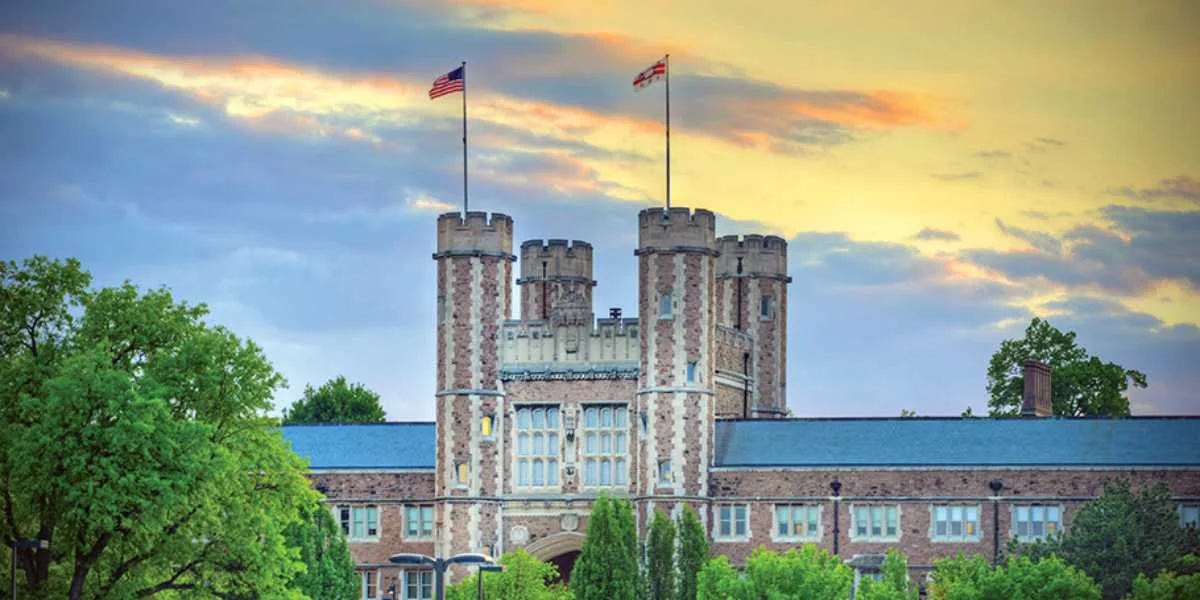
Washington University in St. Louis currently comprises seven schools, six graduate schools, and four undergraduate schools. Located in St. Louis, Missouri, the university has world-class teaching and research achievements in fields such as science, engineering, medicine, the humanities, and the social sciences, and enjoys an international reputation. Washington University is dedicated to cultivating future leaders with a global perspective and leadership skills, and provides students with a high-quality education and academic environment. In addition, the university emphasizes students' all-around development, offering a rich variety of extracurricular activities and community service opportunities that build leadership ability and a sense of social responsibility.

About the university

School data is compiled from public sources and may change. Confirm current tuition, deadlines and requirements with the university before applying.

At a glance

Acceptance rate 12%
Tuition and fees $21,854
SAT range 1500-1570
Application deadline Jan. 2
Undergraduate enrollment 7,653
Student-faculty ratio 7:1
Location 1 Brookings Dr, St. Louis, MO 63130
School type Private research university
In-state tuition
$790
Out-of-state tuition
$21,854
Room and board
$21,854
Graduation rate
87%
Student-faculty ratio
7:1
Gender ratio
46:55

Alumni starting salaries

Biological and Biomedical Sciences
+
Business, Management, Marketing and Related Fields
+
Engineering
+
Mathematics and Statistics
+
Social Sciences
+
Psychology
+
History
+
English Language and Literature
+

Student body

First-year diversity
White
41%
Hispanic
13%
Asian
21%
Black
8%

Inside the school

Washington University in St. Louis combines world-class academic strength, a beautiful campus, and outstanding research resources to offer students opportunities for well-rounded development. Located in St. Louis, Missouri, adjacent to Forest Park, the university features elegant architecture and a tranquil setting. A member of the American "New Ivies," WUSTL enjoys a strong reputation in fields such as medicine, business, and law: its School of Medicine ranks among the top five in the nation, its business school emphasizes a practice-oriented approach, and its law school has a long history. The university is also known for top-tier residence halls, abundant dining options, and strong career resources; blending a deep academic tradition with a vibrant campus culture, it is an ideal destination for students.

We will examine Washington University's distinctive appeal from several angles, highlighting its core features and showcasing its academic achievements and cultural character. Click the button below to view the full introduction to the university.

01. Washington University in St. Louis Is Not in Washington

02. The Most Beautiful Campus Environment in the Central United States

03. Best Residential Hall Environment

04. One of the Most Popular University Dining Halls Among Students in the Nation

05. Abundant Career Resources

06. A Favorite Hub of Social Activity

07. One of the top medical schools in the United States

08. A leading business school in the central United States

09. The first law school in the United States to admit students under a charter

10. The host site of the first modern Olympic Games held in the United States

Most popular majors

Computer Science
9%
Experimental Psychology
6%
Mechanical Engineering
6%
Finance
5%
Econometrics and Quantitative Economics
4%
Biology/Biological Sciences
4%
Neuroscience
4%
Political Science and Government
3%
Cognitive Science
3%
Design and Visual Communications
3%

Graduate programs

Computer Engineering

Computer Engineering

Program Overview

The Computer Engineering program at Washington University in St. Louis is jointly administered by the Department of Computer Science & Engineering and the Department of Electrical & Systems Engineering. The program offers courses and mentorship for students who wish to study the computer engineering (hardware) side of the field. Students may choose a coursework-only option or include a project or thesis. Students delve into the computer hardware field and gain broad knowledge and hands-on experience. Whether pursuing academic depth or practical project experience, the program offers flexibility and variety. The educational experience takes place in advanced laboratories and under faculty mentorship, building the skills students need to succeed in computer engineering.

Degree Type

The Master of Science in Computer Engineering

Source: MS in Computer Science

Application Requirements

English Proficiency

IELTS

Your IELTS Academic overall score should be at least 6.5. Official IELTS scores must be sent by IELTS email to the Washington University in St. Louis graduate program.

TOEFL

Your TOEFL internet-based test score should be at least 90. TOEFL scores should be sent to your major department. Be sure to list the TOEFL institution code 6929; no department code is needed.

GRE/GMAT

Applicants must submit GRE scores; there is no minimum GRE score requirement. If sending your GRE scores, be sure to list the institution code 6929; no department code is needed.

Coursework Requirements

All students in the Master of Science in Computer Engineering program must have previously completed, successfully tested out of, or complete at the start of the program the following courses: CSE 501N Programming Concepts and Practice and CSE 505N Introduction to Digital Logic and Computer Design.

In addition, the McKelvey School of Engineering requires all international students who submit TOEFL or IELTS scores or who have not received at least 3 years of education in the United States to take a communication course. This new course was first offered in Fall 2018. The course carries no additional fee for full-time students and does not count toward the degree or GPA.

Beyond the program-specific requirements above, full application requirements can be found in the Application Requirements section of our website

Source:

Frequently Asked Questions

Application Checklist

Graduation Requirements

Credit Requirements

Students must complete 30 credits.

Students may choose a thesis or a coursework project.

The thesis option requires 24 credits of graduate coursework and 6 credits of thesis coursework (CSE/ESE 599).

The coursework project option requires 24 credits of graduate coursework and 6 credits of project coursework (CSE 598), or 27 credits of graduate coursework and 3 credits of project coursework.

Students must also observe the following general degree requirements when selecting courses:

Of the 30 credits, 18 must come from designated graduate-level computer engineering courses.

Students may apply to take up to 12 additional credits outside the CSE/ESE departments. To take more than 6 units outside the CSE/ESE departments, the advisor and student should provide appropriate justification for the additional increment. With each additional credit, the department's approval review becomes increasingly rigorous.

A maximum of 12 credits of 400-level courses may count toward graduate credit.

Courses marked "N" do not count toward the master's degree.

Grade Requirements

GPA of 2.70 or higher

A grade of C- or better is required in all courses

Thesis Requirements

Students choosing the thesis option must complete and defend a master's thesis.

For more thesis requirements, see: Thesis & Dissertation Submission Procedures

Source: MS in Computer Science

Course Information

Selected Course Information

Technology Entrepreneurship, Machine Learning, Advanced Real-Time Embedded Systems, Probability and Stochastic Processes, Wireless Embedded Sensor Networks, Advanced Operating Systems, Natural Language Processing, Systems Security, Advanced Mult Paradigm Software Development, Modeling and Performance Evaluation of Interconnected Computer Systems. For more course information, see: MS in Computer Engineering

Career Development

The McKelvey School of Engineering hosts a variety of recruiting events for students, giving them the chance to connect with engineers, scientists, Washington University alumni and human resources professionals and to learn about industry internships and job opportunities. Many students secure paid internships and jobs at Fortune 500 companies through these events.

Source: Engineering and STEM Spotlight

Finance

Finance

Program Overview

The Finance program at Washington University in St. Louis (WashU) has many distinctive features, the most notable of which is its GMF program. The GMF program is led by internationally recognized leading academics and aims to develop the next generation of management professionals. This program is led by the International Management Federation and provides students with opportunities to connect and collaborate. Through the GMF program, students gain practical experience and skills training related to the international management field, laying a solid foundation for their future career development. The GMF program is described as a collaborative and experiential program in which students take classes on two campuses, namely at WashU and at another university partnered with it. This indicates that students will study in two different academic environments, gain a rich academic experience, and obtain practical collaboration and networking opportunities related to the management field through the GMF program.

Degree Type

MS in Finance (MSF)

Program Length

11 to 20 months of full-time study

Source: WashU Global Master of Finance

Application Requirements

Language Scores

If you are an international applicant whose native language is not English (a non-U.S. citizen or non-U.S. permanent resident), you must take the TOEFL or IELTS. The university only accepts scores from tests taken within two years of the program start date. TOEFL code: 6929

You are eligible for an exemption if you are a citizen of one of the following countries:

Australia, Cameroon, Commonwealth Caribbean countries, Ghana, India, Ireland, Kenya, Liberia, New Zealand, Nigeria, Singapore, Uganda, the United Kingdom, Zambia, Zimbabwe.

You are also eligible to waive this requirement if you have studied for at least three consecutive years at a college or university located in one of the above countries (Canada, Hong Kong, South Africa, or the United States) where the primary language of instruction is English, and you have received or will receive a degree from the same institution.

GRE/GMAT

GMAT: R4T-WG-53

GRE: 4938

Required Essay

Share a personal value that is important to you with Washington University in St. Louis and describe how that value connects to your career aspirations. (Maximum 500 words)

Application Interview Video

Students applying to specialized master's programs must submit a video interview through the KIRA platform as part of the application process. Once you submit your application to the school, a URL link will be sent to your email address with instructions outlining the video submission process.

Optional Essay

You may share information with the school that was not covered in your application to help the admissions committee evaluate your qualifications. (Maximum 250 words)

In addition to the program-specific application requirements above, the complete application requirements can be found in the corresponding [Application Requirements] section of our official website.

Source: WashU How to Apply for On-Campus Specialized Master's

Curriculum

The Master of Finance program is a collaborative and experiential program in which you complete coursework on two campuses: WashU and a partner university of Washington University in St. Louis. Courses and schedules vary by partner school. Below is an overview of the curriculum by semester.

Online Foundation Courses (these courses are supplementary to the required credits.)

FIN 510 Introduction to Finance

ACCT 560 Introduction to Financial Accounting

Summer Semester 1 at WashU

FIN 532 Investment Theory (1.5 credits)

FIN 534 Advanced Corporate Finance I (1.5 credits)

FIN 524 Options and Futures (1.5 credits)

FIN 524B Derivative Securities (1.5 credits)

Fall Semester 1 at the Partner School

Singapore Management University: Quantitative Methods and Statistics, Hedge Funds, Financial Statement Analysis I, Fixed Income Analysis, Financial Analysis, and Innovation.

Yonsei School of Business: Economic Analysis, Managerial Statistics, Financial Accounting, Marketing Management, Management Science, Career Foundations Advising

Reichman University: Risk Creation, Risk Consulting, Financial Statement Analysis, Econometrics, 2 electives, non-credit seminar

WHU Otto Beisheim School of Management: International Financial Reporting, Capital Market Theory, Financial Econometrics, electives

Winter Semester at the Partner School

Yonsei School of Business: Exploring Emerging Markets, Entrepreneurship in Action, Business Strategy I, Financial Statement Analysis, Doing Business in China, Marketing Strategy and Models and Tools for Strategy

Spring Semester 2 at the Partner School

Singapore Management University: Financial Modeling and Analysis, Advanced Quantitative Methods and Economic Analysis, Advanced Financial Statement Analysis, Financial Sustainability and Alternative Investments

Yonsei School of Business: Global Business Environment, Production and Operations Management, Business Strategy II, Leadership, Negotiation, Business Analytics and Valuation, International Finance

WHU Otto Beisheim School of Management: Financial Technology, electives

Spring Semester at WashU

Reichman University: Fixed Income Securities, Advanced Corporate Finance II, Investment Practice, electives, Financial Markets - Regulation DC Immersion, Financial Markets

The Reichman University program ends at the end of this semester.

Summer Semester 2 at WashU

FIN 500U Financial Markets - Regulation, DC Immersion (3 credits)

FIN 500T Financial Markets - Institutions, New York Immersion (3 credits)

FIN 500Y Private Equity Methods (1.5 credits)

FIN 523B Mergers and Acquisitions (1.5 credits)

FIN 530 International Finance (1.5 credits)

FIN 555 Risk Management and Insurance (1.5 credits)

FIN 532B Investment Data Analysis (1.5 credits)

FIN 533 Real Options Valuation (1.5 credits)

FIN 534B Advanced Corporate Finance II (1.5 credits)

FIN 534C Advanced Corporate Finance III (1.5 credits)

The Yonsei School of Business program ends at the end of this semester.

Fall Semester 2 at the Partner School

Singapore Management University: Internship, Capstone

WHU Otto Beisheim School of Management: Internship, Master's Thesis (this semester can be completed remotely)

The programs at Singapore Management University and WHU Otto Beisheim School of Management end at the end of this semester.

Prerequisites, Transfers and Waivers

Applicants to the GMF program should have studied microeconomics, statistics, and calculus. Students must take foundation courses before beginning regular coursework.

Students must complete all courses in the GMF program; course waivers and transfer credits from other universities are not permitted.

Any transfer credits between Washington University in St. Louis and partner schools must be at the B level or higher, but credits transferred from SMU to Washington University in St. Louis must be at the C level or higher.

Source: WashU Global Master of Finance Curriculum

Career Development

As a WashU student, no matter which career path you choose, you are heading toward an exciting future.

From in-person and virtual advising to career events, job resources, and assessments and skills training, the WashU Career Engagement Center has the tools, resources, and connections needed for career readiness and lifelong success. Washington University in St. Louis will help you find your future.

WashU Career Center

You will work with a career coach through the provided coaching and resources; your coach will not only learn about your aspirations but also provide personalized guidance and help guide you in setting a job search strategy for a specific position or company.

Personalized Professional Development

Whether you are seeking a business career path or a different career trajectory, Washington University in St. Louis offers career guidance tailored to your needs and interests.

Source: WashU Career Services and Resources

Data Analytics & Statistics

Data Analytics & Statistics

Program Overview

The Master of Science in Data Analytics & Statistics at Washington University in St. Louis is an academic master's degree program designed to equip students with the ability to collect, analyze, model, and optimize data by teaching them advanced software and analytical tools. These skills are essential across a wide range of fields, because data analysis helps people better understand and use data to make more accurate and effective decisions. In this program, students study across systems science, mathematics, computer science, and engineering, gaining a comprehensive command of the theoretical and practical skills required for data analysis.

Degree Type

Master of Science in Engineering Data Analytics and Statistics (MSDAS)

Source: WUSTL MS in Engineering Data Analytics & Statistics

Application Requirements

Language Scores

IELTS: Your IELTS Academic overall score should be at least 6.5.

TOEFL: Your TOEFL iBT score should be at least 90.

TOEFL scores should be sent to your major department. Be sure to list the TOEFL institution code 6929; no department code is needed.

Official IELTS scores must be sent to the Washington University in St. Louis graduate program via IELTS email.

Waiver-Eligible Requirements:

Applicants who meet any of the following conditions may be exempt from the English proficiency test requirement: citizens of Australia, Cameroon, Commonwealth Caribbean countries, Ghana, India, Ireland, Kenya, Liberia, New Zealand, Nigeria, Sierra Leone, Singapore, Uganda, the United Kingdom, Zambia, and Zimbabwe.

Completion of at least three years of documented academic coursework at a university in the United States or one of the countries listed above.

Completion of at least three years of academic coursework taught in English in Canada, Hong Kong, or South Africa.

GRE/GMAT

Applicants may choose to submit GRE scores; there is no minimum GRE score requirement. If you send your GRE scores, please list the institution code 6929; no department code is needed.

Coursework Requirements

Applicants with a bachelor's degree in engineering or another STEM-related degree are encouraged to apply. Applicants are encouraged to have coursework in the following: the calculus sequence and differential equations, probability and statistics, matrix algebra, and introduction to computer science. Applicants with knowledge in the sciences or quantitative social sciences are encouraged, but this is not required.

In addition to the program-specific application requirements above, the complete application requirements can be found in the Application Requirements section of our website.

Source: WUSTL Application Checklist

Graduation Requirements

Coursework Requirements

Students may meet graduation requirements through either the course option or the thesis option:

Course Option

The Master of Science in Engineering Data Analytics and Statistics is an academic master's degree intended primarily for full-time and part-time students interested in pursuing the department's full-time doctoral program and/or an industrial career. Under the course option, students may omit ESE 599 Master's Research. With faculty permission, they may take up to 3 credits of graduate-level independent study.

Thesis Option

This option is intended for full-time students engaged in a research project. Candidates for this degree must complete at least 24 credits of coursework and 6 credits of thesis research (ESE 599); 3 of these thesis research credits may be applied toward the 15 core electrical engineering units required for the MSEE program. Any of these 6 thesis research units may serve as electives for the MSEE, MSSSM, and MSDAS programs.

Credit Requirements

The total is 30 credits, of which at least 15 credits must be selected from the core electrical engineering courses taught by the Department of Electrical and Systems Engineering (ESE).

Up to 6 credits may be transferred from other departments and applied toward the master's degree.

Grade Requirements

GPA of 3.0 or higher.

Thesis Requirements

Students choosing the Thesis Option must complete and defend a master's thesis.

Source: WUSTL Master of Science in Engineering Data Analytics and Statistics (MSDAS)

Course Information

Required Courses

Introduction to Machine Learning and Pattern Classification; Introduction to Machine Learning; Machine Learning; Optimization; Large Scale Optimization for Data Science; Probability and Stochastic Processes; Detection and Estimation Theory; Practicum in Data Analytics and Statistics. Degree Electives

Linear Statistical Models; Bayesian Statistics; Time Series Analysis; Statistical Computation; Mathematical Statistics; Introduction to Artificial Intelligence; Cloud Computing with Big Data Applications; Data Mining; Bayesian Methods in Machine Learning; Machine Learning; Statistical Methods for Data Analysis with Applications to Financial Engineering; Financial Mathematics; Large-Scale Optimization for Data Science; Information Theory; Linear Dynamic Systems 1. Free Electives

Students may take up to 6 units of free electives. Any course numbered 401 or higher in the engineering departments (prefixes BME, CSE, EECE, ESE, or MEMS), the Department of Physics, or the Department of Mathematics may count as an elective, except for the exclusions listed below.

Finance courses FIN 500Q, FIN 550F, and FIN 537, as well as courses with the DAT designation and numbered 500 or above (except DAT 561), may be used as free electives.

Students may take ESE 417 or CSE 417T, but not both, as a degree elective.

Students who have already taken ESE 318 and 319 may not take ESE 501 for graduate credit.

For complete course information, see: WUSTL MS in Engineering Data Analytics & Statistics

Career Development

Graduates of this program have a wide range of choices and opportunities for career development. Many graduates enter industry, taking positions such as researchers, analysts, and software engineers at well-known companies. Some of these companies include Amazon, Bayer, Bosch, Citigroup, Deloitte Consulting, the Federal Reserve, and General Electric. These companies have ongoing demand for professionals with data analytics and statistics skills, and graduates of this program, with their solid expertise and skills, can find broad career development opportunities at these companies and succeed in their respective fields.

Source: WUSTL MS in Engineering Data Analytics & Statistics

Business Analytics

Business Analytics

Program Overview

Business analytics is a professional field rising rapidly around the world and has become one of the areas with the most significant growth in talent demand. It combines problem-solving and data analysis skills, and through data-driven methods it has brought enormous change and innovation to a wide range of industries. Whether it is risk management in finance, analysis of student performance in education, or disease prediction in healthcare, business analytics plays a key role, making people's lives more convenient and efficient. For those who aspire to work in business analytics, this is therefore a field full of opportunity and broad prospects.

Degree Type

Master of Science in Business Analytics

Program Length

18-month full-time program

Source: WashU Master of Science in Business Analytics

Application Requirements

Language Scores

If you are an international applicant whose native language is not English (a non-U.S. citizen or non-U.S. permanent resident), you must take the TOEFL or IELTS. Washington University in St. Louis accepts only scores from tests taken within two years of the start of the program. If you have studied for at least three consecutive years at an English-language college or university located in Canada, Hong Kong, South Africa, or the United States, and you have received or will receive a degree from the same institution, the admissions office may waive the language test.

TOEFL code: 6929

GRE / GMAT

The GMAT or GRE, as standardized tests, are part of the application process used to assess academic ability. The school does not require test scores to be submitted, but recommends that most applicants submit them.

GMAT code: R4T-WG-73

GRE code: 3764

Required Essay

Washington University in St. Louis believes that people often bring their personal values into their professional lives. Please share with Washington University in St. Louis one value that is important to you and describe how that value connects to your career aspirations. (Maximum 500 words)

Application Interview Video

Students applying to specialized master's programs must submit a video interview through the KIRA platform as part of the application process. Once you submit your application to the school, a URL link will be sent to your email address with instructions outlining the video submission process.

Optional Essay

You may share with Washington University in St. Louis information not covered in your application to help the admissions committee evaluate your candidacy. (Maximum 250 words)

In addition to the program-specific application requirements above, the complete application requirements can be found in the corresponding [Application Requirements] section of our website

Source: WashU How to Apply for On-Campus Specialized Master’s Programs

Graduation Requirements

Credit Requirements

You must complete 39 credits, including 18 core credits, 12–13.5 track-required credits, and 7.5–9 elective credits.

Source: WashU MS in Business Analytics Curriculum

Curriculum

Core coursework includes the following:

Course Name

Database Design & SQL

Prescriptive Analytics

Big Data & Cloud Computing

Professional Business Communication

Machine Learning Tools for Prediction of Business Outcomes

Introduction to Python & Data Science

A/B Testing in Business & Social Science

Data Visualization for Business Insights

Text Mining

Accounting Analytics Track Required courses include the following:

Course Name

Financial Accounting II – Intermediate Accounting

Ethical Decision-Making in Accounting

Strategic Cost Analysis

Business Analysis Using Financial Statements

Advanced Business Analysis Using Financial Statements

Financial Reporting & Assurance in a Blockchain World

Accounting Policy & Research

Customer Analytics Track Required courses include the following

Course Name

Marketing Research Analytics

Data Analysis for Brand Management

Digital Marketing

Analytics-Driven Brand Management

Customer Analytics

Marketing Strategy

Financial Technology Analytics Track Required courses include the following:

Course Name

Financial Management

Advanced Corporate Finance I–Valuation

Investment Theory

Options & Futures

Fixed Income Securities

Financial Technology–Methods and Practice

Seminar in Financial Technology

Healthcare Analytics Track Required courses include the following:

Course Name

Olin Grand Rounds: The Business & Practice of Medicine

Research in Healthcare Management

Healthcare Management

Health Economics & Policy

Supply Chain Analytics Track Required courses include the following:

Course Name

Foundations of Supply Chain Management

Stochastic Models

Supply Chain Finance

Operations Analytics

Introduction to Revenue Management

Advanced Operations Strategy

Supply Chain Analytics Capstone

Talent Analytics Track Required courses include the following:

Course Name

Human Resource Management

Economics of the Organization

Talent Analytics

People Metrics

Compensation, Incentives & Organization

Ethical Issues in Managerial Decision-Making

Required experiential course includes the following:

Course Name

Leading Change

Source: WashU MS in Business Analytics Curriculum

Career Development

Business analytics is a fast-growing field with growing demand for analysts—88% of Washington University in St. Louis recent graduates are employed within six months. At WashU Olin, you apply data-driven decision-making skills across industries, including healthcare, technology, finance, and more.

WashU Career Resources Center

Provides you with coaching, skills training, career planning, and access to a global community of business leaders, recruiters, influencers, and WashU alumni.

Personalized Professional Development

At WashU, you can find career guidance tailored to your needs and interests.

Career Search

Washington University in St. Louis will help you break the career search process into small, manageable tasks so that you can seize opportunities for potential internships or jobs.

Coaching Team

Work one-on-one with certified career management coaches at WashU Olin and after graduation, so that throughout the job search process you can get support in quickly building your network, interviewing, and evaluating job offers, seeking the best opportunities for your skills and aspirations.

Customized Curriculum

Work with your academic advisor and career coach to optimize your studies and make the most of your WashU education. Use self-assessment tools to gain a clear understanding of what you want to do next, where you want your career to take you, and how best to achieve your career goals.

Career-Oriented Clubs

Current students have many opportunities to join analytics-related clubs. The Olin Big Data Association is a great way to improve your data skills. For more focused interests, check out these clubs—Olin Marketing Association, Supply Chain and Operations Association, ASCM (MSSCA), and Beta Alpha Psi (MSAA).

Source:

WashU Master of Science in Business Analytics

WashU MS in Business Analytics Career Prospects

Computer Science

Computer Science

Program Overview

The MS in Computer Science at Washington University in St. Louis offers outstanding academic and professional development opportunities for students aiming to achieve excellence in computing. The program emphasizes the integration of theory and practice: students may choose the Pure Course option or combine coursework with a Project or Thesis, gaining comprehensive computer science knowledge and skills. In addition, WashU's Center for Career Engagement provides professional career guidance and development support to help students successfully enter the workforce.

Degree Type

MS in Computer Science

Source: WashU MS in Computer Science

Application Requirements

All students pursuing the master's degree in Computer Science must, prior to applying or by the start of the program, complete by examination or coursework

CSE 501N: Introduction to Computer Science and CSE 502N: Data Structures and Algorithms.

English Proficiency Scores

WashU considers official TOEFL score reports valid for only two years.

The minimum TOEFL score is 90; official TOEFL scores must be sent to WashU via ETS. The school code is: 6929

The minimum IELTS score is 6.5; official IELTS scores should be sent electronically to the Washington University in St. Louis graduate program.

Exemption Eligibility

Applicants who meet any of the following criteria may be exempt from the English proficiency test requirement: citizens of Australia, Cameroon, Commonwealth Caribbean countries, Ghana, India, Ireland, Kenya, Liberia, New Zealand, Nigeria, Sierra Leone, Singapore, Uganda, the United Kingdom, Zambia, and Zimbabwe.

Completion of at least three years of written study in a university-level academic program in the United States or one of the above countries.

Completion of at least three years of written study in an English-language program of study in Canada, Hong Kong, or South Africa.

Statement of Purpose and Resume

The statement of purpose should be a short document describing your goals and aspirations.

GRE

The GRE General Test and the GRE General Test at Home are accepted; there is no minimum score requirement.

Applicants must report their official GRE scores to WashU via ETS using school code 6929.

Note: The Department of Computer Science and Engineering requires GRE scores for Spring 2024 and Fall 2024 admission.

For more information, please refer to the GRE score FAQs.

In addition to the program-specific requirements above, the complete application requirements can be found in the corresponding Application Requirements section of our website.

Sources:

WashU Application Checklist

WashU Standardized Tests

Graduation Requirements

Credit Requirements

Students choosing the Pure Course option must complete 30 credits;

Students choosing coursework with a thesis must complete 24 graduate credits plus 6 research credits (CSE 599: Master's Research);

Students choosing coursework with a project must complete 24 graduate credits plus 6 project credits (CSE 598: Master's Project).

Grade Requirements

All courses must be completed with a grade of C- or higher.

Students must maintain a GPA of at least 2.70.

Thesis Requirements

Students completing a master's project or master's thesis must:

Complete and submit the research proposal form: Until this form is completed and submitted, students are automatically placed on the CSE 598 (Project) and CSE 599 (Thesis) candidate lists. If a student does not submit the form by the add/drop date, the student will be dropped.

Select a faculty committee to evaluate the final presentation of their work: The committee should be formed according to the guidelines in the Master's Program Handbook. The committee then requires departmental approval.

Obtain departmental approval for the committee: Submit the Master's Committee Approval Form to the graduate coordinator. Once the committee is approved, the student may schedule the presentation/defense.

Present/defend the project/thesis: The student presents their work and results to the committee, which evaluates whether the presentation passes. The committee then completes the Master's Final Examination Report Form indicating whether the student passed.

Master's Thesis Report: Students completing a master's thesis must submit a final report.

Sources:

WashU MS in Computer Science

WashU Master's Project and Thesis Guidelines

Curriculum Overview

Students must complete CSE 501N: Introduction to Computer Science and CSE 502N: Data Structures and Algorithms before the start of the program.

Course and program options include:

One 500-level Theoretical Computer Science (T) course

One 500-level Software Systems (S) course

One 500-level Machine (M) course or one 500-level Applications (A) course

18 of the 30 units must be departmental courses at the 500 level or above.

With departmental approval, up to 12 units may be taken outside the department. Approval requires that the credits be at an appropriate graduate level of technical rigor. To take more than 6 credits outside the CSE department, the advisor and student should provide additional justification for the additional increment. With each additional credit, the department's approval review becomes increasingly stringent.

A maximum of 12 units of 400-level courses may count toward graduate credit.

None of the 30 credits may be taken as independent study (i.e., CSE 400 or CSE 500).

Note: Courses with the "N" designation do not count toward the master's degree.

Sources: WashU MS in Computer Science

Career Development

The Center for Career Engagement is a comprehensive center dedicated to helping students translate their WashU education into real-world success. For students preparing to enter the workforce, it offers:

Career coaching and planning

Career assessments and skills training

Access to a global community of leaders, recruiters, influencers, and WashU alumni

Source: WashU Center for Career Engagement

Campus life

Transportation

Nearby Airports

St. Louis Lambert International Airport (STL)

Distance to campus: 15 miles

Campus to airport travel:

Driving/rideshare:

Typically takes about 12–14 minutes. It may take longer during heavy traffic.

Public transit:

Take Bus 2/MetroLink MLB, transfer to MetroLink MLR to the airport, or walk directly to the Metro station and take MetroLink MLR.

Scott Air Force Base

Distance to campus: 25 miles

Campus to airport travel:

Driving/rideshare:

Typically takes about 35–40 minutes. It may take longer during heavy traffic.

Public transit:

Although primarily a military base, it also offers some civilian services. Take MetroLink MLB/Bus 16/2, transfer to MetroLink MLR to reach the airport.

Nearby Train Stations

St. Louis Union Station

Campus to train station travel:

Driving/rideshare:

Typically takes 10–15 minutes. However, it may take longer during heavy traffic.

Public transit:

From the Washington University in St. Louis station, take MetroLink MLB directly to Union Station, which takes about 17 minutes.

City Public Transportation

Buses: St. Louis has an extensive bus system operated by Metro Transit. Several bus routes pass near Washington University, and students and residents can take buses to downtown, commercial districts, shopping centers, and other places.

Metro: Students can register for Ride Metro for free and receive a U-Pass transit card, making it easy to travel between the Danforth, North, West, and Medical campuses.

Campus Shuttles: Washington University offers on-campus shuttle services connecting major areas of the campus. These shuttles are usually free and convenient for students, faculty, and staff to get around campus.

Safety

Washington University in St. Louis is located in the city of St. Louis, which is relatively less safe at night. The campus itself is quite safe. Undergraduates and students who do not plan to buy a car may consider living on campus or near campus.

On-Campus Assistance

You can call the Washington University Police Department (WUPD) on the Danforth Campus at 314-935-5555, or call the Medical School Protective Services at 314-362-4357 / 314-362-HELP on the Medical Campus.

WashU Emergency Notification System

Receive emails with important information during campus emergencies. WashUAlerts can only send messages to @wustl.edu addresses.

Blue Light System

The Blue Light emergency phone system is a series of highly visible phones distributed throughout the Danforth Campus. On campus, they connect directly to the Washington University Police Department. Press the red button, and the caller will be connected directly to a university police dispatcher.

R.A.D. Program

The R.A.D. system consists of easy-to-learn, effective physical defense techniques. This dynamic, hands-on 12-hour course begins with awareness, risk reduction, avoidance, and prevention. Certified instructors teach the basic techniques.

Laptop Security

We offer low-cost solutions to help prevent computer theft. To reduce costs, we will affix a STOP TAG security plate to your computer casing. STOP TAG is also a registration tracking system that provides owner contact information if the computer is lost or stolen.

Housing

Washington University in St. Louis is committed to providing a safe environment that encourages learning and personal growth in an inclusive community. The university offers 28 on- and off-campus residential locations in the North and South communities to meet students' varying housing preferences.

Residential Colleges

North Community

The Lofts Apartments

Rosedale Court Apartments

520 Kingsland Avenue Apartments

Washington Avenue Apartments

South Community

Greenway Apartments

University Drive Apartments

Millbrook Apartments

Village East

On-Campus Housing Application Steps

All full-time degree-seeking undergraduates are required to live in a residence hall during their first year. This requirement does not apply to transfer or exchange students.

Submit Student and Emergency Contact Information

In this step, you need to select your enrollment status and gender and provide your contact phone number and email address. If you have special housing needs, such as a disability or other circumstances that may affect your housing assignment, you can also note them here. When finished, click "Continue" to proceed to the next step.

Review Rates and Preferences

In this step, you will have the opportunity to rank housing rates and preferences and provide personal preference information. If you wish to live with a specific roommate, you can enter their information here. You can also provide additional information in the comments section. When finished, click "Continue."

Select a Meal Plan

In this step, you need to choose from the provided meal plan options and indicate any food allergies or other relevant conditions according to your needs. When finished, click "Continue."

Review and Submit Application

In this step, you need to carefully review and understand the contract terms and conditions, including the cancellation policy. If you are 18 or older, you can review and print the application; if you are under 18, a parent/guardian must sign in the provided window. When finished, click "Submit Application."

Dining

Washington University Dining Services' meal plans emphasize variety and allow each student to choose the meal plan that best fits their health and nutritional needs. There are 17+ restaurants, cafes, fast-food options, and vending machines on campus, ensuring students have enough food to stay energized, rested, and mentally well.

Campus Restaurants

Beast Craft BBQ and LaJoy Coffee at Parkside Café: serving STL-style barbecue, sides, burgers, salads, and wings, coffee, cakes, donuts, and more.

Village Café: deli, salad bar, stir-fry station, and comfort station. Students can also enjoy our new smoothie station and the Simply Made allergen-friendly station. Full-service coffee, espresso, and tea bar, plus pastries and breads.

DUC Dining Hall: build-your-own tacos, burritos, and burrito bowls, salad bar, wood-fired pizza, burgers, chicken sandwiches, and two allergen-friendly stations: Simply Made Comfort and Simply Made Bowls.

Ibby's Bistro: Located in the heart of the Washington University in St. Louis campus, this campus bistro serves fresh, creative cuisine inspired by local ingredients and seasonal changes.

The Bear's Den: offering burgers and chicken sandwiches, WashU Half & Half, stir-fry, wood-fired pizza, pasta, and late-night food. It also features a fully equipped kosher kitchen, and students can find the Simply Made allergen-friendly station at BD.

Paws & Go: one of two convenience stores, the grab-and-go coolers offer a variety of vegan, vegetarian, halal, and kosher foods for anyone needing a quick meal. There is also a make-your-own salad bar!

Meal Plan

Meal Plan Requirements:

Full-time students must select a meal plan when submitting their on-campus housing application. In this step, students need to choose from the provided meal plan options.

Students can change their meal plan during the first two weeks of the fall semester or the first two weeks of the spring semester. All changes submitted during the first 2 weeks of each semester will take effect at the end of the 2 weeks.

Students can access the Washington University Housing Portal through WebSTAC to complete the meal plan change form. Students with questions can contact Washington University Dining Services at diningservices@wustl.edu.

Meal Plan Prices:

Meal Plan | Semester Points | Semester Price | Best For

Platinum Plan | 3,138 | $4,023 | Students living on campus who enjoy regular dining at all residential locations and occasional retail dining.

Gold Plan | 2,809 | $3,694 | Students living on campus who regularly plan to dine in residential areas.

Silver Plan | 2,297 | $3,182 | Students living on or off campus who plan to eat a variety of meals on campus throughout the week.

Bronze Plan | 1,775 | $2,660 | Students in North Community or fraternity/sorority housing who occasionally enjoy lunch on campus with friends.

Apartment Plan | 813 | $1,198 | Students who plan to cook for themselves but want to enjoy occasional meals on campus.

Off-Campus Plan | 480 | $744 | Students who often eat off campus or bring their own food and want drinks, snacks, or occasional meals on campus.

*The Off-Campus Plan is the minimum required plan for undergraduates enrolled in 12 hours or more.

Admissions

Acceptance rate
12%
SAT range
1500-1570
ACT range
33-35
SAT / ACT
SAT reading and writing, 25th–75th percentile: 730-770
SAT math, 25th–75th percentile: 770-800
SAT median: 1540
ACT composite, 25th–75th percentile: 33-36
ACT English, 25th–75th percentile: 34-35
ACT math, 25th–75th percentile: 31-35
ACT median: 34

Admissions data

Admission to Washington University in St. Louis is highly competitive, with an acceptance rate of 13%.
Half of the applicants admitted to Washington University in St. Louis have an SAT score between 1490 and 1570 or an ACT score between 33 and 35.
The application deadline for Washington University in St. Louis is January 4, and the application fee is $70.
Admissions officials at Washington University in St. Louis consider a student's GPA an important academic factor. Admissions officials at Washington University in St. Louis consider an applicant's high school class rank, but the quality of letters of recommendation is also a very important consideration.
Applicants
Admitted
Female applicants
Male applicants
Female admits
Male admits
Waitlist offered
Yes
Students on waitlist
2,713
Admitted from waitlist
200

Application requirements

01.
Students applying to Washington University in St. Louis should have at least a high school diploma or expect to receive one soon.
02.
Most candidates' transcripts include: 4 years of English; 4 years of mathematics (calculus is strongly recommended for architecture, business, and engineering); 3–4 years of laboratory science (chemistry and physics are recommended for engineering); 3–4 years of history or social science; at least 2 years of the same foreign language beginning in ninth grade; the College of Arts & Sciences recommends chemistry and physics for students planning to pursue pre-medicine or natural science coursework.

Application checklist

01.
1. Complete the application via the Common Application or the Coalition Application
02.
Secondary school report and official transcript
Including specific grades and class rank
03.
School counselor recommendation letter
04.
Teacher evaluation
05.
SAT or ACT scores
Optional
06.
TOEFL, IELTS, or Duolingo English test scores
For students whose first language is not English
07.
Portfolio
For students applying to the School of Art and the School of Architecture; must be submitted through SlideRoom
08.
A 200-word response to the prompt "Please tell us which part of studying at this school interests you and why"

Application deadlines

Deadline
Date
Early Decision I
Nov. 1
Early Decision II
Jan. 4
Regular Decision
Jan. 2
ED I notification
Dec. 13
RD notification
April 1

Transfer requirements

01.
Has completed high school/secondary school and some college study
02.
Wishes to be considered for admission to the University of Washington with advanced standing
03.
Is interested in enrolling in a full-time undergraduate degree program and has specific academic goals
04.
Has never attended any full-time degree-granting school at the University of Washington
05.
Because few transfer spaces are open, the school recommends that the strongest admission candidates present a high school diploma or its equivalent and evidence of high-level academic achievement at their current institution. Successful applicants have a GPA of at least 3.5/3.6 at a two-year or four-year college and take a broad academic course load. Some academic tracks require specific grades in specific courses. For example, students interested in engineering, business, or the physical or biological sciences must have a strong background in science and mathematics, including calculus.
06.
If a student has been away from a formal academic environment for more than two years, the school generally recommends completing at least one year (30 hours) of work at another college or university before submitting a transfer application.
07.
If a student is in the first year of college, the student must submit at least one complete semester of full-time college work, or a complete midterm progress report, when applying for transfer admission.

Transfer checklist

01.
Application form
Common Application
02.
College transcript
03.
High school transcript
04.
College counselor evaluation
05.
College report
06.
English proficiency test scores (TOEFL, IELTS, Duolingo)
For students whose first language is not English
07.
Portfolio
For students applying to the School of Art or the School of Architecture

Transfer deadlines

Deadline
Date
Fall application deadline
Mar. 1

Similar universities

Admissions FAQ

What is the acceptance rate at Washington University in St. Louis?

The reported acceptance rate is 12%. Acceptance rates vary by applicant pool and application cycle; confirm the current figure with Washington University in St. Louis.

What SAT scores does Washington University in St. Louis expect?

The reported SAT range is 1500-1570. Test-optional and score-reporting policies can change by application cycle; check the university's official admissions page before applying.

When is the application deadline at Washington University in St. Louis?

The listed Regular Decision deadline is Jan. 2. Deadlines can vary by program and application cycle; confirm the exact date with the university.

How much does Washington University in St. Louis cost?

The listed tuition and fee figure is $21,854. Costs vary by residency, programme and academic year; confirm current costs with the university.

Where is Washington University in St. Louis located?

Washington University in St. Louis is located at 1 Brookings Dr, St. Louis, MO 63130.

Planning your application?

Build a school list around your profile.

Ivy Elite advisors help students compare programs, plan coursework and prepare applications for U.S. universities.