Ivy Elite
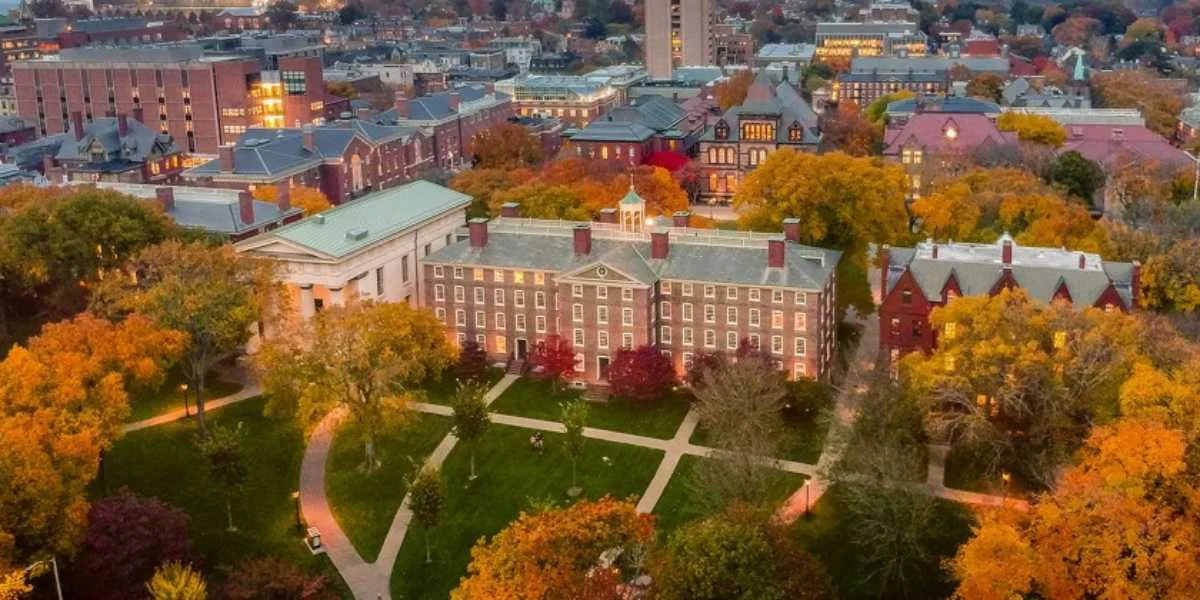
Brown University

Brown University currently has 6 schools. As a private, nonprofit institution, the university advances its mission through the support of communities that invest in Brown's commitment to advancing knowledge and making a positive impact locally and globally. Brown students and faculty are focused on addressing the national opioid crisis, planning the next Mars landing site, exploring the locations of ancient civilizations, advising world leaders on new political models, and exploring new frontiers in multimedia art. The university's students, faculty, and staff firmly believe that their work will have an impact on the world.

About the university

School data is compiled from public sources and may change. Confirm current tuition, deadlines and requirements with the university before applying.

At a glance

Acceptance rate 5%
Tuition and fees $17,444
SAT range 1500-1570
Application deadline Jan. 3
Undergraduate enrollment 6,792
Student-faculty ratio 6:1
Location Page-Robinson Hall. 69 Brown Street. Providence, RI 02912
School type Private research university
In-state tuition
$312
Out-of-state tuition
$17,444
Room and board
$17,444
Graduation rate
80%
Student-faculty ratio
6:1
Gender ratio
49:52

Alumni starting salaries

Biological and Biomedical Sciences
+
Business, Management, Marketing and Related Fields
+
Engineering
+
Mathematics and Statistics
+
Social Sciences
+
Psychology
+
History
+
Public Administration and Social Service
+

Student body

First-year diversity
White
36%
Hispanic
12%
Asian
20%
Black
9%

Inside the school

Brown University is known for its free and open academic atmosphere and its spirit of innovation, and it has a distinctive open curriculum that is unique in the United States, allowing students to design their own paths of study. Located in Providence, Rhode Island, the university combines rich historical culture with modern urban resources, offering students a wealth of academic and life experiences. Brown University is also noted for its small-class elite education, its powerful alumni network, and its distinctive interdisciplinary collaborations, such as the dual-degree program with the Rhode Island School of Design. At the same time, amusing traditions on campus, such as the Donut Run and the legend of the Van Wickle Gates, showcase its unique campus culture.

We will examine the distinctive appeal of the University of Washington from the following perspectives, presenting the school's core features and conveying its academic achievements and cultural charm. Click the button below to view the school's full introduction.

01. Location and campus environment

02. A school that makes "schedule freedom" a reality

03. Distinctive assessment standards

04. Small-class education of exceptionally high quality

05. One of the strongest alumni networks in the United States

06. A sister school to a world-leading art school

07. One of the most selective universities in the United States

08. The happiest Ivy League school

09. A refined and free-spirited place

10. Fun campus traditions

Most popular majors

Computer Science
14%
Econometrics and Quantitative Economics
11%
Applied Mathematics
9%
International Relations and Affairs
8%
Biology/Biological Sciences
7%
Engineering
5%
English Language and Literature
5%
Public Health
5%
Neuroscience
4%
History
4%

Graduate programs

Computer Science

Computer Science

Program Overview

Brown University's Computer Science program offers students two paths: coursework only or a research project. Either way, the faculty who teach are renowned for innovative education and research. The Department of Computer Science has expertise across many areas, including algorithms and data structures, artificial intelligence, programming languages, computational biology, human-computer interaction, computer security, cryptography, database management systems, distributed systems, agents, graphics and visualization, automated reasoning and planning, natural language processing, constraint programming, networks, operating systems, robotics and computer vision, and software engineering. Students may also choose a professional track and then complete a 2-4 month internship. Whether you want to strengthen your computer science skills or continue your studies in computer science to prepare for higher-level research, Brown University's Computer Science program is a suitable choice.

Degree Type

Master of Science in Computer Science MSCS

Program Length

Two-year full-time program

Program Resources

The Department of Computer Science is richly resourced: every Master of Science student can use the department's shared office, equipped with desktop computers and docking stations, as well as all research laboratories.

Source: Brown University Master of Science in Computer Science

Application Requirements

English Proficiency

Any non-native English speaker who has not earned a degree from a university where English is the sole language of instruction in the following countries must submit English test scores: Australia, the Bahamas, Botswana, Cameroon, Canada (except Quebec), Ethiopia, Ghana, Ireland, Kenya, Lesotho, Liberia, Malawi, New Zealand, Nigeria, Zimbabwe, South Africa, Sierra Leone, Eswatini, Tanzania, Gambia, Uganda, the United Kingdom (England, Scotland, Northern Ireland, Wales), the West Indies, and Zambia.

The department accepts the TOEFL iBT Special Home Edition and the IELTS Indicator. Students in mainland China may submit the TOEFL ITP Plus.

The minimum TOEFL score is 105, and the minimum IELTS score is 8.0.

TOEFL school code: 3094

GRE/GMAT

The GRE Subject test is not required, and the GRE General test is not mandatory, but the department encourages applicants to submit scores. GRE school code: 3094

Recommendation Letters

Brown undergraduates considering a fifth-year master's degree may submit two recommendation letters; external applicants must submit three. Recent graduates (within 3 years) and current students should provide at least 2 letters from professors who can attest to coursework completed in computer science.

Personal Statement

The personal statement asks you to answer specific questions about your preparation, interests, experience, and goals.

In addition to the program-specific requirements above, full application requirements can be found in the Application Requirements section of our website.

Source: Brown University MSCS Apply Requirement

Graduation Requirements

Grade Requirements

The average grade across all courses used to satisfy the requirements must be a B. All courses must be taken for a grade, and all grades must be C or above (S grades may not be used).

Thesis Requirement

Students who choose the research-related master's content must prepare a research report. The report's format is agreed upon by the student and advisor, and the student's program—and therefore the degree—is incomplete until the advisor approves the report. The report should describe the work the student did in the project and the knowledge gained, and it will appear on the Department of Computer Science website.

Internship Requirement

For students aiming for employment as professional computer scientists, the department recommends building professional experience during preparation. Before becoming eligible for a relevant internship, students must complete a certain amount of foundational coursework. Students with limited experience in computer science should take some advanced computer science courses before starting an internship. Internship experience can inform students' subsequent coursework and project work, and students without such experience are at a relative disadvantage compared with their peers. The department therefore strongly recommends that students without internship experience choose the two advanced components that require an internship when making advanced course selections.

Source: Brown University Master's Program Requirements

Curriculum

The requirements for Brown University's Master of Science (ScM) in Computer Science include a basic component and an advanced component, and all courses must be at the 1000 level or above.

Basic Component

The basic component consists of six courses, which may not be reading and research courses (in particular, not CSCI 2980).

The six courses are selected as follows:

Two must be CS courses that form a pathway (for an introduction to study pathways, see: Course Pathways for Master's Students).

One must be a CS course not listed in the chosen pathway (it cannot be a core course, a graduate course, or a course related to the pathway).

The other three courses must be in computer science or a related field and must be approved by the advisor or the Director of Graduate Studies. To obtain approval, students must demonstrate that these courses are relevant to their CS interests. In general, the more non-CS courses a student wishes to take, the stronger the justification must be.

Advanced Component

The advanced component requires students to complete one of the following four two-course options; options 3 and 4 may not include reading and research courses. "Advanced course" below means a 2000-level CS course.

The four options are:

Complete two CSCI 2980 research projects under the supervision and approval of a research advisor.

Complete two CSCI 2980 research projects under the guidance and approval of a research advisor, and complete an internship.

Complete two advanced courses (excluding CSCI 2980).

Complete two advanced courses (excluding CSCI 2980) and complete an internship.

Options 2 and 4 are known as the professional track.

Source: Brown University MSCS Curriculum

Career Development

The Department of Computer Science regularly organizes many career-related events to help students achieve better career development.

Industry Night

Industry Night is usually held the evening before the university's fall career fair, giving the department's partners and students a chance to connect and get to know each other before more meaningful conversations at the fair. The department has a long history of connecting students with industry leaders, startups, and everything in between.

Research Symposium

At the end of the spring semester, the department highlights the research undergraduates and master's students have done over the past year. Each student has the opportunity to present their research to a panel of judges and to attending faculty and students, and the judges select winners in certain categories.

Source: Brown University MSCS Career Fair

Public Affairs

Public Affairs

Program Overview

Brown University's Master of Public Affairs is the only one-year, full-time master's program in public affairs offered by an Ivy League school. Its goal is to prepare students to become leaders, analysts, and advocates in public policy, including in government, politics, nonprofit organizations, and the private sector in the United States and abroad. The program's tagline is "Gain key professional skills for an impactful career in public affairs – in just one year." The program begins in June and runs at an accelerated pace across summer, fall, and spring, giving students in one year the analytical foundation, policy-domain knowledge, field experience, interdisciplinary tools, and leadership skills needed to tackle today's most difficult problems.

Degree Type

Master of Public Affairs

Program Length

One-year full-time program

Program Features

A rigorous, multidisciplinary curriculum

"Policy-in-Action" projects with leading partner organizations in the public, private, or nonprofit sector

Dedicated career planning and coaching support

A faculty of world-renowned researchers and experienced practitioners

Merit-based funding is available

The only one-year master's degree in public affairs offered by an Ivy League institution

Sources:

Brown University Master of Public Affairs Home Page

Brown University Master of Public Affair

Application Requirements

Language Scores

All international applicants whose native language is not English must submit official TOEFL or IELTS scores. Applicants are exempt from submitting language test scores if they hold a degree from a university where English is the sole language of instruction in one of the following countries or in the United States: Australia, the Bahamas, Botswana, Cameroon, Canada (except Quebec), Ethiopia, Ghana, Ireland, Kenya, Lesotho, Liberia, Malawi, New Zealand, Nigeria, Zimbabwe, South Africa, Sierra Leone, Eswatini, Tanzania, Gambia, Uganda, the United Kingdom (England, Scotland, Northern Ireland, Wales), the West Indies, and Zambia.

The program accepts the TOEFL iBT Special Home Edition and the IELTS Indicator, including TOEFL ITP Plus.

Recommended minimum TOEFL score: 90

Recommended minimum IELTS score: 7

TOEFL school code: 3094

GRE and Quantitative Resume

The GRE is not required, but applicants who do not submit official GRE scores must submit a quantitative resume demonstrating their quantitative ability and potential to the admissions office. The quantitative resume must include the applicant's academic and work experience.

Brown University GRE school code: 3094; department/major field code: 2204 (GRE scores taken at home are accepted)

Prerequisite Background

To ensure students succeed in the MPA curriculum, especially the quantitative core courses, the school strongly recommends that students assess their own mathematical proficiency; if their undergraduate coursework does not include prerequisites such as algebra or calculus, additional preparation is required.

Incoming MPA students should be prepared to work rigorously on the following three areas:

Algebraic manipulation, such as knowing that [X/Y + X/(X+Y)] = (X^2 + 2XY)/(Y^2 + XY)

Graphing and Data (e.g., histograms, scatter plots)

Calculus, with a focus on understanding how to take derivatives of some simple forms

The school strongly recommends that students further develop these skills through online courses or other means before applying, and that they become familiar with and learn to use Excel in advance.

Letters of Recommendation

Three letters of recommendation are required; Brown University undergraduates need only two.

Personal Statement

Your statement should outline your reasons for pursuing a graduate program in public policy/public administration/public affairs. Please discuss your interest in public affairs, focusing on the fields and topics that interest you most and on how studying at Brown University will advance your career goals. You will have the opportunity to upload a copy of your personal statement directly to the application portal. There is no minimum word count, but we encourage you to keep your statement to 1,500 words or fewer.

In addition to the program-specific application requirements above, the complete application requirements can be found in the corresponding [Application Requirements] section of our website.

Sources:

Brown University Admissions Requirements

Brown University Language Proficiency: TOEFL or IELTS

Graduation Requirements

Credit Requirements

Students must complete at least 13 courses (10 credits)

Source: Brown University Required Courses

Curriculum

Required Courses

Economics for Public Policy, Statistics for Public Policy, Economics of Government Intervention, Statistics for Program Evaluation, Policy Analysis and Problem Solving, The Politics of Policymaking in Comparative Perspective, Policy-In-Action Project, Management and Implementation in Public and Nonprofit Organizations, Policy Problems of the 21st Century. Building on the MPA core foundation courses, students can also choose electives according to their policy interests, academic curiosity, or career goals. The school offers a variety of specializations, and students can customize their program through combinations of Brown University elective courses. Below are the elective courses that can be combined for each specialization:

The Data-Analysis Specialization

How do you conduct research that changes public policy? Machine Learning, Data Science, GIS and Public Policy. The Management & Leadership Specialization

Public Budgeting, Strategic Communication, Disaster, Displacement, and Response. The Advocacy & Change Specialization

Dismantling Global Racism, Climate Diplomacy, Stakeholder Engagement, Public Policy and Politics in Partisan Times, Race & Ethnicity in Policy. Some students, after consulting with their MBA academic advisor, design elective combinations tailored to their personal interests, such as:

Social policy

Envisioning and Building Prosperous, Inclusive Communities, Introduction to Health Policy, The Corporation and Public Policy, Policy Problems of the 21st Century. Global policy

Skills for Future Diplomats, U.S. Foreign Policy: The Institutional Basis, Women and Nations, International Political Economy. Climate policy

Climate Diplomacy and International Negotiations, The Politics of Climate Change, From Growth to the Green Transition. Sources:

Brown University Curriculum

Brown University Required Course

Brown University Specializations

Career Development

Brown University's Master of Public Affairs program has a dedicated Associate Director of Career Development and Alumni Engagement who provides a range of services, workshops, and resources tailored to the career needs of students in the program.

Career Development Planning

The career services director creates a customized career assessment and development path for each student, including:

Guidance on exploring the various paths within public policy

Developing a career vision—from coaching on the elevator pitch to transitioning to a new career

Teaching career development skills, including goal setting, resume and cover letter writing, interviewing, and offer negotiation

Career Development and Employer Connections

Assisting students in exploring career options and connecting them with potential career opportunities. Resources available to MPA students include:

A robust database of potential internships, fellowships, and job opportunities in the nonprofit, private, and public sectors

On-campus networking and recruiting programs led by employers, alumni, faculty, and public affairs practitioners

Access to Brown University's extensive alumni network

Brown University MPA students possess the skills and knowledge to address real-world policy challenges. From government and NPOs to consulting firms and private companies, they serve as policy analysts or researchers, participating in the formulation, analysis, or implementation of public policy.

Policy-in-Action Project

The program's Policy-in-Action project also gives MPA students an opportunity to advance their careers by applying their knowledge and professional experience.

Policy Mentor Program

The Watson Policy Mentor Program is a newly established program designed to provide MPA students and Watson undergraduates with professional networks, career advising, and mentoring opportunities. Watson policy mentors are accomplished practitioners in international and public affairs who offer students various forms of guidance, such as career-focused events and dedicated student advising hours.

Source: Brown University Career

Data Science

Data Science

Program Overview

Brown University's Data Science program offers individualized attention, a balance between theory and practice, and a strong emphasis on the ethical issues in the field of data science. Through the study of relevant content in mathematics, statistics, and computer science, including machine learning, data mining, visualization, and data management, the program teaches students the methods and algorithms of data science. The program also gives students experience solving important frontline data science problems across a range of fields and introduces them to the ethical and social issues related to data science and its applications.

The curriculum structure of Brown University's Data Science program is designed to enable students to achieve the following goals: master and integrate foundational systematic knowledge of data science, apply that knowledge to specific problems, and understand the broad impact of data-driven methods on human activity. A distinctive experiential learning approach also gives students the opportunity to apply their skills to real data science problems.

Degree Type

Master of Science in Data Science (MSDS)

Program Length

Two-year full-time program

Source: Brown University MSDS

Application Requirements

Language Scores

All international applicants whose native language is not English must submit official TOEFL or IELTS scores. Applicants are exempt from submitting language test scores if they hold a degree from a university where English is the sole language of instruction in one of the following countries or in the United States: Australia, the Bahamas, Botswana, Cameroon, Canada (except Quebec), Ethiopia, Ghana, Ireland, Kenya, Lesotho, Liberia, Malawi, New Zealand, Nigeria, Zimbabwe, South Africa, Sierra Leone, Eswatini, Tanzania, Gambia, Uganda, the United Kingdom (England, Scotland, Northern Ireland, Wales), the West Indies, and Zambia.

The program accepts the TOEFL iBT Special Home Edition and the IELTS Indicator, including TOEFL ITP Plus.

TOEFL school code: 3094

Prerequisite Background

Students enrolled in the program must have completed at least one year of calculus coursework (at the level of MATH 0090 and 0100), one semester of linear algebra (at the level of MATH 0520), one semester of calculus-based probability and statistics (at the level of APMA 1650), and an introductory programming course (at the level of CSCI 0150 or 0170).

GRE

Not required. Applicants who wish to submit scores may use school code 3094.

Personal Statement

In 1,000 words or fewer, tell Brown University why you are specifically interested in the Data Science program at Brown. Tell the university something about yourself and your interests that Brown cannot learn from your resume. What are your goals and plans after graduation? How do your plans align with the mission statements of Brown University and DSI?

Writing Sample (Optional)

You may submit a technical article or paper you have written if it helps Brown University assess your preparation for the program.

Recommendation Letters

Three recommendation letters must be submitted.

In addition to the program-specific application requirements above, the complete application requirements can be found in the corresponding Application Requirements section of our website.

Source: Brown University MSDS Apply Requirement

Graduation Requirements

Credit Requirements

You must complete 9 credits.

Source: Brown University Curriculum

Curriculum Overview

The curriculum of the Master's in Data Science program consists of nine credits: eight required courses (one of which is an experiential project course) and one elective course.

Required Courses

Course Course Number Credits Hands-on Data Science DATA 1030 1 Data Engineering DATA 1050 1 Statistical Learning DATA 2020 1 Fairness in Automated Decision Making CSCI/DATA 1951Z 1 Deep Learning CSCI 2470 1 Data Practicum DATA 2050 1 One course on machine learning

Machine Learning Machine Learning

One course on machine learning

Machine Learning Machine Learning

DATA 2060 CSCI 1420

1 One computational math course

Computational Probability and Statistics Advanced Introduction to Probability for Computing and Data Science

One computational math course

Computational Probability and Statistics Advanced Introduction to Probability for Computing and Data Science

APMA 1690 CSCI 1450

1 Electives

Domain knowledge related to your personal interests, 1 credit, must be a graduate-level course whose 4-digit course number does not begin with 0. Most graduate-level CSCI and APMA courses qualify.

Source: Brown University Curriculum

Career Outcomes

The school lists in detail the positions held by graduates of the program for reference. These include:

Applied Scientist, Business Systems Analyst, Clinical Data Manager, Data Coordinator, Data Engineer, Data Science Associate, Data Scientist, Global Business Analyst, Health Data Scientist, Insights Research Analyst, Investment Analyst, Investment Banking Analyst, Machine Learning Engineer, Machine Learning Researcher, Natural Language Processing Specialist, Operations Analyst, Performance Design Engineer, Pre-Doctoral Junior Researcher, Product Analyst - Product Marketing Manager, Project Manager, Quantitative Analyst, Quantitative Analysis Associate, Research Analyst, R&D Scientist, Risk Analyst, Scientific Investigator, Software Engineer, Speech Scientist, Technical Product Manager.

The companies where they work are spread across many locations and include:

1800-Flowers.com, 6Estates, Advanced Portfolio Management, Allen Institute for AI - Amazon, AppSheet, Bank of America Merrill Lynch, Black Sesame Technologies, ByteDance, CAPE Analytics, Capital One, Chartbeat, Citibank, Columbia University Irving Medical Center, Comcast, Deep Health, Devron Corporation, Ericsson, EY-Parthenon, Fidelity Investments, Frontline Communications, Goldman Sachs, Google, Green Dot Public Schools, GSK, Hudson's Bay Company, Hypernet Labs, Inspirit AI, Instacart, Institute for Quantitative Social Science, iRobot, LinkedIn, Los Alamos National Laboratory, Microsoft, PayPal, Peloton Interactive, Santander Bank, Tagup, Inc., Tesla, TikTok, University of California, San Francisco, View, Inc., Wayfair, Zylotech

Source: Brown University Career Outcomes

Data Science

Program Overview

The Data Science program at Stevens Institute of Technology combines theoretical knowledge with practical skills. The program develops students' ability to analyze complex data and apply advanced modeling and visualization techniques to support data-driven decision-making across organizations. The Data Science program offers a flexible curriculum with an interdisciplinary character and four optional specialization tracks: Fundamentals of Data Science, Data Acquisition and Management, Data Security, and Business Applications. Students may choose a thesis or non-thesis option.

Degree Type

MS in Data Science

Source: Stevens Institute of Technology MSDS

Application Requirements

English Language Scores

Depending on your native language and academic background, you may be required to submit English language proficiency test scores, such as TOEFL, IELTS, or DuoLingo, to demonstrate your English proficiency. Students must achieve at least 74 on the TOEFL iBT, at least 547 on the TOEFL PBT, at least 6 on IELTS, or at least 100 on DuoLingo to be admitted to Stevens graduate programs. Beginning in Fall 2024, the minimum DuoLingo score requirement will be 110. The institution code is 2819.

Essays

Students should write a personal statement on the following topic: "Why did you choose Stevens and the program to which you are applying?"

Personal Statement Specifications - Font: Times New Roman, size: 12pt, line spacing: double; length: maximum one page

Admission Background

Applicants must hold a bachelor's degree in any major and satisfy several mathematics prerequisites. An overall average of 3.0 is required.

In addition to the program-specific admission requirements above, the complete application requirements can be found in the [Application Requirements] section of our website

Source:

Stevens Institute of Technology MSDS Application Requirements

Stevens Institute of Technology Application Requirements

Stevens Institute of Technology English Language Scores

Graduation Requirements

Credit Requirements

Students must complete 30 credits of coursework, including 15 credits of core courses and 15 credits of elective courses

Thesis Requirement

Students may choose to complete 6 credits of thesis credits

Source: Stevens Institute of Technology MSDS Graduation Requirements

Course Overview

Students must complete 30 credits of coursework, including 5 core courses and 5 elective courses. Choosing a specialization track is not mandatory; students who choose a track must take at least 9 credits from the corresponding 15 elective courses.

Core Courses

Course Course Number Credits Statistical Methods MA541 3 Applied Machine Learning CPE695 3 Deep Learning CS583 3 Optimization for Data Science/Advanced Optimization Methods MA576/MA630 3 Numerical Linear Algebra for Big Data/Time Series Analysis I/Dynamic Programming and Reinforcement Learning MA544/MA641/MA661 3 Elective Courses

FUNDAMENTALS OF DATA SCIENCE

Course Course Number Credits Numerical Linear Algebra for Big Data MA544 3 Statistical Network Analysis MA577 3 Spatial and Spatio-Temporal Statistical Modeling MA613 3 Tensor Methods for Data Analysis MA617 3 Intro Network & Graph Theory MA620 3 DATA ACQUISITION AND MANAGEMENT

Course Course Number Credits Enterprise and Cloud Computing CS526 3 Distributed Systems and Cloud Computing CS549 3 Database Management Systems I CS561 3 Database Management Systems II CS562 3 Data Management and Exploration on the Web CS609 3 DATA SECURITY

Course Course Number Credits Privacy in a Networked World CS578 3 Enterprise and Cloud Security CS594 3 Information Security and the Law CS595 3 Database Security CS696 3 Information Systems Security CPE691 3 BUSINESS APPLICATIONS

Course Course Number Credits Web Mining BIA660 3 Augmented Intelligence and Generative AI BIA662 3 Marketing Analytics BIA672 3 Supply Chain Analytics BIA674 3 Data Stream Analytics BIA676 3 For more information, please read the course catalog for the Data Science program at Stevens Institute of Technology.

Career Development

The Master's in Data Science program builds in-demand knowledge and skills to help you succeed in a variety of roles, such as:

Data Scientist

Data Analyst

Data Engineer

Statistician

Network Engineer

AI Research Scientist

Data Analytics Specialist

Companies hiring data scientists: Amazon, Bank of America, New York University, Cityblock Health, Disney Streaming Services, Two Sigma Investments, LLC.

Source: Stevens Institute of Technology MSDS Career Development

Data Science

Program Overview

The Data Science program at Stevens Institute of Technology combines theoretical knowledge with practical skills. The program prepares students to analyze complex data and apply advanced modeling and visualization techniques to support data-driven decision-making across a wide range of organizations. The Data Science program offers a flexible curriculum with an interdisciplinary character and four optional specialization tracks: Fundamentals of Data Science, Data Acquisition and Management, Data Security, and Business Applications. Students may choose either a thesis or non-thesis option.

Degree Type

MS in Data Science

Source: Stevens Institute of Technology MSDS

Application Requirements

English Language Proficiency

Depending on your native language and academic background, you may be required to submit English language proficiency test scores, such as TOEFL, IELTS, or DuoLingo, to demonstrate your English proficiency. Students must achieve at least 74 on the TOEFL iBT, at least 547 on the TOEFL PBT, at least 6 on IELTS, or at least 100 on the DuoLingo test to be admitted to Stevens graduate programs. Beginning in Fall 2024, the minimum DuoLingo score requirement will be 110. The institutional code is 2819.

Essays

Students should write a personal statement on the following topic: "Why did you choose Stevens and the program to which you are applying?"

Personal statement specifications - Font: Times New Roman, size: 12pt, line spacing: double-spaced; length: maximum one page

Admission Background

Applicants must hold a bachelor's degree in any major and satisfy several mathematics prerequisites. An overall grade point average of 3.0 is required.

In addition to the program-specific admission requirements above, the complete application requirements can be found in the corresponding [Application Requirements] section of our website.

Source:

Stevens Institute of Technology MSDS Application Requirements

Stevens Institute of Technology Application Requirements

Stevens Institute of Technology English Language Proficiency

Graduation Requirements

Credit Requirements

Students must complete 30 credits of coursework, including 15 credits of core courses and 15 credits of elective courses.

Thesis Requirement

Students may choose to complete 6 credits of thesis work.

Curriculum Overview

Students must complete 30 credits of coursework, including 5 core courses and 5 elective courses. Choosing a specialization track is not required; students who choose a track must complete at least 9 credits from the corresponding 15 elective courses.

Core Courses

Course | Course Number | Credits: Statistical Methods | MA541 | 3; Applied Machine Learning | CPE695 | 3; Deep Learning | CS583 | 3; Optimization for Data Science/Advanced Optimization Methods | MA576/MA630 | 3; Numerical Linear Algebra for Big Data/Time Series Analysis I/Dynamic Programming and Reinforcement Learning | MA544/MA641/MA661 | 3

Elective Courses

FUNDAMENTALS OF DATA SCIENCE

Course | Course Number | Credits: Numerical Linear Algebra for Big Data | MA544 | 3; Statistical Network Analysis | MA577 | 3; Spatial and Spatio-Temporal Statistical Modeling | MA613 | 3; Tensor Methods for Data Analysis | MA617 | 3; Intro Network & Graph Theory | MA620 | 3

DATA ACQUISITION AND MANAGEMENT

Course | Course Number | Credits: Enterprise and Cloud Computing | CS526 | 3; Distributed Systems and Cloud Computing | CS549 | 3; Database Management Systems I | CS561 | 3; Database Management Systems II | CS562 | 3; Data Management and Exploration on the Web | CS609 | 3

DATA SECURITY

Course | Course Number | Credits: Privacy in a Networked World | CS578 | 3; Enterprise and Cloud Security | CS594 | 3; Information Security and the Law | CS595 | 3; Database Security | CS696 | 3; Information Systems Security | CPE691 | 3

BUSINESS APPLICATIONS

Course | Course Number | Credits: Web Mining | BIA660 | 3; Augmented Intelligence and Generative AI | BIA662 | 3; Marketing Analytics | BIA672 | 3; Supply Chain Analytics | BIA674 | 3; Data Stream Analytics | BIA676 | 3

For more information, please read the course catalog for the Data Science program at Stevens Institute of Technology.

Career Development

The Master's in Data Science program builds in-demand knowledge and skills that help you succeed in a variety of roles, such as:

Data Scientist

Data Analyst

Data Engineer

Statistician

Network Engineer

AI Research Scientist

Data Analytics Specialist

Companies hiring data scientists: Amazon, Bank of America, New York University, Cityblock Health, Disney Streaming Services, Two Sigma Investments, LLC.

Source: Stevens Institute of Technology MSDS Career Development

Campus life

Transportation

Nearby Airport

T.F. Green Airport in Providence

Distance from campus: 9-10 miles

Campus to airport travel:

By car/rideshare:

Typically about 14 minutes. It may take longer during heavy traffic.

Public transit:

Buses 1/20/66/14 reach the airport, taking about 25-45 minutes.

Nearby Train Station

Providence Station

Campus to train station travel:

By car/rideshare:

Typically 3 minutes. It may take longer during heavy traffic.

Public transit:

No public transit reaches the train station; the station is a 12-minute walk.

City Public Transit

Bus: Providence's bus system is operated by RIPTA (Rhode Island Public Transit Authority) and offers an extensive bus network, including routes that stop near Brown University.

Subway: Providence has no subway system, but buses connect to subway stations in neighboring cities such as Boston, Massachusetts.

Safety

The University provides a full-service Department of Public Safety that serves the Brown community 24 hours a day, 7 days a week, patrolling campus to deter crime, build community relationships and respond to requests for service and assistance.

Brown Guardian App:

The Guardian app provides safety resources optimized for mobile devices, such as direct calling and a safety timer.

Fingerprinting/Letter of Good Conduct:

DPS offers free fingerprinting services by appointment and letters of good conduct.

Event Security:

The Department of Public Safety provides security services for campus events.

Safewalk:

Safewalk provides point-to-point walking escorts for members of the Brown community for peace of mind.

Transaction Safe Space:

The University provides a safe space for safe transactions arranged online.

Find a Lost Item:

The Department of Public Safety can help locate lost items.

Crime Victim Assistance:

The Department of Public Safety works with other campus offices to provide comprehensive resources for victims.

Personal Safety Alarms:

The Department of Public Safety distributes PALs, which protect their users by drawing attention to unsafe situations.

Housing

At Brown University, students gather in residence hall common rooms, campus cafes and their favorite lounges to talk enthusiastically about what they are learning, experiencing and loving. On campus, students are immersed in a classic New England college experience among scenic green spaces, towering modern buildings and century-old historic buildings.

Residential Colleges

First-Year and Transfer Student Housing

First-year student residences offer a variety of settings and room sizes, and each residence hall has its own distinctive features. The residential colleges offered include: Archibald-Bronson, Everett-Poland, Jameson-Mead, Andrews Hall, Metcalf and others.

Upper-Division Buildings

The residential colleges Brown's campus offers for sophomores, juniors and seniors include: Caswell Hall, Grad Center A-D, Gregorian Quad A-B, Hegeman Hall, Hope College and others.

For more information, you can read the housing information.

On-Campus Housing Application Steps

Brown's housing system reflects the vibrant, diverse community on campus. All first-year students and 74% of undergraduates live on campus. First-year undergraduates live with roommates in tight-knit residence communities of 50 to 60 students. Upperclass students choose their housing assignments through a lottery system, ranging from private singles to suites and apartments for friends and groups.

First-Year Housing Process

1. Your community

Every first-year student lives in a "community" that includes 40 to 60 first-year students and several peer advisers known as Community Coordinators (CCs). Some first-year areas may also include upperclass students living in singles or suites.

2. Your roommate

You need to complete the first-year housing application. Once the application is active, you will receive an email.

Roommate assignments are made by computer based on your answers to the questionnaire (such as sleep and study habits). Assignments of residence halls, rooms and roommates are made without regard to race, color, creed, sexual orientation or national origin. Rooms are assigned randomly.

Room changes are not permitted for about two weeks after the start of the semester. After the housing freeze period ends, requests for room changes may be submitted and reviewed by area coordinators.

3. Housing and roommate concerns

If students have concerns about their housing, roommates or residential community, they can first talk with their Community Coordinator.

Transfer Students

After being admitted, transfer students should complete the "First-Year Housing Application" online. The application asks for information about students' room type and size preferences. In addition, students are asked to express interest in substance-free, quiet or single-gender housing.

Resumed Undergraduate Students

Traditional undergraduates must live on campus for at least six (6) semesters. However, students in the Resumed Undergraduate Education (RUE) program are exempt from this requirement. Resumed Undergraduate Education students may live in residence halls, but starting in their first semester at Brown they may live off campus.

Resumed Undergraduate Education (RUE) students must communicate their housing intentions with the Office of Residential Life each year. Students who will live off campus should complete a "Non-Resident Intent Form" each year.

Dining

Dining Halls

Brown University students can choose among two all-you-care-to-eat dining halls—the venerable Sharpe Refectory (aka "the Ratty") or the alluring Verney-Woolley (or "V-Dub")—as well as four campus eateries, three coffee carts and two convenience markets.

JOSIAH'S

Josiah's, located in Vartan Gregorian Quad, is known for its selection of the most popular foods in American history. You can customize your meal by building your own salad, or choose from barbecue burgers, chicken sandwiches, french fries and onion rings.

ANDREWS COMMONS

This popular campus eatery, led by an innovative culinary staff, features a dual concept of traditional college fare, including pizza, custom salads and sandwiches, along with dishes inspired by Vietnam, Thailand and Singapore.

VERNEY-WOOLLEY

Verney-Woolley, located in Pembroke Quad and affectionately known as V-Dub, is a self-service dining hall. The space includes a variety of foods, such as barbecue, salads, yogurt and a rotating station that includes custom omelets.

For more information, you can read about the campus dining halls.

Meal Plans

Weekly Plans and Flex Plans

Weekly Plans offer more structure in terms of the number of meals per day (up to 4 meals per day) and per week. "These meals do not carry over from week to week. For example, the "20 Meals Per Week Plan" resets to 20 meals every Sunday morning. Students can use up to 4 meal swipes per day.

Flex Plans provide a set of meals that you decide how to use, because they are not allocated weekly. This plan allows you to use up to 2 swipes per hour, but you can use them throughout the semester as needed. Unused meals can carry over from fall to spring, but all unused meals are forfeited at the end of the spring semester. For reference, the Flex 460 plan averages 14 meals per week.

Both plans come with points. Weekly plans provide more meals per week, while flex plans provide more points. Points can be used for à la carte purchases at any dining location. Flex points can carry over from fall to spring but are forfeited at the end of the spring semester.

Benefits of a Meal Plan

1. Meal plans provide comprehensive packages that let you enjoy a variety of foods throughout the day. Whether it's a ke bowl, a custom sandwich, a smoothie, the hot entrée of the day, avocado toast or eggs, you can find something you like!

2. All meal plans come with meal credits, flex points and guest passes. Your meal plan is valid throughout the academic year. You can change your spring meal plan during the grace period, but cancellations are not permitted in the spring semester.

3. Swiping your card gives you access to any of Brown's "all-you-care-to-eat" dining halls: you can dine at Sharpe Refectory in Wriston Quad or Verney-Woolley in the Emery-Woolley residence hall. Swipes can also be used at most of Brown's à la carte eateries and cafes. When used this way, your meal credit has a certain value or equivalent that is deducted from your total purchase.

4. Flex points are treated as cash within your meal plan! These points can be used at any dining location on campus, and these dollar-for-dollar points help when you want to buy as you go or don't need to use a swipe.

5. Guest meals are for sharing with family and friends so they can enjoy the Brown dining experience with you! Guest meals function as meal swipes at Brown's "all-you-care-to-eat" facilities.

Meal Plan Options

A. 20 Per Week

Meal Plan eligibility: open to all class years

Meals: 20 meals per week

Points: $100

Guest meals: 2 meals

Meal Plan price: $6,948 per year

B. FLEX 460

Meal Plan eligibility: open to all class years

Meals: 230 meals

Points: $250

Guest meals: 5 meals

Meal Plan price: $6,948 per year

C. 14 Per Week

Meal Plan eligibility: sophomores and above

Meals: 14 meals per week

Points: $75

Guest meals: 2 meals

Meal Plan price: $6,542 per year

D. Flex 330

Meal Plan eligibility: sophomores and above

Meals: 165 meals

Points: $175

Guest meals: 4 meals

Meal Plan price: $6,542 per year

E. Flex 70

Meal Plan eligibility: juniors and above

Meals: 35 meals

Points: $375

Guest meals: 2 meals

Meal Plan price: $2,218 per year

Admissions

Acceptance rate
5%
SAT range
1500-1570
ACT range
34-35
SAT / ACT
SAT reading and writing, 25th–75th percentile: 740-770
SAT math, 25th–75th percentile: 760-800
SAT median: 1540
ACT composite, 25th–75th percentile: 34-36
ACT English, 25th–75th percentile: 35-36
ACT math, 25th–75th percentile: 32-35
ACT median: 35

Admissions data

Admission to Brown University is highly competitive, with an acceptance rate of 6%.
Among applicants admitted to Brown University, half have SAT scores between 1460 and 1570, or ACT scores between 33 and 35.
The Brown University application deadline is January 5, and the application fee is $75.
Brown University admissions officers consider a student's GPA to be an important academic factor.
Brown University admissions officers will consider an applicant's high school class rank, but the quality of letters of recommendation is also a very important consideration.
Applicants
Admitted
Female applicants
Male applicants
Female admits
Male admits
Waitlist offered
Yes
Admitted from waitlist
73

Application requirements

01.
Admission to Brown University does not rest on a set of quantifiable criteria alone, such as high school grades and standardized test scores; instead, applicants must show Brown how each of them would contribute to and benefit from Brown's academics, community, and extracurricular activities in the future.

Application checklist

01.
Completed Common Application and Brown University supplement
02.
$75 application fee
03.
Transcript
An official copy of your high school transcript must be sent by your school counselor or school official
04.
School Report (completed and submitted by your school counselor or school official)
05.
Midyear School Report and transcript
Submit by February 23, or as soon as possible after the end of the first or second semester of your final year of high school. The Midyear Report includes information such as the student's GPA and class rank (if the school provides this information) and shares whether there have been any course changes or other updates since the application was submitted. It is accompanied by a midyear transcript that includes your most recent available grades.
06.
Counselor recommendation
07.
Two teacher evaluations/recommendations (Two letters of recommendation from teachers who have taught you in a core academic subject (science, social studies, mathematics, a foreign language, or English) must be submitted through the Common Application or sent by email or fax. Materials sent by email or fax should include the applicant's name, date of birth, and high school.
08.
Final School Report and transcript. For students who choose to enroll at Brown University, the deadline is June 22, and the school counselor or other school official should submit the Final School Report and transcript online through the Common Application. The Final School Report confirms the graduation date and notes any course changes or other updates. The final transcript will include the student's final grades and confirm that the student has successfully completed secondary school.
09.
First-quarter/trimester grades. Early Decision applicants must have their counselor submit first-quarter or third-trimester grades as soon as possible. All applicants should have their school submit midyear or second-trimester grades as soon as possible.
10.
Early Decision agreement
If applying Early Decision

Application deadlines

Deadline
Date
Early Decision I
Nov. 1
Regular Decision
Jan. 3
ED I notification
Dec. 15
RD notification
March 31

Transfer requirements

01.
Transfer students applying to Brown University in fall 2022 for spring 2023 entry are eligible only if they will have completed at least one year and no more than one and a half years of full-time college enrollment before January 2023.
02.
Transfer students applying to Brown University in spring 2023 for fall 2023 entry are eligible only if they will have completed at least one year of full-time college enrollment before September 2023.
03.
University rules require that anyone admitted as a transfer student must be enrolled full-time at Brown University for at least four semesters before receiving a bachelor's degree. For this reason, we do not encourage students who have already completed more than four semesters of college work before enrolling at Brown University to apply for transfer.
04.
High school students currently enrolled in a dual-degree program or an early college program are not eligible to apply for transfer. These students may apply only as first-year applicants.
05.
Students who have already completed a bachelor's degree at another university are not eligible to apply for transfer.
06.
Transfer students may submit only one application per intended entry calendar year. Once you have applied for transfer admission, you may not reapply for transfer in the same calendar year. For example, if you apply in September 2022 for January 2023 entry, you may not reapply in March 2023 for September 2023 entry.
07.
Foreign nationals are eligible to apply only for fall semester entry.
08.
Applicants from universities in the United Kingdom must have completed one year or more of undergraduate education before applying. For applicants from universities in the United Kingdom that provide graded fall semester transcripts for their students, we will make an exception to this rule.

Transfer checklist

01.
$75 application fee
02.
Common Application (Transfer)
03.
Brown supplemental essays
Submitted through the Common Application
04.
Official high school transcript
05.
Official college transcript and coursework from all previously attended colleges
06.
College Report
07.
Two letters of recommendation from teachers
From your current college
08.
Mid-Term Report
09.
SAT/ACT scores
Optional submission

Transfer deadlines

Deadline
Date
Spring application deadline
Oct. 1
Fall application deadline
Mar. 1
Spring materials deadline
Nov. 1
Fall materials deadline
Apr. 1

Similar universities

Admissions FAQ

What is the acceptance rate at Brown University?

The reported acceptance rate is 5%. Acceptance rates vary by applicant pool and application cycle; confirm the current figure with Brown University.

What SAT scores does Brown University expect?

The reported SAT range is 1500-1570. Test-optional and score-reporting policies can change by application cycle; check the university's official admissions page before applying.

When is the application deadline at Brown University?

The listed Regular Decision deadline is Jan. 3. Deadlines can vary by program and application cycle; confirm the exact date with the university.

How much does Brown University cost?

The listed tuition and fee figure is $17,444. Costs vary by residency, programme and academic year; confirm current costs with the university.

Where is Brown University located?

Brown University is located at Page-Robinson Hall. 69 Brown Street. Providence, RI 02912.

Planning your application?

Build a school list around your profile.

Ivy Elite advisors help students compare programs, plan coursework and prepare applications for U.S. universities.