
The colleges established at Brigham Young University include: the Marriott School of Business, the College of Life Sciences, the David O. McKay School of Education, the College of Family, Home, and Social Sciences, the College of Humanities, the J. Reuben Clark Law School, the College of Nursing, the Graduate School, the College of Religious Education, the Ira A. Fulton College of Engineering, the College of Statistics, the College of Health and Human Performance, the College of Fine Arts and Communications, and the College of Physical and Mathematical Sciences. At BYU, the most popular majors include biological and biomedical sciences; business, management, marketing, and related support services; education; health professions and related programs; and social sciences, among others. In 2016, the accounting program was ranked No. 1 in the United States by BusinessWeek. Human resource management is also a strong program. BYU's library holdings are exceptionally extensive, and the library has been rated among the best in the United States for several consecutive years.


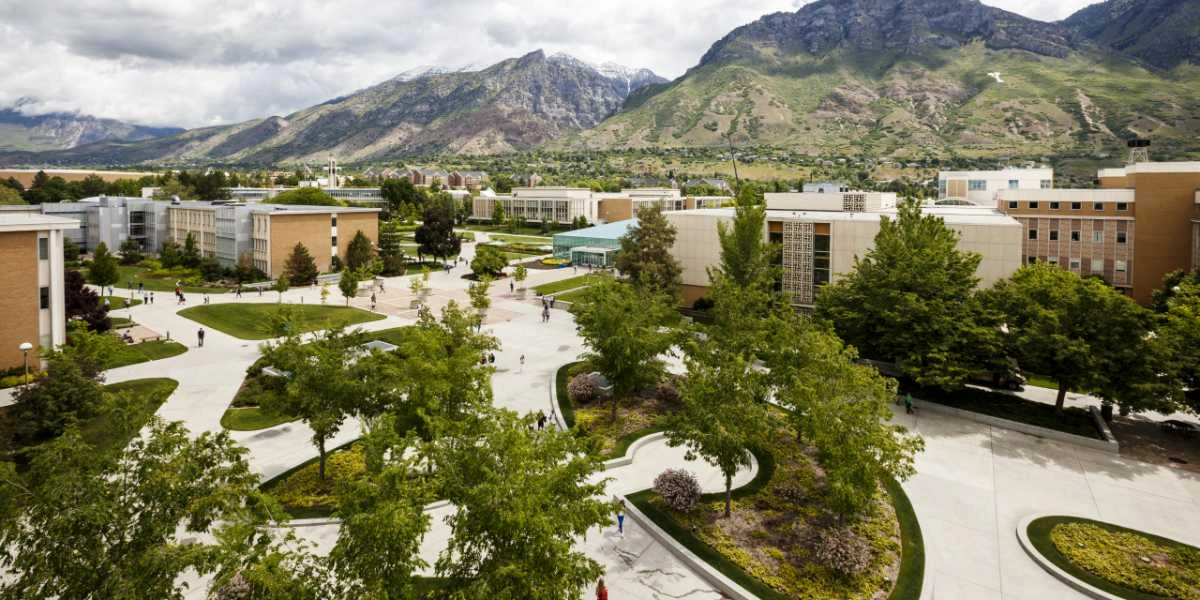
Brigham Young University currently has 15 colleges and schools. The university emphasizes the full development of spirit, intellect, and character, cultivating a commitment to lifelong learning and service. As disciples of Jesus Christ, Brigham Young University graduates are driven by love for God and for others, follow the teachings of the prophets, and are prepared to serve, lift, and lead in society. Many graduates continue their education at top graduate schools in a wide range of fields, carrying forward the mission of learning and service. The university's distinctive educational model integrates faith and scholarship, with revelation and learning reinforcing each other to help students realize their divine potential.
About the university
School data is compiled from public sources and may change. Confirm current tuition, deadlines and requirements with the university before applying.
At a glance
Alumni starting salaries
Student body
Most popular majors
Campus life
Transportation
Nearby Airports
Provo Airport
Distance from campus: 5.9 miles
Campus to airport:
By car/rideshare:
Typically about 38 minutes. Allow more time during heavy traffic.
Public transit:
Take bus route 834 to the airport.
Salt Lake City International Airport
Distance from campus: 49.5 miles
Campus to airport:
By car/rideshare:
Typically about 50 minutes. Allow more time during heavy traffic.
Public transit:
Take the UVX bus to Provo Central Station, transfer to the FrontRunner train line to North Temple Station, walk to the North Temple Bridge/Guadalupe station, and transfer to the Green Line light rail to the airport.
Nearby Train Stations
Provo Station
Campus to train station:
By car/rideshare:
Typically 7 minutes. Allow more time during heavy traffic.
Public transit:
Take the UVX bus.
Salt Lake Central Station
Campus to train station:
By car/rideshare:
Typically 50 minutes. Allow more time during heavy traffic.
Public transit:
Take the UVX bus to Provo Central Station (Bay H) and transfer to the FrontRunner train.
City Public Transit
BYU offers students a range of convenient transportation options. The main public transit systems in the area are provided by the Utah Transit Authority (UTA). The available public transit services include:
RYDE Shuttle Service
RYDE is a free shuttle service that helps thousands of students living off campus get to and from BYU campus. It has eight routes, with frequent service; on some routes a shuttle arrives every 15 to 20 minutes.
Utah Transit Authority (UTA)
Students, employees, and their spouses and dependents can use the Utah Transit Authority (UTA) system free of charge, including Utah Valley Express buses, other local and express buses, and the rail network including FrontRunner, TRAX and the S-Line.
Source: BYU Transportation
Housing
BYU has five housing communities. Campus housing offers a convenient location and a supportive environment that helps students meet their academic and social needs. Undergraduate and transfer students must live in on-campus housing, BYU off-campus contracted housing, or with eligible family members during their first two semesters at BYU.
Housing Communities
The housing communities include: Helaman Halls, Heritage Halls, Language Immersion Student Residence, Riviera, and Wyview Park.
On-Campus Housing Application Steps
Current and prospective students seeking housing must complete a housing application and answer questions about housing preferences and other related matters. Preferred roommate requests must be submitted through "Step 5: Preferred Roommates" in the on-campus housing application; preferred roommate requests are not guaranteed to be met. Newly admitted students will receive a message on the message board under the "Account" tab stating the contract signing dates and times for spring, summer, and fall/winter. The contract signing date and time do not require a student to select an on-campus housing bed, nor do they guarantee that space will be available on a particular contract signing date. After completing the agreement, a $100 deposit and a $50 processing fee are required.
Source: BYU Newly Admitted Students Housing Checklist
Safety
The BYU Emergency Management department coordinates university-wide preparedness, mitigation, response and recovery efforts to strengthen the campus's ability to respond to crises. It focuses on protecting lives, reducing risk and safeguarding property, while providing safety education and training to the campus community to help address a range of potential threats.
AED Information
Multiple AEDs are located across campus. Each AED is inspected regularly to ensure it is ready for use in an emergency.
Emergency Notification System Y-Alerts!
Immediately notifies the BYU community of emergencies or serious threats, such as an active shooter. Notifications are sent by text message, voice call and/or email.
Weather Information Perry Weather
Perry Weather is a tool used to provide real-time weather information to members of the BYU community. While monitoring weather conditions, the university follows national safety standards and university policy in making decisions that keep students and employees safe.
Emergency Operations Plan
BYU is committed to the welfare of students, faculty, staff and visitors. The university has established an Emergency Operations Plan designed to help university employees respond appropriately in an emergency.
Sources:
BYU Emergency Management
BYU WHAT WE DO
Dining
BYU offers convenient dining services, with meal plans covering the entire campus, including vending machines, so students can grab food at any time. Students do not need to spend time going home to eat and can enjoy food on campus whenever they like. In addition, meal plans help students buy food at better prices and save money.
On-Campus Restaurants
Blue Line Deli
Blue Line Deli offers a wide range of food, including sandwiches with ham, turkey and bacon, as well as Mexican-inspired dishes such as tacos and burritos.
Jamba
The restaurant offers smoothies, energy bowls, fresh juices and healthy drinks.
CANNON COMMONS
An all-you-can-eat buffet experience for breakfast, lunch and dinner. Six different stations at BYU serve fresh food every day so you get the nutrition and energy you need.
BYU Food To-Go
Serves the campus as well as communities, families, businesses and religious events around the Wasatch Front. Here you will find favorite traditional foods such as the famous mint brownie, BBQ pulled pork and BYU Creamery ice cream.
Meal Plan
Meal Plan requirements:
Students in Helaman Halls must choose a Helaman-approved Meal Plan (Dining Plus, Open Door or 19+).
Meal Plan prices:
Price highlights: EZ Dining plan $100, $150 or $200/month. Students choose to receive 100-200 dining dollars each month in debit-card form, and unused dining dollars roll over to the next month;
20% discount at Cannon Commons, and a 5% discount at Cougareat after 2 p.m. on weekdays and all day Saturday;
tax-free purchases at all dining services locations;
cancel at any time.
Open Door plan $2,645/semester. Unlimited entry to Cannon Commons during operating hours;
includes 200 dining vouchers, usable tax-free at any BYU dining services location;
discounted pricing when paying for guests at Cannon Commons.
Dining Plus plan $2,645/semester. Receive 15 dining dollars each day, and unused funds roll over to the next day;
maximum discount at Cannon Commons;
tax-free purchases at all dining services locations.
19+ plan $1,630/semester. Huge discount at Cannon Commons;
receive 1,630 dining vouchers at the start of the semester;
dining vouchers can be used tax-free at all BYU dining services locations.
True Blue Dining plan
$500 or $800/semester. Students receive 500 or 800 dining dollars each semester;
5% discount on Creamery groceries, a 5% discount at Cougareat after 2 p.m. on weekdays and all day Saturday, and a 20-25% discount at Cannon Commons;
all purchases tax-free.
Sources:
BYU Meal Plan
BYU Blue Line Deli
BYU cannon-commons
BYU Food To-Go
BYU Jamba
Admissions
Admissions data
Application requirements

Application checklist
Application deadlines
Transfer requirements
Transfer checklist
Transfer deadlines
Similar universities
Admissions FAQ
What is the acceptance rate at Brigham Young University?
The reported acceptance rate is 69%. Acceptance rates vary by applicant pool and application cycle; confirm the current figure with Brigham Young University.
What SAT scores does Brigham Young University expect?
The reported SAT range is 1290-1450. Test-optional and score-reporting policies can change by application cycle; check the university's official admissions page before applying.
When is the application deadline at Brigham Young University?
The listed Regular Decision deadline is Dec. 15. Deadlines can vary by program and application cycle; confirm the exact date with the university.
How much does Brigham Young University cost?
The listed tuition and fee figure is $10,396. Costs vary by residency, programme and academic year; confirm current costs with the university.
Where is Brigham Young University located?
Brigham Young University is located at Provo, UT 84602, United States.
Planning your application?
Build a school list around your profile.
Ivy Elite advisors help students compare programs, plan coursework and prepare applications for U.S. universities.