
Clark University offers undergraduate majors in biochemistry and molecular biology, bioinformatics, biology, chemistry, communication and culture, computer science, economics, education, engineering, English, environmental science, and more. Graduate programs include biology, finance, accounting, business administration, public administration, chemistry, social development and planning, economics, environmental science and policy, geoinformatics, geography, and more. Two disciplines at Clark University are nationally renowned: psychology and geography. The Frances L. Hiatt School of Psychology is one of the top psychology schools in the country, and the university awards more geography doctorates than any other university in the United States. Clark University is a relatively small institution; as one of the first graduate schools in the United States, it did not establish undergraduate programs until 1902 and offers roughly 30 undergraduate degrees.


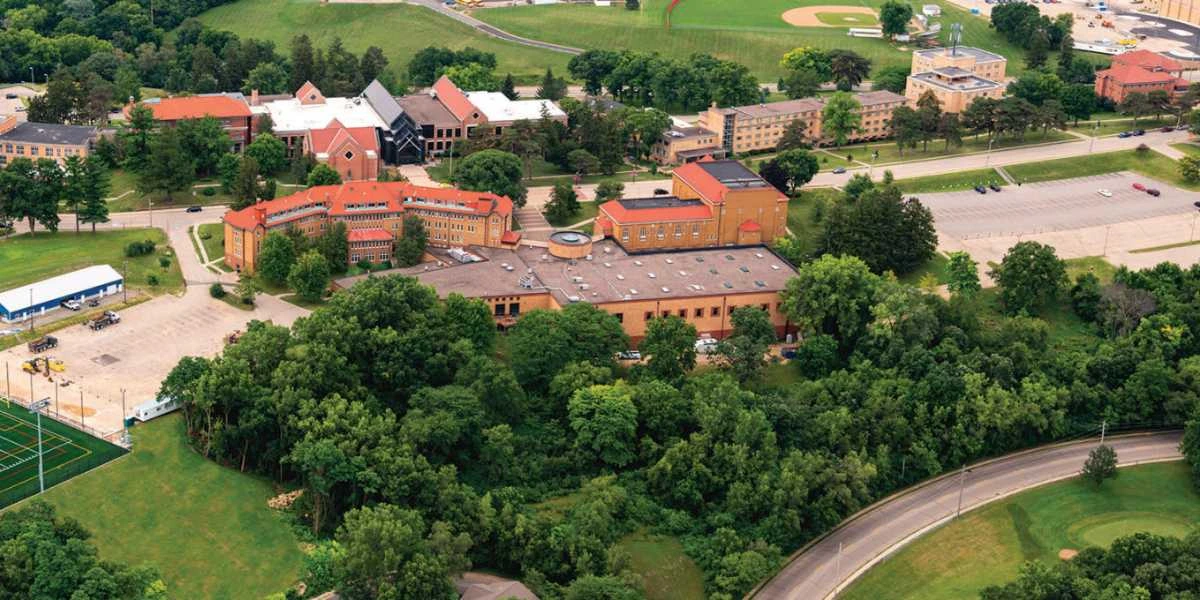
Clark University currently comprises 1 graduate school and 1 undergraduate college, offering a diverse range of undergraduate and graduate degree programs. The university is known for its courses and research in fields such as psychology, environmental science, and international development. Clark University's psychology program enjoys a strong reputation across the United States, particularly in the areas of developmental psychology and clinical psychology; its environmental science curriculum emphasizes research and hands-on work on global climate change and sustainable development; and its international development program focuses on social justice and global affairs. As a small research university, Clark University attracts scholars and students from around the world through a teaching model built on close faculty-student interaction.
About the university
School data is compiled from public sources and may change. Confirm current tuition, deadlines and requirements with the university before applying.
At a glance
Alumni starting salaries
Student body
Most popular majors
Campus life
Transportation
Nearby Airports
Worcester Regional Airport (ORH)
Distance from campus: 4 miles
Getting from campus to the airport:
By car or rideshare:
Typically about 8 minutes. Allow more time during heavy traffic.
Public transportation:
Take Bus 19 to the airport.
Boston Logan International Airport (BOS)
Distance from campus: 48.1 miles
Getting from campus to the airport:
By car or rideshare:
Typically about 50–60 minutes. Allow more time during heavy traffic.
Public transportation:
Take Bus 19, transfer to the Framingham/Worcester Line (Purple Line), then transfer to the SL1 bus.
Nearby Train Stations
Worcester Union Station
Getting from campus to the station:
By car or rideshare:
Typically 5 minutes. Allow more time during heavy traffic.
Public transportation:
Take Bus 19.
Boston South Station
Getting from campus to the station:
By car or rideshare:
Typically 45–60 minutes. Allow more time during heavy traffic.
Public transportation:
Take Bus 19 and transfer to the Framingham/Worcester Line (Purple Line).
City Public Transportation
The public transportation system around Clark University offers a range of options, provided mainly by the Massachusetts Bay Transportation Authority (MBTA) and the Worcester Regional Transit Authority (WRTA):
WRTA buses:
The Worcester Regional Transit Authority (WRTA) operates multiple bus routes covering the city of Worcester and surrounding areas. Students can take WRTA buses to downtown, shopping centers, Worcester Union Station and other major destinations. Several bus routes run near Clark University, making getting around very convenient.
MBTA commuter rail:
From Worcester Union Station, students can take the MBTA commuter rail to downtown Boston and nearby cities, which is well suited to longer commutes or travel.
These transportation options make it easy for students, faculty and staff to get around campus and to travel to Boston and other destinations.
Safety
The goal of the Clark University Police Department is to help create an exceptionally safe campus where students, faculty and staff can focus on excellent academics, research and public service. The university promotes an inclusive, respectful environment across its global campus and protects the free and civil exchange of ideas. CUPD operates 24 hours a day, 365 days a year. Officers are certified as Massachusetts special police officers and trained at a police academy, and they are armed and authorized to make arrests; within the jurisdiction permitted by law, they enforce all federal, state and local laws, ordinances and university policies.
Fingerprinting
You can schedule fingerprinting by calling the Clark University Police Department at 1-508-793-7575.
First Week Orientation
Officers meet with all new students to present campus safety information and crime prevention tips and to discuss the services offered by the Clark University Police Department. All new students are required to attend this session.
Safety Patrol
University police patrol the campus and surrounding areas 24 hours a day, 7 days a week, 365 days a year, on foot, in patrol cars or by bicycle.
Vehicle and Room Lockouts
If you are locked out of your room and cannot reach your roommate or suitemate, call Residential Life and Housing (RLH) at 508-793-7453. If no resident advisor (RA) is available, call the campus ambassadors at 508-450-5584. If these options do not resolve the situation, university police can perform a room lockout; however, emergency calls take priority, which may result in a wait. If you are locked out of your car, you can also contact university police; the dispatcher can contact AAA or a local towing company to assist you. Please also note that officers are not trained or certified in vehicle lockouts, so if you ask an officer to open your vehicle, they are not responsible for any damage that may occur.
Source: Clark University Campus Safety
Housing
About 1,700 graduate and undergraduate students live in the university's eight traditional residence halls, ten houses and two graduate residence halls. The Office of Residential Life and Housing works with Clarkies and campus partners to create a student-centered, inclusive, equitable and safe residential community.
Residential Colleges
First-year students: Bullock Hall, Dana Hall, Wright Hall
Sophomores: Dodd Hall, Hughes Hall, Johnson Sanford Center, Maywood Hall
Upperclass students: Blackstone Hall, Main Street Houses
On-Campus Housing Application Steps
New and Transfer Students
You must have a Clark account to apply. After you set up your Clark email address, you can log in to the Housing and Dining portal to access and complete your housing application. Another way to reach the form (also using your Clark credentials) is by logging in through the ClarkYOU portal. Once logged in: click the menu item "Housing and Dining Self-Service." Click the "Applications, Forms and Requests" tab. Complete the undergraduate housing application form for the semester.
Housing assignments and corresponding roommate information can be viewed on the Housing and Dining Self-Service portal. After you log in, the information will appear on the main screen.
Upperclass Students
Undergraduate housing application opens
Priority housing deadline for Student Accessibility Services. Students who are already housed or continuing their housing must confirm their housing with SAS by this date
Housing lottery numbers and lottery times announced
Special housing information session held on the designated date in the Grace Conference Room to explain how to select housing on the Self-Service portal
Housing selection through the Self-Service portal during the designated dates
Sources:
Clark University Housing
Clark University First-Year Application
Clark University Upperclass Application
Dining
Clark Dining Services is committed to providing student-centered dining options that promote a healthy lifestyle. The university offers fresh ingredients, a variety of cuisines, flexible hours and many locations. You can always find a satisfying meal or a nutritious snack to keep you sharp during late-night study sessions.
Dining Locations
The Table at Higgins
Clark's flagship all-you-care-to-eat dining hall, featuring a deli, salad bar, kosher kitchen, brick-oven pizza and more.
Cougar Cafe
Fair trade tea, refreshing coffee or a muffin to go, located in the academic commons area of Goddard Library.
For more information, see the list of dining locations.
Meal Plans
Meal Plan | Meals | Dining Dollars per Semester | Guest Meals | Cost | All Access | Unlimited | 50 | 5 per year | 2,525 | Weekly 15 | 15 per week | 160 | 5 per year | 2,525 | Weekly 12 | 12 per week | 210 | 5 per year | 2,525 | Weekly 10 | 10 per week | 400 | 5 per year | 2,525 | Weekly 5 | 5 per week | 250 | 0 | 1,290 | Block 100 | 100 per semester | 675 | 0 | 1,975 | 10 Block Faculty/Staff/Grad Students | 9 per semester | 0 | 1 per year | 77 | Source: Clark University Meal Plan
Admissions
Admissions data
Application requirements

Application checklist
Application deadlines
Transfer requirements
Transfer checklist
Transfer deadlines
Similar universities
Admissions FAQ
What is the acceptance rate at Clark University?
The reported acceptance rate is 42%. Acceptance rates vary by applicant pool and application cycle; confirm the current figure with Clark University.
What SAT scores does Clark University expect?
The reported SAT range is 1240-1400. Test-optional and score-reporting policies can change by application cycle; check the university's official admissions page before applying.
When is the application deadline at Clark University?
The listed Regular Decision deadline is Jan. 15. Deadlines can vary by program and application cycle; confirm the exact date with the university.
How much does Clark University cost?
The listed tuition and fee figure is $12,500. Costs vary by residency, programme and academic year; confirm current costs with the university.
Where is Clark University located?
Clark University is located at 950 Main St, Worcester, MA, 001610-1477.
Planning your application?
Build a school list around your profile.
Ivy Elite advisors help students compare programs, plan coursework and prepare applications for U.S. universities.