
Yeshiva University's undergraduate education is divided into three colleges: Yeshiva College, Stern College for Women, and the Sy Syms School of Business. The university also has a campus in Israel, and each year more than 600 students go to Israel to study in the S. Daniel Abraham Israel Program. Yeshiva University's Albert Einstein College of Medicine is highly regarded. Through the Azrieli Graduate School of Jewish Education and Administration and the Bernard Revel Graduate School, the university offers a large number of graduate programs for those of the Jewish faith.


School type: Private nonprofit (4-year)
Founded: 1886
Religious affiliation: Nonsectarian
Academic calendar: Semester
President / Chancellor: Ari Berman (President)
Website:
https://www.yu.edu/
Phone: 2129605400
Location: 500 W 185th St, New York, NY, 10033-3299
U.S. News 2027
90
QS
413
Undergraduate
View
Graduate
View
Apply now
Get the admissions guide
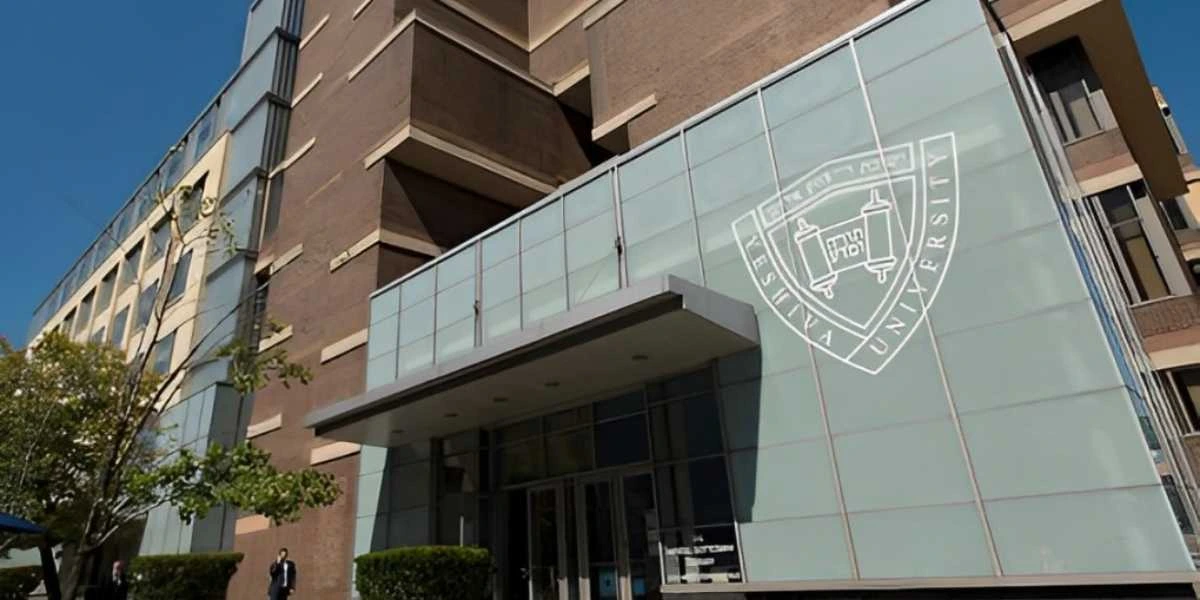
Yeshiva University currently comprises 8 schools in total, including 4 graduate schools and 4 undergraduate schools. Founded in 1886 and located in New York City, it is a private research university. The university is known for programs such as psychology, law, business, and biological sciences. Its psychology school enjoys a strong reputation in clinical psychology and school psychology, its law school stands out in intellectual property and public interest law, and its business school is known for its accounting and finance curricula. Its campus setting is attractive, with a long history and rich cultural heritage.
About the university
School data is compiled from public sources and may change. Confirm current tuition, deadlines and requirements with the university before applying.
At a glance
Acceptance rate 64%
Tuition and fees $15,750
SAT range 1320-1500
Application deadline Feb. 1
Undergraduate enrollment 2,045
Student-faculty ratio 7:1
Location 500 W 185th St, New York, NY, 10033-3299
School type Private nonprofit (4-year)
In-state tuition
$51,800
Out-of-state tuition
$15,750
Room and board
$15,750
Graduation rate
79%
Student-faculty ratio
7:1
Gender ratio
56
Alumni starting salaries
Business, Management, Marketing, and Related Fields
+
Psychology
+
Student body
First-year diversity
White
53%
Hispanic
8%
Asian
37%
Black
0%
Most popular majors
Business Administration and Management
28%
Biology/Biological Sciences
15%
Psychology
10%
Accounting
9%
Multi/Interdisciplinary Studies
6%
Computer and Information Sciences
4%
Political Science and Government
4%
English Language and Literature
4%
Jewish/Judaic Studies
4%
Economics
3%
Campus life
Housing
The Wilf Campus has three residence halls: Morgenstern Hall, Muss Hall and Rubin Hall. Each residence hall has its own distinct atmosphere and amenities.
Residence halls
Morgenstern Hall
Muss Hall
Rubin Hall
Steps to apply for on-campus housing
The academic-year housing application and roommate group open
Room and roommate assignments
You will receive your room number when you check in on your move-in day.
Source: Yeshiva University Housing
Dining
The Department of Dining Services is part of the Yeshiva University Office of Operations. The university serves daily meals at its four undergraduate and graduate campuses in New York City. It also operates several convenience stores and vending machines. The university also handles departmental catering. Menus offer a variety of food choices.
Campus dining locations:
Le Bistro Cafe
Le Bistro Cafe is located in the basement of 215 Lexington Avenue. The cafe serves breakfast, lunch and dinner, offering a light, healthy dairy and Chinese dim sum menu that includes pasta and fish entrees, wraps, pizza, salads and sushi. All food is pre-packaged for easy takeout. A variety of pre-packaged items such as cookies, biscuits, cereal and beverages is also available.
Milner's Mart
Milner's Mart convenience store is located in the Brookdale residence hall and offers a variety of packaged and frozen foods. It stays open late, giving students a convenient place to shop.
For more information, please read the dining location list.
Meal Plan:
The Yeshiva University undergraduate Dining Club Card is designed to provide greater convenience, accessibility and money management at dining locations, facilities and convenience stores on the Wilf and Beren campuses. Here is how it works:
Become a member
The Dining Club Card is mandatory for undergraduates. The current per-semester fee is charged in advance according to the Student Finance Office fee schedule, where the details of the mandatory plan can also be viewed.
Undergraduate voluntary funds can be added and used on campus and at participating local vendors to supplement your meal plan options. These funds are tax-free and expire at the end of the spring semester.
High school voluntary funds can be added and used on campus and at participating local vendors. These funds are fully taxable.
Graduate voluntary funds can be added and used on campus and at participating local vendors. These funds are tax-free and expire at the end of the spring semester.
Employee voluntary funds can be added and used on campus and at participating local vendors. These funds are fully taxable.
The Dining Club Card is non-transferable and may be used only for purchases by the person whose name is on the card.
Declining balance plan: The Dining Club is a declining balance plan that works similarly to a bank debit card. Each time a purchase is made with the Dining Club Card, the purchase amount is automatically deducted from the account balance. Any balance remaining in the account at the end of the first semester automatically carries over to the second semester. Any balance must be used before the end of the second semester, as no refunds are given.
Source: Yeshiva University Dining
Safety
Ensuring the safety of students, faculty, staff and visitors is one of Yeshiva University's top priorities. As part of the Yeshiva University Office of Operations, the Department of Safety is committed to providing and maintaining the highest quality public safety services at the University's Manhattan campuses: the Wilf Campus in Washington Heights, the Beren Campus in Midtown Manhattan, the Cardozo School of Law at the Brookdale Center in Greenwich Village, the Ferkauf/Katz Campus in the Bronx and the Samuel H. Wang Yeshiva University High School for Girls in Queens.
Annual Security Reports
The goal of the Yeshiva University Department of Safety is to foster an atmosphere in which students, faculty, staff and visitors can feel at ease. The Annual Security Report is published by October 1 each year. This report is prepared in accordance with the Jeanne Clery Disclosure of Campus Security Policy and Campus Crime Statistics Act (20 USC 1092 (f)) and the Campus Sexual Assault Prevention Act (Public Law 106-386, Section 1601).
Shuttles and NYC Transit:
The university offers a variety of shuttles.
Parking
Yeshiva University offers paid parking for employees, visitors and events on the Wilf Campus. Student and alumni parking is available only at night and on the Sabbath.
Visitors
To enter University facilities, all visitors (that is, anyone who is not a currently enrolled student or a faculty or staff member holding a valid Yeshiva University ID) must be pre-approved and registered in the YU Visitor Management System. Only visitors with a legitimate purpose for visiting the University are permitted to enter University buildings, and in general visitors must be hosted by a faculty or staff member. In some cases, students may also host visitors. Please see the visitor policy guidelines on the Yeshiva University website for more information.
YU Alert
In the event of an emergency, the University wants to notify you quickly. Although alerts are sent automatically to all email addresses ending in "yu.edu" or "einstein.yu.edu", be sure to register your phone, personal email address and/or text device so that Yeshiva University can reach you when you are away from your computer.
Emergency Procedures
These emergency procedures were developed by the Yeshiva University Department of Safety and Security to help members of the campus community report and appropriately handle emergencies on and off campus. They combine Yeshiva University's current policies and procedures with recommended guidelines from government agencies, including the Federal Bureau of Investigation, the U.S. Department of Homeland Security, the U.S. Federal Emergency Management Agency, the New York City Office of Emergency Management, the New York City Fire Department, the Bureau of Alcohol, Tobacco, Firearms and Explosives, the U.S. Postal Service and the Centers for Disease Control. Although it is impossible to produce an all-encompassing document, this publication addresses the most common emergencies that have occurred in the past as well as emergencies that may occur in the future.
Source: Yeshiva University Campus Safety
Transportation
Nearby airports
John F. Kennedy International Airport (JFK)
Distance from campus: 18.3 miles
Getting from campus to the airport:
By car/taxi:
Typically about 25-35 minutes. It may take longer during heavy traffic.
Public transportation:
Take the 1 train, transfer to the LIRR, and finally transfer to AirTrain to arrive.
LaGuardia Airport (LGA)
Distance from campus: 8.1 miles
Getting from campus to the airport:
By car/taxi:
Typically about 10-15 minutes. It may take longer during heavy traffic.
Public transportation:
Take the M101 bus and transfer to the M60-SBS to arrive.
Newark Liberty International Airport (EWR)
Distance from campus: 22.1 miles
Getting from campus to the airport:
By car/taxi:
Typically about 24-35 minutes. It may take longer during heavy traffic.
Public transportation:
Take the 1 bus, transfer to PATH, then transfer to the go28 bus to arrive.
Nearby train stations
Penn Station (NYP)
Getting from campus to the train station:
By car/taxi:
Typically 15-25 minutes. It may take longer during heavy traffic.
Public transportation:
Take the 1 bus to arrive.
Grand Central Terminal (GCT)
Getting from campus to the train station:
By car/taxi:
Typically 10-25 minutes. It may take longer during heavy traffic.
Public transportation:
Take the M101 bus to arrive.
City public transportation
The main public transportation systems around Yeshiva University include New York City subway and bus service, offering convenient ways to get around:
Subway:
1 train (red line): The 191st Street and 181st Street stations are close to Yeshiva University; this is one of the most convenient subway lines, connecting upper and lower Manhattan and passing many popular locations, including Columbus Circle and Times Square.
A train (blue line): The 181st Street station is close to Yeshiva University; it is an express train connecting Manhattan, Brooklyn and Queens, making longer commutes easier.
Bus:
M3 bus route: Runs along St. Nicholas Avenue, connecting Harlem and other parts of Manhattan and passing near Yeshiva University.
Bx7 and Bx3 bus routes: These are crosstown routes through the Bronx and upper Manhattan, offering students and faculty and staff cross-borough commuting options.
MTA buses and rail:
The Metropolitan Transportation Authority (MTA) provides bus and rail service covering the entire city, making it easy to commute between different boroughs of New York City and to neighboring states.
These public transportation routes make it easy for Yeshiva University students, faculty and staff to reach Manhattan and surrounding areas.
Admissions
Acceptance rate
64%
Average GPA
3.5
SAT range
1320-1500
ACT range
28-33
SAT / ACT
Admissions data
Yeshiva University is more selective, with an acceptance rate of 62%.
Half of the applicants admitted to Yeshiva University have an SAT score between 1200 and 1450 or an ACT score between 25 and 31.
One quarter of admitted applicants scored above these ranges, and one quarter scored below them.
The application deadline is February 1, and Yeshiva University's application fee is $65.
Yeshiva University admissions officials consider a student's GPA to be a very important academic factor.
An applicant's high school class rank is not considered, but letters of recommendation are important to Yeshiva University admissions officials.
Applicants
Admitted
Female applicants
Male applicants
Female admits
Male admits
Application requirements
01.
Students applying to Yeshiva University need a high school GPA of 85 or above, or a B or better
02.
SAT above 1180 or ACT above 24
03.
Specific requirements

https://www.yu.edu/admissions/apply/freshman-applicants
Application checklist
01.
Applicants to Yeshiva University must complete the online application through the Yeshiva University official website application system
02.
$65 application fee
03.
Personal statement
04.
SAT/ACT test scores
05.
Official high school transcripts
If a student's transcript is not in English, it must be translated by the WES translation service and sent directly to the Undergraduate Office
06.
Interview
Students must call the Undergraduate Admissions Office at 646-592-4440 to schedule an interview time
07.
English proficiency scores
Yeshiva University requires English proficiency scores from applicants who are citizens of non-English-speaking countries or whose native language is not English, or who have lived in the United States for no more than three years. The school requires a TOEFL score of at least 82; if a student demonstrates highly competitive scores in the submitted SAT/ACT results, the English proficiency requirement may be waived on a case-by-case basis
08.
2 letters of recommendation from U.S. colleges
09.
All application forms must be sent by the high school through the designated channel, and transcripts must accurately reflect the student's performance at the school. The school recommends that all materials be mailed eight weeks before the application deadline; other materials may be sent directly to Yeshiva University Undergraduate Admissions, 500 West 185th Street, Suite 101, New York, NY 10033, 646-592-4440.
Application deadlines
Deadline
Date
Early Decision I
Nov. 1
Regular Decision
Feb. 1
ED I notification
Dec. 15
RD notification
Feb. 15, Apr. 1
Transfer requirements
01.
Students with 29 or fewer postsecondary credits must submit a high school transcript, SAT/ACT scores, and college transcripts.
02.
Students with 30 or more postsecondary credits must submit college transcripts. The credits must be postsecondary credits earned at an accredited college or university.
03.
Transfer Requirements
https://www.yu.edu/admissions/apply/transfer
Transfer checklist
01.
Completed Application
Applicants should first create an account in our online application (link is external). This will give them access to their personal portal, where they will be able to submit their application. After the application is submitted, supplemental items will populate based on the applicant's admission type. Applicants will be prompted to upload an essay and a resume. Applicants will also be able to submit the names and contact information of recommenders, who will receive a link to upload their letters of recommendation directly to our system. The applicant's high school transcript must be sent directly from their high school administration to the Undergraduate Admissions Office. College transcripts must be sent directly from the college itself to the Undergraduate Admissions Office. Effective immediately, YU will no longer require standardized test scores for regular admission, but if an applicant submits official ACT/SAT score reports, they must be sent directly from the testing service to the Admissions Office. Finally, we require every applicant to complete an interview. Please contact yuadmit@yu.edu (link sends email) to schedule an interview. Applicants can always check the status of their application or program by logging into the portal.
02.
$65 Non-refundable Application Fee
Payment can be processed in the personal application portal.
03.
Essays
Please respond to the following prompts in 500-750 words: 2023 essay topics: Essay Option 1: Describe a time in your life when you decided to step out of your comfort zone. What was the outcome of your decision? Looking back on this experience, would you make the same decision, or would you make a different one? Essay Option 2: Highlight an example from your life in which you embodied compassion (Torat Chessed) and its impact on a personal level and/or on the community. Essay Option 3: How did COVID affect your self-image? What did you learn about yourself, your strengths, and the areas where you need resilience?
04.
Resume/Extracurricular Activity List
Please upload a resume or extracurricular activity list detailing your extracurricular involvement, internships, and work experience in school and in the community.
05.
Official SAT or ACT Scores - Scores Are Optional
Official scores must be sent directly from the testing service (i.e., College Board, ACT) to the Undergraduate Admissions Office. Yeshiva University does not require the writing section of the SAT or ACT. Yeshiva University's SAT school code is 2990. Yeshiva University's ACT school code is 2992.
06.
Official High School Transcript
The high school transcript must be sent directly from the high school administration (e.g., college guidance counselor, principal) to the Undergraduate Admissions Office.
07.
Official College Transcript
The college transcript must be sent directly from the institution itself to the Undergraduate Admissions Office.
08.
Letters of Recommendation
Please identify someone who can help the admissions committee better understand why you would be a great fit for Yeshiva University. Your personal application portal will allow you to send an email to the person you choose.
09.
Interview with a Yeshiva University admissions officer
Schedule an interview here. Yeshiva University takes a holistic approach when reviewing applicants' candidacy. Interviews allow admissions officers to meet every applicant and get to know them beyond the application.
Transfer deadlines
Deadline
Date
Spring application deadline
Nov. 15
Fall application deadline
Dec. 2, Feb. 3
Similar universities
Fordham University 441 E Fordham Rd, Bronx, NY, 10458Syracuse University 900 South Crouse Ave., Syracuse, NY, 13244Rochester University Wilson Blvd. - Wallis Hall, Rochester, NY, 14627-001New York University 70 Washington Sq South, New York, NY, 10012-1091Baylor University Waco, TX, 76798https://www.youtube.com/watch?v=4waPRn4meGwMarquette University 1250 W Wisconsin Avenue, Milwaukee, WI, 53233
Admissions FAQ
What is the acceptance rate at Yeshiva University?
The reported acceptance rate is 64%. Acceptance rates vary by applicant pool and application cycle; confirm the current figure with Yeshiva University.
What SAT scores does Yeshiva University expect?
The reported SAT range is 1320-1500. Test-optional and score-reporting policies can change by application cycle; check the university's official admissions page before applying.
When is the application deadline at Yeshiva University?
The listed Regular Decision deadline is Feb. 1. Deadlines can vary by program and application cycle; confirm the exact date with the university.
How much does Yeshiva University cost?
The listed tuition and fee figure is $15,750. Costs vary by residency, programme and academic year; confirm current costs with the university.
Where is Yeshiva University located?
Yeshiva University is located at 500 W 185th St, New York, NY, 10033-3299.
Planning your application?
Build a school list around your profile.
Ivy Elite advisors help students compare programs, plan coursework and prepare applications for U.S. universities.