


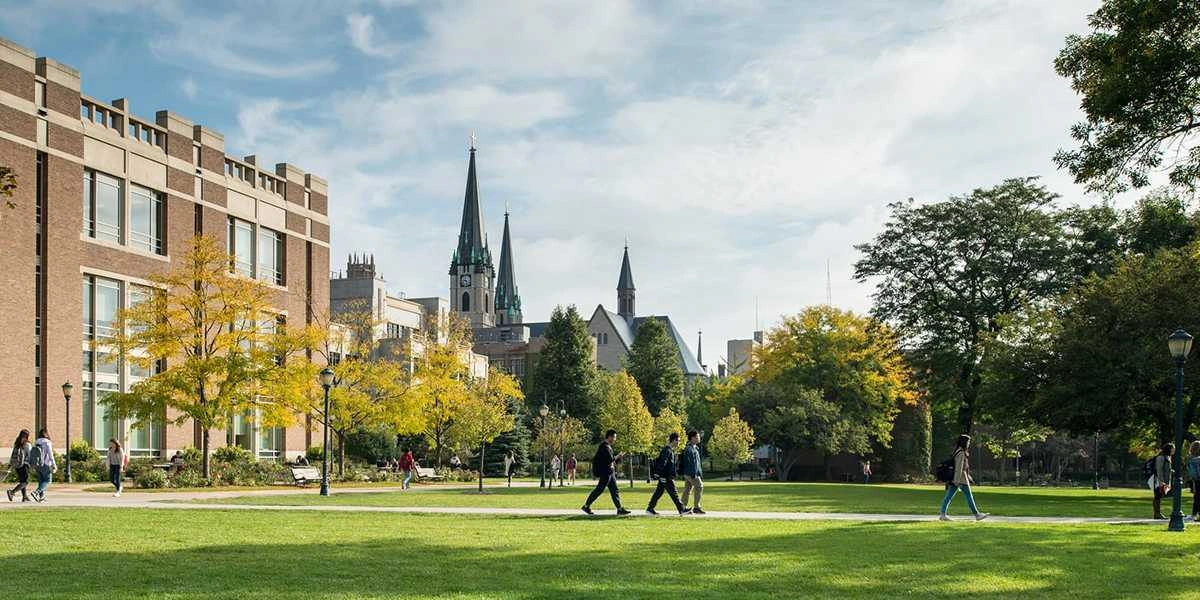
Founded in 1881 and located in Milwaukee, Wisconsin, Marquette University is a prominent private Catholic Jesuit university. The school has 11 undergraduate and graduate colleges and schools. The university is particularly strong in the field of law, especially in sports law and health law. At the same time, the Marquette University College of Business is known for its innovative business curriculum and strong corporate relationship network, performing especially well in accounting, finance, and marketing. The university's College of Engineering has strong research capabilities in fields such as electrical engineering, mechanical engineering, and biomedical engineering. With its comprehensive education and innovative research programs, Marquette University provides students with a high-quality environment for learning and growth and has cultivated numerous industry leaders and professionals.
About the university
School data is compiled from public sources and may change. Confirm current tuition, deadlines and requirements with the university before applying.
At a glance
Alumni starting salaries
Student body
Most popular majors
Graduate programs
Finance
Finance
Program Overview
Marquette University's Finance program is designed to provide students with the theoretical foundation, technical skills, and practical application needed to meet the demands of today's finance industry. Program highlights include quantitative courses and electives in high-growth areas. Through core courses such as Advanced Financial Management, Financial Econometrics, and Investments, as well as technical courses in R, Python, and SQL, students build the technical skills required in the finance field. Students may also choose to pursue deeper study in areas such as FinTech, sustainable finance, investment banking, behavioral finance, and real estate finance. These specialized courses are designed to prepare students for success in emerging fields, enabling them to stand out in the finance industry and respond to changing market demands.
Degree Type
MS in Finance
Program Length
1 year
Source: Marquette University About MS IN FINANCE
Application Requirements
Language Requirements
International students whose official language of instruction for their bachelor's degree (or master's degree) was not English must submit proof of English proficiency, typically evidenced by official TOEFL or IELTS scores. The Duolingo English Test cannot be used as proof of English proficiency.
TOEFL: minimum computer-based score of 213, or minimum internet-based score of 80 (at least 20 in each section). Institution code: 1448
IELTS: minimum score of 6.5
GRE/GMAT
Applicants with an overall grade point average (GPA) between 2.750 and 2.999 must submit GRE/GMAT scores. Students with a GPA above 3.0 may submit scores optionally. Regardless of undergraduate GPA, applicants may be required to take the GMAT/GRE if their educational background does not include at least one college-level introductory statistics course and one college-level calculus course, or if the grade in either course is below a B-.
GRE institution code: 1448
Academic Background
To prepare successfully for the program, knowledge equivalent to an undergraduate introductory finance course is required. Therefore:
Applicants who have completed at least a college-level introductory finance course are fully eligible to apply.
Applicants who have not completed a college-level introductory finance course may be considered for conditional admission. During the semester of conditional admission, students will complete MBA 6060 - Business Foundations Finance, which is offered online in the fall, spring, and summer terms. If students earn a B or better in MBA 6060, they will be admitted to the Master of Science in Finance program the following semester.
Interview
Applicants may be invited to an interview.
In addition to the program-specific application requirements above, complete application requirements can be found in the corresponding Application Requirements section of our website.
Sources:
Marquette University GMAT/GRE EXAM POLICY
Marquette University PROOF OF ENGLISH PROFICIENCY
Marquette MSF APPLICATION REQUIREMENTS
Graduation Requirements
Credit Requirements
Students must complete 30 credits.
Grade Requirements
Students must achieve an average grade of at least 3.00 across all graduate courses.
Sources:
Marquette University MS IN FINANCE CURRICULUM
Marquette University ACADEMIC REVIEW
Curriculum
The Master of Science in Finance (MSF) program requires 30 credits of graduate coursework. These include:
Core Courses (15 credits)
Course Course CodeAdvanced Financial ManagementMSF 6500InvestmentsMSF 6511Financial EconometricsMSF 6520Managerial Accounting for Decision MakingACCO 6200Macroeconomic Theory and ApplicationsMSF 6504Skills Courses (3 courses, 1-credit courses)
Python Programming
R Programming
SQL
Electives (9 credits): Students complete 9 credits of electives. Elective courses include:
Behavioral Finance
Bank Management
Financial Derivatives
FinTech Foundations and Applications
Fixed Income Securities
International Financial Management
Investment Banking
Real Estate Finance and Investments
Sustainable Finance
Applied Time-Series Econometrics and Forecasting*
Microeconomic Theory and Applications*
Monetary Theory and Policy*
Students may select one of these courses.
Professional Project Courses (3 credits)
MSF students complete their degree through a professional research project. Students work closely with a faculty mentor to apply the knowledge and technical skills learned in the program. The project is completed through two courses. In the first course, MSF 6998 (1 credit), students define their project focus and empirical model. In the second course, MSF 6998 (2 credits), students execute the model and present their research findings to a faculty panel.
Students may choose a unique research question for their project. In recent MSF projects, students have researched topics including stock market cointegration, bank financial performance, digital asset valuation centered on blockchain and artificial intelligence, international sustainable finance, and the influence of behavioral factors on stock market decision-making.
Source: Marquette University MS IN FINANCE CURRICULUM
Career Development
The Marquette network, Business Career Center resources, and the College of Business Administration's industry connections add tremendous value for students in the Graduate School of Management (GSM) programs.
Business Career Center Resources
Business Career Center resources support all business students and alumni. Business graduate students can attend recruiting events, use the Handshake career platform, and schedule individual career planning appointments. Annual recruiting events include a university-wide career fair as well as specialized events in finance, information systems, supply chain, analytics, human resources, marketing, accounting, and real estate.
Alumni Resources and Mentoring
In the Marquette alumni community, you can find mentors and friends. More than 20,000 business alumni and 100,000 Marquette alumni will provide you with extensive networking and career development opportunities. GSM students can also participate in mentoring programs, receiving support from alumni and/or giving back by supporting undergraduates.
Through the Marquette Career Network online platform, GSM students can:
Connect with alumni based on interests and career goals to advance networking, mentoring, and internship opportunities
Ask career-related questions through industry-specific discussion forums
Access a variety of online resources to help with career exploration
Access a job board featuring experienced professional positions
Marquette's mentoring program also offers students one-on-one opportunities with mentors located in about 25 U.S. states and Europe who share similar professional or career interests.
Industry Connections and Events
Since opening in January 2023, O'Brien Hall has supported the expansion of industry connections through a variety of learning, networking, and career-focused events. The events foster collaboration between Marquette business students and industry, helping ensure students' future career success at Marquette and beyond. The college's centers of excellence and programs bridge industry and academia through research, teaching, and experiential collaboration. Annual conferences and symposia in areas such as commercial banking, real estate, environmental, social and governance, and supply chain, as well as featured speakers at events such as economics, marketing, the Business Leaders Forum, and Women in Business, provide students with valuable learning and networking opportunities.
Source: Marquette University College of Business Administration CAREER & NETWORKING OPPORTUNITIES
Computer and Information Science
Computer and Information Science
Program Overview
Marquette University's Master of Science in Computer and Information Science is designed to meet the educational needs of professionals interested in entering the computing field or updating their skills. The program opens a broad range of employment areas, including but not limited to business and systems analysis, software engineering, project management, enterprise architecture, business process modeling and management, IT security, database design and management, network design and management, technology management, and service management. To better meet student needs, the program offers two specializations: Information Assurance and Cyber Defense and the Computing Opportunity for Students with a Minimal IT Computing Background (COSMIC). These specializations are designed to provide students with more specialized training so they can successfully find employment or advance their careers in a variety of fields.
Degree Type
M.S. in Computer and Information Science
Program Length
2 years
STEM Designation
Yes
Source: Marquette University M.S. in Computer and Information Science
Application Requirements
Language Requirements
International students whose official language of instruction for their bachelor's (or master's) degree was not English must submit proof of English proficiency, typically demonstrated by official TOEFL or IELTS scores. The Duolingo English Test cannot be used as proof of English proficiency.
TOEFL: minimum computer-based score of 213, or minimum internet-based score of 80 (with at least 20 in each section). Institution code: 1448
IELTS: minimum score of 6.5
GRE
The GRE is optional and is not an admission requirement for Computer and Information Science. However, if you apply for financial aid in the application, you must submit GRE scores.
Academic Background
A bachelor's degree from an accredited institution.
Two semesters of computer coursework, including programming and data structures, or equivalent experience
Students admitted to the program without the course prerequisites may need to take undergraduate courses or engage in self-study to acquire the necessary background skills. If the coursework does not appear on the applicant's transcript, other experience should be explained in the application.
In addition to the program-specific requirements above, full application requirements can be found in the Application Requirements section of our website.
Sources:
Marquette University PROOF OF ENGLISH PROFICIENCY
Marquette University M.S. in Computer and Information Science
Graduation Requirements
Credit Requirements
Students must complete 36 credits.
Grade Requirements
Students must maintain a minimum average grade of 3.00 across all graduate courses.
Internship Requirement
Not required, but since fall 2014 the Computer and Information Science master's degree program has offered a new comprehensive internship course pathway. Students can receive financial support in a part-time format. The course is open to all students, including international students holding F-1 visas. Through this part-time work, students can begin their careers while continuing to build their IT fundamentals and their knowledge of computer and information science. The university also introduces students to potential participating employers. By working with employers and academic advisors, students take academic courses related to the skills and knowledge required for their work assignments.
Sources:
Marquette University ACADEMIC REVIEW
Marquette University M.S. in Computer and Information Science Program Resource
Curriculum
The courses required to complete the Master of Science in Computer and Information Science are typically offered by the Department of Computer and Information Science, the College of Engineering, and the Graduate School of Management. The program's flexibility comes from the following:
As part of the total degree requirements, students may take six semesters of graduate coursework in any department at Marquette University.
The program director may approve other courses in any department based on individual needs.
Selected courses must meet the breadth, major, and minor requirements described in the Computer and Information Science program section of the Graduate Bulletin. Consult your advisor for course selection guidance.
Below is a list of approved courses by department. COSC 5931 and COSC 6931 are special-topics courses proposed by faculty for students. This allows the department to update courses quickly as technology changes. The topic list shown here represents topics the college offers regularly. Other courses may also be applied to a student's major with the instructor's consent.
Sample Courses Offered by the Department of Computer Science
Course | Course Code Teaching Computer Science | COSC 5110 Real-Time and Embedded Systems | COSC 5290 Network Design and Security | COSC 5300 Software and System Security | COSC 5360 Internet of Things (IoT) | COSC 5370 Compiler Construction | COSC 5400 Visual Analytics | COSC 5500
Sample Courses Offered by the College of Engineering
Course | Course Code Digital Signal Processing | EECE 5510 Object-Oriented Software Engineering | EECE 5610 Modern Programming Practices | EECE 5620 Software Testing | EECE 5630 Introduction to Algorithms | EECE 5650 Developments in Computer Software | EECE 5690 Computer Hardware | EECE 5710
Sample Courses Offered by the Graduate School of Management
Course | Course Code Information Systems Governance | INSY 5056 Information Systems Foundations | INSY 6000 Quantitative Analysis | MBA 6010 Business Analytics | MBA 6100 Information Technology Strategy | INSY 6150 Project Management | INSY 6153
For more courses, see: Course List
Career Development
The flexibility of the Computer and Information Science master's program lets you shape your study plan around your career interests and goals. You can choose courses from any graduate program on campus relevant to computer and information science and your career goals. This includes the Colleges of Arts and Sciences, Engineering, Management, and Health Sciences and Nursing.
Marquette University's Career Services Center hosts and participates in a variety of career fairs. The Marquette University Fall Career and Internship Fair, held every September, is the largest on-campus recruiting event of the year. The fair runs for two days and includes a non-technical day (business, communications, government, nonprofit, healthcare, social services, and graduate/service year) and a technical day (engineering, IT, and other technical fields). Details and registration information for each year are announced on Handshake. The Wisconsin Private College Career Consortium (WIPCCC) also holds an annual job fair (usually in February).
In addition, Marquette University offers guidance matched to current job roles.
Business Intelligence and Analytics
Database Analysis/Management/Architecture
Information Security
Mobile Computing
Systems/Enterprise Architecture
Software Development/Software Engineering
Healthcare Information Technology
Source: Marquette University CAREER FAIRS
Data Science
Data Science
Program Overview
Marquette University's Data Science program is designed to build students' ability to solve problems in today's increasingly data-driven world through a curriculum that combines theory and practice in data analysis. Its coursework covers data analysis, computing, and the relationship between them, helping students gain a deep understanding of complex datasets and learn to solve business decision problems. Students also learn to develop reproducible programs and exploratory and inferential methods to effectively represent, manipulate, analyze, and interpret large data, and to use relevant software packages and tools proficiently. The program offers three specializations—Big Data, Machine Learning, and Statistics and Modeling—to meet students' varied interests and needs.
Degree Type
M.S. in Data Science
Program Length
2 years
STEM Designation
Yes
Source: Marquette University M.S. in Data Science
Application Requirements
Language Requirements
International students whose official language of instruction for their bachelor's degree (or master's degree) is not English must submit proof of English proficiency, typically evidenced by official TOEFL or IELTS scores. The Duolingo English Test cannot be used as proof of English proficiency.
TOEFL: minimum computer-based score of 213, minimum internet-based score of 80 (at least 20 in each section). Institution code: 1448
IELTS: minimum score of 6.5
GRE
International students must submit GRE scores. Institution code: 1448
Academic Background
Applicants must demonstrate that they have completed an introductory course (such as COSC 1010 Introduction to Software Development or an equivalent course) or successfully completed an online introductory Python programming course recommended by the program director. Applicants must also complete a foundational statistics course, be familiar with programs such as R, MATLAB, SAS, and Stata, or successfully complete an online introductory foundational statistics course recommended by the program director.
In addition to the program-specific admission requirements above, full application requirements can be found in the Application Requirements section of our website.
Sources:
Marquette University PROOF OF ENGLISH PROFICIENCY
Marquette University M.S. in Data Science Application Details
Graduation Requirements
Credit Requirements
The M.S. in Data Science offers two specializations, Machine Learning and Big Data, and students may complete the degree under one of two plans.
Students choosing the thesis option must complete 30 credits
Students choosing the non-thesis option must complete 33 credits
Grade Requirements
Students must achieve an average grade of at least 3.00 across all graduate courses
Thesis Requirements
Students choosing the thesis option must complete a thesis
Sources:
Marquette University ACADEMIC REVIEW
Marquette University M.S. in Data Science
Course Information
Course Course Code Credits Teaching Computer Science
Teaching Computer Science COSC 5010 3 Real-Time and Embedded Systems
Real-Time and Embedded Systems COSC 5290 3 Network Design and Security
Network Design and Security COSC 5300 3-4 Software and System Security
Software and System Security COSC 5360 3 Internet of Things (IoT)
Internet of Things (IoT) COSC 5370 3 Compiler Construction
Compiler Construction COSC 5400 3 Visual Analytics Systems Visual Analytics COSC 5500 3 Social and Collaborative Computing
Social and Collaborative Computing COSC 5550 3 Fundamentals of Artificial Intelligence
Fundamentals of Artificial Intelligence COSC 5600 3 Data Mining Data Mining COSC 5610 3 For more courses, see Marquette University M.S. in Data Science Course
Career Development
The Career Services Center (CSC) helps undergraduates, graduate students, and alumni continually develop their career discernment, learn about campus partners and employers, and better achieve their life goals. To support this mission, the Career Services Center offers individual career counseling appointments, walk-in services, electronic services, and career events, presentations, and workshops.
Handshake is Marquette University's career management platform, where students and alumni can schedule career counseling appointments, view upcoming events, and search for jobs and internships from thousands of employers, ranging from nonprofit startups to Fortune 500 companies.
Source: Marquette University career service center
Communication
Program Overview
Marquette University's Communication program is designed for students who work in media and want a graduate degree, for students who wish to pursue teaching and plan to earn a doctorate, and for students who want to deepen their expertise. The curriculum is flexible, and students can choose between the Communication and Media Studies and Digital Communication Strategies specializations according to their own interests and goals. The program's course offerings are flexible, and students can choose between the Communication and Media Studies and Digital Communication Strategies specializations according to their own interests and goals.
In the Communication and Media Studies track, students focus on deeper analytical and research skills in communication, with an emphasis on the planning and use of communication technology. This track is designed to prepare students for senior roles in their careers or for doctoral study.
The Digital Communication Strategies track focuses on the foundations and practical training for organizations planning and executing effective digital communication strategies. Students learn how to plan effective strategies and create digital content while exploring how to measure the effectiveness of communication messages in advertising, public relations and journalism. They learn to plan effective strategies and create digital content, and explore how to measure the effectiveness of communication messages in advertising, public relations and journalism.
Degree Type
M.A. in Communication
Program Length
2 years
Sources:
Marquette University M.A. in Communication
Marquette University COMMUNICATION GRADUATE PROGRAMS
Application Requirements
Language Requirements
International students whose official language of instruction for their bachelor's degree (or master's degree) was not English must submit proof of English proficiency, usually evidenced by official TOEFL or IELTS scores.
TOEFL minimum scores: 600 on the paper-based test, 250 on the computer-based test, and 100 on the internet-based test
Institution code: 1448
GRE
International applicants may choose whether to submit GRE scores (General Test only), but GRE scores are strongly recommended.
Institution code: 1448
In addition to the program-specific application requirements above, full application requirements can be found in the Application Requirements section of our website
Sources: Marquette University COMMUNICATION GRADUATE PROGRAMS Application Details
Graduation Requirements
Credit Requirements
Students must complete 30 credits.
Grade Requirements
Students must maintain a graduate grade point average of at least 3.00 across all courses
Students must achieve a grade point average of at least 3.000, with no grade below C.
Thesis Requirement
Students must choose a specialization and may complete either a thesis course or a non-thesis course. All students may take the thesis course; students who choose this option must complete a thesis
Sources:
Marquette University ACADEMIC REVIEW
Marquette University M.A. in Communication
Course Information
Students must choose a specialization and complete 30 credits of coursework. Only 3 of the total credits may be at the 5000 level. With the approval of the department chair, students may take up to 6 credits of COMM 6995 Independent Study in Communication.
Required Courses
Course, Course Code, Credits: Communication Theory in Context, COMM 6001, 3; Communication Research in Action, COMM 6002, 3; Communication as Ethical Practice, COMM 6250, 3; O'Brien Fellowship Practicum, COMM 6964, 0; Professional Project in Communication, COMM 6998, 0
COMMUNICATION AND MEDIA STUDIES
This specialization provides students with the theoretical and methodological foundation needed for knowledge-leadership positions in the communication industry or for doctoral study. The seminar format encourages students to discover their own individual interests within a broad range of communication concepts, theories and research methods.
The seminars are organized around six important contemporary themes; specific content and titles vary by semester and instructor. Seminars may be repeated under different titles.
To complete the Communication and Society specialization coursework, students must choose 3 proseminars from the list below and additionally choose one 6000-level COMM course. Each course's topic varies and may be repeated once.
Course, Course Code, Credits: Proseminar in Health, Science and Environment, COMM 6953, 3; Proseminar in Media, COMM 6954, 3; Proseminar in Organizations, COMM 6955, 3; Proseminar in Public Life, COMM 6956, 3; Proseminar in Relationships, COMM 6957, 3; Proseminar in Technology, COMM 6958, 3
DIGITAL COMMUNICATION STRATEGIES
This specialization provides students with the conceptual foundation and practical training needed to help organizations plan and execute effective digital communication strategies. Courses help students identify and plan communication strategies, develop digital content, and measure the effectiveness of communication messages in various professional contexts such as advertising, public relations and journalism. Students can choose courses according to their professional needs and interests.
The Digital Communication Strategies specialization offers topic-based courses that use an applied approach to the strategic use of digital communication technologies. Specific titles vary by semester and instructor, and topic courses may be offered repeatedly under different titles.
To complete the Digital Communication Strategies specialization, students must choose 3 courses from the list below and additionally choose one 6000-level COMM course. Each course's topic varies and may be repeated once.
Course, Course Code, Credits: Digital Communication Strategies for Content, COMM 6810, 3; Digital Communication Strategies in Metrics, COMM 6815, 3; Digital Communication Strategies for Technologies, COMM 6820, 3; Digital Communication Strategies for Leadership, COMM 6825, 3
Sources: Marquette University MA in Communication Courses
Career Development
Marquette University offers a range of support to alumni and new graduates. The Los Angeles Alumni Mentor and Network Program's Marquette Entertainment and Communication Alumni (MECA) program provides networking and mentoring support for Marquette alumni working in the entertainment, communication and new media industries in Southern California. In addition to networking events, MECA has established a committee of senior alumni who volunteer as mentors for Marquette students who wish to achieve career goals in Los Angeles. Each mentor on the committee represents a specific field of work and provides resources to new graduates in the following ways:
Offering support, guidance and motivation when taking a big step in a new direction after graduation
Helping graduates identify career directions and how to overcome obstacles
Sharing professional connections and stories and building personal relationships with other MU alumni
Passing on knowledge gained at Marquette and sharing these experiences so that young professionals from Marquette University can better prepare for their careers
Serving as a link between Marquette University and the city of Los Angeles
Sources: Marquette University LOS ANGELES ALUMNI MENTOR AND NETWORK PROGRAM
Campus life
Transportation
Nearby Airport
General Mitchell International Airport, MKE
Distance from campus: 9.3 miles
Trip from campus to the airport:
By car/rideshare:
Typically takes about 12 minutes. It may take longer during heavy traffic.
Public transit:
Take Bus 80 directly to the airport, or take Bus 30 and transfer to the GRE bus.
Nearby Train Station
Milwaukee Intermodal Station
Trip from campus to the train station:
By car/rideshare:
Typically takes 4 minutes. It may take longer during heavy traffic.
Public transit:
Take Bus 12, the BLU bus, or Bus 30 directly to the train station.
City Public Transit
Milwaukee County Transit System (MCTS): MCTS operates multiple bus routes covering the entire city of Milwaukee and surrounding areas. Several bus stops are located near Marquette University, offering frequent service and convenient access to downtown, shopping centers, and other major destinations.
The Gold Line: This bus rapid transit line connects Marquette University with downtown Milwaukee and the lakefront, providing efficient transit service.
Streetcar service: The Hop is Milwaukee's modern streetcar system, covering downtown and surrounding areas. It connects Milwaukee Intermodal Station, major commercial districts, and attractions, offering students a convenient option for short trips.
Milwaukee Intermodal Station: Provides rail service to Chicago and other major cities, suitable for long-distance travel.
Safety
Marquette University continually addresses campus and community safety through new innovative programs, educational efforts, technological advances, and well-trained campus law enforcement personnel in the area.
MUPD SAFETY ALERTS
Timely and effective communication offers the best opportunity to safeguard the well-being of the campus community during a crisis. The Marquette University Police Department issues safety alerts to Marquette University students, faculty, and staff via text message and email in accordance with the Jeanne Clery Act. The Clery Act requires colleges and universities to report campus crime data, support victims of violence, and publicly outline the policies and procedures they have put in place to improve campus safety.
Blue Light Phones
There are more than 450 Blue Light phones on campus and in nearby neighborhoods. Blue Light phones are equipped with cameras that can record at any time. Simply picking up the phone immediately connects the caller with MUPD. The dispatcher will know the caller's location and immediately send assistance if needed.
EagleExpress
Marquette University offers free EagleExpress transportation service to help keep the campus community safe at night. In addition, the campus is located along major bus routes, making it easy for people to get to and from work, home, or events.
CheckMarq
Go to CheckMarq to register for the university emergency text message system. Go to "Personal Profile," select "Contact Information." Scroll to "Phone" and enter your mobile phone number.
EagleEye
Parents and guardians can sign up for safety alert text messages or download the EagleEye app to receive the same information via push notifications.
Housing
Marquette University's residence halls offer more than just food and shelter. Vibrant staff, specialized facilities, and tailored programs make each residence hall a unique, comfortable, and safe environment. The university's distinctive housing options are guaranteed to meet any special need.
Residence Halls
Abbottsford Hall
Carpenter Tower
Cobeen Hall
O'Donnell Hall
Mashuda Hall
McCabe Hall
Schroeder Hall
Straz Tower
The Commons
Dining
The university dining facilities offer a rich and varied selection of food, with 13 dining locations for students to choose from.
Dining Locations
The Grill at Marquette Place
Students can enjoy a variety of breakfast sandwiches, lunch, and dinner here, including some American favorites such as chicken fingers, cheeseburgers, or chicken sandwiches. If you are in a hurry, you can pick up a "grab-and-go" meal at the grill.
EINSTEIN BROS BAGELS
Offers a variety of bagels and sandwiches with different fillings, such as turkey sandwiches, egg and bacon sandwiches, and cheese sandwiches. You can also purchase a combo meal with an entrée and a drink.
Tory Hill Cafe
Offers a variety of sandwiches, including chicken, pork, ham, and egg sandwiches. Also offers various salads, wraps, and bowls. Starbucks coffee is also available.
Meal Plan
Meal Plan requirements:
Students living in residence halls must purchase a meal plan each semester and can use their meal plan at more than 15 locations on campus.
Meal Plan pricing:
Apartment and off-campus residents: The "Loyalty 50" plan is available to all students, faculty, and staff living off campus. The plan provides 50 meal swipes per semester and can be purchased up to twice per semester. This option can be a great complement to cooking in your apartment.
Residence hall students: The "Anytime Dining" plan is the default plan for all residence hall students, but it is also available to all students, faculty, and staff. The plan provides unlimited meal swipes per semester, a limited number of guest passes, and a limited number of dining coupons for use at various retail locations.
Admissions
Admissions data
Application requirements

Application checklist
Application deadlines
Transfer requirements
Transfer checklist
Transfer deadlines
Similar universities
Admissions FAQ
What is the acceptance rate at Marquette University ?
The reported acceptance rate is 87%. Acceptance rates vary by applicant pool and application cycle; confirm the current figure with Marquette University .
What SAT scores does Marquette University expect?
The reported SAT range is 1200-1370. Test-optional and score-reporting policies can change by application cycle; check the university's official admissions page before applying.
When is the application deadline at Marquette University ?
The listed Regular Decision deadline is Aug. 10. Deadlines can vary by program and application cycle; confirm the exact date with the university.
How much does Marquette University cost?
The listed tuition and fee figure is $16,490. Costs vary by residency, programme and academic year; confirm current costs with the university.
Where is Marquette University located?
Marquette University is located at 1250 W Wisconsin Avenue, Milwaukee, WI, 53233.
Planning your application?
Build a school list around your profile.
Ivy Elite advisors help students compare programs, plan coursework and prepare applications for U.S. universities.