
At the heart of New York University is academic excellence. It attracts the strongest students and faculty because it is a gathering place for intellect and innovation. NYU is a community defined by collaboration and an innovative spirit, with a high degree of globalization that offers students endless opportunities to learn. Home to 17 schools and colleges, NYU is distinguished by the humanities and arts, the social sciences, and business, and its programs in film, drama, and dance rank among the best in the United States. Its MBA program sits at the top of the rankings. Its outstanding location gives students opportunities to conduct research in partnership with companies; the Tandon School of Engineering's collaboration with RangeForce, for example, offers students broad learning opportunities and lets them take part in a range of team exercises. NYU is indeed a global center of knowledge devoted to excellence and pathbreaking innovation.


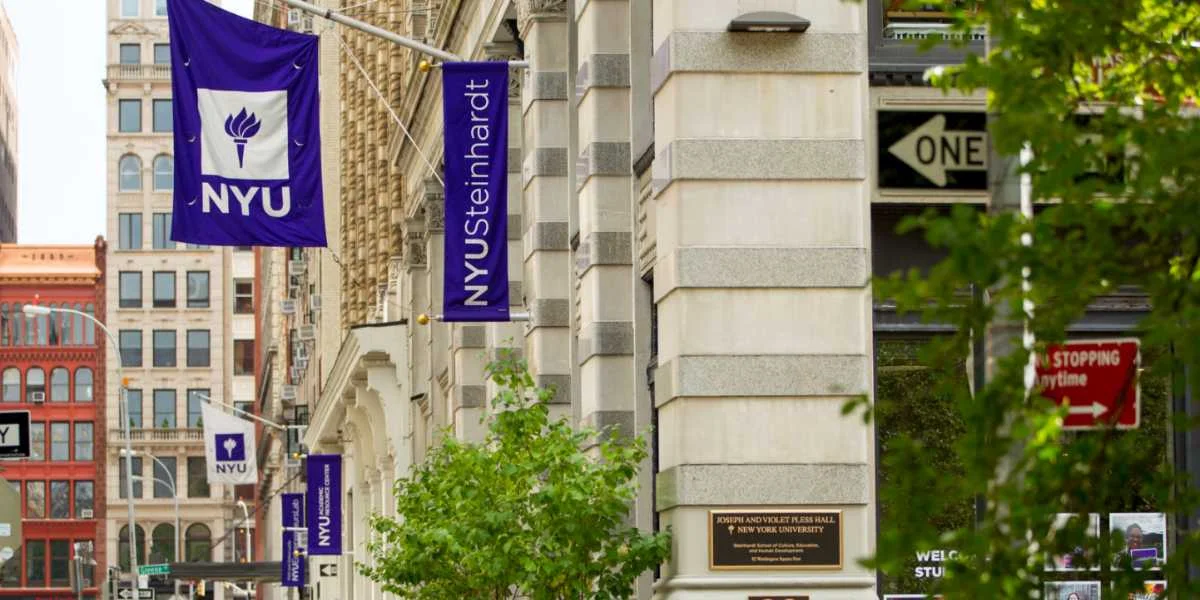
New York University (New York Univeristy) has been an innovator in higher education since its founding. One of the largest private universities in the United States, it is headquartered in New York City and also has campuses in Abu Dhabi and Shanghai. It currently comprises 17 schools and colleges and operates 12 study-away sites worldwide, making it a leader in global education. NYU draws on the character of the city and encourages the development of a global perspective. With $1 billion in annual research funding, it is one of the stronger research institutions. In addition to its New York City campus, NYU has degree-granting campuses in Abu Dhabi and Shanghai, offering students a broader academic and cultural experience. The university ranks among the top U.S. universities for the number of international students and students studying abroad, contributing actively to global academic exchange and collaboration.
About the university
School data is compiled from public sources and may change. Confirm current tuition, deadlines and requirements with the university before applying.
At a glance
Alumni starting salaries
Student body
Inside the school
New York University sits in the heart of New York City and is known for its global outlook, academic excellence, and limitless career opportunities. The campus is woven into the city, with Washington Square and the Brooklyn campus offering students a distinctive learning environment. The Stern School of Business is steps from Wall Street, the School of Medicine charges no tuition, and the Tandon School of Engineering focuses on technological innovation. A broad alumni network spans finance, entertainment, the arts, and other fields, and the employment rate is high. Resources such as Bobst Library, the residential college system, and museum passes enhance the learning experience. Campus traditions such as the Strawberry Festival add energy, and the color violet symbolizes a spirit of freedom, reflecting NYU's diversity and inclusiveness.
We will examine the distinctive appeal of New York University from several angles, highlighting the school's core features and its academic achievements and cultural character. Click the button below to view the full introduction to the school.
01. New York University's geographic advantages
02. New York University: employment upon graduation
03. Exclusive benefits for New York University students
04. New York University waives tuition for its medical school students
05. The business school next to Wall Street — the Stern School of Business
06. One of the largest private university libraries in the United States
07. Student Housing at New York University
08. A Vast Alumni Network
09. NYU Strawberry Festival
10. Violet Seen Throughout New York
Most popular majors
Graduate programs
Media, Culture, and Communication
Media, Culture, and Communication
Program Overview
The Master of Arts in Media, Culture, and Communication at New York University is designed to develop perceptive researchers who think critically and can form their own judgments from multiple perspectives on a constantly changing industry, technology, and culture. The curriculum centers on global media and culture, digital media and new technologies, media history and theory, visual culture, race and politics, and more. Students also work closely with the department's diverse and renowned media studies faculty.
Although the graduate curriculum leans toward theory, the program's course structure is highly flexible: students can take electives across the entire university according to their individual academic and career goals. These include Media Management at NYU's Stern School of Business, Media Law at the School of Law, Interactive Technology at the Tandon School of Engineering, and Media Ethnography in the Department of Anthropology, to name just a few of the many electives available.
The program also draws fully on New York's media and cultural advantages. MCC regularly hosts guest lectures and public events and serves as an intellectual hub for visiting scholars, artists, activists, and media experts.
Degree Type
Master of Arts in Media, Culture and Communication (MA in MCC)
Program Length
Two-year full-time program
STEM Designation
The MA in Media, Culture, and Communication at New York University is a STEM program, which means international students who, after completing the degree, work in the United States in a STEM-eligible role may apply to extend their current 12 months of Optional Practical Training (OPT, the practical training period available to F1 visa students after graduation) to 36 months.
Source: NYU Master of Arts Media, Culture, and Communication
Application Requirements
Language Scores
Applicants whose native language is not English must submit scores from one of the following English proficiency exams: TOEFL iBT (TOEFL Essentials is not accepted; TOEFL MyBest Score is accepted), IELTS, Duolingo English Test, or PTE Academic.
TOEFL minimum score: 100; school code 2556
IELTS minimum score: 7; select New York University Steinhardt Graduate Admissions when submitting scores
PTE minimum score: 68-70; select New York University Steinhardt Graduate Admissions when submitting scores
Duolingo minimum score: 130; select New York University Steinhardt Graduate Admissions when submitting scores
The English exam requirement may be waived in the following cases:
The official language of instruction for all courses at the four-year undergraduate institution was English;
The official language of instruction for all courses at the four-year graduate institution was English;
Across the undergraduate and graduate institutions, the official language of instruction for all courses over a cumulative four years was English
GRE/GMAT
The program does not require GRE scores. Applicants who wish to submit GRE scores must have an official GRE score report sent electronically from Educational Testing Service (ETS) to NYU Steinhardt; the ETS school code is 2556.
Statement of Purpose
You must upload a two-part Statement of Purpose:
Describe the relevant aspects of your educational and professional background that have prepared you for graduate study, and describe your academic interests and goals for graduate study in MCC. Include the academic research, books, and creative works that have influenced your thinking. You may also consider describing where the research interests of MCC faculty intersect with your own research interests (800-1000 words).
Describe your goals after completing the master's program (no more than 250 words).
In addition to the program-specific requirements above, the complete application requirements can be found in the corresponding Application Requirements section of our website.
Sources:
NYU MA, Media, Culture, and Communication How to Apply
NYU Testing Requirement
Graduation Requirements
Credit Requirements
Students must complete 36 credits.
Thesis Requirement
The program has no mandatory thesis requirement. Students must complete one required culminating project to graduate; one option is a thesis in Media, Culture, and Communication.
Source: MA, Media, Culture, and Communication Curriculum
Curriculum Overview
Required Core Class
Course
Course Number
Credits
Media, Culture, and Communication Core Seminar
MCC-GE 2001
4
Areas of Study Coursework (16 Credits)
Students must complete at least 12 credits within a single area of study: Global Communication and Media, Visual Culture and Sound Studies, Interaction and Experience, Media Industries and Politics, and Technology and Society.
For a detailed introduction to each area, see: NYU MA, Media, Culture, and Communication Area of Study
Elective Coursework (up to 12 credits)
Electives for the MCC master's degree may include MCC internship credits, non-MCC study abroad courses, and/or graduate-level courses offered by other NYU departments. To qualify as an MCC elective, a course offered outside the department must meet the following conditions:
Graduate level
Directly relevant to the area of study
Approved by the MCC graduate adviser
One elective must be a research course selected with the adviser.
Culminating Experience
Students must complete one of the required culminating projects to graduate. Alternatively, students may choose to complete the MCC examination in the fall and spring semesters.
Course
Course Number
Credits
Thesis in Media, Culture, and Communication
MCC-GE 2900
0-4
Theoretical Synthesis for Research, Writing, and Teaching
MCC-GE 2901
0-4
Professional Writing and Research Applications
MCC-GE 2174
0-4
Source: NYU MA, Media, Culture, and Communication Curriculum
Career Development
Graduates of the MA in Media, Culture, and Communication at New York University go on to build careers as astute analysts of the global media landscape. Past alumni have found that, after completing the program, they can secure suitable career positions at the intersection of media, culture, and technology, whether in research or creative work, strategy or policy. On the path to future employment—
Students benefit from MCC's strong alumni network and become part of this large community after graduation.
An active MCC alumni board invites current students and graduates to various events throughout the year.
As a student, you can apply to join the MCC Alumni Mentoring Program.
In the MCC Alumni Master Class series, students learn from alumni of the program about how knowledge and research are applied in industry.
Source: NYU MA, Media, Culture, and Communication Career and Alumni
Computer Science
Computer Science
Program Overview
At New York University, the Computer Science program is offered by two schools: the GSAS Graduate School of Arts and Science and the Tandon School of Engineering. This section introduces the Computer Science program housed in GSAS, which ranks higher. The program's main purpose is to help students graduate as better thinkers, programmers, and systems architects with a stronger understanding of current technologies. Its basic philosophy asks students to master foundational topics first, then specialize in the application areas that interest them most, such as databases, programming languages, graphics, security and cryptography, scientific computing, and networks and distributed systems. Through their studies, students gain broader and deeper knowledge of all aspects of computer science, and this knowledge and these abilities will enable MSCS graduates to become design leads on complex multi-party projects.
Degree Type
Master of Science in Computer Science MSCS
Program Length
2-year full-time program
STEM Designation
New York University's Computer Science program (MSCS) is a STEM program, meaning international students who, after completing the degree, work in the United States in a job that meets STEM requirements may apply to extend their current 12 months of Optional Practical Training (OPT, the practical training period for U.S. F1 visa students after graduation) to 36 months.
Source: NYU MASTER IN COMPUTER SCIENCE (MSCS)
Application Requirements
Standardized Tests
Applicants whose first language is not English, or whose undergraduate institution did not teach entirely in English, must submit TOEFL or IELTS scores. The minimum TOEFL requirement is 100, and the minimum IELTS requirement is 7.
TOEFL school code: 2596
IELTS does not require a school code; contact the test center directly and request that scores be sent to New York University, Graduate School of Arts and Science, New York, NY.
GRE
GRE scores are recommended but not required.
GRE school code: 2596
Letters of Recommendation
Three letters of recommendation are required; letters from professors or employers are strongly recommended.
Prerequisite/Background Requirements
Proficiency in C and familiarity with object-oriented concepts, including use of object-oriented languages such as Java or C++;
Data structures and mathematics: understanding and mastery of pointers, lists, stacks, queues, trees, arrays, and recursion; induction, order-of-magnitude growth, probability and basic combinatorics, and set notation;
Familiarity with Windows and Unix;
Knowledge of assembly language (such as Intel or Motorola) sufficient to understand self-modifying code.
In addition to the program-specific application conditions above, complete application requirements can be found in the corresponding Application Requirements section of our website.
Source: https://cs.nyu.edu/home/master/prospective_admission.html
Graduation Requirements
Credit Requirements
NYU MSCS graduates must complete 36 credits of approved coursework, and 21 of those credits must be standard CS classroom courses.
Another 6 credits should be taken as standard graduate classroom courses in CS, mathematics, and data science; or independent study courses; or an MS thesis.
The remaining 9 credits may be any of the course credits mentioned above, or: credits transferred from computer science graduate courses at another university; an external internship; or relevant graduate courses in other NYU departments. A maximum of 6 external internship credits may be counted. Relevant graduate courses and external internships must be approved by the graduate director.
Grade Requirements
A cumulative grade point average (GPA) of 3.0 is required to graduate.
Three foundational courses must be completed with a grade of B- (2.667) or higher. The foundational courses are CSCI-GA 1170 Fundamental Algorithms, CSCI-GA 2110 Programming Languages, and CSCI-GA 2250 Operating Systems.
The capstone course grade must be B (3.0) or higher.
Thesis Requirements
MSCS graduates must complete a designated capstone course with a grade of B (3.0) or higher. Alternatively, students may complete the capstone through a master's thesis or advanced laboratory work if they meet specific requirements and obtain prior approval from the graduate director.
Students who choose to write a master's thesis must meet the following conditions:
A cumulative grade point average (GPA) of 3.75 after completing six courses;
Completion of all three foundational courses with a grade of at least B+ in each;
Finding a full-time faculty member to serve as thesis advisor;
Obtaining approval from the DGS graduate director.
The master's thesis counts toward six credits of the student's master's coursework. The thesis must meet the following standards:
It must be original;
The workload must be equivalent to two regular master's courses;
The thesis must be a high-quality work of 30-50 pages or more;
The thesis must be read and reviewed by two full-time faculty members (one of whom must be the advisor). At the discretion of the advisor and the department chair, the thesis may be published on the department website.
Internship Requirement: There is no mandatory external internship requirement.
Source: https://cs.nyu.edu/home/master/current_mscsreq.html
Course Overview
The MSCS degree is a coursework-based master's. Typically, students take about 12 graduate-level courses. These courses must include:
Three foundational courses in algorithms, programming languages, and operating systems
Two courses in different designated application areas, such as graphics and databases
One capstone course that provides substantial programming practice
Below is a small sample of courses offered in the MSCS program. For the complete list of graduate courses, see the official course catalog and schedule.
Foundational classes:
Course Course Number Credits Fundamental Algorithms CSCI-GA 1170 3 Programming Languages CSCI-GA 2110 3 Operating Systems CSCI-GA 2250 3 Capstone classes:
Course Course Number Credits Advanced Database Systems CSCI-GA 2434 3 Compiler Construction CSCI-GA 2130 3 Software Engineering CSCI-GA 2440 3 Other special topics classes Other CS classes:
Course Course Number Credits Networks and Distributed Systems CSCI-GA 2620 3 Introduction to Cryptography CSCI-GA 3210 3 Applied Cryptography and Network Security CSCI-GA 3205 3 Natural Language Processing CSCI-GA 2590 3 Distributed Computing CSCI-GA 2631 3 Source: NYU MASTER IN COMPUTER SCIENCE (MSCS)
Career Development
Students who earn the Master of Science in Computer Science from NYU GSAS will be qualified for development work in the computer industry or in important application fields. Because of its rigorous curriculum and selective admissions, the program ranks very high on major U.S. lists and is highly favored by employers. The NYU Department of Computer Science is also glad to help companies publicize their job opportunities to students and provides very attentive service. For example, the department has an internal email list dedicated to publicizing job opportunities to students. Employers can submit the required information through the official website and then post relevant job openings to the email list. NYU's The Wasserman Center for Career Development also provides detailed services to both employers and students, building a bridge between them.
Source: NYU SERVICES FOR PROSPECTIVE EMPLOYERS
Computer Engineering
Computer Engineering
Program Overview
NYU's Computer Engineering program is always at the forefront of innovation, playing a leading role in developing the models that drive technological progress. The NYU Master of Science in Computer Engineering (MSCE) program gives students the opportunity to pursue careers in in-demand and dynamic fields, including information technology, computer design and engineering, operating systems and networks, computer architecture, and software applications. Through their studies, students gain both theoretical knowledge and practical experience in the telecommunications, networking, and microelectronics industries, and they also learn the fundamental principles of designing and integrating computer components and systems, enabling them to play an important role in the field and drive meaningful change. NYU Tandon also has close collaborative relationships with industry and government agencies that help students reach their full potential and gain hands-on experience in a range of settings beyond the classroom, including several key areas such as VLSI verification and testing, embedded system design, and computer architecture.
Degree Type
Master of Science in Computer Engineering (MSCE)
Program Length
Two-year full-time program
STEM Designation
NYU's Computer Engineering program (MSCE) is a STEM program, meaning that international students who, after completing the degree, work in the United States in a job that meets STEM requirements may apply to extend their current 12 months of Optional Practical Training (OPT, the practical training period for U.S. F1 visa students after graduation) to 36 months.
Source: https://engineering.nyu.edu/academics/programs/computer-engineering-ms
Application Requirements
Eligibility
Applicants must hold a four-year bachelor's degree from a U.S. regionally accredited institution or an equivalent international degree; the program does not accept three-year bachelor's degrees.
English Proficiency
NYU's Office of Graduate Admissions and Enrollment Management reserves the right to require proof of English proficiency from any applicant. All international applicants (those who have applied for or will apply for a visa) or applicants whose native language is not English and/or who have not completed a bachelor's degree in the United States must take at least one of the language exams.
Accepted language exams include
TOEFL, IELTS, Duolingo English Test, Cambridge English exams, or Pearson PTE Academic
For TOEFL (Internet-based), a score of at least 90, school code 2669, valid for 2 years;
For IELTS, an overall score of at least 7.0, valid for 2 years;
For the Duolingo English Test, a score of at least 125;
For Pearson PTE Academic, a score of at least 65, valid for 2 years;
For Cambridge English exams, a score of at least C1 Advanced or C2 Proficiency.
Students must submit test scores online through the testing agency for the exam they took, and the name and date of birth on the test scores must match those on the application form so that the school can receive the scores correctly.
In special circumstances, applicants may request a waiver of the English language proficiency test by submitting the application form. Students who have attended a U.S. institution for four years and earned a bachelor's degree, or for two years and earned a master's degree, will automatically be reviewed for a waiver and do not need to submit a waiver request form. Students who have attended both U.S. schools and schools outside the United States must submit a waiver request. The admissions office will review the request only after receiving the transcripts.
GPA Requirement
The minimum GPA requirement for applicants is 3.0/4.0.
GRE
The GRE is not required. If students wish to submit GRE scores, the school code is 2668. Students should check the official website to see whether they are eligible to take the GRE at home.
Personal Essays
As part of your application, you must respond in writing to two prompts. You must respond to both prompts. This is an opportunity for us to get to know you better.
Use each prompt as the heading for your two responses. When finished, combine your responses to the two prompts into a single PDF file and upload it to the application. The total length of the uploaded essays should be 12 pt, Arial font, no more than two pages, double-spaced.
Prompt 1: Based on your prior academic, professional, and personal experiences, tell us what drew you to the major you mentioned in your application. Please be specific about your past experiences and how they shaped your interest.
Prompt 2: Students often have a wide range of ideas and plans for what they hope to achieve after earning a graduate degree. Please tell us about your five-year plan after completing your studies at NYU Tandon.
In addition to the program-specific application requirements above, the complete application requirements can be found in the corresponding [Application Requirements] section of our official website.
Source: https://engineering.nyu.edu/admissions/graduate/apply/requirements
Graduation Requirements
Credit Requirement
Students must complete no fewer than 30 credits of graduate coursework and research in their chosen major.
Of these, students may use no more than 3 credits of internship to satisfy master's degree requirements, and the total credits for project, guided study, reading, or thesis may not exceed 9 credits. Students who elect a project or thesis must register for at least 3 credits of project or thesis each semester until the work is completed and a grade is recorded.
Grade Requirement
To earn the Master of Science degree, students must maintain a cumulative GPA of 3.0 (equivalent to a B) or higher in the selected graduate courses in the Tandon School of Engineering and any other NYU school (including courses not used to satisfy specific course requirements), including all guided study, reading, project, thesis, and dissertation work. In addition, the average GPA in the two required courses must be above 3.0.
Thesis Requirement
Students are encouraged to participate in research through a master's thesis (ECE-GY 997x, 6 credits, which may be taken over two semesters). If students choose to write a master's thesis, they must obtain permission from a faculty member to supervise this individual study, and the master's thesis oral defense requires the attendance of at least three professors (including at least two ECE professors).
Internship Requirement
International students must register for an internship course (CP-GY 9911 and CP-GY 9921, 1.5 credits each) in order to undertake an internship; approved internships may earn up to 3 credits toward the 30 master's degree credits.
An internship must offer industry or research related to the Computer Engineering (CE) degree program in order to be approved for credit. International students may not undertake an internship after completing their degree, and all internships must be approved and supervised by ECE faculty; after the internship ends, students must submit a project report to the supervising instructor so that the internship course can be evaluated and graded.
Sources:
http://bulletin.engineering.nyu.edu/content.php?catoid=16&navoid=1307
http://bulletin.engineering.nyu.edu/preview_program.php?catoid=16&poid=4582&returnto=1314
Curriculum
Core Courses (6 Credits)
All students must choose two of the following required core courses:
Course Course Number Credits Computing Systems Architecture ECE-GY 6913 3 Advanced Hardware Design ECE-GY 6463 3 Introduction to VLSI System Design ECE-GY 6473 3 Real Time Embedded Systems ECE-GY 6483 3 Internet Architecture and Protocols ECE-GY 6353 3 Electives (24 Credits):
Of the 30 credits, at least 24 credits must be courses with the ECE-GY prefix, including the core courses; CP-GY 9911 and CP-GY 9921 also count toward the ECE-GY course requirement. The following robotics courses may also count as ECE-GY prefix courses:
Course Course Number Credits Foundations of Robotics ROB-GY 6003 3 Robot Localization and Navigation ROB-GY 6213 3 Reinforcement Learning and Optimal Control for Robotics ROB-GY 6323 3 Swarm Robotics ROB-GY 6333 3 Interactive Medical Robotics ROB-GY 6423 3 Students must also complete an ECE/CSE advanced project (ECE-GY 9953 or CS-GY 9963), and the project must earn 3 credits.
Source: http://bulletin.engineering.nyu.edu/preview_program.php?catoid=16&poid=4582&returnto=1314
Career Development
From the moment students become Tandon students, the Tandon Career Hub begins working with them to map out a clear career roadmap and provide tailored services that meet the unique needs of STEM students. The Career Hub offers one-on-one career coaching, career development workshops, resume reviews, job search assistance, and services such as employer information sessions and tech talks. The office also regularly organizes two career fairs each year, in the fall and spring, during which dozens of employers come to promote and discuss related internship and job opportunities.
Sources:
https://engineering.nyu.edu/life-tandon/tandon-career-hub
https://engineering.nyu.edu/life-tandon/tandon-career-hub/resources-students
Public Administration – Nonprofit Management and Policy
Public & Nonprofit Management & Policy
Program Overview
The MPA in Public & Nonprofit Management & Policy at NYU Wagner is an interdisciplinary program whose curriculum spans finance, policy, and management, with the entire city of New York serving as students' urban laboratory—across a wide range of fields, sectors, and policies—preparing them to tackle the most pressing issues of our time. The program features engaged, high-impact faculty who consistently encourage students to test the skills and ideas they learn in the classroom against real-world experience. The program builds students' critical analytical skills and frameworks in management, finance, and policy so they can drive positive change and impact in society. It is also a strong community that connects students with key organizations, contacts, and career opportunities around the world. Students can also choose relevant electives according to different issues and areas of focus.
Degree Type
MPA in Public & Nonprofit Management & Policy (MPA in PNP)
Program Length
Two-year full-time program
Specializations
The program offers six specialized areas of study: Advocacy & Political Action, Finance, International Development, Management & Leadership, Policy, and Social Innovation.
Source: https://wagner.nyu.edu/education/degrees/mpa-public-nonprofit-management-policy
Application Requirements
Language Proficiency
Applicants whose undergraduate or graduate degree was not taught entirely in English must submit language test scores. The accepted tests and requirements are as follows:
1. TOEFL score of at least 100 (MyBest scores are accepted; the TOEFL school code is 2507)
2. IELTS score of at least 7.0
3. Duolingo score of 130
Test scores must be dated within two years of the time you submit your application. If the scores you submit do not meet the minimum requirements for admission, the admissions committee will contact the student and offer the opportunity to retake the exam.
GRE/GMAT
The program does not require GRE or GMAT scores. Applicants are encouraged to submit scores when they believe GRE/GMAT results will strengthen their application, or when their academic and professional record does not adequately demonstrate their quantitative, verbal, and reasoning abilities.
Scores are valid for five years from the test date and must be valid at the time the application is submitted. The program has no minimum GRE or GMAT score requirement, and for applicants who have taken the test more than once, the admissions office considers only the highest total score from a single sitting.
GRE school code: 2507
Essays
The NYU Wagner essay gives you an opportunity to introduce yourself to the admissions committee and to describe your goals, background, and career plans as they relate to your academic pursuits.
Essay 1
The admissions committee is interested in learning about your impact to date and any achievements, skills, or experiences that have prepared you to succeed in this program. Please write an essay responding to the following prompt: What are your short-term and long-term career goals? How will a degree from NYU Wagner help you achieve these goals? If pursuing this degree represents a shift or change in your career direction, please explain in detail the reasons for making this decision. (500 words)
Essay 2
Drawing on your personal and professional experiences, identify a significant public service issue that ignites your passion. Why are you passionate about this issue? In what ways do you believe the program will help you address this issue practically and intellectually? (500 words)
Video essay (optional)
You may submit a video essay of no more than 1 minute sharing your unique perspective, skills, or life experiences. Explain how the video would benefit your classmates, enhance class discussion, and/or contribute to the NYU Wagner community.
How to upload your video:
Upload your video to an easily accessible website (such as YouTube).
In the "Essays" section of the application form, enter the video URL in response to the prompt.
In addition to the program-specific application requirements described above, the full application requirements can be found in the [Application Requirements] section of our website.
Source: https://wagner.nyu.edu/admissions/degree-checklist/mpa
Graduation Requirements
Credit Requirements
NYU's Master of Public Administration in Nonprofit Management and Policy (MPA-PNP) is a 45-credit degree program consisting of a foundational core curriculum, specialized required courses, electives, a capstone project, and professional practice.
Internship Requirement
NYU Wagner is committed to advancing education beyond the classroom. Gaining firsthand work experience in a student's chosen field is essential, and NYU's outstanding location offers students countless opportunities for career exploration. Accordingly, the school requires all MPA students to have professional internship experience directly related to their degree program and area of interest by the time they graduate. Students who do not have more than two years of relevant full-time professional experience before enrolling must fulfill the school's internship requirement.
Capstone Requirement
The capstone project is a consulting or research project that all MPA students must complete. Lasting one year, it takes students into the field to solve problems or conduct analysis for client organizations.
Sources:
https://wagner.nyu.edu/education/degrees/mpa-public-nonprofit-management-policy/curriculum
https://wagner.nyu.edu/admissions/degree-comparison
Curriculum Overview
Degree Core (15 Credits):
Course | Course Number | Credits Statistical Methods | CORE-GP.1011 | 3 Microeconomics | CORE-GP.1018 | 3 Management and Leadership | CORE-GP.1020 | 3 Financial Management | CORE-GP.1021 | 3 Introduction to Public Policy | CORE-GP.1022 | 3
Specialization Requirements:
ADVOCACY AND POLITICAL ACTION
Advocacy and Political Action
FINANCE
Finance
INTERNATIONAL DEVELOPMENT
International Development
Community Organizing
Community Organizing
Public Economics
Public Economics
Institutions, Governance, and International Development
Institutions, Governance, and International Development
Advocacy Lab: How to Make Change Happen
Advocacy Lab: How to Make Change Happen
Financial Management II
Financial Management II
Politics of International Development
Political Economy of International Development
Policy Formation and Policy Analysis
Policy Formation and Policy Analysis
Corporate Finance and Public Policy; or
Multiple Regression and Introduction to Econometrics
Corporate Finance and Public Policy; or Multiple Regression and Introduction to Econometrics
Economics of International Development
Economics of International Development
MANAGEMENT AND LEADERSHIP
Management and Leadership
PUBLIC POLICY
Public Policy
SOCIAL INNOVATION
Social Innovation
Strategic Management and Leadership
Strategic Management and Leadership
Public Economics
Public Economics
Social Entrepreneurship and Innovation by Design
Social Entrepreneurship and Innovation by Design
Human Resources: Leading Talent Development
Human Resources: Leading Talent Development
Evaluating Programs and Policies
Evaluating Programs and Policies
Design Thinking: A Creative Approach to Problem Solving and Creating Impact
Design Thinking: A Creative Approach to Problem Solving and Creating Impact
Performance Measurement and Management
Performance Measurement and Management
Multiple Regression and Introduction to Econometrics; or Policy Formation
Multiple Regression and Introduction to Econometrics; or Policy Formation
Social Impact Investment
Social Impact Investment
Electives: specialization-recommended and school-wide focus areas (18 credits):
Electives for each specialization may be chosen freely from any course at Wagner. The school has assembled a series of course combinations based on the characteristics of each specialization to help students make their selections. The fields targeted by each specialization are listed below; the specific courses related to each field can be found on the official website.
Advocacy and Political Action:
Tools and Skills; Policies and Issues
Finance:
Public Economics and Finance; Financial Management
International Development:
Growth, Sustainability, and Inequality; Organizations and Management in International Contexts; International Finance; Health, Human Rights, and Humanitarian Aid
Management and Leadership:
Relationships Across Differences; Organizational Performance; Strategy and Leadership
Public Policy:
Policy Advocacy and Creation; Policy Design; Policy Analysis and Program Evaluation; Data Science
Data Science
Social Innovation: Social Enterprise; Social Finance; Social Innovation, Design, and Technology
Source: https://wagner.nyu.edu/education/degrees/mpa-public-nonprofit-management-policy/curriculum
Career Development
Wagner encourages students to achieve self-fulfillment while working and to make more meaningful contributions to society. MPA graduates typically work across sectors such as nonprofit organizations, public agencies, and private companies. During their time at NYU Wagner and after graduation, students can draw on the extensive resources of the Office of Career Services (OCS). Specific resources and services include: developing career plans, pursuing public service positions, and assessing students' career goals; regular networking events and workshops; through OCS employer information sessions, students can meet directly with numerous employers; and the office's online career directory also attracts many employers looking to post jobs and internships. OCS offers one-on-one career counseling to students throughout the year.
Each year, Wagner also provides up to 25 students with a $7,500 stipend so they can take part in unpaid public service internships over the summer, clarifying their career goals, expanding their professional networks, and gaining important skills to apply classroom knowledge to the real world.
Sources:
https://wagner.nyu.edu/careers/composing-your-career
https://wagner.nyu.edu/careers/resources
Teaching English to Speakers of Other Languages (TESOL)
Teaching English to Speakers of Other Language
Program Overview
The TESOL program at New York University is designed to prepare practicing and future teachers, researchers, and leaders by giving them a solid foundation in applied linguistics and in language and literacy, so they can meet the needs of students from diverse backgrounds. NYU's TESOL program is a degree program located in New York City and is a Master of Arts in Teaching English to Speakers of Other Languages with flexible course credits. After completing the program, students will have the skills to teach English to speakers of other languages in the United States and other countries, including second language teaching methods, literacy, and linguistics. The curriculum includes a substantial amount of field-based teaching content, places strong emphasis on connecting theory and practice, and adopts a reflective teaching model that involves collaboration with colleagues, students, and the community.
Degree Type
Master of arts in Teaching English to Speakers of Other Language (Non-Certification)
Program Length
Two-year full-time program
Through this program, you will learn to:
Adapt instruction to the needs of learners from different linguistic, educational, and racial backgrounds
Second language teaching methods, second language acquisition research, linguistics, English grammar, and intercultural or multicultural studies
How to develop and implement innovative classroom strategies and curricula
Understand cultural diversity in global educational settings.
Source: NYU Teaching English to Speakers of Other Languages (TESOL)
Application Requirements
Language Test Scores
If an applicant's native language is not English, they must submit scores from one of the following English proficiency tests: TOEFL iBT (TOEFL Essentials is not accepted; TOEFL-MyBest Score is accepted), IELTS, Duolingo English Test, or PTE Academic.
TOEFL minimum score: 100, school institution code 2556
IELTS minimum score: 7; when submitting scores, select New York University Steinhardt Graduate Admissions
PTE minimum score: 68-70; when submitting scores, select New York University Steinhardt Graduate Admissions
Duolingo minimum score: 130; when submitting scores, select New York University Steinhardt Graduate Admissions
The language test may be waived in the following cases:
The official language of instruction for all courses at the four-year undergraduate institution was English;
The official language of instruction for all courses at the four-year graduate institution was English;
The official language of instruction for all courses across a cumulative four years of undergraduate and graduate education was English
GRE/GMAT
This program does not require GRE scores. If an applicant wishes to submit GRE scores, an official GRE score report must be sent electronically from Educational Testing Service (ETS) to the NYU Steinhardt School; the ETS school institution code is 2556.
Statement of Purpose
As part of the application materials, you need to upload a typed, double-spaced, two-to-three-page statement explaining your purpose in pursuing graduate study in this major. This is your opportunity to introduce yourself and to tell the admissions committee about your goals, interests, and career plans as they relate to your academic pursuits.
In addition to the program-specific application requirements above, full application requirements can be found in the corresponding [Application Requirements] section on our official website
Sources:
NYU MA, Teaching English to Speakers of Other Languages, Non-Certification How to Apply
NYU Testing Requirement
Graduation Requirements
Credit Requirements
You need to complete 31 credits
Source: NYU MA, Teaching English to Speakers of Other Languages, Non-Certification Curriculum
Curriculum
Foundation Courses (9 credits)
Course
Course Number
Credits
Structure of American English
TESOL-GE 2205
3
Teaching Second Languages: Theory and Practice
TESOL-GE 2002
3
Linguistic Analysis
LANED-GE 2003
3
Language, Culture and Education (3-9 credits)
Course
Course Number
Credits
Bilingual Multicultural Education: Theory and Practice
BILED-GE 2001
3
Methods of Teaching Language Arts and Literacy with a Bilingual Approach
BILED-GE 2110
3
Intercultural Perspectives in Multicultural Education
LANED-GE 2005
3
Classroom Practice
Course
Course Number
Credits
The Second Language Classroom: Colleges and Adults
LANED-GE 2202
4
Field Experience
Course
Course Number
Credits
Observation and Seminar in Second Language Teaching
BILED-GE 2250
3
Terminal Experience
Course
Course Number
Credits
Observation and Seminar in Second Language Teaching
BILED-GE 2250
3
Specialization Elective
Course
Course Number
Credits
Teaching English as a World Language in International Settings
WLGED-GE 2223
3
Teaching Second Language Across Content Areas
TESOL-GE 2204
3
Research and Practice in Academic English Writing for English Language Learners
TESOL-GE 2810
3
Teaching Second Language in a Technological Society
LANED-GE 2040
3
Language Evaluation and Assessment
LANED-GE 2060
3
Seminar and Practicum in Adult
Second/World Language Education
LANED-GE 2035
2-6
Source: NYU MA, Teaching English to Speakers of Other Languages, Non-Certification Curriculum
Career Development
Graduates of this program have a wide range of options in their future careers, including:
Teaching English to speakers of other languages at adult learning centers, community colleges, universities, community organizations, and immigrant resettlement agencies in the United States
Teaching English to speakers of other languages at all levels abroad
Curriculum developers, specialists, or assessors
Researchers, teacher educators, trainers, or program coordinators in government, nonprofit educational organizations, and multinational companies
Source: NYU MA, Teaching English to Speakers of Other Languages, Non-Certification Career and Outcome
Campus life
Transportation
Nearby Airports
John F. Kennedy International Airport (JFK)
JFK Airport is located in Queens, New York City, and is one of the busiest international airports in the United States and one of the highest-traffic airports in the world. As a major international aviation hub, it has multiple terminals and offers numerous international and domestic flights.
Distance from campus: 15-20 miles
Campus to airport travel:
Driving/rideshare:
Typically about 50 minutes to 1 hour, but it may take longer during heavy traffic.
Public transportation:
Subway: You can take the A and E lines to the Howard Beach-JFK Airport station or the Jamaica Center-Parsons/Archer station, then transfer to the train to JFK.
AirTrain: Inside JFK Airport there is an internal train system called AirTrain JFK that connects the airport's terminals and parking lots. You can board the AirTrain at Jamaica Station or Howard Beach Station, then transfer within the airport to the terminal you need.
LaGuardia Airport (LGA)
LGA is located in Queens, New York City, and is one of the three major airports in New York City. The airport mainly offers domestic flights and is a major hub for U.S. domestic airlines, such as American Airlines and Delta Air Lines.
Distance from campus: 8-10 miles
Campus to airport travel:
Driving/rideshare:
Typically about 30 minutes to 1 hour. However, it may take longer during heavy traffic.
Public transportation:
Subway: You can take the E, F, M, or R subway lines to stations with connecting airport bus service (74th Street - Broadway and Jackson Heights - Roosevelt Avenue). Then you can transfer to an airport bus to LaGuardia Airport.
Airport bus: Airport bus service to LGA is available from various parts of New York City. You can take the dedicated MTA Q70 SBS (Select Bus Service) or the MTA M60 SBS (Select Bus Service) to the airport.
Newark Liberty International Airport
EWR Airport is located on the U.S. East Coast and is one of the busiest airports in the region. With three terminals, EWR Airport is an important hub for many major airlines and offers a wide variety of international and domestic flights. Its convenient location and extensive flight network make it a top choice for travelers on the East Coast. As a multifunctional transportation hub, EWR Airport provides travelers with convenient, efficient air service connecting destinations around the world.
Distance from campus: 16-18 miles
Campus to airport travel:
Driving/rideshare:
Typically 30 minutes to 1 hour. However, it may take longer during heavy traffic.
Public transportation:
Subway and train: You can first take the A/C/E subway lines to New York City's train station (Penn Station), then take the train to EWR Airport. There are two options: the PATH train and New Jersey Transit (NJ Transit).
Airport train: EWR Airport has an internal train system called AirTrain Newark, which connects the different terminals and other transportation hubs (such as the Newark train station).
Nearby Train Stations
Penn Station
Penn Station is one of the main railway transportation hubs in Manhattan, New York City, and offers long-distance train service to areas around New York.
Campus to train station travel:
Driving/rideshare:
Typically 15-30 minutes. However, it may take longer during heavy traffic.
Public transportation:
You can take the A/C/E/B/D/F subway lines to Penn Station.
Grand Central Terminal
Grand Central is a famous train terminal in Manhattan, New York, one of the largest train stations in the United States, and one of the busiest train stations in the world. The station is also a historic building in the beautiful Beaux-Arts architectural style, with a grand hall, arched ceilings, large clocks, and ornate decoration. Both inside and outside, the station displays the architectural art style of the early 20th century. It is not only a train station but also an interchange point for subways and buses. It connects Manhattan with train lines to the New England region and northern New York.
Campus to train station travel:
Driving/rideshare:
Typically 15-30 minutes. However, it may take longer during heavy traffic.
Public transportation:
You can take the B/D/F/M/4/5/6 subway lines to Grand Central Terminal.
Local Public Transportation
The New York City subway system is one of the largest subway systems in the United States, so New York University, located in Manhattan, has very convenient transportation nearby, with multiple subway stations. The nearest subway stations may include 8th Street-NYU station (R, W, N, Q, 4, 5, 6 lines) and West 4th Street-Washington Square station (A, B, C, D, E, F, M lines).
Safety
To help keep students safe, New York University provides the following safety and security services.
Safe NYU App
Safe NYU is New York University's free mobile campus app; with just a tap of the icon, you can use a one-stop app for NYU campus safety services.
Common Scams
Learn about common scams and raise your safety awareness.
Emergency Call Boxes
Emergency call boxes are placed around New York campuses and connect directly with the Department of Campus Safety.
Green Light Buildings
Buildings on campus that are open 24/7 and staffed with campus safety officers.
Lost and Found
When you lose an item, you can check what items our Lost and Found has kept and how to recover your belongings.
Victim Services
Need help after an incident? Our Victim Services team can help you through various legal processes, including reporting to law enforcement.
NYU Traveler
When you register your travel, the NYU Department of Campus Safety can assist you if an emergency occurs at your destination.
NYU Alert Page
The NYU Alert Page posts any active NYU alerts affecting the NYU community and university operations.
Sources:
NYU Campus Safety
NYU Resources for Students
Housing
New York University does not require students to live on campus; it is voluntary. NYU offers students 20 residence halls, as well as some graduate student housing space in two comprehensive buildings. Each academic year and summer, approximately 11,500 undergraduate and graduate students choose to live in these housing facilities.
Residential Colleges
New York City is one of the most vibrant and culturally rich cities in the world, and residents of NYU student housing are right in the heart of it. Whether you choose a student residence around Washington Square in Greenwich Village, a student residence in Brooklyn Heights, or a student residence in other bustling New York City neighborhoods, you will have the opportunity to take part in countless city activities and cultural experiences.
Residential colleges open to first-year students: Brittany Hall, Founders Hall, Lipton Hall, and others.
Residential colleges open to upperclass students: Coral Tower, Gramercy Hall, Greenwich Hall, and others.
On-Campus Housing Application Steps
Once first-year undergraduate students are admitted to New York University, they can apply for housing on the NYU family housing form. Students need to submit the application before the relevant deadline each semester and pay a $1,000 housing reservation deposit.
Sources:
NYU Applying For Housing
NYU Housing: Fall First Year Assignment Process
NYU On Campus Living
NYU Residence Halls
Dining
Campus Dining Halls
New York University has a total of 15 dining locations, including various cafes, buffets, markets, and more, such as:
Marketplace at Kimmel: This location offers students a variety of dining options and some international foods, including fried chicken, burgers, poke bowls, and more.
Upstein: You can pre-order on Grubhub. Options include vegetarian dishes, sandwiches, and more.
UUhall Common Cafe: Offers a variety of burgers, fries, milkshakes, and more.
Meal Plan
The NYU meal plan consists of three parts: Meal Allowance, Meal Exchange, and Dining Dollars.
Meal Plan requirement: NYU requires all first-year students and transfer students living in residence halls, regardless of academic status, to participate in an NYU dining meal plan. If you live on campus, you will automatically receive an NYU meal plan.
Meal Plan prices:
Washington Square campus: 95-300 Flex swipes, priced from $1,606 to $3,143 per semester.
Brooklyn campus: 50-225 Flex swipes, priced from $1,209 to $2,915 per semester.
Students who buy a Meal Plan can enjoy the following benefits:
Using a Meal Plan at all NYU dining locations requires no tax payment.
You can pre-order on Grubhub for busy students.
You do not need to carry cash or a bank card at all times; your funds will be on your student ID.
The Meal Plan is very flexible and lets you "exchange" for equivalent meals at almost all convenience stores, snack shops, and more on campus.
You can take part in fun dining events throughout the year, such as Teaching Kitchen, Palladium Brunch, and more.
Sources:
NYU Dining at a glance
NYU Eats Dining Guide
Admissions
Admissions data
Application requirements

Application checklist
Application deadlines
Transfer requirements
Transfer checklist
Transfer deadlines
Similar universities
Admissions FAQ
What is the acceptance rate at New York University?
The reported acceptance rate is 9%. Acceptance rates vary by applicant pool and application cycle; confirm the current figure with New York University.
What SAT scores does New York University expect?
The reported SAT range is 1480-1570. Test-optional and score-reporting policies can change by application cycle; check the university's official admissions page before applying.
When is the application deadline at New York University?
The listed Regular Decision deadline is Jan. 5. Deadlines can vary by program and application cycle; confirm the exact date with the university.
How much does New York University cost?
The listed tuition and fee figure is $24,652. Costs vary by residency, programme and academic year; confirm current costs with the university.
Where is New York University located?
New York University is located at 70 Washington Sq South, New York, NY, 10012-1091.
Planning your application?
Build a school list around your profile.
Ivy Elite advisors help students compare programs, plan coursework and prepare applications for U.S. universities.