Ivy Elite
Tufts University

Tufts University comprises 8 undergraduate colleges and 1 graduate school. As a distinguished private research university, Tufts is known for its outstanding teaching quality and diverse academic research. The university has achieved notable success in international relations, international affairs, the social sciences, and the environment, and is recognized for its emphasis on interdisciplinary learning and community engagement.

About the university

School data is compiled from public sources and may change. Confirm current tuition, deadlines and requirements with the university before applying.

At a glance

Acceptance rate 10%
Tuition and fees $18,588
SAT range 1460-1550
Application deadline Jan. 4
Undergraduate enrollment 16,872
Student-faculty ratio 10:1
Location 419 Boston Ave, Medford, MA 02155
School type Private nonprofit
In-state tuition
$704
Out-of-state tuition
$18,588
Room and board
$18,588
Graduation rate
86%
Student-faculty ratio
10:1
Gender ratio
44:57

Alumni starting salaries

Biological and Biomedical Sciences
+
Engineering
+
English Language and Literature/Letters
+
Foreign Languages, Literatures, and Linguistics
+
History
+
Psychology
+
Social Sciences
+
Visual and Performing Arts
+

Student body

First-year diversity
White
42%
Hispanic
12%
Asian
17%
Black
8%

Inside the school

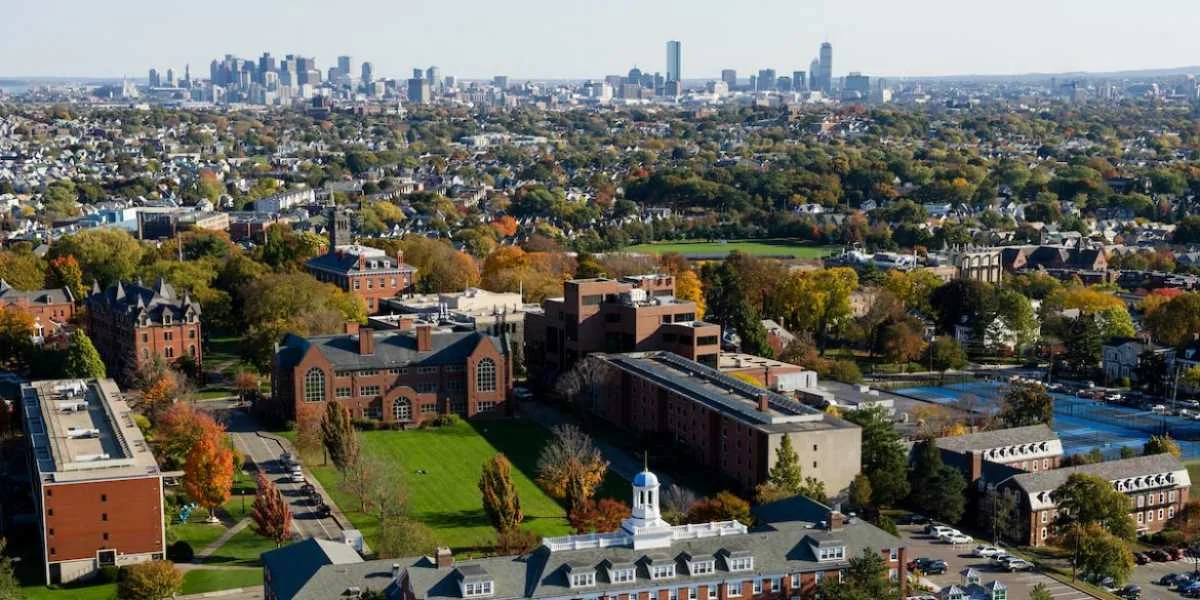
Tufts University blends the personalized education of a liberal arts college with the extensive resources of a research university, offering an academic experience that combines depth and breadth. Its main campus sits on Walnut Hill in Medford, removed from the bustle yet close to Boston, creating an environment where academic and urban life coexist. The university emphasizes interdisciplinary education, with international relations, engineering, and biology among its standout programs, and the Fletcher School of Law and Diplomacy is renowned worldwide. Tufts offers abundant career resources, and its alumni have achieved distinction in government and business. The distinctive mascot Jumbo and the "Cannon" tradition further reveal a campus culture that pairs rigor with playfulness.

We will examine the distinctive character of the University of Washington from several angles, showcasing the school's core features and conveying its academic achievements and cultural appeal. Click the button below to view the full introduction to the school.

01. Location

02. Campus Environment

03. Both a Large University and a Liberal Arts College: Having It Both Ways

04. The "Light on the Hilltop" of Walnut Hill

05. A Diplomacy School Built with Harvard University

06. Alumni of Exceptional Caliber

07. Extensive career resources

08. Overseas school programs

09. A healing, warm, and adorable mascot

10. The fun "Cannon" tradition

Most popular majors

Social Sciences
23%
Engineering
11%
Multi/Interdisciplinary Studies
10%
Computer, Information Sciences and Support Services
10%
Biological and Biomedical Sciences
9%
Visual and Performing Arts
7%
Psychology
6%
Health Professions and Related Programs
4%
Mathematics and Statistics
3%
Foreign Languages, Literatures, and Linguistics
3%

Graduate programs

Data Science Program

Data Science

Program Overview

The Data Science program in the Tufts School of Engineering gives students a distinctive advantage by offering an interdisciplinary data science curriculum that not only expands research in the field but also provides students with state-of-the-art facilities to carry out projects and hone their professional skills. The Master of Science in Data Science (MSDS) at Tufts University is jointly administered by the Department of Computer Science and the Department of Electrical and Computer Engineering, and is interdisciplinary and forward-thinking in nature. The curriculum builds on the disciplinary core of statistics and machine learning, and through data infrastructure and systems, data analysis and interfaces, computation and theory of data science, and data science practice, helps prepare students for future careers and research in related fields.

Degree Type

MS in Data Analytics

Program Length

9-12 months

Sources:

Tufts University Data Science Program

Tufts University MS in Data Science

Application Requirements

Language Requirements

All applicants whose primary language is not English must submit proof of English proficiency, unless they have attended a school where English is the language of instruction for at least three years. Students who attended a secondary school where English is the primary language of instruction for at least three years do not need to submit an English proficiency test, but may do so if they wish. Tufts University accepts the following English language tests: TOEFL, IELTS, PTE, and Duolingo. Although Tufts University has no minimum score requirement, successful applicants generally have at least the following corresponding scores:

TOEFL: recommended score of 100 or above

IELTS: recommended score of 7 or above

Duolingo: recommended score of 130 or above

GRE

Applicants who have earned a degree from a U.S. or Canadian institution at the time of enrollment do not need to provide GRE General Test scores. All other applicants must provide GRE scores.

Institution code: 3901

Academic Background

Prerequisites for the Master's program in Data Science include a Bachelor of Science degree in a science, technology, engineering, or mathematics (STEM) field.

Applicants with a bachelor's degree in a non-STEM field may begin with the Data Science certificate, which offers applicants a sample of the program "in additional semesters."

Portfolio (Optional)

In addition to the program-specific application requirements above, the complete application requirements can be found in the corresponding [Application Requirements] section on our website

Sources:

Tufts Data Science Application

Tufts Applying as International Students

Graduation Requirements

Credit Requirements

The degree requirements include at least 30 credits

Internship Requirement

An internship is not required, but the School of Engineering's graduate Cooperative Education (Co-Op) program offers students the opportunity to apply theoretical knowledge to practical engineering projects. Students may choose to gain up to six months of full-time work experience, build their resumes, and gain a competitive edge for employment after graduation. Click here to learn more about the Co-Op program

Sources:

Tufts University MS in Data Science

Tufts University Co-op

Curriculum

The degree requirements include at least 30 credits of study units, which must include Electrical Engineering 104 or Mathematics 165, Mathematics 166, Computer Science 119, and Computer Science 135.

The three electives must include:

(A) one data infrastructure course (including Computer Science 112, 115, 116, 117, 118, 120, and 151);

(B) one data analysis and/or interface course (including Computer Science 136, 137, 138, 141, 142, 152, 166, 167, 169, 171, 175, 177, 178, 236, 272, 275, and 277; Mechanical Engineering 150;

(C) one computation and theory of data analysis course (including Computer Science 131 and 160; Data Science 153 (or Computer Science 153); Mathematics 123, 125, 126, 133, 153, 155, and 156; and Electrical Engineering 109, 127, 130, 133, and 140).

The practice requirement may be satisfied by (D) a data science practice course (Data Science 143 or 154, or Computer Science 169) or the Master's project in Data Science (Data Science 293). The practice requirement may also be satisfied by an additional course chosen from categories (A)-(C).

In consultation with your faculty advisor, you may choose one additional elective from categories (A)-(D). Courses in the above categories may not be counted in more than one category.

Selected Course Information:

Course: Probabilistic Systems Analysis

Probabilistic Systems Analysis; Introduction to Machine Learning; Big Data; Statistics; Special topics in the practice of Data Science

Special topics in the practice of Data Science; Master's project in Data Science; Source: Tufts Data Science Curriculum

Career Development

The Tufts University career development center provides advising, workshops, and resources for master's and doctoral students in the Tufts School of Arts and Sciences, the School of Engineering, and SMFA. The center helps students set career goals and develop strategies and skills to achieve them. Career counseling can advise students on career decisions, job searching, networking, writing resumes, CVs, and cover letters, and interview preparation. You can schedule appointments online; please plan ahead to ensure you receive help before application deadlines or interviews.

Virtual Career Programs

Visit Handshake to learn about virtual industry fairs, career workshops, and other online events.

Graduate Career Development Workshops

The Graduate School of Arts and Sciences and the School of Engineering offer a variety of professional development opportunities to help you build academic and non-academic skills. These events are designed to strengthen the training provided by each department. Click here to view the latest list of events/programs.

Professional Development Series

Tufts Alumni Career Services invites graduate students to these one-hour lectures on topics including personal marketing materials, job searching, networking and LinkedIn, negotiation, and career management. Please register here for upcoming lectures.

Source: Tufts University Graduate Student Career Center

Computer Science

Computer Science

Program Overview

Tufts University's Computer Science program has long been at the forefront of technological innovation, and its open, diverse learning environment suits all students who want to research or work in the field of computer science. Students can choose an individualized course of study based on their interests and regularly interact with professors in small classes and outside the classroom. The department's faculty are recognized leaders in their fields who continually push forward in innovative research.

Computer Science students may choose to complete a master's thesis or a project-based research track. The program can be completed in as little as one year, or students may choose to complete a thesis over two years.

Degree Type

MS in Computer Science

Program Length

2 years

Sources:

Tufts Department of Computer Science

Tufts MS in Computer Science

Application Requirements

Language Requirements

All applicants whose primary language is not English must submit proof of English proficiency unless they have attended a school where English is the language of instruction for at least three years. Students who attended a secondary school where English is the primary language of instruction for at least three years do not need to submit an English proficiency test, but may do so if they wish. Tufts University accepts the following English language tests: TOEFL, IELTS, PTE, and Duolingo. Although Tufts University has no minimum score requirement, generally successful applicants have at least the following corresponding scores:

TOEFL: recommended score of 100 or above

IELTS: recommended score of 7 or above

Duolingo: recommended score of 130 or above

GRE

Applicants who have earned a degree from a U.S. or Canadian institution at the time of enrollment do not need to provide GRE General Test scores. All other applicants must provide GRE scores.

Institution code: 3901

Portfolio (optional)

In addition to the program-specific application requirements above, the complete application requirements can be found in the corresponding Application Requirements section of our website

Sources: Tufts Applying as International Students

Tufts Computer Science Application

Graduation Requirements

Credit Requirements

Students must complete 30 credits, of which at least 24 credits must come from approved courses. The remaining 6 credits may be earned from approved courses, approved research, or independent study, or a combination of both.

Grade Requirements

Grades in all courses must be B- or above

If a student earned below a B- in COMP105, COMP160, or COMP170 during undergraduate study, the student may retake the course for graduate credit.

Thesis Requirement (optional)

Students are admitted to the thesis course after enrollment only with the support of a faculty advisor interested in supervising the thesis work. Writing a thesis requires a total of two semesters. After finding a faculty member willing to work with you on a master's thesis, that faculty member may write to the CS graduate coordinator to request that you transfer to the thesis track.

Some reasons for deciding to write a master's thesis may include:

1) You are a master's student who wants significant research experience

2) You wish to leave a doctoral program after earning a master's degree and retain a formal record of some research activity

3) You wish to complete a substantial, refined preliminary research project on the path toward a doctoral degree. You need to submit a thesis proposal by the end of the first semester and submit the thesis document after classes end in the semester of your defense. Deadlines can be confirmed here. The defense should take place two weeks before the deadline.

Internship Requirement (not required)

The School of Engineering's graduate Cooperative Education (Co-Op) program gives students the opportunity to apply theoretical knowledge to real engineering projects. You can gain up to six months of full-time work experience, build your resume, and gain a competitive edge for employment after graduation. Click here to learn more about the Co-Op program.

Sources:

Tufts MS. In Computer Science Program highlight

Tufts University Co-op

Tufts Master of Science in Computer Science Requirements

Course Information

In their final semester at Tufts University, CS faculty must certify that the student has completed at least one course in each of at least four areas listed in Appendix E of the handbook.

Core Area Courses:

Computer Architecture and Assembly Language (CA&AL)

Course Course Code Machine Structure COMP/CS 40 Operating Systems COMP/CS 111 Networks & Protocols COMP/CS 112 Network Security COMP/CS 114 Computer Security COMP/CS 116 Cloud Computing COMP/CS 118 Computer Engineering COMP/CS 146, (also EE 126) Compilers COMP/CS 107 (Formerly COMP/CS 181) Advanced Topics in Computer Architecture COMP/CS 140 Programming Languages (PL)

Course Course Code Programming Languages COMP/CS 105 Concurrent Programming COMP/CS 21 Object-Oriented Programming for GUIs COMP/CS 86 Software Engineering OMP/CS 121 (Formerly COMP/CS 180) Compilers COMP/CS 107 (formerly COMP/CS 181) Data Structures and Analysis of Algorithms (DS&AA)

Course Course Code Intro to Algorithms COMP/CS 160 Theory of Computation (ToC)

Course Course Code Computation theory COMP/CS 170 More course content can be found in the CS student handbook

Career Development

Tufts University's top networking resources include The Herd, a networking and mentoring platform for alumni and students in Arts and Sciences, Engineering, and SMFA. The school provides a list of all networking resources, as well as resources on the mentoring process. The school also offers LinkedIn groups, diverse communities, professional affinity groups, Tufts professional and graduate school networks, and domestic and international chapters. Please consult the networking list for details.

Career development webinars feature alumni and friends sharing advice for every stage of career development. You can register for upcoming webinars or watch the YouTube playlist.

Sources: Tufts Advance Your Career

Computer Engineering

Computer Engineering

Program Overview

The MS in Computer Engineering at Tufts University combines interdisciplinary research and teaching to give students a well-rounded approach to learning. Its content spans topics from advanced computing architecture to image and signal processing to nanoscale engineering. Tufts' computer science program offers a distinctive perspective on how electrical and computer technologies can be used to solve important human problems. With expert faculty, cutting-edge research, and innovative facilities, students have the opportunity to draw on the university's resources to make significant contributions to the field and to become leaders in industry, government, and business. The program is jointly administered by the Department of Electrical and Computer Engineering and the Department of Computer Science.

Degree Type

MS in Computer Engineering

Program Length

2 years

Sources:

Tufts Computer Engineering program

Tufts MS in Computer Engineering

Application Requirements

Language Requirements

All applicants whose primary language is not English must submit proof of English proficiency unless they have attended a school where English is the language of instruction for at least three years. Students who attended secondary school with English as the primary language of instruction for at least three years do not need to submit an English proficiency test, but may do so if they wish. Tufts University accepts the following English language tests: TOEFL, IELTS, PTE, and Duolingo. Although Tufts University has no minimum score requirement, generally successful applicants have at least the following corresponding scores:

TOEFL: recommended score of 100 or above

IELTS: recommended score of 7 or above

Duolingo: recommended score of 130 or above

GRE

Applicants who have earned a degree from a U.S. or Canadian institution at the time of enrollment do not need to provide GRE General Test scores. All other applicants must provide GRE scores.

Institution code: 3901

Portfolio (Optional)

In addition to the program-specific application requirements above, the complete application requirements can be found in the [Application Requirements] section of our website.

Sources:

Tufts MS in Computer Engineering Application

Tufts Applying as International Students

Graduation Requirements

Credit Requirements

You must complete at least 30 credits.

Grade Requirements

Students must have at least 10 courses with a grade of S (Satisfactory).

All courses must be completed with a grade of at least B-.

Internship Requirement

Not required.

The School of Engineering's graduate cooperative education (Co-Op) program gives students the opportunity to apply theoretical knowledge to real engineering projects. You can gain up to six months of full-time work experience, build your resume, and gain a competitive edge for employment after graduation. Click here to learn more about the Co-Op program.

Sources: Tufts University Computer Engineering Program Highlights

Course Information

Computer Engineering Core Courses

Course Course Code Credits Introduction to VLSI Design EE 103 4 Computer Animation for Technical Communications EE 120 3 Computer Engineering w/ Lab [Computer Architecture] EE 126 4 Information Theory EE 127 3 Operating Systems [Computer Software/Systems] EE 128 3 Computer Communication Networks [Computer Networks] EE 129 3 Parallel Computing [Computer Architecture] EE 155 3 Advanced Topics in Computer Architecture [Computer Architecture] EE 156 3 Programming, Data Structures, and Algorithms in C++ [Computer Software/Systems] EE 200 3 Fundamentals of Computer Systems and Engineering [Computer Architecture] EE 201 3 Operating Systems [Computer Software/Systems] [cross-listed with EE128] COMP 111 3 Networks [Computer Networks] COMP 112 3 Database Systems [Computer Software/Systems] COMP 115 3 Computer Systems Security [Computer Software/Systems] COMP 116 3 Intro to Machine Learning COMP 135 3 Advanced Computer Architecture [Computer Architecture] COMP 140 3 Algorithms COMP 160 4 Cryptography COMP 163 3 Compilers [Computer Software/Systems] COMP 181 3 For more courses, see: Tufts Computer Engineering Course Requirements

For students whose undergraduate coursework did not cover core computer engineering material, Tufts University recommends taking one or two of the following bridge courses. Only one bridge course may count as one of the four computer engineering core courses.

EE200: A Machine-Centric Approach to Programming, Data Structures and Algorithms (3 credits)

Programming in C and C++, covering data structures (linked lists, binary trees, hash tables, graphs), abstract data types (stacks, queues, maps, sets), and algorithms (sorting, graph search, minimum spanning trees). Comparing the efficiency of these structures and algorithms through Big-O analysis. Brief introduction to concurrent (multithreaded) programming. Object-oriented design: inheritance, templates, and virtual methods. Emphasis on embedded, high-performance, and close-to-hardware applications. Tufts University also emphasizes defensive coding and the use of standard UNIX development tools. This course will provide students with the background needed for advanced coursework and project work in computer engineering.

EE201: Fundamentals of Computer Systems and Engineering (3 credits)

Fundamentals of digital systems and computer architecture for master's students whose undergraduate background did not cover this material. Topics covered include digital logic, assembly programming, computer architecture, memory hierarchy and technology, IO, VHDL hardware implementation, operating systems, and networks. Analysis and hands-on operation of complex digital systems.

Career Development

Internships, recruiting, and all career-related programs in the School of Engineering are coordinated by the Tufts University Career Center. The Career Center hosts many career events throughout the year, including the Tufts Career Fair (October), the Tufts Engineering Internship Fair (February), an alumni networking night for engineering students, and industry and alumni events hosted by individual departments. For more information, see the Career Center website.

Sources: Tufts University Engineering Alumn

Campus life

Transportation

Nearby Airport

Boston Logan International Airport

Distance from campus: 7.5 miles

Trip from campus to the airport:

Driving/rideshare:

Under normal conditions, the trip takes about 20 minutes. It may take longer when traffic is heavy.

Public transit:

Take the Green Line E branch, transfer to the Blue Line, and then transfer to bus route 552/88 to reach the airport.

Nearby Train Stations

Boston South Station

Trip from campus to the station:

Driving/rideshare:

Under normal conditions, the trip takes 20 minutes. It may take longer when traffic is heavy.

Public transit:

Take the Green Line E branch and transfer to the Red Line to reach the station. Or take the Green Line E branch/Red Line directly to the station.

Boston North Station

Trip from campus to the station:

Driving/rideshare:

Under normal conditions, the trip takes 15 minutes. It may take longer when traffic is heavy.

Public transit:

Take the Green Line E branch directly to the station, or take bus route 101 and transfer to the Orange Line.

City Public Transit

Public transit around Tufts University includes the subway, buses, and campus shuttle service. The subway is accessible via the MBTA Orange Line; the nearest stations are Massachusetts Avenue and Tufts University/Museum of Fine Arts. Buses also pass through campus, and campus shuttles provide shuttle service.

Safety

Tufts University's campuses in Medford and Somerville are very safe. Just five miles from Boston, students take the normal precautions of residents near a major city, but crime on campus is rare. Much of this environment is due to an excellent team of campus safety professionals, from the Tufts University Police Department (TUPD) to the student-run Tufts Emergency Medical Services (TEMS).

Tufts University Police Department (TUPD):

TUPD is one of the only fully authorized campus police departments in Massachusetts, and all officers are trained at a state-certified law enforcement training academy. Officers are friendly, familiar figures in the Tufts community and proactive problem solvers. TUPD has officer liaisons with many different community groups on campus, including six centers: the Africana Center, the Asian American Center, the International Center, the Latino Center, the Tufts University Trans and Queer Advocacy and Resource Center, and the Women's Center. Officers regularly meet with students living on campus to raise awareness of TUPD services, train students, and serve as a resource when needed. Among many other services, TUPD offers self-defense classes, a campus safety shuttle, and an emergency blue-light system that lets students contact police directly from anywhere on campus.

Tufts Emergency Medical Services (TEMS):

TEMS provides quality medical assistance to the Tufts community 24 hours a day, 7 days a week. The emergency medical personnel are students who are trained to handle everything from car accidents to asthma attacks.

Tufts Threat Assessment and Management (TTAM):

Tufts University is committed to maintaining a safe environment where all students, faculty, and staff can study, work, and live without the threat of violence. That is why President Monaco created TTAM, which allows community members to report threats of violence safely and confidentially. TTAM also responds to any threat by working with other health and safety organizations on campus. Recognizing and reporting early signs of potentially dangerous situations is essential to preventing violence and strengthening the university's ability to assist community members who may be in distress.

Housing

Tufts University has more than 25 residence halls, 11 of which are designated exclusively for first-year students. Students in the residence halls organize discussion and study groups, invite guest speakers, and plan a variety of social activities together.

Residential colleges

First-year students: Bush Hall, Carmichael Hall, Court at Professors Row, Hill Hall, Hodgdon Hall, and others

Sophomores: Harleston Hall, Haskell Hall, Lewis Hall, Simpson House, Stratton Hall, and others

Upperclass students: 9-11 Sunset, 10 Winthrop, CoHo (Community Housing), Fairmount House, Hillside Apartments, and others

Graduate students: McCollester House, Tousey House, Hillside Apartments, 159 College Avenue, 122 Powder House Boulevard, 126 Powder House Boulevard

On-campus housing application steps

First-year students

Based on the residential life housing survey you complete during the enrollment process, the university assigns every new student a roommate and a residence hall.

Sophomores

Application

All eligible rising sophomores must complete a housing application through the housing portal.

Special-interest, theme, and fraternity/sorority housing

Students who wish to live in special-interest, theme, or identity-based housing should also apply through the housing portal according to the schedule below. Admitted students will complete their housing assignment by the designated date and complete the housing lottery process. All students may apply for housing for students interested in theme housing, special-interest housing, or fraternity/sorority housing, even those on a waitlist. Students who have been accepted into a theme/special-interest community or Greek housing will complete that process and no longer need to participate in the housing selection process. Lottery numbers and waitlist numbers for accepted placements become void.

Upperclass students

Juniors and seniors will have the opportunity to form housing groups during the application process. Students are not bound by these students, but forming a group by the deadline ensures that all students in the group will receive a lottery number or waitlist number. Each student in the group must complete their own housing application by the deadline.

Graduate students

First-year graduate students

Full-time students in their first year of a graduate program in the School of Arts and Sciences, the School of Engineering, or The Fletcher School are eligible to apply for on-campus graduate housing.

Continuing graduate students

Continuing graduate students are eligible to apply for on-campus housing through the housing portal. Students will be eligible to choose from available options during the online selection process on the designated date. Students who previously lived in on-campus graduate housing are eligible to apply for on-campus housing but will be placed on a waitlist until all first-year graduate students have been assigned housing and have accepted or declined their housing offers. The university will contact waitlisted students based on application availability and the order in which completed applications were received. Because space is limited, students are strongly encouraged to begin looking for off-campus housing options.

Dining

The university offers several restaurants, dining centers, and coffee shops.

University dining halls

Fresh at Carmichael Dining Center

The fresh food at Fresh at Carmichael Dining Center is completely free of gluten and nuts. The dining hall offers steak, fries, and fresh fruit.

Dewick-MacPhie Dining Center

Recommended dishes at Dewick-MacPhie Dining Center include chickpeas, pizza, and pumpkin bisque.

Hodgdon Food-on-the-Run

Hodgdon Food-on-the-Run offers halal lamb or chicken shawarma and a signature pita falafel plate.

For more information, please read the dining hall list.

Meal Plan

All first- and second-year AS&E students living on campus must follow a meal plan.

First-year student Meal Plan

Meal Plan | Meals | JumboCash | Rhino Bucks | Eligible students | Cost | Tufts Premium Plan | 400/semester | 75/semester | 0/semester | AS&E first-year/SMFA/NEC first-year | 4019/semester | SMFA Premium Rhino Bucks Plan | 267/semester | 75/semester | 699/semester | SMFA/NEC first-year | 4019/semester | SMFA - A Plan | 10/week + 75 Emmanuel College Meals + $1,500 in SMFA Meal Money | 0/semester | 300/semester | SMFA first-year | 2480/semester | Sophomore Meal Plan (first-year Meal Plans may be selected)

Meal Plan | Meals | Rhino Bucks | Eligible students | Cost | 220 Plan | 220/semester | 0/semester | AS&E sophomores/SMFA Medford Somerville campus sophomores | 3641/semester | 160 Plan | 160/semester | 0/semester | AS&E sophomores | 2678/semester | SMFA - B Plan | 4/week + 50 Emmanuel College Meals + $1050 in SMFA Meal Money | 200/semester | SMFA Boston campus sophomores

2480/semester | Upperclass students + graduate students (the above Meal Plans may be selected)

Meal Plan | Meals | Cost | 100 Plan | 100/semester | 1732/semester | 80 Plan | 80/semester | 1389/semester | 40 Plan | 40/semester | 699/semester

Admissions

Acceptance rate
10%
SAT range
1460-1550
ACT range
33-35
SAT / ACT
SAT reading and writing, 25th–75th percentile: 710-760
SAT math, 25th–75th percentile: 750-790
SAT median: 1500
ACT median: 34

Admissions data

Admission to Tufts University is among the most selective, with an acceptance rate of 11%.
Half of the applicants admitted to Tufts University have an SAT score between 1440 and 1550 or an ACT score between 33 and 35.
However, one quarter of admitted applicants scored above these ranges and one quarter scored below these ranges. The application deadline is January 1, and the application fee at Tufts University is $75.
Tufts University admissions officials consider a student's GPA to be a very important academic factor.
An applicant's high school class rank, when available, is considered very important, and letters of recommendation are considered very important by Tufts University admissions officials.
Applicants
Admitted
Female applicants
Male applicants
Female admits
Male admits
Waitlist offered
Yes
Students on waitlist
1,324
Students accepting a place
2,565
Admitted from waitlist
200

Application requirements

01.
Applicants may apply online through one of three application systems: the Common Application, the Coalition Application, or the QuestBridge Application.

Application checklist

01.
Letters of Recommendation
Tufts University requires all applicants to submit one letter of recommendation from a teacher in a core academic subject in high school (mathematics, natural sciences, social sciences, English, or a foreign language) and one letter of recommendation from a school counselor.
If a student believes that additional letters of recommendation can offer a new perspective on their application, they may submit additional letters as well.
02.
Extracurricular Activities
In addition to evaluating academic achievement, the admissions committee also looks for ways in which a student can contribute to the community as a whole.
The Common Application allows students to list 10 different activities.
03.
Writing Supplement
04.
Official High School Transcript(s)
05.
SAT or ACT Test Scores
06.
Students whose native language is not English must also submit TOEFL, IELTS, or PTE scores (TOEFL above 100, IELTS above 7, PTE above 68)
07.
$75 application fee or a fee waiver request
08.
If during the application process you find that some materials cannot be submitted through the online application system, you may mail them to the following address:
09.
Office of Undergraduate Admissions
10.
Tufts University
11.
Bendetson Hall
12.
2 The Green
13.
Medford, MA 02155-7057

Application deadlines

Deadline
Date
Early Decision I
Nov. 1
Early Decision II
Jan. 4
Regular Decision
Jan. 4
ED I notification
Dec. 15
ED II notification
Feb. 15
RD notification
April 1

Transfer requirements

01.
Students who wish to transfer to Tufts should plan their transfer process carefully according to the U.S. undergraduate transfer timeline, meet the basic U.S. undergraduate transfer requirements, and may apply only for fall transfer.
02.
Tufts University welcomes transfer applications from students at both four-year universities and two-year community colleges.
03.
Before transferring, however, students must have completed at least one year of college study.
04.
Students applying to the School of Engineering must meet certain admission requirements in order to apply for transfer.
05.
To successfully earn a Tufts University degree, students must be enrolled at Tufts for at least two years.
06.
For this reason, the university does not recommend that students who have already earned more than two years of full-time college credit apply to transfer to Tufts University.

Transfer checklist

01.
Online application form, using the Common Application system
02.
College Report
03.
Academic Evaluation
04.
Application essay
05.
All official transcripts, including high school transcripts and college transcripts
06.
SAT or ACT test scores
07.
Course descriptions, briefly describing the college courses previously taken. This application material must include your full name and date of birth, and must be mailed or faxed to the school. (Fax number: 617-627-4079)
08.
A list of courses currently being taken, as stated in the transfer report
09.
International students must submit proof of English proficiency and may choose to submit either TOEFL or IELTS scores
10.
Mid-term report; the relevant form can be found on the Common Application. It may be submitted in early April
11.
Students applying to transfer to the School of Art must additionally submit a portfolio
12.
$75 application fee

Transfer deadlines

Deadline
Date
Fall application deadline
Mar. 15

Similar universities

Admissions FAQ

What is the acceptance rate at Tufts University?

The reported acceptance rate is 10%. Acceptance rates vary by applicant pool and application cycle; confirm the current figure with Tufts University.

What SAT scores does Tufts University expect?

The reported SAT range is 1460-1550. Test-optional and score-reporting policies can change by application cycle; check the university's official admissions page before applying.

When is the application deadline at Tufts University?

The listed Regular Decision deadline is Jan. 4. Deadlines can vary by program and application cycle; confirm the exact date with the university.

How much does Tufts University cost?

The listed tuition and fee figure is $18,588. Costs vary by residency, programme and academic year; confirm current costs with the university.

Where is Tufts University located?

Tufts University is located at 419 Boston Ave, Medford, MA 02155.

Planning your application?

Build a school list around your profile.

Ivy Elite advisors help students compare programs, plan coursework and prepare applications for U.S. universities.