Ivy Elite
Harvard University

Harvard University comprises Harvard College for undergraduates, 12 graduate and professional schools, and the Radcliffe Institute for Advanced Study, spanning a broad range of disciplines. Its undergraduate curriculum covers more than 100 majors, with fields such as politics, law, and medicine enjoying a strong national reputation across the United States. Harvard brings together world-class professors, conducts innovative research, and sustains a vibrant student community. The educational and academic atmosphere here inspires students' enthusiasm for learning, drives the continued development of education, and makes important contributions to advancing change in the world.

About the university

School data is compiled from public sources and may change. Confirm current tuition, deadlines and requirements with the university before applying.

At a glance

Acceptance rate 3%
Tuition and fees $21,190
SAT range 1500-1580
Application deadline Jan. 1
Undergraduate enrollment 8,527
Student-faculty ratio 7:1
Location Massachusetts Hall Cambridge, MA, 002138
School type Private research university
In-state tuition
$676
Out-of-state tuition
$21,190
Room and board
$21,190
Graduation rate
66%
Student-faculty ratio
7:1
Gender ratio
48:53

Alumni starting salaries

Biological and Biomedical Sciences
+
Business, Management, Marketing and Related Fields
+
Engineering
+
Mathematics and Statistics
+
Social Sciences
+
Psychology
+
Physical Sciences
+
History
+

Student body

First-year diversity
White
32%
Hispanic
14%
Asian
24%
Black
9%

Inside the school

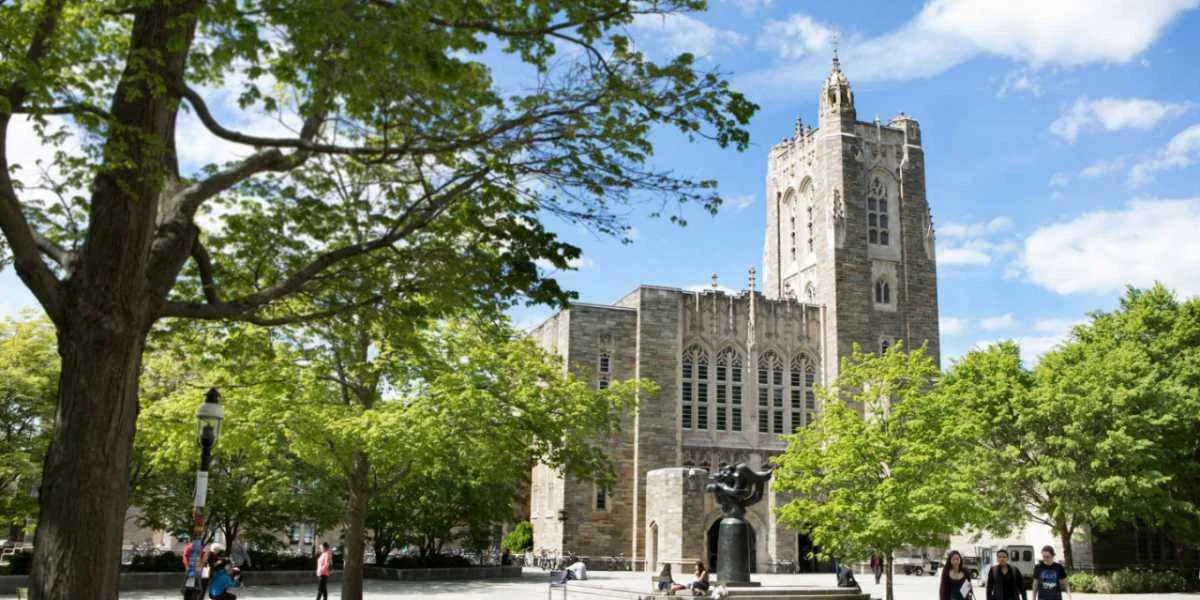
As the oldest institution of higher learning in the United States, Harvard University has not only set world-class academic standards but is also renowned for its outstanding alumni network, top-ranked business school, and rich scientific research output. Iconic campus landmarks such as the John Harvard Statue and Widener Library carry deep historical and cultural significance, while its location in Cambridge gives students full access to Boston's abundant resources. Harvard's admissions are extremely selective, drawing the world's most talented students each year and producing countless leaders in politics and business. From the Harvard-Yale game and Primal Scream to its deep athletic traditions, Harvard University demonstrates extraordinary influence in academics, culture, and competition.

We will examine the distinctive appeal of the University of Washington from several angles, showcasing its core characteristics and its academic and cultural strengths. Click the button below to view the full introduction to the school.

01. One of the oldest universities in U.S. history

02. A famous landmark — the "three lies" of the John Harvard Statue

03. One of the world's most renowned business schools

04. A powerhouse alumni network

05. One of the largest university libraries in the world

06. A prime location

07. World inventions connected to Harvard University

08. Harvard University's distinctive traditional festival — the naked run

09. One of the hardest universities in the world to get into

10. The university where U.S. college competitive sports first began

Most popular majors

Social Sciences
29%
Biological and Biomedical Sciences
12%
Mathematics and Statistics
11%
Computer and Information Sciences and Support Services
10%
History
9%
Physical Sciences
8%
Psychology
5%
Engineering
5%
Visual and Performing Arts
3%
English Language and Literature/Letters
2%

Graduate programs

Master of Business Administration Program

MBA

Program Overview

Harvard Business School was founded in 1908, marking the creation of the world's first MBA (Master of Business Administration) program. Students entering Harvard Business School join a long tradition of management education. The School is dedicated to developing outstanding leaders and, through active participation and shared learning, creates an environment that cultivates students' ability to solve problems innovatively. Harvard Business School has students and faculty from around the world, and this diversity provides rich opportunities for academic and professional exchange.

Degree Type

Master of Business Administration (MBA)

Program Length

Two-year full-time MBA program

Source: Harvard Business School MBA

Application Requirements

Language Scores

The Harvard Business School MBA program is built on an immersive learning experience that encourages public speaking, group discussion, and active classroom participation. Students must therefore have strong written and oral English skills. That is, all students who earned their bachelor's and graduate degrees at universities where English is not the sole language of instruction must take an English language test (TOEFL, IELTS, Pearson Test of English (PTE), or Duolingo English Test).

The MBA Admissions Board discourages applicants with a TOEFL iBT score below 109, an IELTS score below 7.5, a PTE score below 75, or a Duolingo score below 145 from applying.

Applicants required to take an English language test must have at least unofficial scores before submitting their application. Total and section scores must be entered on the application form. The HBS TOEFL code is 3444. For IELTS, PTE, and Duolingo, follow the instructions provided by the official IELTS, PTE, and Duolingo organizations.

GRE/GMAT

The Harvard MBA program has no preference for GRE or GMAT scores and no minimum score requirement.

The HBS GMAT code is HRLX892, and the HBS GRE code is 4064.

In addition to the program-specific application conditions above, the complete application requirements can be found in the corresponding Application Requirements section of our website.

Sources:

Harvard Business School MBA Application Process

Harvard Business School MBA Application Process International Applicants

Graduation Requirements

Credit Requirements

Each graded course in the MBA program carries a specified number of credits. To earn the MBA degree, students must complete all courses in Term 1 and Term 2 of the Required Curriculum, as well as the equivalent of 30 credits in the Elective Curriculum.

Regarding the 30-credit elective requirement: 15 credits are required each semester (fall and spring), with no more than 6 non-classroom Independent Project credits in one semester and no more than 9 non-classroom Independent Project (IP) credits in the full year.

Students may take up to 6 credits of approved cross-registration courses from the electives toward the standard MBA degree.

Of the maximum combined 15 credits from Independent Projects and cross-registration, 6 credits may be earned through online IP credits.

Grading

At the end of each course, professors assign students one of four grades: I, II, III, or IV. These grades are reported to the Registrar's Office.

Category I: awarded to the top 15%-20% of students in Required Curriculum courses.

Category II: awarded to the next 70%-75% of students in the elective cohort. The actual number of Category II grades depends on the number of Category I grades.

Category III: awarded to the lowest 10% of students in a regularly meeting course or elective.

Category IV: rarely given; indicates unsatisfactory performance and/or commitment and therefore failure to meet the minimum standard of the course. If Category IV is used in a course, the combined number of students receiving Category III and Category IV must equal the lowest 10% of that section.

Note: These percentage guidelines do not apply to electives with 25 or fewer students.

Thesis Requirement

Depends on the courses the student chooses.

Sources:

Harvard Business School MBA Degree Requirements

Harvard Business School MBA Grading

Curriculum Overview

The Harvard Business School MBA curriculum is designed to develop students' ability to solve complex problems by examining issues in depth, articulating and challenging ideas, and integrating information from diverse perspectives.

Required Curriculum

The following courses are required for the Harvard MBA Class of 2025.

Term 1 CreditsTerm 2 CreditsData Science for Managers (DSM)

Data Science for Managers (DSM)1.5Business, Government, and the International Economy (BGIE)

Business, Government, and the International Economy3Finance 1 (FIN1)

Finance 13The Entrepreneurial Manager (TEM)

The Entrepreneurial Manager3Financial Reporting and Control (FRC)

Financial Reporting and Control3FIELD Global Immersion (FGI)FIELD Global Immersion3Leadership and Organizational Behavior (LEAD)

Leadership and Organizational Behavior3Finance 2 (FIN2)

Finance 23Marketing (MKT)

Marketing3Leadership and Corporate Accountability (LCA)

Leadership and Corporate Accountability3Technology and Operations Management (TOM)

Technology and Operations Management3The Social Purpose of the Firm (SPF)

The Social Purpose of the Firm1.5Elective Curriculum

Students may take any combination of full-term courses (3 credits) and half-term courses (1.5 credits) to meet the minimum credit requirement each semester. Students who complete a 3-credit Immersive Field Course during the January term may choose to take only 12 credits in the fall or spring semester. In addition, to keep students' workload manageable, students may not take more than 10.5 credits on one semester schedule (X or Y), excluding courses that meet only once per week.

Course TypeCredits AvailableSessionsOtherShort Course

Short Course

1.5One quarter, 14* sessionsSessionsExam or paperLong Courses

Long Courses

3Two quarters, 28* sessions; two-hour weekly classes held over two quartersExam or paper;

if the course is project-focused, some sessions may be set aside for presentations or teamwork.

Intensive Courses

Intensive Courses

3 14 sessions within one quarter, two sessions per dayExam or paper/projectField Courses

Field Courses

3 14 sessions held at the start of the quarter, or multiple sessions held across the semesterProjectImmersive Field Courses

Immersive Field Courses

3Several on-campus sessions during the fall semester; additional registration information required in September; program fees and travel expensesIndependent Projects

Independent Projects

Non-classroom credits; 1.5, 3, 4.5, or 6 credits. A maximum of 9 non-classroom credits, i.e., 30 total credits, may be earned in the full year. Work with a team or with a faculty supervisorRegistration takes place at the start of each semester and is not part of EC pre-registration.Non-MBA Courses

Non-MBA Courses

N/AN/AFor details, see Cross-RegistrationSources: Harvard Business School MBA Degree Requirements

Career Development

Everyone's career is different. At Harvard Business School, you will have the opportunity to realize your personal career vision, develop a job search strategy, and enrich your experience through unparalleled career education resources, hundreds of events, and outstanding coaches. Wherever your Harvard Business School experience takes you, the Career & Professional Development Office will work with you at every stage of your HBS journey.

First Year

Tactical Internship

Search Support

Career Visioning

Meet with a Career Coach

Career Visioning

In the first few weeks, students conduct a self-assessment, reflecting on the passions, values, and goals that drive their lives and work. This helps them gain a clearer understanding of their career vision.

Meet with a Career Coach

As a student, you can choose from more than 60 career coaches who will work directly with you, starting from your initial self-assessment, through your job search and beyond.

Industry Education

Students have the opportunity to take part in more than 150 programs offered throughout the year, including industry education events and opportunities to connect with hundreds of companies. This helps students gain a deeper understanding of the industries that interest them.

Tactical Internship Search Support

In addition to industry education, students can receive one-on-one support with the "tactical" elements of the internship search, including resume and LinkedIn preparation, interview practice, and negotiation guidance.

Summer Internship

Summer Internship

The two-year MBA program offers a unique opportunity for a summer internship or to start your own venture. Whether you are exploring a new industry, function, or location, or further building on the industry experience you had before HBS, CPD has personalized resources and company relationships to help you find a summer internship opportunity.Second Year

Focused Job Search

In the second year at Harvard Business School, students work closely with their career coach to adjust based on their summer experience.

Career Adjustment: Students have the opportunity to recalibrate their job search direction based on their summer internship experience and new career development goals.

Coach Guidance: Students' career coaches continue to guide them through the job search. This may include revisiting the self-assessment, exploring new career areas, or adjusting their original career plans.

On-Campus Resources: Students have access to a wealth of on-campus resources, including on-campus interview opportunities, networking events, and resources on how to negotiate successfully. This helps students take the next step toward their career goals.

After HBS

The Alumni Experience

At Harvard Business School, career development support after graduation does not end with your time at the School. Alumni benefit for life from a range of resources and events designed specifically for them.

Professional Development Programs: Alumni can continue to use the career development programs offered by the School, including personalized career coaching, resume reviews, and job search strategy.

Courses and Events: The School regularly holds courses and events designed specifically for alumni, covering a variety of topics to ensure alumni stay connected to the latest industry trends and career development information.

Webinars: Alumni can participate in webinars to interact with other alumni and industry experts and share experiences, insights, and career advice.

Career Coaching: The School offers career coaching services to alumni, supporting them in making decisions at different stages of their careers and helping them achieve new career goals.

Source: Harvard Business School MBA Career Path

Master in Public Administration in International Development

Public Administration in International Development

Program Overview

The Master in Public Administration in International Development program at Harvard Kennedy School is designed to inspire students and equip them with the ability to improve public policy, pursue ideas of excellence, and strengthen their leadership skills. This mission reflects the school's commitment to developing professionals with a global perspective, a sense of social responsibility, and leadership potential who will drive change across sectors and make positive contributions to society.

Degree Type

Master in Public Administration in International Development (MPA/ID)

Program Length

2 years

Source: Harvard University Master's Programs

Application Requirements

Master in Public Administration in International Development

Work Experience Requirement

Three years of professional work experience by September 1 of the year of entry

Course Prerequisite Requirements

At least four graduate-level courses comparable to the MPP core curriculum, including two quantitative courses. Qualifying graduate-level courses may include: economics, financial management, international business, international development, management, mathematics, mathematical physical sciences (such as chemistry or physics), politics and advocacy, or quantitative analysis and statistics. These courses cannot count toward your undergraduate degree.

Language Requirement

Applicants who are non-native English speakers or who have not earned an undergraduate degree taught in English must demonstrate English language proficiency. This requirement can be met by submitting satisfactory TOEFL, IELTS (Academic test only), or Cambridge English test scores.

Master in Public Administration in International Development (MPA/ID)

Prerequisite Courses

Students are typically expected to have completed college-level coursework in microeconomics, macroeconomics, and calculus. It is also feasible to fulfill some of these prerequisites after applying. Applicants may satisfy some of these prerequisites after submitting their application, as long as they are completed before the program begins. Courses in statistics and linear algebra are recommended but not required.

GRE / GMAT

Competitive scores are generally expected for the GRE or GMAT, especially the quantitative section. A quantitative score of 160 or above on the GRE, or 48 or above on the GMAT, is considered most competitive.

In addition to the program-specific application requirements above, the complete application requirements can be found in the corresponding [Application Requirements] section of our website

Source: Harvard University Degree Program Prerequisites

Graduation Requirements

Credit Requirement

Students must complete 76 credits to graduate

Grade Requirement

Students must earn a grade of B- or better in all MPA/ID required courses (including the second-year policy analysis).

Students must earn an average grade of B or higher across the 76 credits to graduate and receive the MPA/ID degree.

Thesis Requirement

In the second year, students take the Policy Analysis Seminar (DEV-250Y) and write a clear and persuasive thesis (no more than 40 pages) that includes an executive summary outlining your findings, followed by your analysis of the problem and your recommendations.

For many students, the SYPA is also an opportunity to deepen the work of their summer internship. In the SYPA, students choose a current development problem that interests them and select their advisor, using economics, management, and institutional analysis tools to define the problem, analyze evidence, formulate alternatives, and propose practical policy recommendations.

Internship Requirement

As an MPA/ID student, you must also complete a development-related internship, usually in a developing country.

The summer internship provides an opportunity for students to apply the theoretical knowledge learned in the first year to real work settings. It helps test their skills and see whether they can effectively use the concepts they have learned to address real development challenges. In addition, by participating in the summer internship, students have the opportunity to broaden their perspectives on development practice. They can choose to explore new organizations, substantive areas, or a specific region of the world, thereby gaining more comprehensive development experience. Furthermore, the internship experience can serve as the basis for the second-year policy analysis thesis; by combining practical experience with theory, students can analyze a specific development problem in depth and propose innovative policy recommendations.

For more on the summer internship program, please read: Harvard University Summer Internship

Source:

Harvard University Degree Requirements

Harvard University Second Year Policy Analysis

Curriculum Overview

This section focuses on the Master in Public Administration in International Development (MPA/ID)

As a student in the Master in Public Administration in International Development (MPA/ID), you must complete the core courses relevant to the field and six elective courses. In addition, students must complete a development-related internship during the summer after the first year, and in the second year, students write a Second Year Policy Analysis.

First Year: First Year Required Courses

Fall Semester Course Number Credits Advanced Microeconomic Analysis I API-109 4 Credits Advanced Macroeconomics for the Open Economy I API-119 4 Credits Advanced Quantitative Methods I: Statistics API-209 4 Credits Economic Development: Theory and Evidence DEV-101 4 Credits Applications and Cases in International Development I DEV-401 4 Credits Spring Semester Course Number Credits Advanced Microeconomic Analysis II API-110 4 Credits Advanced Macroeconomics for the Open Economy II API-120 4 Credits Advanced Quantitative Methods II: Econometrics API-210 4 Credits Economic Development: Using Analytic Frameworks for Smart Policy Design DEV-102m 2 Credits The Politics of Development DPI-410 4 Credits Second Year: Second Year Required Courses and Electives (24 credits of elective courses offered in total)

The following are some of the courses:

Course Course Number Credits Political Philosophy for Development DPI-411 4 Credits Getting Things Done: Management in a Development Context MLD-102 4 Credits Second Year Policy Analysis Seminar with Capstone Paper DEV-250Y 6 Credits For complete course information, please see: Harvard University Degree Requirements

Career Development

The MPA/ID program provides comprehensive training for careers in development. The combination of the program's theoretical rigor and practical approach enables students from diverse international backgrounds to build on their experience and insights to address complex development challenges.

Broad Development Field: Graduates of this field work not only in policy but also succeed in areas such as advocacy and management.

Graduate Success Stories: Graduates of the MPA/ID program have secured influential positions in international organizations, national governments, banks, nonprofits, research institutions, and private companies. This demonstrates that the program equips students with the skills needed to build successful careers across a variety of organizations.

Source: Harvard University Developing leaders, leading development

Public Health

Public Health

Program Overview

The Master of Public Health program at the Harvard T.H. Chan School of Public Health is designed to give students comprehensive public health knowledge, professional skills, and a global network to meet the challenge of leading change and transforming communities worldwide. The degrees are structured flexibly and suit students from a wide range of disciplines and experience backgrounds, including MDs, experienced public health professionals, and newcomers to the field.

The Harvard T.H. Chan School of Public Health offers two master's degrees to meet the needs of different students:

MPH-45:

For students who already hold a graduate degree, medical or dental students who have completed their preclinical clinical year, or students with at least five years of relevant work experience in public health or a related field.

Suited to students pursuing professional practice and research.

Offers a variety of fields of study, so students can choose a specialization that matches their background and interests.

MPH-65:

For students who hold a bachelor's degree and have at least two consecutive years of full-time work experience in a public health-related field at the time of enrollment.

Provides a broader academic experience and is suited to students focused on in-depth research and scholarly inquiry.

Students have more credit room to deepen their knowledge in the field of public health.

Degree Type

Master of Public Health

Program Length

MPH-45: 1.5 years full-time (3 semesters, with a summer internship experience after the first 2 semesters)

MPH-65: 1 year full-time (typically completed within 2 semesters); some fields of study offer part-time programs of two to three years.

Program Features

The Harvard T.H. Chan School of Public Health emphasizes developing "T-shaped" capabilities: deep knowledge in a professional field (the vertical stroke of the "T") combined with broad knowledge across multiple disciplines and research areas (the horizontal bar of the "T").

Source: Harvard Master of Public Health

Application Requirements

Master of Public Health (45-Credit)

All applicants to the MPH-45 degree must meet one of the following conditions:

A doctoral degree, such as an MD, DMD, DDS, DrPH, DO, or JD (or equivalent degree)

A master's degree in a health-related field—such as an MSN, MSW, or MBA—plus at least two years of relevant health work experience

Completion of the preclinical clinical year at a medical or dental school, or status as a 1L student at Harvard Law School. For more information, please visit Dual/Joint Degrees.

A bachelor's degree plus five or more years of relevant health work experience (applicable only to the fields of Epidemiology, Generalist, Global Health, Health and Social Behavior, Health Management, and Health Policy)

Within the 45-credit Master of Public Health program, specific admission requirements vary by field of study. Please read the relevant requirements on the official website carefully for your intended field of study.

Master of Public Health (65-Credit)

All applicants to the MPH-65 degree must meet the following conditions:

A bachelor's degree

Two or more consecutive years of full-time work experience in a public health-related field.

Specific admission requirements vary by field of study within the MPH 65-credit program. Please read the relevant requirements on the official website carefully for your intended field of study.

In addition to the program-specific admission conditions above, the complete application requirements can be found in the corresponding [Application Requirements] section of our official website.

Sources:

Harvard Master of Public Health Fields of Study

Harvard Master of Public Health Degree Programs

Graduation Requirements

Credit Requirements

All MPH-45 and MPH-65 students must complete the core requirements of the program and the required courses of their chosen field of study. In addition, all students must complete the MPH practicum and related experiential work in accordance with the guidelines of their field of study.

MPH-45 requires at least 32.5 ordinal credits

MPH-65 requires at least 47.5 ordinal credits

Full-time MPH students must register for at least 15 credits and at most 27.5 credits in the fall and spring semesters.

Grade Requirements

Maintain a grade point average (GPA) of 2.70 or higher

In addition, MPH-65 reviews the following:

MPH-65 students may register for at most 3.75 online credits per semester and at most 10 online credits within the required 65 credits.

MPH-65 students may earn at most 17.5 credits on a Pass/Fail basis.

Summer students may take at most 5 online credits per semester and at most 10 online credits within the required 45 total credits.

Practicum requirement: determined by the chosen field.

Source: Harvard University Master of Public Health Programs

Curriculum Overview

This section focuses on the MPH-65.

Full-time MPH-65 students must meet all academic and financial degree requirements within three consecutive semesters (excluding summer).

In addition, all applicants to the MPH-65 must choose one of the following fields of study.

Health and Social Behavior

The Health and Social Behavior (SBS) field is dedicated to building a deep understanding of important issues in health, including health disparities, social determinants (especially racism), and how to promote health and social equity.

Curriculum Features

Theory and methods: Focuses on characterizing population health problems in depth from theoretical and methodological perspectives.

Theoretical research provides deep insight for addressing health problems.

Designing and evaluating interventions: Focuses on building students' ability to design and evaluate practical interventions that address health problems.

Emphasizes effectively improving social equity and health through action.

Public sector communication, advocacy, and policymaking: Highlights the critical skills of communication, advocacy, and policymaking in public health.

Emphasizes building students' ability to communicate information effectively and drive policy change in public health practice.

Professional expertise development: Students have opportunities to develop expertise in skill or topic areas of interest.

Under a mentor's guidance, students examine specific health issues in depth and their relationship to vulnerable populations.

Health Management

The Health Management field aims to prepare students for a wide range of health-related careers grounded in public health principles and values. Curriculum Features:

Public health foundations: Students take foundational public health courses such as epidemiology and the social and structural determinants of health.

They gain population health perspectives and expertise that provide a deep understanding for health management.

Management courses: Professional courses cover financial and managerial accounting, innovation, entrepreneurship, strategy, and organizational behavior.

Students build the practical skills needed to manage health organizations and address industry challenges.

Practical skill development: Through field experiences and real-world cases, students apply theoretical knowledge to practical situations.

They develop the ability to solve real health management problems.

International learning environment: Students interact with classmates from around the world and share professional experience and perspectives.

They join an international learning environment and broaden their perspective on global health management.

Improving organizational performance: Through various frameworks and knowledge, students learn how to improve organizational performance.

The focus is on preparing students to become successful leaders in health organizations.

Health Policy

The Health Policy field prepares students to use economic, legal, and political analysis to design, implement, and evaluate health care and public health policies for the United States and other high-income economies.

Curriculum Features

Interdisciplinary analysis: Students learn how to apply economic, legal, and political analysis to the health care and public health policy arena.

They master methods from different disciplines, providing a comprehensive perspective for policy design.

Use of scientific evidence: Through quantitative disciplines such as biostatistics and epidemiology, students gain the ability to interpret and evaluate scientific evidence.

This helps students use reliable data to support policy development and evaluation.

Freedom to choose electives: Students are encouraged to choose electives of interest to develop further expertise.

They may deepen expertise in areas such as health care delivery, health care quality, pharmaceutical policy, injury prevention, or health care financing.

Hands-on policy work: Students have opportunities to take part in actual health policy design, implementation, and evaluation.

Practical projects and field experiences help students apply theoretical knowledge to real policy settings.

Global perspective: Professional courses may cover health policy not only in the United States but also in other high-income economies.

Students gain an understanding of global health challenges and prepare for cross-national health policy work.

Nutrition

The Nutrition field is dedicated to improving human health by improving nutrition and lifestyle. Nutrition students use research to further understand how diet affects health at the molecular and population levels.

Curriculum Features

Global health focus: Students learn about the critical role of nutrition in the health and well-being of populations worldwide.

They learn to translate the latest research advances into health-related policy, educational approaches, and nutrition recommendations.

Strengthened quantitative skills: Through quantitative disciplines such as biostatistics and epidemiology, students build the skills to interpret and evaluate scientific evidence, providing a foundation for decision-making in practice.

Personalized development: Students are encouraged to choose electives that help them develop areas of interest and strength, such as nutrition policy, health disparities, nutritional epidemiology, global health, or sustainability. Sources:

Harvard Master of Public Health Fields of Study

Harvard University Master of Public Health 65-credit

Career Development

The Office of Career and Professional Development at Harvard T.H. Chan is dedicated to providing students, alumni, and employers with unparalleled career development and recruiting services. It offers students a wealth of job-search resources and helps them conduct career-related research, develop effective job-search strategies, build professional networks, and market themselves in interviews.

Support at every stage: From a student's first day as a member of the Harvard Chan community, the career development office is committed to providing support throughout their entire career.

Abundant resources: The office provides students with extensive resources, including support for career-related research, job-search strategy development, application document preparation, network building, and marketing themselves in interviews.

Comprehensive services: Students can attend career fairs, meet with campus recruiting employers, and receive personalized career support from career coaches, ensuring they can make full use of the resources and opportunities available throughout the year.

Career coaching: The office emphasizes personalized career support, including interactions with career coaches, to ensure students receive guidance that matches their individual needs and goals.

Graduates of the fields primarily pursue the following roles: Health and Social Behavior: research analysts at consulting firms and government agencies

program directors at city, state, and federal health boards

leadership positions at nonprofit organizations

For students in the MPH-65 HSB program, the summer internship experience typically provides opportunities to work at a variety of organizations.

Health Management: project managers at community organizations

program directors at city, state, and federal health boards

leadership positions at nonprofit organizations

Health Policy: project managers at community organizations

program directors at city, state, and federal health boards

leadership positions at nonprofit organizations

Nutrition: research analysts at consulting firms

program coordinators at community organizations

program directors at city, state, and federal health boards

leadership positions at nonprofit organizations

Sources:

Harvard University Career Development

Harvard University Nutrition

Harvard University Health Policy and Management

Harvard University Social and Behavioral Sciences

Public Policy

Data Science

Program Overview

The Data Science program at Stevens Institute of Technology combines theoretical knowledge with practical skills. The program prepares students to analyze complex data and apply advanced modeling and visualization techniques to support data-driven decision-making across a range of organizations. The Data Science program offers a flexible curriculum with an interdisciplinary character and four optional specialization tracks: Fundamentals of Data Science, Data Acquisition and Management, Data Security, and Business Applications. Students may choose a thesis or non-thesis option.

Degree Type

MS in Data Science

Source: Stevens Institute of Technology MSDS

Application Requirements

English Language Proficiency

Depending on your native language and academic background, you may be required to submit English language proficiency test scores, such as TOEFL, IELTS, or DuoLingo, to demonstrate your English proficiency. Students must achieve at least 74 on the TOEFL iBT, at least 547 on the TOEFL PBT, at least 6 on IELTS, or at least 100 on DuoLingo to be admitted to Stevens graduate programs. Beginning in Fall 2024, the minimum DuoLingo score requirement will be 110. The institutional code is 2819.

Essays

Students should write a personal statement on the following topic: "Why did you choose Stevens and the program to which you are applying?"

Personal Statement Specifications - Font - Times New Roman, size: 12pt, line spacing: double-spaced; length: maximum one page

Admission Background

Applicants must hold a bachelor's degree in any major and satisfy several mathematics prerequisites. An overall average GPA of 3.0 is required.

In addition to the program-specific admission requirements above, the complete application requirements can be found in the [Application Requirements] section of our website.

Source:

Stevens Institute of Technology MSDS Application Requirements

Stevens Institute of Technology Application Requirements

Stevens Institute of Technology English Language Proficiency

Graduation Requirements

Credit Requirements

Students must complete 30 credits of coursework, including 15 credits of core courses and 15 credits of elective courses.

Thesis Requirement

Students may choose to complete 6 credits of thesis work.

Source: Stevens Institute of Technology MSDS Graduation Requirements

Curriculum Overview

Students must complete 30 credits of coursework, including 5 core courses and 5 elective courses. Choosing a specialization track is not required; students who choose a track must complete at least 9 credits from the corresponding 15 elective courses.

Core Courses

Course - Course Number - Credits: Statistical Methods - MA541 - 3; Applied Machine Learning - CPE695 - 3; Deep Learning - CS583 - 3; Optimization for Data Science/Advanced Optimization Methods - MA576/MA630 - 3; Numerical Linear Algebra for Big Data/Time Series Analysis I/Dynamic Programming and Reinforcement Learning - MA544/MA641/MA661 - 3

Elective Courses

FUNDAMENTALS OF DATA SCIENCE

Course - Course Number - Credits: Numerical Linear Algebra for Big Data - MA544 - 3; Statistical Network Analysis - MA577 - 3; Spatial and Spatio-Temporal Statistical Modeling - MA613 - 3; Tensor Methods for Data Analysis - MA617 - 3; Intro Network & Graph Theory - MA620 - 3

DATA ACQUISITION AND MANAGEMENT

Course - Course Number - Credits: Enterprise and Cloud Computing - CS526 - 3; Distributed Systems and Cloud Computing - CS549 - 3; Database Management Systems I - CS561 - 3; Database Management Systems II - CS562 - 3; Data Management and Exploration on the Web - CS609 - 3

DATA SECURITY

Course - Course Number - Credits: Privacy in a Networked World - CS578 - 3; Enterprise and Cloud Security - CS594 - 3; Information Security and the Law - CS595 - 3; Database Security - CS696 - 3; Information Systems Security - CPE691 - 3

BUSINESS APPLICATIONS

Course - Course Number - Credits: Web Mining - BIA660 - 3; Augmented Intelligence and Generative AI - BIA662 - 3; Marketing Analytics - BIA672 - 3; Supply Chain Analytics - BIA674 - 3; Data Stream Analytics - BIA676 - 3

For more information, see the course catalog for the Data Science program at Stevens Institute of Technology.

Career Development

The Master's in Data Science program builds in-demand knowledge and skills to help you succeed in a variety of roles, such as:

Data Scientist

Data Analyst

Data Engineer

Statistician

Network Engineer

AI Research Scientist

Data Analytics Specialist

Companies hiring data scientists include: Amazon, Bank of America, New York University, Cityblock Health, Disney Streaming Services, and Two Sigma Investments, LLC.

Source: Stevens Institute of Technology MSDS Career Development

Campus life

Transportation

Nearby Airports

Boston Logan International Airport

Distance from campus: 8.1 miles

Getting from campus to the airport:

By car/rideshare:

Typically, the trip takes about 17 minutes. It may take longer during heavy traffic.

Public transportation

A. Subway (MBTA): Take the Red Line from the Harvard Square station, heading south toward Alewife. Transfer at Park Street to the Green Line E Branch, heading east toward Lechmere, then transfer at Government Center to the Blue Line, heading east toward Wonderland. Get off at the Blue Line's Airport station and walk to the airport.

B. Bus (MBTA): Take a bus from Harvard Square to a subway station, or go directly to a subway station, then transfer to the Blue Line to reach the airport.

Manchester-Boston Regional Airport:

Distance from campus: 55 miles

Getting from campus to the airport:

By car/rideshare:

Typically, the trip takes about 59 minutes. It may take longer during heavy traffic.

Public transportation

Getting from Harvard University to Manchester-Boston Regional Airport by public transportation is relatively inconvenient, because the connections between the two locations are not direct. Public transportation to Manchester-Boston Regional Airport is not common; taxis, rideshare services or driving are more often used.

If you are determined to take public transportation to Manchester-Boston Regional Airport, you may first need to take the subway or a bus to downtown Boston, then transfer to a long-distance bus or other transportation to the city of Manchester, and finally take a taxi or other means of transportation to the airport. Please note that this may take considerable time and may be inconvenient in terms of time and connections. It is best to plan ahead and verify the relevant public transportation routes and schedules.

Worcester Regional Airport

Distance from campus: 47-55 miles

Getting from campus to the airport:

By car/rideshare:

Typically, the trip takes about 58 minutes. It may take longer during heavy traffic.

Public transportation:

Getting from Harvard University to Worcester Regional Airport by public transportation may require multiple transfers and may take considerable time. The most common approach is to first take the subway, a bus or a rideshare service to central Boston, then take a long-distance bus or a dedicated airport bus service to Worcester Regional Airport. The specific itinerary and transportation options may vary depending on local traffic conditions and service changes, so it is recommended that you check and plan your trip in advance.

City Public Transportation

Subway (the "T") Red Line: Runs north-south, connecting Cambridge, Somerville, downtown Boston and neighborhoods such as Dorchester.

Green Line: Divided into several branches, serving areas such as Allston, Brighton, Brookline, Fenway and downtown Boston.

Blue Line: Runs east-west, connecting downtown Boston with East Boston and Revere.

Orange Line: Runs north-south, connecting neighborhoods such as Jamaica Plain, Roxbury, downtown Boston and Malden.

Commuter Rail: MBTA operates commuter rail lines serving the Greater Boston area and extending to suburban and out-of-town communities. Some major lines include the Providence/Stoughton Line, the Worcester Line and the Lowell Line. Bus Service:

The Massachusetts Bay Transportation Authority (MBTA) operates an extensive network of bus routes in Boston and surrounding communities. Buses serve areas that the subway or commuter rail cannot reach.

Silver Line: This is a bus rapid transit service, running partly underground and partly in dedicated lanes. It connects Roxbury, the South End, South Boston and the Seaport District.

Ferry Service: MBTA operates ferry service across Boston Harbor, connecting downtown Boston with areas such as Charlestown, East Boston and Winthrop.

The RIDE: This is an auxiliary transportation service provided by the MBTA for people with disabilities who cannot use the fixed-route transportation system.

Rapid Transit Service: Mattapan High-Speed Line: Also known as the "Mattapan Trolley," it connects Mattapan and the Red Line's Ashmont station

Safety

Harvard University is located in Cambridge, Massachusetts. The area is relatively safe, with a low crime rate. However, as in any urban environment, it is essential to stay alert and take precautions to ensure personal safety. To this end, Harvard University offers students the following safety-related services:

Harvard University Police Department

The mission of the Harvard University Police Department (HUPD) is to maintain campus safety by providing quality policing services in partnership with the community. The Harvard University Police Department carries out this mission in the context of Harvard University's free expression, rigorous inquiry, rich diversity and pursuit of excellence. The Harvard University Police respect these traditions and seek success through means that are ethical, constitutional and respectful of individual rights and the interests of the community. The Harvard University Police Department headquarters is located on the sixth floor of 1033 Massachusetts Avenue.

CAMHS Care

CAMHS is a counseling and mental health support service designed to work with students and the University to support individuals experiencing some degree of distress in their lives. A 24-hour support hotline is available to help Harvard students with mental health concerns on campus or elsewhere: 617-495-2042

SHARE

SHARE counselors provide a range of support to all members of the Harvard community, including students, faculty, staff and postdoctoral fellows who are affected by harm or who are supporting others. This support includes

Harvard University Health Service

Harvard University Health Service is a multi-specialty medical practice dedicated to providing medical care to members of the Harvard University community—students, faculty, staff, retirees and their families

Harvard University Campus Escort Program (HUCEP)

The Harvard University Campus Escort Program (HUCEP) is a campus safety program developed by Harvard College in partnership with the Harvard University Police Department. HUCEP teams are trained and supervised by the Harvard University Police Department and provide walking escorts to students, faculty and staff three nights a week during the academic year, covering areas including the athletic fields, the river, the Quad and North Fields. Escort teams consist of two undergraduates wearing bright HUCEP vests. Escorts respond to service requests via the HUCEP hotline (617-384-8237 or 617-38-HUCEP) or by flagging down a student, faculty or staff member who needs an escort.

Walking Escort Service

Available 24 hours a day. Call 617-43(2-1379) to request a security escort. Security personnel will escort you anywhere on campus or to the nearest MBTA station. Please call ahead and allow 15 minutes for security personnel to reach your location.

Housing

Harvard University Housing (HUH) offers a variety of properties, and rent includes heat, hot water, electricity and gas. At some locations, air conditioning and/or internet service are also included. There is no deposit, application fee or broker fee, and rent is paid conveniently through the student term bill. All HUH properties have a graduate student common space program, providing students with a vibrant social and learning community.

Residence Halls

The Office of Residential Life manages four residence halls—Child, Conant, Perkins and Richards—all located in the North Yard of Harvard's Cambridge campus. These residence halls are the most convenient and affordable housing options at Harvard University. Each residence hall has its own unique features, and you can find relevant information in the "Residence Hall Tours" section.

First-year students live in shared dormitories near Harvard Yard and dine most of the time at Annenberg Hall. Here, you can interact extensively with new classmates. The dormitories are divided into several larger groups called "yards" (Crimson, Elm, Ivy and Oak).

On-Campus Housing Application Steps

All students must apply through the housing portal, which cannot be accessed without a HarvardKey and password. To participate in the first round of the housing lottery, a complete application must be received by the priority deadline. All applicants must pay a $75 application fee, whether or not they receive housing; the application fee is non-refundable. Applicants have the opportunity to choose their four favorite buildings and room sizes, as well as a preferred single-gender floor or a room near an all-gender restroom.

If you have accepted your offer of admission and will be joining the Harvard Griffin Graduate School of Arts and Sciences Global Credit System in the fall, you need to set up your HarvardKey before applying. In early April, you will receive an email providing a Harvard University ID number, which you will use to set up your HarvardKey. Please note that there may be a delay between receiving your HarvardKey and being able to access the application form.

All correspondence about the application, assignment and waitlist process will be sent to your Harvard email account. The Office of Residential Life is not responsible for missed deadlines due to failure to check email.

Dining

Campus Dining Halls

The University has 14 dining locations in total, including cafés serving coffee and light meals and dining halls serving full meals.

Baker

Baker Café welcomes you to enjoy delicious coffee made by Dean's Beans, a Massachusetts roaster based in Orange. Here, student baristas prepare espresso drinks and drip coffee in the sunlit Barker Rotunda, where there is ample seating to sit and study, meet with a group or simply relax. The café offers baked goods and pastries, espresso drinks, grab-and-go yogurt and fruit.

GATO ROJO Café

Gato Rojo is a cozy café serving the Harvard community, located in the basement of The Student Center at Harvard Griffin GSAS. Cafe Gato Rojo offers hot coffee and espresso from Dean's Bean Coffee Roasters, as well as loose-leaf black, herbal and green teas, baked goods and pastries, ready-to-eat salads/sandwiches, and ready-to-eat yogurt and fruit.

Chauhaus at GSD

Chauhaus at the Graduate School of Design (GSD) is a sunlit space where students can enjoy a quick breakfast, lunch or snack.

Meal Plan

Meal Plan requirements:

Individuals who do not live in on-campus undergraduate housing but are affiliated with the College may purchase a variable meal plan of 5, 10 or 21 meals per week. The plan is non-refundable. Participants may swipe their meal card once per meal during breakfast, lunch, dinner or brunch. Meals can be used at any residence hall (subject to restrictions between residence halls and for guests) and at Annenberg, but only for breakfast. Unused meal balances cannot be carried over to the next week; unused meals are forfeited each week (after Saturday dinner).

Meal Plan prices:

5-meal plan: $1,367.50 per semester

10-meal plan: $2,720.50 per semester

21-meal plan: $3,910.00 per semester

Admissions

Acceptance rate
3%
Average GPA
3.9
SAT range
1500-1580
ACT range
34-36
SAT / ACT
SAT reading and writing, 25th–75th percentile: 740-780
SAT math, 25th–75th percentile: 760-800
ACT composite, 25th–75th percentile: 34-36
ACT English, 25th–75th percentile: 35-36
ACT math, 25th–75th percentile: 35-36

Admissions data

Admission to Harvard University is highly competitive.
The acceptance rate is 5%, the early acceptance rate is 13.9%, and half of the applicants admitted to Harvard University have an SAT score between 1460 and 1580 or an ACT score between 33 and 35.
The Harvard University application deadline is January 1, and the application fee is $75. The Harvard University application deadline is January 1, and the application fee is $75.
Harvard University admissions officers consider a student's GPA to be an important academic factor. Harvard University admissions officers will consider an applicant's high school class rank, but the quality of letters of recommendation is also a very important consideration.
Applicants
Admitted
Female applicants
Male applicants
Female admits
Male admits
Waitlist offered
Yes

Application requirements

01.
Students may choose Restrictive Early Action or Regular Decision; both plans allow students to compare admission and financial aid offers from other schools and to wait until May 1 to make a final college choice.
02.
While some students succeed academically and personally by taking a large number of such courses, others benefit from a more balanced approach that gives them more time for extracurricular activities and personal development. Even the strongest students can be negatively affected by taking too many courses at once; instead, they may benefit from writing, reading, or research projects in topics they are deeply interested in.
03.
Harvard applicants should excel in a challenging high school mathematics sequence that corresponds to their educational interests and aspirations. Rigorous and relevant data science, computer science, statistics, mathematical modeling, calculus, and other advanced mathematics courses are given equal consideration in the application process. Specifically, calculus is neither a requirement nor a preference for admission to Harvard. Harvard understands that many students do not intend to pursue college coursework that requires knowledge of calculus, and that other students are uncertain about their future college studies. Harvard also understands that not all students have the same opportunities to take certain mathematics courses, including calculus, in high school. Therefore, Harvard encourages applicants to pursue a path aligned with their interests and goals through the mathematics pathways available to them.

Application checklist

01.
Common Application or Coalition Application, powered by Scoir
02.
Harvard College Questions
03.
$85 application fee
04.
SAT or ACT (with or without writing) — optional for the 2022–2026 application cycles
05.
School Report (including counselor letter) and high school transcript
06.
Teacher Report (2)
07.
Midyear School Report (after first-semester grades)
08.
Final School Report (admitted students only)

Application deadlines

Deadline
Date
Early Action
Yes
Regular Decision
Jan. 1
EA notification
Nov. 1
RD notification
March 31

Transfer requirements

01.
To be eligible to transfer, a student must have completed at least one continuous academic year and no more than two academic years in a full-time degree program at one college. Students must complete at least two full years of study at Harvard. Once a student has completed more than two years of college study at another institution, that student is no longer eligible to transfer, regardless of the courses taken.
02.
Students may transfer only from a liberal arts curriculum similar to Harvard's. Candidates who have received education in vocational, professional, technical, online, extension, or performing arts programs are generally not eligible for transfer admission.
03.
If a student has completed one full-time year of college in a regular degree program instead of the senior year of high school (commonly known as dual enrollment), and if those courses earned high credits, the student should apply for first-year admission with a school diploma.
04.
Part-time students are not eligible unless they have previously completed one continuous full-time academic year.

Transfer checklist

01.
Transfer Application
02.
Harvard Questions and Supplemental Writing
03.
$85 Application Fee
04.
SAT or ACT Scores
Not required for 2022–2026
05.
College Report
06.
Official College Transcript
07.
Instructor Recommendation Letters
08.
Official High School Transcript

Transfer deadlines

Deadline
Date
Fall application deadline
March 1
Fall materials deadline
March 1

Similar universities

Admissions FAQ

What is the acceptance rate at Harvard University?

The reported acceptance rate is 3%. Acceptance rates vary by applicant pool and application cycle; confirm the current figure with Harvard University.

What SAT scores does Harvard University expect?

The reported SAT range is 1500-1580. Test-optional and score-reporting policies can change by application cycle; check the university's official admissions page before applying.

When is the application deadline at Harvard University?

The listed Regular Decision deadline is Jan. 1. Deadlines can vary by program and application cycle; confirm the exact date with the university.

How much does Harvard University cost?

The listed tuition and fee figure is $21,190. Costs vary by residency, programme and academic year; confirm current costs with the university.

Where is Harvard University located?

Harvard University is located at Massachusetts Hall Cambridge, MA, 002138.

Planning your application?

Build a school list around your profile.

Ivy Elite advisors help students compare programs, plan coursework and prepare applications for U.S. universities.