


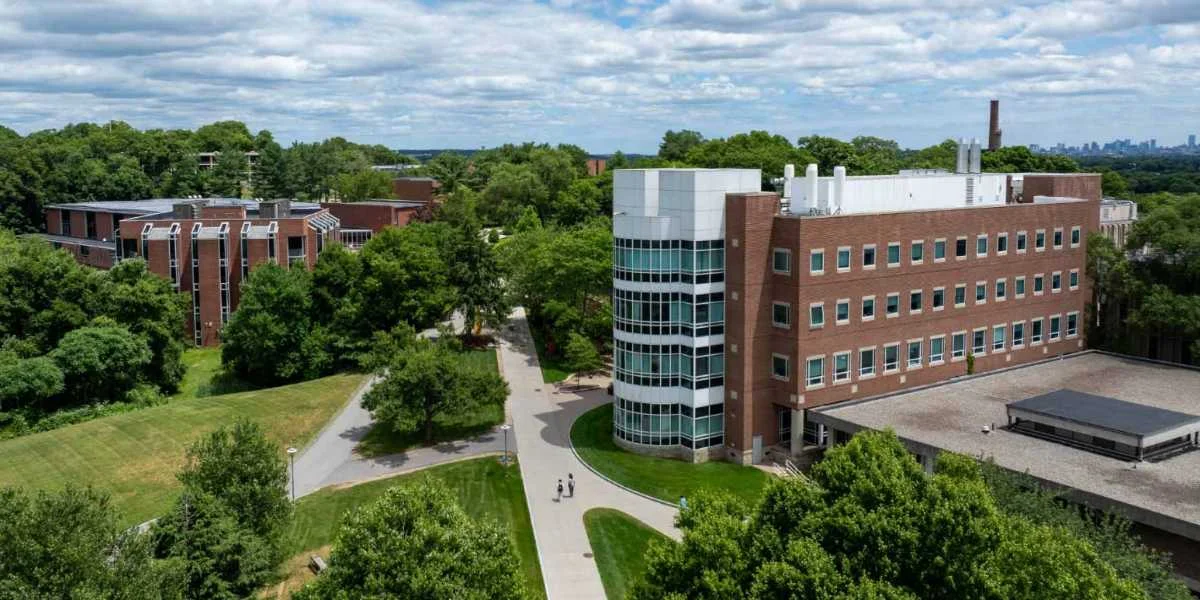
Brandeis University is a private research university located in Massachusetts, United States, with 5 undergraduate schools and 8 graduate schools. Brandeis University is strongest in the social sciences and the humanities. Its social science school has outstanding teaching and research in fields such as economics, sociology, and political science. The humanities school is likewise highly regarded in literary, historical, philosophical, and other humanistic fields, and has produced many distinguished humanities scholars and researchers. The university also encourages students to take part in practical work and community service, offering abundant internship and volunteer opportunities that prepare students to become future leaders.
About the university
School data is compiled from public sources and may change. Confirm current tuition, deadlines and requirements with the university before applying.
At a glance
Alumni starting salaries
Student body
Most popular majors
Graduate programs
Business Analytics
Business Analytics
Program Overview
Brandeis University's Business Analytics program equips students with the knowledge and skills needed to design, build, and leverage data-driven business projects across leading industries. The MSBA program teaches you how to organize and filter all of this new data with a focus on innovative business applications, specifically including mastery of foundational technical skills, grounding in probability, statistics, linear algebra, data structures, algorithms, and numerical analysis, and deep study of cutting-edge machine learning techniques.
Degree Type
Master of Science in Business Analytics (MSBA)
Program Length
12–16 months
STEM Designation
Yes
Source: Brandeis University MSBA
Application Requirements
Language Scores
Applicants must submit TOEFL, IELTS, Duolingo English Test, or PTE Academic scores, except those who meet one of the following conditions:
Will complete or have completed at least three full-time academic years of bachelor's degree study in a designated country (excluding ESL and online courses).
Have completed at least one full-time academic year of graduate study in a designated country at the time of application (excluding online courses).
Have worked full-time for at least three consecutive years in a designated country within the past four years.
Successful applicants typically score at least 100 on TOEFL iBT, at least 627 on TOEFL ITP, at least 7.0 on IELTS, at least 130 on the Duolingo English Test, or at least 68 on PTE Academic. Brandeis International Business School accepts TOEFL iBT Home Edition, IELTS Indicator, and IELTS Online scores. The business school considers only TOEFL scores from a single test date and does not consider MyBest™ scores. The admissions committee reviews applications holistically and considers every part of the application to assess communication skills and fit for the program. Unofficial test scores should be submitted as part of the online application. Official test scores are required only when you accept an offer of admission. TOEFL, IELTS, Duolingo English Test, and PTE scores are valid for a maximum of two years. Test scores must be valid at the time of application. If your test scores will expire before the program begins, you must submit official test scores before they expire. The International Business School's TOEFL code is 3122.
Essays
The essay question is: What motivates you to pursue a graduate program in business analytics? Which area of business analytics interests you most, and why? (500 words)
In addition, applicants must answer a short-answer question about their career goals. If necessary, applicants may also provide additional information not mentioned elsewhere in the application that they would like the admissions committee to consider as part of their application.
In addition to the program-specific application requirements above, the complete application requirements can be found in the corresponding Application Requirements section of our website.
Source: Brandeis University MSBA Application Requirements
Graduation Requirements
Credit Requirements
Students must complete 41 credits, including 21 credits of required courses.
Internship Requirement
In the 16-month program, an internship may be used for capstone credit.
Source: Brandeis University MSBA Graduation Requirements
Curriculum Overview
Students must complete 41 credits, specifically including:
21 credits of required courses
8 credits of core courses
8 credits of elective courses
4 credits of capstone courses
Required Courses
Course | Course Number | Credits
Launching Your Global Career | BUS 224g | 1
Python and Applications to Business Analytics | BUS 215f | 2
Foundations of Data Analytics | BUS 211a | 4
Advanced Data Analytics | BUS 212a | 4
Information Visualization | BUS 240f | 2
Machine Learning and Data Analysis for Business and Finance | BUS 241a | 4
Applied Econometrics with R | BUS 213a | 4
Core Courses
Course | Course Number | Credits
Marketing Analytics | BUS 256a | /
Business Dynamics | BUS 276a | /
Python and Applications to Business Analytics | BUS 216f | 4
Entrepreneurship and Rapid Prototyping | BUS 233a | 4
Marketing Management | BUS 252a | 4
For more information, see the Brandeis University Business Analytics course catalog.
Capstone
Course | Course Number | Credits
Applications of System Dynamics | BUS 286a | 4
Data Analytics Field Project | BUS 294a | 4
Internship | BUS 296a | 4
Directed Research | BUS 290a | 4
Elective courses may be BUS 297a: Approved Internship (2 credits) or any BUS, BUS/FIN, ECON, ECON/FIN, or FIN course offered by the International Business School.
Source: Brandeis University MSBA Curriculum Overview
Career Development
Graduates of the MSBA program have the knowledge, tools, and skills needed to enter the emerging field of business analytics. After completing the master's degree program in business analytics, students will know how to classify, manage, and present data to generate insights for innovative business decisions.
100% of applicants secured an internship or field project. 52% of students completed both.
96% of students completed an internship or field project in the United States.
$81,410 average U.S. salary and bonus; depending on industry and experience, salaries reach up to $125,000.
95% of job seekers found employment within six months of graduation.
At the International Business School, the MSBA program is designed to prepare students for employment in emerging, cutting-edge fields. The Career Strategies Center provides support from experienced, well-connected career advisors who connect graduates with top companies.
Area | Details | Link
Internships and Field Projects | Explore job functions that match your academic and personal interests. | Internships and Field Projects
Global Industry Treks | Students can experience how companies around the world operate and their cultures. | Global Industry Treks
Employer and Alumni Networking Opportunities | Students can connect with companies and organizations on campus and around the world. | Employer and Alumni Networking Opportunities
Career Center | The school's Career Strategies Center provides personalized services for your career. | Career Center
Source: Brandeis University MSBA Career Development
Finance
Finance
Program Overview
Brandeis University's Finance program is ranked among the top ten internationally and is recognized for its distinctive combination of financial analysis, theory and practice, diverse market specializations, and a faculty of leading academics and finance practitioners. The practical skills students gain through the program span a range of career areas, including risk management, transfer pricing and valuation, asset management, and corporate finance. The program is STEM (Science, Technology, Engineering, and Mathematics) designated and emphasizes hands-on experience; students can build practical, quantitative skills in the Bloomberg Lab, through corporate internships, field projects, and mentor-guided research.
Degree Type
Master of Science in Finance (MSF)
Program Length
9 or 16 months
Source: Brandeis University MSF
Application Requirements
English Proficiency Scores
Applicants must submit TOEFL, IELTS, Duolingo English Test, or PTE Academic scores, unless they meet one of the following conditions:
They will complete, or have already completed, at least three full-time academic years of bachelor's degree study in a designated country (excluding ESL and online courses).
They have completed at least one full-time academic year of graduate study in a designated country at the time of application (excluding online courses).
They have worked full-time for at least three consecutive years in a designated country within the past four years.
Successful applicants typically score at least 100 on TOEFL iBT, at least 627 on TOEFL ITP, at least 7.0 on IELTS, at least 130 on the Duolingo English Test, or at least 68 on PTE Academic. Brandeis International Business School accepts TOEFL iBT Home Edition, IELTS Indicator, and IELTS Online scores.
The business school considers only TOEFL scores from a single test date and does not consider MyBest™ scores. The admissions committee reviews applications holistically and considers every part of a student's application to assess communication skills and fit with the program. Unofficial test scores should be submitted as part of the online application. Official test scores are required only when you accept an offer of admission. TOEFL, IELTS, Duolingo English Test, and PTE scores are valid for a maximum of two years. Test scores must be valid at the time the application is submitted. If your test scores will expire before the program begins, you must submit official test scores before they expire. The International Business School's TOEFL code is 3122.
Essay
The written essay question is: What motivates you to pursue a graduate program in finance? (500 words)
In addition, applicants must answer short-answer questions about their career goals. If necessary, applicants may provide additional information not mentioned in the application that they would like the admissions committee to consider as part of the application materials.
Admission Background
Courses: Financial Management, Quantitative Methods
Prerequisites may be satisfied in the following ways:
1) Applicants who have passed the CFA Level I exam.
2) Completion of one course in Financial Management and one course in Quantitative Methods with a grade of B or better at an accredited three-year or four-year nonprofit college or university. Each course must carry at least 3 credits or the equivalent of one full semester of coursework.
3) Prerequisite courses can be completed online through Coursera and/or EdX courses. If you have already graduated and/or are unable to fulfill the course requirements at an accredited college or university before submitting your application, Coursera courses are an excellent way to meet these requirements before or after you apply. In your application for admission, you may indicate whether you need Coursera/EdX courses to satisfy the prerequisite requirements; if applicable, the admissions office will contact you after the application review with more details.
In addition to the program-specific application requirements described above, full application requirements can be found in the corresponding [Application Requirements] section of our website.
Source: Brandeis University MSF application requirements
Graduation Requirements
Credit Requirements
Students must complete 24 core course credits; the 16-month program requires an additional 18 elective course credits.
Internship Requirement
Students in the 9-month program must complete an internship project.
Students in the 16-month program may choose an internship, a field project, or research.
Source: Brandeis University MSF degree requirements
Curriculum Overview
Students in both program lengths must complete 24 core course credits.
The 9-month program requires an additional 4-credit internship project and 6–8 credits of electives.
The 16-month program requires selecting a concentration and completing 18 additional elective credits in that concentration, plus 4 internship credits.
Core Courses
Course | Course Number | Credits Financial Accounting and Analysis | FIN212a | 4 Investments | FIN201a | 4 Adv Corporate Finance | FIN204a | 4 Corporate Financial Modeling | FIN217f | 2 Launching Your Global Career | BUS224g | 1 Fixed Income Securities | FIN261a | 4 Options and Derivatives | FIN270a | 4 Financial Modeling Bootcamp | FIN217g | 1 If you choose the 16-month program:
Practicum
Course | Course Number | Credits | InternshipFIN292a | 4 | Field Project in FinanceFIN293a | 4 | Directed ResearchFIN294a | 4 | Corporate Finance & Valuation
Required Course
Course | Course Number | Credits | Managerial AccountingFIN214a | 4 | Group 2 Courses: Complete at least 8 credits from the following courses
Course | Course Number | Credits | Semester | Foundations of Data AnalyticsBUS211a | 4 | Fall/Spring | Financial Statement AnalysisFIN216f | 2 | Fall | Private EquityFIN231f | 2 | Fall/Spring | Mergers and AcquisitionsFIN232a | 4 | Fall/Spring | Venture Capital and Entrepreneurial FinanceBUS240a | 4 | Fall | Transfer Pricing: Theory and PracticeFIN247a | 4 | Fall | Predictive Analytics and Corporate InnovationFIN252a | 4 | Fall | Group 3 Courses: Complete at most 6 credits from the following courses
Course | Course Number | Credits | Semester | Real Estate FundamentalsBUS235f | 2 | Fall | Corporate Fraud: Detection and PreventionBUS279f | 2 | Spring | Econometrics with RECON213a | 4 | Fall | Real Estate FinanceFIN225f | 2 | Spring | Social Impact InvestingBUS234a | 4 | Spring | Credit Risk AnalysisFIN242f | 2 | Fall/Spring | New Frontiers of Finance: From Animal Spirits to Cyber RiskFIN282f | 2 | Fall | Approved Internship in Corporate FinanceBUS297a | 2/ | Asset Management
Required Course
Course | Course Number | Credits | International Portfolio ManagementFIN263a | 4 | Group 2 Courses: Complete at least 8 credits from the following courses
Course | Course Number | Credits | Semester Portfolio Financial Modeling | FIN218f | 2 | Fall/Spring Social Impact Investing | FIN234a | 4 | Spring Security Analysis | FIN237f | 2 | Spring Venture Capital and Entrepreneurial Finance | FIN240a | 4 | Fall Credit Risk Analysis | FIN242f | 2 | Fall/Spring Options and Derivatives II | FIN271a | 4 | Fall Group 3: Select a maximum of 4 credits from the following courses
Course | Course Number | Credits | Semester Foundations of Data Analytics | BUS211a | 4 | Fall/Spring Real Estate Finance | FIN225f | 2 | Spring Private Equity | FIN231f | 2 | Fall/Spring Technical Analysis | FIN236f | 2 | Fall Predictive Analytics and Corporate Innovation | BUS252a | 4 | Fall New Frontiers of Finance: From Animal Spirits to Cyber Risk | FIN282f | 2 | Fall Computer Simulation and Risk | FIN285a | 4 | Fall/Spring Other electives: Select a maximum of 2 credits
BUS 297a - Approved Finance Internship (2 credits), or any finance, business, economics, business/finance, or economics/finance course offered by the International Business School (except BUS 249f) (including but not limited to the courses above, if not already used to satisfy that requirement).
Risk Management
Required Course
Course | Course Number | Credits | Semester Computer Simulation and Risk Assessment | FIN285a | 4 | Fall/Spring Applied Risk Management | FIN279a | 4 | Spring Group 2: Select 6 credits from the following courses
Course | Course Number | Credits | Semester Foundations of Data Analytics | BUS211a | 4 | Fall/Spring Cyber Security and Operational Risks | BUS281f | 2 | Fall Portfolio Financial Modeling | FIN237f | 2 | Fall/Spring Credit Risk Analysis I | FIN240a | 2 | Fall/Spring Options and Derivatives II | FIN242f | 4 | Fall Approved Internship in Risk Management | FIN271a | 2 | / Group 3: Select 4 credits from the following courses
Course | Course Number | Credits | Semester Advanced Data Analytics | BUS212a | 4 | Fall/Spring Corporate Governance | BUS278f | 2 | Fall Corporate Fraud: Detection and Prevention | BUS279f | 2 | Spring Real Estate Finance | FIN225f | 2 | Spring Financial Risk Management | FIN280a | 4 | Fall FinTech
Required Courses: Course, Course Number, Credits, Semester — Python and Applications to Finance, FIN215f, 2, Fall; Predictive Analytics and Corporate Innovation, FIN252a, 4, Fall; Advanced Quantitative Analysis in Finance, FIN253a, 4, Spring.
Group 2: Select a maximum of 8 credits from the following courses: Course, Course Number, Credits, Semester — Econometrics with R, BUS211a, 4, Fall; Technical Analysis, BUS281f, 2, Fall; Venture Capital and Entrepreneurial Finance, FIN237f, 4, Fall; New Frontiers of Finance: From Animal Spirits to Cyber Risk, FIN240a, 2, Fall; Computer Simulation and Risk, FIN242f, 4, Fall/Spring.
Sources:
Brandeis University MSF Course Descriptions
Brandeis University MSF Corporate Finance and Valuation
Brandeis University MSF Asset Management
Brandeis University MSF Risk Management
Brandeis University MSF FinTech
Career Development
Graduates of the Master of Science in Finance (MSF) leave with the financial expertise needed to add immediate value to companies around the world. The program develops master's students in finance who possess deep knowledge, specialized software skills, critical thinking ability, and a global perspective, enabling them to succeed in roles across risk management, data analytics, transfer pricing, valuation, corporate finance, asset management, and related fields.
100% of students secured an internship or field project. 25% of students completed both.
85% completed an internship or field project in the United States.
$92,452 average U.S. salary and bonus; depending on industry and experience, compensation can reach up to $150,000.
91% of job seekers found employment within six months of graduation.
From risk management to transfer pricing, the Career Strategy Center helps students apply the financial expertise gained in the classroom to the career paths they aspire to pursue.
Internships and Field Projects: Explore job functions that align with your academic and personal interests. Global Industry Treks: Students can experience how companies around the world operate and their cultures.
Global Industry Treks and employer and alumni networking opportunities allow students to connect with companies and organizations both on campus and around the world. Employer and alumni networking opportunities. Center for Career Strategy at the college provides personalized services for your career. Career center. Source: Brandeis University MSF job search post.
Computer Science
Computer Science
Program Overview
The Computer Science program at Brandeis University is designed for students who already hold a bachelor's degree in computer science. The program aims to provide students with deep and broad academic knowledge while developing professional skills in computer science.
Graduate courses in computer science are relatively small, which allows students to receive personalized attention while receiving Brandeis's signature rigorous interdisciplinary training. In addition to individual faculty laboratories, Brandeis University has many computer science research laboratories. The university's proximity to Boston and Cambridge, with their thriving technology sector (including Google, Microsoft, Oracle, and Amazon), provides students with additional research, internship, and employment opportunities.
Degree Type
Master of Science in Computer Science
Program Length
9 months
Source: Brandeis University MSCS
Application Requirements
English Language Proficiency
Applicants must submit a score report from one of the following English language proficiency exams:
TOEFL iBT
TOEFL Revised Paper-delivered Test
TOEFL ITP Plus for China Solution
IELTS Academic
PTE Academic
Duolingo English Test
You can arrange delivery of TOEFL iBT or Revised Paper-delivered Test score reports by providing ETS with institution code 3261 (no department code is required); please note that the university does not accept MyBest scores from ETS. TOEFL ITP Plus score delivery can be arranged through your Vericant account, Duolingo score delivery through your account, and PTE Academic score delivery through your Pearson account. For more information about this requirement, please see the International Students page.
Statement of Purpose
Explain your reasons for pursuing a graduate program. In addition, please describe your academic qualifications and your purpose in studying this program.
GRE
Applicants who have earned or will earn a degree from an accredited U.S. institution of higher education before enrolling at Brandeis University are not required to take the GRE. If you have not earned, or will not earn, a degree from an accredited U.S. institution of higher education before enrolling at Brandeis University, you must take the GRE. The GRE institution code is 3092 (please note: this institution code applies only to GRE scores). MyBest scores from ETS are not accepted. Undergraduates applying to Brandeis's bachelor's/master's dual-degree programs may be exempt from the GRE.
Admission Background
A bachelor's degree in computer science has been earned
In addition to the program-specific application requirements above, the complete application requirements can be found in the corresponding Application Requirements section of our website
Source: Brandeis University MSCS Application Requirements
Graduation Requirements
Credit Requirements
Students must complete 9 courses
Source: Brandeis University MSCS Graduation Requirements
Course Information
Students must complete nine 4-credit COSI courses numbered 100 or above. Note: COSI 210a may be retaken at most once for credit. Students who did not successfully complete an operating systems course at the undergraduate level must choose COSI 131a among their nine electives.
For more courses, please read the course catalog for the Computer Science program at Brandeis University.
Source: Brandeis University MSCS Course Information
Career Development
Alumni of this program have worked at well-known companies such as Google, Microsoft, Dell EMC, Uber, and BBN Technologies. Software developers, professors, design engineers, and robotics programmers are among the many careers available to computer science students after earning a graduate degree. Brandeis University's proximity to Cambridge and Route 128 allows students to pursue internships according to their interests, and the strong alumni network enables students to connect with professionals at leading technology companies. The graduate school's career development team offers a range of resources, including resume/CV assistance, job search, and networking.
Aspect Content Link Career Fellows Program The Brandeis GSAS Spring Career Fellowship provides skills training for GSAS students in all disciplines to help them prepare for careers in academia, nonprofits, industry, and beyond. The program's goal is to cultivate a community of students committed to planning their master's or postdoctoral futures. The university also hopes that fellows will serve as ambassadors, encouraging lively discussions about professional and career development in their respective departments. As a member of this team, everyone is encouraged to engage in lively discussions about professional and career development through programming and Slack. The fellowship is open to all GSAS doctoral and master's students. Career Fellows Program Three Minute Thesis Competition The GSAS Three Minute Thesis competition will hone students' presentation skills, connect them with other GSAS students, and offer the chance to win prizes of up to $1,000. Three Minute Thesis Competition Career Resources The university offers a wide variety of resources, including strategy and self-assessment, exploring career paths, resumes and cover letters, interview preparation, and internships and networking. Career Resources Source: Brandeis University MSCS Career Development
Public Policy
Public Policy
Program Overview
The Public Policy program at Brandeis University is built on the belief that knowledge should advance social justice. The program teaches students to look beyond current structures and pursue tangible progress through pragmatic, politically feasible approaches to social change. It trains students to understand the broader context of social problems, the systemic inequalities that intensify them, and the analytical tools needed to assess root causes and implement equitable solutions. Students learn how to address critical social issues such as closing the racial wealth gap or promoting better integration of people with disabilities. The program's areas of focus include economic and racial equity, children, youth, and families, health policy, women, gender, and sexuality, behavioral health policy, and general social policy.
Degree Type
Master of Public Policy (MPP)
Program Length
2 years
Source: Brandeis University MPP
Application Requirements
Language Scores
Applicants must submit TOEFL, IELTS, Duolingo English Test, or PTE Academic scores, unless they meet one of the following conditions:
They will complete or have completed at least three full-time academic years of bachelor's degree study (excluding ESL and online courses) in a designated country.
They have completed at least one full-time academic year of graduate study (excluding online courses) in a designated country at the time of application.
They have worked full-time for at least three consecutive years in a designated country within the past four years.
Successful applicants typically score at least 94 on the TOEFL iBT, 7.0 on the IELTS, or 115 on the Duolingo English Test. The school considers only TOEFL scores from a single test date and does not consider MyBest™ scores. The admissions committee reviews applications holistically and considers every part of the application to assess communication skills and fit for the program. Unofficial test scores should be submitted as part of the online application. Official test scores are required only if you accept an offer of admission. TOEFL, IELTS, Duolingo English Test, and PTE scores are valid for a maximum of two years. Test scores must be valid at the time of application. If your scores will expire before the program begins, you must submit official scores before they expire. The TOEFL code is 3097.
Essays
As part of the application, you will be asked to answer several questions, but please upload your responses as a single Word or PDF document.
Essay 1:
In essay form, explain why you are pursuing graduate study. In addition, describe your qualifications for the master's program and your goals for pursuing it. Be sure to describe your academic and career plans and how the degree will help you achieve your goals. The following are some questions to consider: Why have you chosen to pursue this field at this point in your career? Which experiences or activities have shaped your qualifications for this field (academic experience, research papers, work responsibilities, extracurricular activities, volunteer work)? How do these experiences relate to your decision to pursue this graduate program? What main issues or research topics interest you most? Why is this program a good fit for you, and what do you hope to gain from it? How will this program help you achieve your long-term goals? (Double-spaced, 2-3 pages)
Essay 2:
Brandeis University was founded in 1948 to address antisemitism, racism, and sexism in higher education. How have your educational or professional experiences shaped your views on these values? (Maximum 250 words)
(Optional) Essay 3:
If applicable, please explain any major gaps in your education or employment, or explain any other special circumstances you believe should be considered in your application. (Maximum 250 words)
In addition to the program-specific application requirements above, full application requirements can be found in the corresponding Application Requirements section of our website
Sources:
Brandeis University MPP Application Requirements
Brandeis University MPP International Student Application Requirements
Graduation Requirements
Credit Requirements
Students must complete 64 credits, including 40 credits of core courses, at least 3 courses in a specialization area, and 3 elective courses.
Thesis Requirement: MPP Capstone
The MPP capstone is a one-semester course that culminates in a thesis and presentation. Students settle on a topic at the start of the semester and then get to work, completing their project over 13 weeks, a timeline that matches the preparation of a real-world policy brief. Students work with the capstone professor to ensure their topic is well focused.
Typically, students choose a topic related to their specialization, which helps them understand the background knowledge and relevant literature in the policy field. After choosing a topic, students conduct extensive research and a literature review to diagnose the policy problem and weigh the pros and cons of several potential policy solutions. The capstone is designed to highlight the policy analysis skills students have gained in the first three semesters of the MPP program. The final product is a 25-30 page policy brief and an oral presentation. The capstone places strong emphasis on concise, persuasive writing and oral communication.
Internship Requirement
During the summer between the first and second years, you will apply your newly acquired skills through an internship, building your policy experience and allowing you to explore a range of career options in social policy, from research institutions and nonprofit organizations to positions at city, state, or federal government agencies.
Sources:
Brandeis University MPP Credit Requirements
Brandeis University MPP Internship Requirement
Brandeis University MPP Capstone
Curriculum Overview
Students must complete 64 credits, including:
40 credits of core courses, including an introductory policy foundations course and a diversity requirement.
At least 3 courses in a specialization area
3 elective courses
Capstone course
Core Courses
Course | Course NumberHistorical and Contemporary Developments in Social Welfare | HS303aResearch Methods | HS332aApplied Regression Analysis | HS404bSocial Policy and Management Through the Lens of Equity | HS412fEconomic Theory and Social Policy | HS372bApplied Econometrics | HS405aSocial Policy Analysis: Technique and Application | HS532bPolicy and Program Evaluation | HS307fPolicy to Action: Understanding Implementation | HS403fCapstone Seminar | HS336aPublic Finance and Budgeting | HS341aDiversity Requirement
Course | Course NumberContemporary Issues in Gender and Public Policy | HS212aPolicy Perspectives on Women, Work, and Inequality | HS216fLaw and Social Justice: Gender Equity Policies and Litigation | HS273fImmigration Policy and Human Rights | HS307aPolicy Approaches to Gender-Based Violence | HS309fRace and Stratification in the U.S. Economy | HS314fLGBTQ+ Justice: A History of Pride, Prejudice, and Policy in the United States | HS320fDisability Policy: Intersections with Health, Poverty, Education and Family Policy | HS334fPolicy Perspectives on Criminal Justice Disparities | HS346bCapitalism and the Welfare State | HS354aLaw and Social Justice: Constructions of Race and Ethnicity and Their Consequences | HS528fPerspectives on Economic and Racial Equity | HS534bElective Courses
Course | Course NumberImmigration Policy and Human Rights | HS307aRace and Stratification in the U.S. Economy | HS314fLabor Income, Labor Power, and Labor Markets | HS317fLGBTQ+ Justice: A History of Pride, Prejudice, and Policy in the United States | HS320fSociological Inquiry (Housing Policy) | HS322bFor more information, see the elective course catalog for the Public Policy program at Brandeis University.
Sources:
Brandeis University MPP Core Courses
Brandeis University MPP Diversity Courses
Brandeis University MPP Elective Courses
Career Development
The Brandeis University Public Policy alumni network is dedicated to social justice issues and offers internships and job opportunities to current students. As a Heller student, you will work closely with the career development center to identify your career goals and develop strategies to achieve them. Beginning with an online career academy in the summer before classes start, MPP students meet regularly with career advisors throughout their time at Heller, attend career development workshops, and participate in employer events. MPP students hold positions in government and mission-driven organizations across the country. Typically, one-third of alumni work in Washington, D.C., one-third work in Boston, and the remaining third are spread across the United States. In a recent survey of the Class of 2020-2021, 97% of graduates were employed or pursuing further study one year after graduation.
The Heller career development office/center works with employers, students, and alumni to connect talented people with impactful career opportunities. The team asks some basic questions: What do you want from your work? How will this job make an impact? Then, through one-on-one career advising, collaboration with employers, skill-building resources, and more, it helps build careers at Heller that advance social justice in the field.
Sources:
Brandeis University MPP Alumni Resources
Brandeis University MPP Career Center
Campus life
Transportation
Nearby Airport
Boston Logan International Airport
Distance from campus: 16.3 miles
Getting from campus to the airport:
By car or rideshare:
Typically takes about 20–25 minutes. It may take longer during heavy traffic.
By public transit:
Take Bus 553 to Bus 504, then transfer to the BB. Alternatively, take the Fitchburg Line and transfer to the Orange Line, then take the BB.
Nearby Train Station
Waltham Station
Getting from campus to the train station:
By car or rideshare:
Typically takes 5 minutes. It may take longer during heavy traffic.
By public transit:
Take the Fitchburg Line, Bus 553, or Bus 70 to reach the station, or you can walk there in 25 minutes.
City Public Transit
Bus service: Several Massachusetts Bay Transportation Authority (MBTA) bus routes run near campus, including 70, 553, and 554, connecting the campus and surrounding areas and making it easy for students to travel between campus and the city.
On-campus shuttle: Brandeis University also offers an on-campus shuttle service connecting key locations on the main campus, providing students with convenient on-campus transportation.
Train service: The closest train station to Brandeis University is Waltham Station, where students can take MBTA Fitchburg Line trains to downtown Boston and other destinations.
Safety
Brandeis University places great importance on campus safety and is committed to providing a safe and reliable learning and living environment for students, faculty, staff, and visitors. The university safeguards campus safety through a variety of measures and strategies; the main ones are listed below.
Brandeis Emergency Medical Corps (BEMCO)
The Brandeis Emergency Medical Corps (BEMCo) is a student-run volunteer emergency medical service at Brandeis. BEMCo is dedicated to providing prompt, efficient emergency medical care to the Brandeis community. Today, under the guidance of the Director of Public Safety and the Director of the University Health Center, BEMCo continues to meet the community's emergency medical needs. Call 781-736-3333.
Community Training & Education
The Brandeis University Department of Public Safety is committed to working with the community to improve safety and preparedness for everyone. One of the department's top priorities is ensuring the highest level of service to foster a safe learning and working environment. Visit the safety training website to find courses.
Crime Prevention and Reporting
Call the emergency line at 781-736-3333. Identify yourself and your location to the police dispatcher. Your identity will be kept confidential, but it is necessary if more details about an incident are needed.
Blue Light Emergency Phones
The Brandeis campus is equipped with a series of blue light emergency phones. Phone locations can be found on the campus map. These phones have both an emergency call button and a regular call button. They work as follows: 1. Emergency call button (red): automatically contacts the police dispatch center and activates two-way communication at that location. Once the dispatcher acknowledges the call, the caller can provide the police with any relevant information about the emergency. Police will be dispatched to the appropriate location. 2. General call button: connects the caller to the police dispatch center and activates two-way communication at that location. Once the dispatcher acknowledges the call, the caller can provide the police with any relevant information about their situation (for example, reporting a suspicious person, asking for directions, or reporting a broken-down vehicle).
Housing
Brandeis University has more than ten undergraduate residence halls. Community living staff are dedicated to building a high-quality living environment, promoting strong leadership development among community members, and fostering personal growth.
Residential Colleges
First-year students
Massell
North Quads
Sophomores
Skyline
East
Rosenthal
The Village
567 South Street
On-campus housing application steps
Complete the housing application through the MyHousing portal by February
Once housing numbers are released, you can form roommate groups
Dining
Campus Dining Locations
Upper Usdan offers soups, salads, sandwiches, burritos, and sushi freshly prepared daily.
Lower Usdan, a dining facility where you can eat as you like, offers a broader selection, from vegan and vegetarian options to international cuisine, pizza, salads, and more.
Sherman Dining Hall offers a range of glatt kosher and non-kosher meals.
Stein offers delicious appetizers and entrées, beer and wine for students 21 and older, and a late-night breakfast buffet for those who want a bite in the middle of the night.
Meal Plans
Meal Plan requirements:
All students living in Brandeis residence halls must have a meal plan.
Students living in non-Brandeis housing may choose a commuter/voluntary meal plan.
During the first few weeks of each semester, students may choose to change their plan.
The meal plan selected for the fall semester will automatically renew in the spring as the plan selected for the fall, unless a change is made before the published deadline.
Changing a meal plan will result in an adjustment to the account balance.
Changing a meal plan will result in prorated charges after the start of the semester.
Meal plans credited to the account before the semester bill due date will be due before the due date.
Meal plans credited to the account after the due date and before the first day of the semester will be due before the first day of the semester.
Meal plans credited to the account on or after the first day of the semester will be due immediately.
Any charges not paid by the specified deadline will result in a registration hold and may incur a late fee.
Meal Plan prices:
Meal plan options for traditional and suite-style housing
Plan type
Meals per week
Included points
Guest meals
Cost per semester
All Access +55 $175 5 $3,992 All Access +1010 $250 5 $4,360 Apartment-style housing meal plans
Plan type
Included points
Guest meals
Cost per semester
120 Block Plan 120 40 0 $580 80 Block Plan 80 30 0 $5 Commuter/voluntary meal plans
Plan type
Included points
Cost per semester
90 Block Plan 100 $1,175 60 Block Plan 60 $905 Points-only plan 260 $260
Admissions
Admissions data
Application requirements
Application checklist

Application deadlines
Transfer requirements
Transfer checklist
Transfer deadlines
Similar universities
Admissions FAQ
What is the acceptance rate at Brandeis University?
The reported acceptance rate is 35%. Acceptance rates vary by applicant pool and application cycle; confirm the current figure with Brandeis University.
What SAT scores does Brandeis University expect?
The reported SAT range is 1370-1520. Test-optional and score-reporting policies can change by application cycle; check the university's official admissions page before applying.
When is the application deadline at Brandeis University?
The listed Regular Decision deadline is Jan. 2. Deadlines can vary by program and application cycle; confirm the exact date with the university.
How much does Brandeis University cost?
The listed tuition and fee figure is $18,584. Costs vary by residency, programme and academic year; confirm current costs with the university.
Where is Brandeis University located?
Brandeis University is located at Brandeis University 415 South Street Waltham, MA 02453.
Planning your application?
Build a school list around your profile.
Ivy Elite advisors help students compare programs, plan coursework and prepare applications for U.S. universities.