


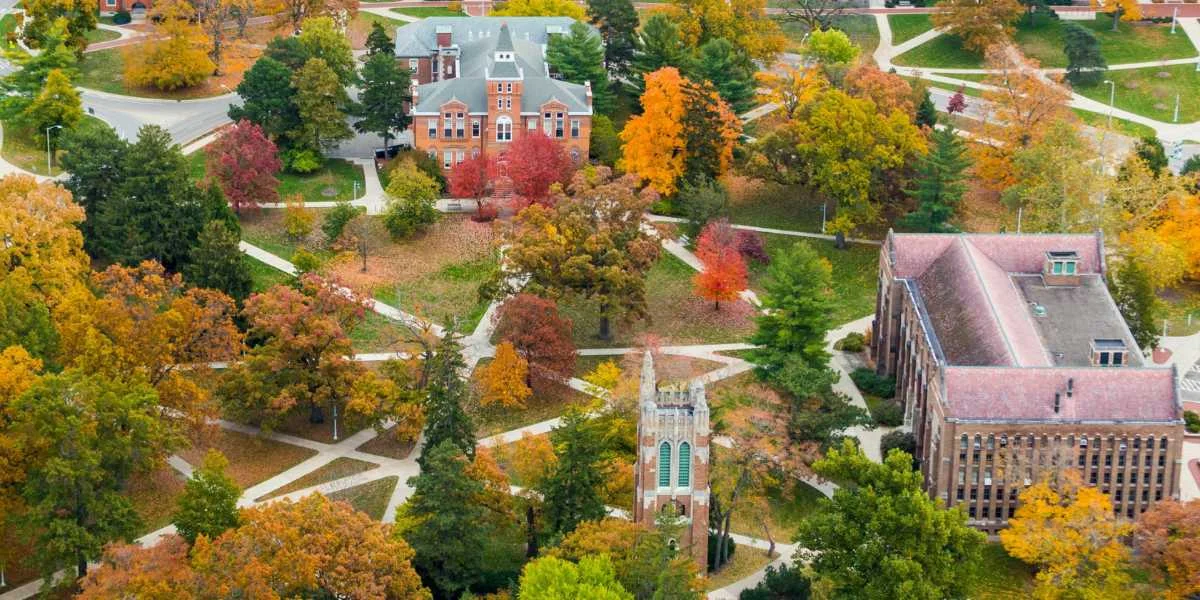
Michigan State University (MSU) is a public research university located in Lansing, Michigan, with 17 graduate colleges and 13 undergraduate colleges. Michigan State University is particularly strong in agriculture and agronomy and in engineering technology. Its College of Agriculture is dedicated to addressing the challenges facing global agricultural and food systems, including food safety, sustainable agriculture, and environmental protection. The College of Engineering has notable achievements in many fields, with outstanding research and teaching, especially in automotive engineering, aerospace engineering, materials science, and mechanical engineering. The university has first-rate teaching facilities and research centers that attract many excellent faculty members and scholars.
About the university
School data is compiled from public sources and may change. Confirm current tuition, deadlines and requirements with the university before applying.
At a glance
Alumni starting salaries
Student body
Most popular majors
Graduate programs
Electrical and Computer Engineering
Electrical and Computer Engineering
Program Overview
The Electrical and Computer Engineering program at Michigan State University is the Electrical and Computer Engineering program. The program is built on outstanding faculty and the quality of their research. The university has created an exceptional environment that fosters collaboration across departments, throughout the campus, and with other universities. This interdisciplinary atmosphere of cooperation encourages multidisciplinary projects, enabling students to take part in teamwork that reaches beyond their own discipline to address together some of the most challenging problems of today and the future. In short, the Electrical and Computer Engineering program emphasizes collaboration across disciplines and interdisciplinary research, giving students opportunities to interact with teams from different fields to solve complex real-world problems together.
Degree Type
Master of Science Electrical and Computer Engineering
Source: Michigan State University Electrical and Computer Engineering
Application Requirements
Language Requirements
All international applicants must submit TOEFL scores (PDF). Applicants are strongly encouraged to take the internet-based test rather than the paper-based test. TOEFL scores must be sent directly to the university by Educational Testing Service. For any reason, the university will not consider photocopies of TOEFL scores. The university also recognizes IELTS scores sent to us by the testing agency. English score submission institution code: 1465
TOEFL total score of 80 (19 in each section except Writing, which requires 22)
IELTS score of 6.5 or above.
GRE
All international applicants must submit Graduate Record Examination (GRE) General Test scores. Domestic students are strongly encouraged, but not required, to take the GRE. GRE scores must be sent directly to the university by Educational Testing Service.
GRE Quantitative scores are typically above 159
GRE Verbal scores below 146 and Analytical scores below 3.0 are generally not accepted
Admission Background
Students should hold a four-year bachelor's degree in electrical engineering or a related field.
Applicants should receive a graduate assistantship, fellowship, or scholarship.
Successful domestic applicants rank near the top of their undergraduate class. Most successful domestic applicants have a GPA of 3.5 or above. Domestic applicants with a GPA below 3.2 are generally not considered for admission.
Successful international applicants generally graduate from top-ranked institutions and rank in the top 10% of their class.
In addition to the program-specific admission requirements above, the complete application requirements can be found in the corresponding Application Requirements section of our website
Source: Michigan State University Electrical and Computer Engineering Admission Requirements
Graduation Requirements
Credit Requirements
Students must complete a total of 30 credits under Plan A (with thesis) or Plan B (without thesis) and meet the specific requirements
Additional Graduation Requirements
If a student chooses Plan A:
The student must complete at least 4 credits, but no more than 8 credits, of master's thesis research (ECE 899)
Pass the thesis defense oral examination.
If a student chooses Plan B:
Complete a final examination or evaluation
Source: Michigan State University Electrical and Computer Engineering Graduation Requirements
Course Information
Students must complete a total of 30 credits under Plan A (with thesis) or Plan B (without thesis),
with the following specific requirements:
Both plans require completion of at least four 800- or 900-level Electrical and Computer Engineering courses totaling at least 12 credits. Two of these courses must be selected from the core courses
In consultation with their academic advisor, students must complete supporting courses outside the department at the 400 level and above. Plan A students must earn at least 20 credits at the 800 level or above, and Plan B students must earn 18 credits at the 800 level or above.
First-year graduate students must attend seven seminars in the graduate seminar series.
Plan A students must complete at least 4 credits, but no more than 8 credits, of master's thesis research (ECE 899), as well as the thesis defense oral examination
Plan B students must complete a final examination
Core Courses
Course Course Number Credits Advanced Power Electronics and Applications ECE821 3 Embedded Cyber-Physical Systems ECE830 3 Advanced Electromagnetic Fields and Waves ECE835 3 Performance Modeling of Communication Networks ECE842 3 Linear Systems and Control ECE851 3 Analysis of Stochastic Systems ECE863 3 Physical Electronics ECE874 3 Source: Michigan State University Electrical and Computer Engineering Course Information
Career Development
Aspect Content Source The Center for Spartan Engineering Students can explore future career plans, prepare for job searches, and connect with top employers. Specific services include resume review, career planning, online resources, and Handshake. The Center for Spartan Engineering Job Postings Employers can connect with candidates from the College of Engineering, post job openings, attend recruiting events, and learn about co-op and internship opportunities. RECRUIT SPARTAN ENGINEERS College Employment Students can search faculty and staff job openings, explore the East Lansing area, and learn about the MSU employee community. College employment Source: Michigan State University Electrical and Computer Engineering Career Development
Public Policy
Public Policy
Program Overview
The goal of the Public Policy program at Michigan State University is to provide students with analytical and practical tools so they can become leaders in the policy field. The program is designed to train students to develop, analyze, and implement policies that are soundly grounded and rigorous. By combining two highly ranked departments, political science and economics, the Master of Public Policy program emphasizes training in policy analysis, policy feasibility, and economic and quantitative analysis. In short, the program focuses on developing students' leadership abilities in the policy field and offers comprehensive training spanning political science and economics so that students can successfully address complex policy problems.
Degree Type
Master of Public Policy
Program Length
2 years
Source: Michigan State University Public Policy
Application Requirements
Language Requirements
All international applicants and applicants whose native language is not English must demonstrate English proficiency, which is a condition of regular admission to Michigan State University. Such applicants must meet certain minimum standards to demonstrate their English proficiency.
Because many international English proficiency tests have been canceled, MSU will temporarily accept the following tests: the Duolingo English Test, the TOEFL iBT Special Home Edition, and the IELTS Indicator test. English score submission institution code: 1465
TOEFL requirements: Reading, Listening, and Speaking subsection scores must not be below 19; Writing subsection score must not be below 22; total score must not be below 80
IELTS requirements: minimum overall score of 6.5. Subsection scores must not be below 6.0.
Duolingo requirements: minimum score of 110
Applicants who earned a bachelor's degree in the United States (or another English-speaking country) may be exempt from the English test; the Bachelor of Arts or Bachelor of Science program should be a regular four-year degree, and most credits must have been earned in the United States (or another English-speaking country).
Statement of Purpose
The statement of purpose focuses on the applicant's ability and preparation to undertake graduate-level work, the applicant's interest in public policy, and career goals.
In addition to the program-specific admission requirements above, the complete application requirements can be found in the corresponding Application Requirements section of our website
Source:
Michigan State University Public Policy Application Requirements
Michigan State University Public Policy International Student Requirements
Graduation Requirements
Credit Requirements
The Master of Public Policy program requires 39 semester credits, including 27 credits of core courses, 6 credits of the PPL 891 Issues in Public Policy course, and 9 credits of policy-related elective courses.
Thesis Requirement
None; students must complete a capstone project. For the relevant capstone project requirements, please refer to the Michigan State University Public Policy capstone project
Internship Requirement
Students must complete three credits of PPL 894 (Field Experience Practicum). In-service students holding significant positions in the public or nonprofit sector may be exempt from the internship requirement. The internship gives students a practical perspective on solving policy and management problems and is an important complement to classroom learning.
Source:
Michigan State University Public Policy Graduation Requirements
Michigan State University Public Policy Internship Requirements
Course Information
The Master of Public Policy program requires 39 semester credits, with the following specific requirements:
24 credits of required courses
6 credits of the PPL 891 - Issues in Public Policy course
9 credits of policy-related elective courses
3 credits of internship credit
Required Courses
Course Course Number Credits Quantitative Methods I PPL801 3 Quantitative Methods II PPL802 3 Microeconomic Theory PPL805 3 Policy Evaluation PPL806 3 Public Policy PPL807 3 Policy Development and Administration PPL808 3 Public Finance PPL813 3 Policy Workshop PPL890 3 Supplemental Courses
Course Course Number Credits Issues in Public Policy PPL891 6 Field Experience Practicum Course
Course Course Number Credits Field Experience Practicum PLS894 3 Source: Michigan State University Public Policy Course Information
Career Development
The expertise, opportunities, advice, and support you gain in the MPP program will give you a competitive advantage when you enter the job market. The university offers numerous resources to help you pursue a meaningful career. These resources include personalized career coaching to help you with your job search, professional internships that increase your experience in your chosen field, workshops to prepare you for the job search, and new job and internship postings. The university also hosts speaker and networking events that introduce you to practitioners and potential employers in your chosen field. The curriculum is designed to help you find the job that suits you, matching your skills and knowledge with your ideals and the needs of the world.
Source: Michigan State University Public Policy Career Development
Finance
Finance
Program Overview
The Michigan State University Finance program uses small class sizes to ensure personalized attention and close interaction between students and faculty. The curriculum primarily covers key areas such as financial analysis, corporate management, asset valuation, securities trading, and insurance and risk management. Its courses offer flexibility and cutting-edge instruction, allowing students to tailor a comprehensive course of study to their interests and market demand.
Degree Type
Master's in Finance
Program Length
12 months
Source: Michigan State University Master's in Finance
Application Requirements
English Proficiency
International students must submit English proficiency test scores (school code 1465, department code 4102) meeting the following minimums:
IELTS 7
TOEFL Paper-Based Test 600
TOEFL Computer-Based Test 250
TOEFL Internet-Based Test 100
Students with lower scores or no scores may be admitted provisionally under applicable university regulations.
GRE/GMAT
The university requires either a GMAT score (minimum 600, school code QH0-5P-69) or a GRE score (minimum 310). GMAT/GRE scores must be less than 5 years old.
Currently enrolled Michigan State University undergraduates in good academic standing are eligible for a GMAT/GRE waiver.
Admission Background
Applicants should hold a four-year bachelor's degree from an accredited institution with a cumulative GPA of 3.0 or higher.
At least two years of full-time work experience after earning the bachelor's degree. Exceptional candidates may be exempt from this requirement.
Working knowledge of personal computers, including at minimum internet, word processing, and spreadsheet use.
Students should have completed coursework equivalent to MTH 124: Survey of Calculus I and STT 315: Introduction to Business Probability and Statistics.
In addition to the program-specific admission requirements above, full application requirements can be found in the corresponding Application Requirements section of our website.
Source: Michigan State University Master's in Finance Application Requirements
Graduation Requirements
Credit Requirements
Students must complete 30 credits, including 18 credits in 800-level or above courses offered by the Finance program and 12 credits of elective courses.
Grade Requirements
Students must maintain an overall average of 3.25 or higher.
Source: Michigan State University Master's in Finance Graduation Requirements
Curriculum
Students must complete 30 credits of coursework as follows:
Complete 18 credits in 800-level or above courses offered by the Department of Finance. These 18 credits must include FI 801 or FI 980 unless the student passes the program's exemption exam.
Complete 12 credits of elective courses approved by the program director. These credits may be earned in finance courses or in related disciplines such as economics, statistics, or mathematics. At least 9 of these 12 credits must be in 800-level or above courses.
Finance Courses
Course Course NumberManagerial FinanceFI801Financial ModelingFI845Introduction to Investments IIFI851Financial Derivatives IFI852Security Analysis and Portfolio ManagementFI857Multinational Corporate FinanceFI860Corporate Strategy ValuationFI862Venture Capital and Private EquityFI870Financial Data AnalyticsFI872Topics In FinanceFI891ATopics In FinanceFI891BBusiness LawGBL891Source: Michigan State University Master's in Finance Curriculum
Career Development
The Russell Palmer Career Management Center is dedicated to providing high-level, personalized service to MBA students, master's students, and employers. The center works with students to connect their career aspirations with future careers through a full suite of services and resources, including support with career planning, networking, resumes, cover letters, and interviews.
AreaDetailsOne-on-One Career AdvisingThe school assigns each student a career advisor based on their program, professional goals, and functional interests, providing support in the following areas:
Exploring career options and setting goals
Reviewing resumes and cover letters
Mock interviews
Job offer management and negotiation
Career Management Course Formats include lectures and panel discussions with career professionals, workshops, and a for-credit career management course (full-time MBA). Topics covered during orientation and throughout the academic year include:
Navigating the job search on and off campus
Developing a personal value proposition
Resumes, cover letters, and LinkedIn
Mock interviews
Functional and industry exploration
Career FairsStudents can attend a variety of career fairs and receive corresponding support. For many students, these fairs play an important role in the job search process.Peer CoachingFull-time MBA students are assigned a second-year MBA coach who provides personalized feedback and advice, including resume and cover letter reviews, elevator pitch practice, and sharing personal experience and insights.Virtual ResourcesThe school offers a full suite of advanced online resources available 24/7:
Videos and webinars from industry-leading professionals covering a variety of career topics.
Access to the school's online recruiting system, Handshake, to apply for positions, post resumes, and search job listings.
CareerLeader, a self-assessment tool that helps you focus your career aspirations.
VMock: an AI resume review platform that helps you refine your resume before one-on-one meetings with a career advisor.
Source: Michigan State University Master's in Finance Career Development
Computer Science
Computer Science
Program Overview
The Computer Science program at Michigan State University is organized around four main areas: software systems, intelligent systems, networking and ubiquitous computing, and computational biology. The program offers students extensive classroom and research experience; students learn in a variety of instructional settings and can take part in diverse research projects spanning artificial intelligence, computational biology, cybersecurity, database systems, machine learning, graphics, and other areas. The university provides extensive teaching resources, seminars, and mentoring programs, and supports the teaching work of graduate teaching assistants.
Degree Type
Computer Science Master of Science
Source: Michigan State University Computer Science
Application Requirements
Language Requirements
All international applicants and applicants whose native language is not English must demonstrate English proficiency, which is a condition of regular admission to Michigan State University. Such applicants must meet certain minimum standards to demonstrate their English proficiency.
Because many international English proficiency tests have been canceled, MSU will temporarily accept the following tests: the Duolingo English Test, the TOEFL iBT Special Home Edition, and the IELTS Indicator. English score submission institution code: 1465
TOEFL requirements: Reading, Listening, and Speaking subsection scores must not be below 19; Writing subsection score must not be below 22; overall score must not be below 80
IELTS requirements: minimum overall band score of 6.5. Subsection scores must not be below 6.0.
Duolingo requirements: minimum score of 110
Applicants who earned a bachelor's degree in the United States (or another English-speaking country) may be exempt from the English test; the Bachelor of Arts or Bachelor of Science program should be a regular four-year degree, with most credits earned in the United States (or another English-speaking country).
Academic Statement
Your academic statement should concisely state your plan of graduate study, your career goals, and how the MSU graduate program will help you achieve your career and educational goals. Your academic statement must include the following: "The area of specialization I intend to pursue in the graduate program in the Department of _____ at Michigan State University is _____." If you have already contacted Michigan State University faculty or staff about the graduate program application, please list those contacts in your academic statement. When preparing your academic statement, include the following information:
Briefly describe the key experiences that led you to pursue graduate study. For example, research experience, internships, coursework, or extracurricular activities.
Provide specific, relevant examples of how these experiences helped you develop the skills to succeed as a graduate student. For example, you might show how you integrated classroom knowledge, developed research skills, communicated effectively, served in leadership roles, or acquired skills and responsibilities over time.
Establish a clear connection between your prior experiences and your current interest in graduate study. If the area of specialization you intend to study in graduate school differs significantly from your prior experience, briefly explain why you decided to change focus.
If applicable, explain any gaps or discrepancies in your academic record and share any unusual obstacles or difficulties you overcame in pursuing your educational goals.
Explain the relationship between your graduate study goals and your long-term career plans, including whether you hope to earn additional degrees or certificates (if applicable).
Your academic statement should be concise and no more than 2 pages, formatted in Times New Roman 12-point font, with 1-inch margins and single spacing.
Personal Statement
Your personal statement should concisely describe your background and life experiences, including how social, economic, cultural, family, educational, or other opportunities or challenges led you to decide to pursue a graduate degree. When preparing your personal statement, answer the following questions:
How well do your personal educational and research goals align with the interests of the department's faculty and the department's research activities? Briefly describe the research areas or problems that interest you and identify specific MSU faculty, labs, or research projects that particularly interest you.
How have you demonstrated your leadership skills or leadership potential? For example, you might share a specific example of how you contributed as an officer of a student organization, or how you took on a leadership role within a team or during a professional internship. You can also discuss your leadership potential in graduate school and beyond by sharing your career goals, and discuss your ability to make unique professional or academic contributions in your field.
How have you contributed to a diverse educational community? How have you promoted understanding among people of different backgrounds and ideas? For example, service activities, leadership roles, education abroad, language learning, and so on.
If applicable, describe any obstacles or barriers you overcame in pursuing your education or personal goals. For example, financial, social, or health challenges, being the first in your family to attend college, family obligations, and so on.
If applicable, describe aspects of your personal background that would enhance the diversity of the MSU graduate community, such as being multilingual, having participated in the McNair or TRIO programs, or having attended a minority-serving institution.
If applicable, describe other aspects of your personal experience, background, or aspirations that distinguish you from other applicants to the university's graduate program.
Your personal statement should be concise and no more than 2 pages, formatted in Times New Roman 12-point font, with 1-inch margins and single spacing.
Admission Background
In general, applicants should have a cumulative grade point average of at least 3.2 on a 4.0 scale.
Students need to have taken mathematics courses including calculus. Some areas may also require linear (matrix) algebra and probability and statistics.
One course in discrete mathematics and discrete structures (CSE 260).
A course in computer organization and architecture (CSE 320).
Courses in data structures and algorithms, object-oriented programming, and software design (CSE 331 and CSE 335).
You must meet the above requirements before applying to MSU. If you lack background in one or more areas, you must take the relevant courses (at MSU or elsewhere) before submitting your application.
In addition to the program-specific application requirements above, full application requirements can be found in the corresponding Application Requirements section of our website
Sources:
Michigan State University Computer Science statement requirements
Michigan State University Computer Science international student requirements
Michigan State University Computer Science application requirements
Graduation Requirements
Credit Requirements
Students must complete at least 30 credits in 4XX, 8XX, and 9XX level courses under Plan A or Plan B.
Grade Requirements
Students must maintain a cumulative grade point average of at least 3.0 in all courses listed in their program plan.
Thesis Requirements
If students choose Plan A, they must complete at least 6 but no more than 8 credits of master's thesis research (CSE 899).
Source: Michigan State University Computer Science graduation requirements
Course Introduction
Students must complete at least 30 credits in 4XX, 8XX, and 9XX level courses under Plan A or Plan B.
Plan A: Under this plan, of the required 30 credits, 21 credits must be at the 8XX-9XX level (excluding CSE 801, CSE 890, and CSE 899). In addition, students must complete at least 6 but no more than 8 credits of master's thesis research (CSE 899).
Plan B: Under this plan, of the required 30 credits, 24 must be at the 8XX-9XX level (excluding CSE 801, CSE 890, and CSE 899).
General requirements: Students' program plans must include at least one course from each of the following three groups, and students must earn a grade of at least 3.0 in at least one course in each of the three groups. In addition, students' master's degree program plans must include at least 18 total credits from the following three groups (courses meeting the breadth requirement).
Group 1: System Design and Analysis
Course Course Number Distributed Systems CSE 812 Advanced Computer Architecture CSE 820 Parallel Computing CSE 822 Advanced Computer Networks and Communications CSE 824 Computer and Network Security CSE 825 Advanced Software Engineering CSE 870 Advanced Database Systems CSE 880
Group 2: Theory and Algorithms
Course Course Number Formal Methods in Software Development CSE 814 Design and Theory of Algorithms CSE 830 Algorithmic Graph Theory CSE 835 Probabilistic Models and Algorithms in Computational Biology CSE 836 Foundations of Computing CSE 860
Group 3: Data Analysis and Applications
Course Course Number Pattern Recognition and Analysis CSE 802 Computer Vision CSE 803 Artificial Intelligence CSE 841 Natural Language Processing CSE 842 Language and Interaction CSE 843 Machine Learning CSE 847 Evolutionary Computing CSE 848 Advanced Computer Graphics CSE 872 Data Mining CSE 881 For more course information, see the Michigan State University Computer Science course catalog.
Source: Michigan State University Computer Science course introduction
Career Development
Aspects and content Source: The Center for Spartan Engineering Students can explore future career plans, prepare for job searches, and connect with top employers. Specific services include resume review, career planning, online resources, and Handshake. The Center for Spartan Engineering Job Postings Employers can connect with candidates from the College of Engineering, post job openings, attend recruiting events, and learn about co-op and internship opportunities. RECRUIT SPARTAN ENGINEERS College Employment Students can search faculty and staff job openings, explore the East Lansing area, and learn about the MSU employee community. College employment Source: Michigan State University Computer Science career development
Data Science
Data Science
Program Overview
The Data Science program (MSDS) at Michigan State University is an interdisciplinary, cutting-edge professional master's degree program offered jointly by the College of Engineering and the College of Natural Science. The program is a collaboration among three departments: the Department of Computational Mathematics, Science and Engineering (CMSE), the Department of Computer Science and Engineering (CSE), and the Department of Statistics and Probability (STT). The MSDS provides high-quality training covering state-of-the-art data analysis and computational methods. The program includes study of the principles of data science and encourages students not only to understand how to implement existing methods, but also to understand how they work, when they are appropriate to use, and how to develop new methods tailored to new situations in any industry.
Degree Type
Data Science - Master of Science
Program Length
2 years
Sources:
Michigan State University MSDS
Michigan State University MSDS detailed information
Application Requirements
Language Requirements
All international applicants and applicants whose native language is not English must be proficient in English, which is a condition of regular admission to Michigan State University. Such applicants must meet certain minimum standards to demonstrate their English proficiency.
Because many international English proficiency tests have been canceled, MSU will temporarily accept the following tests: the Duolingo English Test, the TOEFL iBT Special Home Edition, and the IELTS Indicator. English score submission institution code: 1465
TOEFL requirements: Reading, Listening, and Speaking subsection scores must not be below 19; Writing subsection score must not be below 22; overall score must not be below 80
IELTS requirements: minimum overall score of 6.5. Subsection scores must not be below 6.0.
Duolingo requirements: minimum score of 110
Applicants who earned a bachelor's degree in the United States (or another English-speaking country) may be exempt from the English test; the Bachelor of Arts or Bachelor of Science program should be a regular four-year degree, with most credits earned in the United States (or another English-speaking country).
Statement
Applicants must submit a 2-page statement (combining the personal statement and the academic statement; do not submit two separate statements). The statement should describe your interest in data science and your career goals. The statement may be submitted in any essay section of the online application.
Academic Background
A four-year bachelor's degree in a relevant quantitative discipline.
Demonstrated adequate preparation in quantitative work through work or other relevant experience.
Background Survey
After completing the MSU application, you will receive a technical background survey. This is also a required part of admission consideration.
In addition to the program-specific application requirements above, the complete application requirements can be found in the corresponding [Application Requirements] section on our website
Sources:
Michigan State University MSDS international student requirements
Michigan State University MSDS application requirements
Michigan State University MSDS prospective students
Graduation Requirements
Credit Requirements
Students must complete 30 credits, including 18 credits of required courses, 9 credits of electives, and 3 credits of a capstone project
Internship Requirement
None; students must complete a 3-credit capstone project course involving an applied, industrial, or government data science project.
Source: Michigan State University MSDS graduation requirements
Course Information
Students must complete 30 credits, including 18 credits of required courses, 9 credits of electives, and 3 credits of a capstone project
Required Courses
Course Course Number Credits Foundations of Data Science CMSE830 3 Computational Optimization CMSE831 3 Big Data Analysis CSE482 3 Data Mining CSE881 3 Mathematical Statistics for Data Scientists STT810 3 Applied Statistical Modeling for Data Scientists STT811 3 Elective Courses
Course Course Number Credits Data Visualization Principles and Techniques CMSE402 3 Parallel Computing CMSE822 3 Selected Topics in Computational Mathematics, Science, and Engineering CMSE890 1-4 Pattern Recognition and Analysis CSE802 3 Design and Theory of Algorithms CSE830 3 Machine Learning CSE847 3 Statistical Computation STT802 3 Statistical Learning and Data Analysis STT873 3 Statistical Learning and Data Mining STT874 3 Introduction to Bayesian Analysis STT875 3 R Programming for Data Sciences STT812 3 Source: Michigan State University MSDS course information
Career Development
With computational and analytical skills, graduates of the program can:
Absorb, process, and interpret data from a wide variety of sources, or from large and potentially distributed datasets.
Build computational, mathematical, and statistical models, infer meaningful relationships in data, and use them for explanatory and predictive analysis.
Create visualization tools to help understand data and models.
Communicate their findings and insights to a variety of audiences so that decisions can be made and action taken.
Source: Michigan State University MSDS career development
Campus life
Transportation
Nearby Airports
Detroit Metropolitan Wayne County Airport
Distance from campus: 82.9 miles
Campus-to-airport travel:
By car/rideshare:
Typically takes about 1 hour 15–25 minutes. It may take longer during heavy traffic.
Public transit:
Take Bus Route 18 or Bus Route 20 to the train station, then transfer to the Michigan Flyer bus, and finally transfer to Bus Route 125 or walk.
Nearby Train Station
East Lansing Station
Campus-to-station travel:
By car/rideshare:
Typically takes 1 minute. It may take longer during heavy traffic.
Public transit:
The station is 0.2 miles away, a 3-minute walk, or you can take Bus Route 18/20.
City Public Transit
Michigan State University (MSU) is located in East Lansing, Michigan, and offers a variety of public transit options nearby to meet the travel needs of students, faculty, staff, and visitors. The main public transit options are as follows:
Bus service: MSU offers an on-campus bus service called the "Spartan routes" operated by CATA (Capital Area Transportation Authority). These bus routes cover locations on and off campus, including student residence hall areas, academic buildings, and sports venues. Students can ride these buses for free with an MSU student ID.
City buses: In addition to the campus bus service, CATA also provides city bus service connecting East Lansing and surrounding areas. Students can use CATA city buses to reach shopping centers, commercial districts, the train station, and other locations.
Amtrak train: Amtrak provides service connecting East Lansing with other cities. The East Lansing Amtrak Station is located in the city center, and students can take Amtrak trains to other cities in Michigan as well as to Chicago and other destinations.
Safety
Michigan State University has more than 80 sworn police officers certified by the state of Michigan on campus. Other campus safety and security services include late-night transportation/escort service, 24-hour emergency phones, lighted paths/sidewalks, and controlled residence hall entrances.
Emergency alert system
The Michigan State University Police Department operates an emergency notification system that sends campus safety warnings and information by email, text message, or voice message to mobile phones. Parents and guardians are welcome to subscribe to MSU Alerts to receive the same messages. The Michigan State University campus is also equipped with a mass-notification outdoor speaker system used to sound severe-weather alerts and/or voice messages detailing the actions to take.
Residence hall safety
Residence hall rooms are equipped with hardwired smoke detectors and fire-rated room doors and wing doors. Residents regularly participate in fire drills. All room doors have peepholes, and nighttime reception staff are in place to ensure that only building residents or guests signed in by and under the responsibility of a resident can enter the building after hours. Lobbies in all halls have security cameras.
Late night safety
In addition to Michigan State University's extensive campus bus system, the Night Owl service provides late-night transportation on campus after buses stop running at 2 a.m. In addition, students can use StateWalk, a nighttime campus walking service in which volunteers walk individuals between destinations on campus.
Report criminal activity
Michigan State University departments provide 24/7 service to keep you safe. For non-emergencies, you can contact Michigan State University at any time at 517-355-2221. In an emergency, call or text 911.
Housing
Michigan State University offers a diverse range of housing options, including student residence halls and apartments. Students can choose to live on or near campus according to their personal preferences and needs. The housing environments are varied and designed to meet students' academic, social, and living needs.
Residential colleges
NORTH NEIGHBORHOOD
Abbot Hall
Campbell Hall
Gilchrist Hall
BRODY NEIGHBORHOOD
Armstrong Hall
Bailey Hall
Bryan Hall
APARTMENTS
Family Housing at 1855 Place
University Village Apartments
Apartments and Townhouses at 1855 Place
RIVER TRAIL NEIGHBORHOOD
McDonel Hall
Owen Hall
Shaw Hall
Van Hoosen Hall
On-campus housing application steps
Pay the pre-registration deposit and set up your MSU NetID.
Sign the housing contract in your "My Housing" account (usually 2–3 business days after the deposit).
From mid-May to mid-June, students can indicate housing preferences, including preferred roommate, bathroom style, and dining plan choices.
Students can choose to match with potential roommates using the My College Roomie app.
The housing contract must be signed by mid-June, completing housing and roommate preferences.
If under 18, a parent/guardian must sign the contract and provide their email address.
Dining
Michigan State University has 6 dining halls and one food court, offering a rich and varied selection of dishes to suit the tastes of students and staff.
Campus dining halls
The BRODY SQUARE menu offers food for all tastes, including mainstays such as hot dogs, hamburgers, cheeseburgers, chicken pot pie sandwiches, grilled chicken breast, pollock sandwiches, and seasoned fries, as well as a variety of desserts and ice cream. In addition, it offers modern entrées, carved meats, and fresh roast chicken.
THE VISTA AT SHAW menu offers a variety of options, including oven-fired pizza, hearty pasta, deli sandwiches, a full salad bar, and soups. The entrée area offers modern full entrées, meats, and classic dishes, including roast chicken and mashed potatoes. The street area has a variety of foods, including burgers, barbecue, and various sandwiches. The wok area offers stir-fries, noodle bowls, and other Asian dishes.
THE GALLERY AT SNYDER PHILLIPS menu includes fish and chips, hamburgers, cheeseburger patties, grilled chicken breast, tartar sauce, pizza, and more. There are also soups, roast ham, roast sausage, scrambled eggs, and various dessert cakes.
Meal Plan
Meal Plan requirements:
Dining plans are non-refundable. After the dining plan is activated for the semester, students may not downgrade to another dining plan (for example, from Gold to Silver) because both dining plan options include Spartan Cash.
Students living in Owen Hall, Williams Hall, Van Hoosen Hall, University Apartments, 1855 Place, or off-campus properties can purchase a meal card through Michigan State University's Block Plan bundle.
If off-campus students want to purchase one of the unlimited plans, they must purchase by phone at 517-355-2274.
Meal Plan prices:
Unlimited Plan
Dining prices vary by room selection. Current costs are based on the standard room; prices differ for different room types. For details, refer to Michigan State University – Dining Plan prices.
Plan type
Access to dining halls
Weekly CX swipes
Spartan Cash
Guest meal tickets
Cost (academic year)
Platinum Dining Unlimited 12 $300 8 $13,164 Dining Gold Unlimited 12 $150 4 $12,864 Dining Silver Unlimited 12 Not included Not included $7,376 Block Plan
Package name
Number of items
Price (USD)
10 swipes 90 $102 5 swipes 225 $255 0 swipes 450 $501 00 swipes 900 $100 150 swipes 1,350 $150
Admissions
Admissions data
Application requirements

Application checklist
Application deadlines
Transfer requirements
Transfer checklist
Transfer deadlines
Similar universities
Admissions FAQ
What is the acceptance rate at Michigan State University?
The reported acceptance rate is 84%. Acceptance rates vary by applicant pool and application cycle; confirm the current figure with Michigan State University.
What SAT scores does Michigan State University expect?
The reported SAT range is 1150-1350. Test-optional and score-reporting policies can change by application cycle; check the university's official admissions page before applying.
When is the application deadline at Michigan State University?
The listed Regular Decision deadline is April 1. Deadlines can vary by program and application cycle; confirm the exact date with the university.
How much does Michigan State University cost?
The listed tuition and fee figure is $11,754. Costs vary by residency, programme and academic year; confirm current costs with the university.
Where is Michigan State University located?
Michigan State University is located at East Lansing, MI, 48824-1046.
Planning your application?
Build a school list around your profile.
Ivy Elite advisors help students compare programs, plan coursework and prepare applications for U.S. universities.