


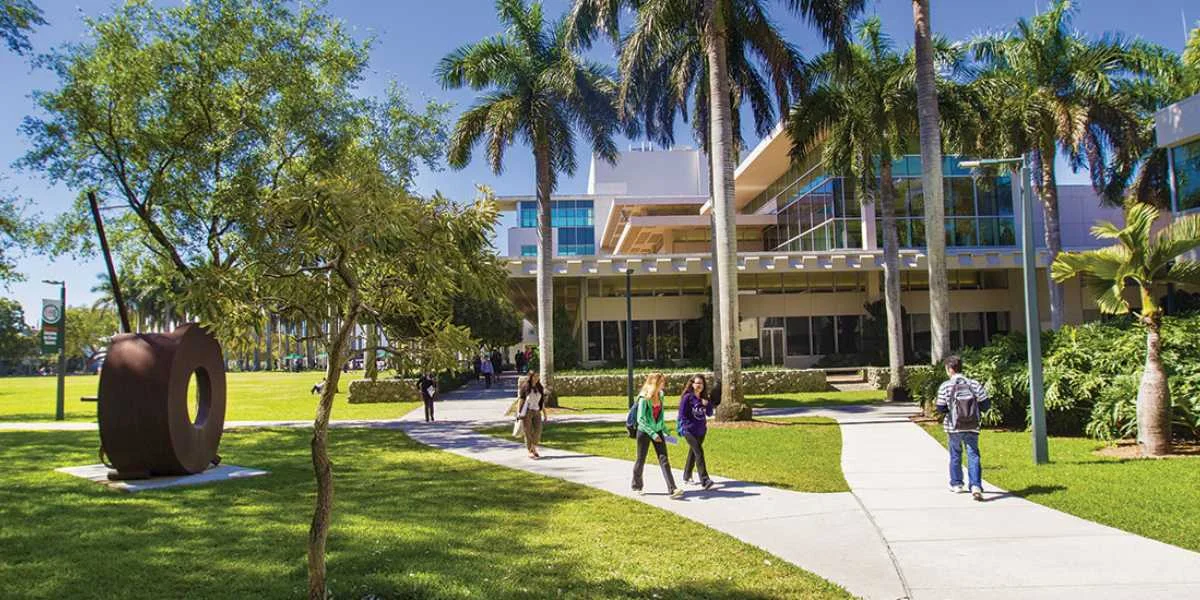
Miami University is a distinguished institution whose 11 colleges and schools span a broad range of disciplines. The university is known worldwide for its outstanding international reputation and exceptional research output. Miami University has achieved notable success in many fields, particularly medicine, business management, law, and engineering. Its School of Medicine, Business School, Law School, and College of Engineering are home to world-class faculty and research facilities, giving students a high-quality teaching and learning environment. Beyond its academic achievements, Miami University also attracts students and scholars from around the world with its distinctive South Florida culture and outstanding campus environment. Set in the beautiful South Florida region, the university enjoys a pleasant climate and charming natural scenery, offering students excellent living and study conditions.
About the university
School data is compiled from public sources and may change. Confirm current tuition, deadlines and requirements with the university before applying.
At a glance
Alumni starting salaries
Student body
Most popular majors
Graduate programs
Finance
Finance
Program Overview
The Finance program at the University of Miami is characterized by its distinctive features and strengths. The program aims to develop students' analytical and quantitative skills, preparing them to become creative thinkers and global finance leaders. The finance faculty come from around the world and bring extensive academic and practical experience. Students can choose from multiple curriculum tracks according to their interests, such as financial analysis, fintech, and investment and portfolio management. Through a unique Master of Science in Finance bridge course, students without a finance background can also acquire the necessary finance training. The program is open to all majors and provides students with a personalized learning experience and career development opportunities.
Degree Type
Master of Science in Finance
Program Duration
1 year
STEM Designation
Yes
Source: UM MSF
Application Requirements
Essay
The essay can be found in the BusinessCAS application. Every University of Miami Herbert applicant has a similar essay, and the second essay is specific to the program. Please follow the instructions in BusinessCAS to complete any additional requirements.
GRE/GMAT
The University of Miami Herbert accepts the Graduate Management Admission Test (GMAT) and the Graduate Record Examination (GRE) as entrance exams for business graduate programs. The University of Miami accepts scores from the past 5 years. Please use the following codes to submit test scores:
GMAT Code 7NV-S1-96
GRE Code 5815
Only test scores received electronically from the testing service are considered official.
Language Requirements
Applicants who have not earned a high school diploma or bachelor's degree in the United States or in a country where English is not the primary language must submit TOEFL or IELTS scores as follows:
TOEFL - 94 or above (iBT only)
IELTS - 7.0 or above
If English is not your native language, you may be exempt from the TOEFL/IELTS requirement if you hold an undergraduate or graduate degree from a U.S. academic institution or from an English-speaking country listed by the graduate school. Similarly, only electronic test scores received from the testing service are considered official.
Interview
Interviews are by invitation only and are conducted before the admissions committee makes its final decision. The interview provides an ideal opportunity to present your distinctive qualifications to the admissions committee. Currently, all interviews are conducted virtually by admissions staff, current students, or the academic director. Interviews are conducted in English and generally take 30 minutes.
In addition to the program-specific application requirements above, complete application requirements can be found in the [Application Requirements] section on our official website.
Source: UM MSF Application Instructions
Graduation Requirements
Credit Requirements
You must complete 35 credits.
Grade Requirements
The average GPA for the graduate degree must be at least a B (3.0).
Source:
University of Miami Academic Policies
University of Miami MSF Curriculum
Curriculum Overview
The curriculum specifies common core required courses (124 credits) and allows for elective courses (10 credits) and one career-related course (1 credit).
Of the 35 total program credits, at least 24 STEM credits must be completed to graduate. 20 STEM credits are core courses and 4 credits are elective courses.
The Master of Science in Finance degree requires 2 credits of experiential learning. Experiential learning is defined as "learning by doing."
All students must take FIN696 (Capstone Course) to fulfill the experiential learning requirement.
Core Courses
Course Course Code Credits Accounting for Decision-Making and Control ACC6002 Quantitative and Analytical Fundamentals for Finance FIN 6354 Quantitative Finance and Market Microstructure FIN 6432 Financial Investment FIN 6502 Fixed Income Securities FIN 6522 Corporate Finance FIN 6702 Financial Modeling FIN 6832 Mathematics of Financial Derivatives FIN 6852 Behavioral and Social Finance FIN 6862 Finance Capstone Project FIN 6962 Communicating for Career Success BUS 6102 Graduate Business Career Connect Course MGT 6971 Finance STEM Electives
Course Course Code Real Estate Investment and Appraisal
Real Estate Investment and Appraisal
FIN644 Real Estate Finance
Real Estate Finance
FIN645 Real Estate Risk Analysis
Real Estate Risk Analysis
FIN646 Introduction to ARGUS
Introduction to ARGUS
FIN647 Advanced ARGUS Advanced ARGUS FIN648 Quantitative Stock Portfolio Management Quantitative Stock Portfolio Management FIN651 Other Electives
Course Course Code Global Economics Global Economics ECO695 Introduction to Accounting Analytics
Introduction to Accounting Analytics
ACC628 Financial Reporting and Analysis
Financial Reporting and Analysis ACC670 Financial Statement Analysis
Financial Statement Analysis ACC672 Real Estate Law Real Estate Law BSL694 More electives can be found in the UM MSF Curriculum
Career Development
The University of Miami Graduate Career Development Center is dedicated to helping each student achieve their future goals and aspirations. From coaching the Miami team to win international case competitions to collaborating with corporate partners to host cutting-edge workshops, the center ensures students receive substantive support through connection and collaboration.
Typically six weeks before classes start, the career development team launches an effective "Career Connect" course that allows students to polish their resumes, improve their elevator pitches, build their personal brands, practice virtual interviews, and start building target company lists. Before coming to campus, students know the name of their career mentor, who will become their advocate and spokesperson and help them advance their careers.
Source: UM MSF Career
Computer Science
Computer Science
Program Overview
The Master of Science in Computer Science program at the University of Miami is overseen by the Computer Science Graduate Committee and requires students to have a certain background in computer science and mathematics. The program offers flexible course and pathway options, including thesis, non-thesis, or software systems concentration. Course content covers algorithms, software, artificial intelligence, systems, and theory, and each course includes both theoretical and experimental topics. The program is suitable for students who wish to pursue a Ph.D. in computer science in the future, as well as for students with work experience in the field who wish to receive more formal training.
Degree Type
Master of Science in Computer Science
Program Length
2 years
STEM Designated
Yes
Source:
UM MSCS
University of Miami M.S. in Computer Science Curriculum requirements
Application Requirements
GRE
Applicants must submit GRE scores.
Institution Code 5815
Applicants must achieve a percentile of 65% or above on the Quantitative Reasoning section. There is no minimum score requirement for other sections of the GRE.
Language Requirements
Students from non-English-speaking countries must submit TOEFL or IELTS scores.
TOEFL: Institution Code 5815
Minimum score requirements: Internet-based test 92; computer-based test 237; paper-based test 580.
IELTS: Minimum score requirement: 6.5.
Academic Background
Completion of the following courses or their equivalents is a prerequisite for admission to the program:
Course Course Code Credits Computer Programming I CSC1204 Computer Programming II CSC2204 Data Structures and Algorithm Analysis CSC3173 Calculus I MTH1614 Introduction to Probability and Statistics MTH2243 Introduction to Linear Algebra MTH2103 Discrete Mathematics I MTH3903 In addition to the specific admission requirements for this program, complete application requirements can be found in the [Application Requirements] section on our website.
Source:
UM MSCS Admission Requirements
UM MSCS Application Procedure and Deadlines for all Graduate Programs
Graduation Requirements
Credit Requirements
You must complete 30 credits.
Students choosing the thesis option must complete 24 credits and 6 credits of master's thesis.
Students choosing the non-thesis option must complete 27 credits and 3 credits of capstone course.
Students choosing the software systems concentration must complete 24 credits and 6 credits of software development capstone.
Grade Requirements
Graduate degree requirements require a grade point average of B (3.0).
Thesis Requirements
Students choosing the thesis option must complete CSC810 Master's Thesis.
Internship Requirements
Students choosing the non-thesis option and students in the software systems concentration may choose either an internship or a capstone project.
Source:
University of Miami MS CS Curriculum Requirements
University of Miami Academic Policies
Course Description
Thesis Option
Obtain 24 credits from approved courses, including at least 9 credits from CSC7XX courses, and at least one course from four of the following five core areas.
At least 18 credits must be from CSC 6XX and CSC 7XX courses, with no more than 6 credits from CSC 670.
Algorithms
Course Course Code Data Security and Cryptography CSC 609
Cybersecurity CSC 616 Introduction to Parallel Computing CSC 632
Algorithm Design and Analysis CSC 640
Data Science / Artificial Intelligence
Course Course Code Statistical Learning with Applications CSC 642
Introduction to Artificial Intelligence CSC 645
Introduction to Machine Learning with Applications CSC 646
Problem Solving for Bioinformatics CSC 648 Biomedical Data Science CSC 649 Software
Course Course Code Introduction to Computer Graphics CSC 629
Introduction to Software Engineering CSC 631
Introduction to Parallel Computing CSC 632
Statistical Learning with Applications CSC 642
Systems
Course Course Code Data Security and Cryptography CSC 609
Cybersecurity CSC 616
Introduction to Computer Graphics CSC 629 Introduction to Parallel Computing CSC 632
Theory
Course Course Code Data Security and Cryptography CSC 609
Algorithm Design and Analysis CSC 640
Semantic Web CSC 751 Master's Thesis
Course Course Code Master's Thesis CSC 810 Non-Thesis Option
Obtain 27 credits from approved courses, including at least 9 credits from CSC7XX courses.
Course list as above
Coursework Capstone
Choose one of the following:
CSC 712 Computer Science Graduate Internship 3
or CSC 793 Research Project
Software Systems Concentration
Core Course (3 credits)
Course Course Code Introduction to Software Engineering CSC631 Electives
Obtain 21 credits from approved courses, including at least 6 credits from CSC7XX courses, and at least one course from three of the four core areas.
Course list as above
Software Development Capstone
Option 1: Complete an internship:
CSC 712 Computer Science Graduate Internship
Option 2: Complete the following courses
CSC 710 Computer Science Software Project Design (Software Design)
CSC 713 Computer Science Software Project Implementation (Software Implementation)
At least 18 credits must be from CSC 6XX and CSC 7XX courses, with no more than 6 credits from CSC670.
Source: UM MSCS Curriculum
Career Development
Career Center
The Toppel Career Center provides innovative, dynamic career services to University of Miami students and alumni. The center is equipped with the latest technology, including video conferencing, 360-degree video recording and presentations, and its six interview rooms, a technology lab, a conference room, and a multi-purpose loft provide ample space for students to meet their career-related needs. The center is a model for career services nationwide. The 12,000-square-foot building on Ponce De Leon Boulevard is more than six times the size of a typical career center and hosts career programs and workshops, networking events, interview practice, drop-in advising, company presentations, on-campus interviews, and more. Toppel also offers virtual services.
Career Education
Career advisors at the career center assist students with career development, providing the necessary tools to explore students' strengths, interests, values, skills, and abilities, helping students prepare for career and industry research, interview practice, and internships, and building professional networks.
Coaching Services
Counselors with specific industry knowledge provide guidance on potential career paths, resume reviews, and job/internship search tips.
Program Workshops
Career programs and workshops are held throughout the academic year. Students and faculty can request workshops tailored to their organization or class. Workshops provide information and skill-building activities on resume writing, interviewing techniques, social media for job searching, and securing internships. Additionally, courses designed to raise awareness of specific career paths and professional opportunities are offered.
Source: University of Miami Career Services
Electrical and Computer Engineering
Electrical and Computer Engineering
Program Overview
The Department of Electrical and Computer Engineering at the University of Miami offers the Master of Science in Electrical and Computer Engineering (M.S.E.C.E.) degree program. Students may choose either the thesis option or the non-thesis option, and the program covers multiple research areas, including but not limited to statistical signal processing, image and video processing, pattern recognition, computer vision, machine learning, big data analytics, bioinformatics, nanophotonics, and network convergence and learning.
The program offers five tracks: Audio Engineering, Data Analytics, Microdevices and Photonics, Cybersecurity, and a general ECE track. The program is suited to students seeking entry-level graduate study in electrical and computer engineering, as well as professionals already working in engineering or computer science who wish to further develop their knowledge and skills.
Degree Type
M.S. in Electrical and Computer Engineering (M.S.E.C.E.)
Program Length
2 years
Sources:
M MS ECE
UM MS in Electrical and Computer Engineering
Application Requirements
GRE
GRE General Test (Verbal plus Quantitative) score should be 300 or above
Institution code 5815
Language Requirements
International students must take an English proficiency examination: TOEFL or IELTS
TOEFL: institution code 5815
Academic Background
This master's program generally requires applicants to hold a bachelor's degree in engineering. Students without a degree in an engineering field may still apply and will be considered by the admissions committee, but if admitted, they must complete prerequisite courses before fully entering the master's program.
In addition to the program-specific application requirements above, complete application requirements can be found in the Application Requirements section of our website
Source: UM MS ECE Admissions Requirements
Graduation Requirements
Credit Requirements
Whether choosing the thesis option or the non-thesis option, students must complete 30 credits
Thesis Option
At least 6 of these credits must be at the 700 level.
Of the required 30 credits, 6 credits must be devoted to thesis work.
Non-Thesis Option
At least 12 credits must be at the 700 level.
In addition, the Cybersecurity track requires completion of a 3-credit capstone project.
Grade Requirements
A grade point average of B or better, with no course grade below C
Thesis Requirements
Students choosing the thesis option must complete a thesis. The thesis defense committee includes at least three members: the committee chair is the research advisor, who must hold ECE RF/GF status; at least one other member (excluding the research advisor) must hold ECE RF/GF status; and at least one member must come from outside ECE.
Source: University of Miami M.S. in Electrical and Computer Engineering Bulletin
Curriculum
Any 600- and 700-level ECE courses, as well as courses from other departments, subject to academic advisor approval.
Audio Engineering Option
Course Course Code Credits Engineering Acoustics ECE 602 3 Random Signals and Noise ECE 633 3 Adaptive Filters and Signal Processing ECE 636 3 Introduction to Digital Image Processing ECE 638 3 Digital Speech and Audio Processing ECE 640 3 Machine Learning ECE 648 3 The remaining credits may be taken, after consulting an academic advisor, from 600/700-level courses in ECE, Computer Science and Technology, Mathematics and Technology, or any other department.
Choose the thesis or non-thesis option
Thesis Option:
ECE 810 Master's Thesis
ECE 820 Research in Residence
ECE 825 Continuous Registration--Master's Study
Non-Thesis Option:
Any 600- or 700-level ECE course
Data Analytics Option
Course Course Code Credits Engineering Analytical Techniques ECE 600 3 Random Signals and Noise ECE 633 3 Machine Learning ECE 648 3 Object-Oriented and Distributed Database Management Systems ECE 672 3 Internet and Intranet Security ECE 676 3 Data Mining ECE 677 3 Introduction to Parallel Computing CSC 632 3 Algorithm Design and Analysis CSC 640 3 The remaining credits may be taken from 600/700-level courses in ECE, Computer Science, Mathematics and Technology, or any other department, after consulting an academic advisor.
Choose the thesis or non-thesis option
Thesis Option:
ECE 810 Master's Thesis
ECE 820 Research in Residence
ECE 825 Continuous Registration--Master's Study
Non-Thesis Option:
Any 600- or 700-level ECE course
Microdevices and Photonics Option
Course Course Code Credits Laser Communications ECE 603 3 Fundamentals of Optical Imaging ECE 604 3 Semiconductor Photonic Devices ECE 605 3 Microfabrication ECE 606 3 VLSI Systems ECE 632 3 BioNanotechnology ECE 643 3 The remaining credits may be taken, after consulting an academic advisor, from 600/700-level courses in ECE, Computer Science and Technology, Mathematics and Technology, or any other department.
Choose the thesis or non-thesis option (6 credits)
Thesis Option:
ECE 810 Master's Thesis
ECE 820 Research in Residence
ECE 825 Continuous Registration--Master's Study
Non-Thesis Option:
Any 600- or 700-level ECE course
Cybersecurity Option
Required Courses
Course Course Code Credits Internet and Intranet Security ECE 676 3 Data Security and Cryptography CSC 609 3 Information Assurance ECE 673 3 Advanced Problems in CyberSecurity ECE 785 3 Electives (choose at least 9 credits)
Course Course Code Credits Random Signals and Noise ECE 633 3 Communication Networks ECE 634 3 Agent Technology ECE 674 3 Digital Forensics ECE 675 3 Data Mining ECE 677 3 Network Security ECE 678 3 Pattern Recognition and Neural Networks ECE 753 3 Introduction to Parallel Computing CSC 632 3 Parallel Algorithms CSC 732 3 Choose the thesis or non-thesis option, 6 credits
Thesis Option:
ECE 810 Master's Thesis
ECE 820 Research in Residence
ECE 825 Continuous Registration--Master's Study
Non-Thesis Option:
Any 600- or 700-level ECE course
Notes: 1 The remaining credits may be taken from 600/700-level courses in ECE, Computer Science and Technology, Mathematics and Technology, or any other department, after consulting an academic advisor.
2 Other elective course areas: legal issues (digital evidence and analysis, privacy, legal response/liability, policy)
Source: UM MS ECE Curriculum
Career Development
The university's career and internship fairs are the largest recruiting events, typically held every two years, with more than 100 employers and over 1,000 students and alumni participating in late September or early October and in February. Toppel also organizes smaller industry-specific fairs focused on more specialized fields. Representatives from a wide range of industries around the world attend these fairs to meet with students, conduct interviews, and discuss employment opportunities.
In addition, the Talent Engagement Program brings employers to campus to hold company information sessions for students and to interview students for jobs and internships. Students can apply for these positions through Handshake, Toppel's free online career management system.
Source: University of Miami Career Fairs and On-Campus Recruiting
Public Administration
Public Administration
Program Overview
The Public Administration program at the University of Miami is designed for students who want to pursue careers in public service. Its curriculum spans all three sectors of public service: government agencies, nonprofit organizations, and private providers. Faculty in the program include practitioners who are leaders in the field as well as experts engaged in in-depth research. Through a modern curriculum, innovative teaching, academic and applied research, and service to key stakeholders, the program strives for distinction at the local, state, and national levels.
Degree Type
Master of Public Administration (MPA)
Program Length
2 years
Source: UM MPA
Application Requirements
Language Requirements
All international students must take this test to demonstrate sufficient English proficiency.
TOEFL PBT minimum score: 550; IBT minimum score: 80.
IELTS minimum score: 6.5.
TOEFL: institution code 5815
All international students must provide a copy of their test scores.
GRE
A GRE score is recommended but not required.
Institution code 5815
Statement of Purpose
The statement of purpose is the most important element of the application package. This letter should reflect who you are, your goals, and why you would be a valuable addition to the Master of Public Administration (MPA) program. Correct grammar and as much detail as possible are important. The statement of purpose should not exceed two pages. Review what you have written before submitting it.
In addition to the program-specific requirements above, the full application requirements can be found in the Application Requirements section of our website.
Sources:
UM MPA Admissions Requirements
UM MPA International Students
Graduation Requirements
Credit Requirements
Students must complete 48 credits.
Grade Requirements
Graduate degree requirements require a grade point average of B (3.0).
Internship Requirement
Students must complete a 3-credit internship experience (200 hours). Students with managerial work experience may, with the prior approval of the MPA Director, substitute a relevant professional course (POL) for the internship. If a student is unable to secure an internship, a relevant POL course may be substituted with the prior written approval of the MPA Director.
Sources:
UM MPA Curriculum
University of Miami Academic Policies
Curriculum
Core Courses
Course | Course Code | Budget and Financial Management and Administration | POL 6013 | Organizational Dynamics | POL 6063 | Political Analysis | POL 6103 | Introduction to Graduate Public Administration | POL 6223 | Public Policy Analysis and Administration | POL 6463 | Human Resource Management in Public Service | POL 6473 | Productivity Improvement in Public and Nonprofit Organizations | POL 6513 | Political Environment of Business | POL 6713
Specialized Courses
Students may also choose four additional courses from the following, with at least one course in each of the three subfields:
Organization Management and Leadership
Course | Course Code | Game Theory | POL 619 | Non-Profit Organizations: Law, Policy and Management | POL 624 | Total Quality Public Service Management | POL 652 | Political Ethics: The Dynamic Dilemmas of Contemporary Leadership | POL 654 | Organizational Security Management | POL 696 | Ending War and Building Peace | POL 697
Equity, Ethics, and Legal Issues in Public Administration
Course | Course Code | Equity and Diversity in Public Administration | POL 608 | Administrative Law | POL 626 | Ethical Issues in Government, Business and Nonprofit Organizations | POL 657 | Issues in Judicial Politics | POL 696 | Issues in Public Policy and Administration
Course | Course Code | Comparative Public Policy and Administration | POL 625 | Applied Policy Analysis | POL 634 | From Electronic Government to Digital Governance | POL 658 | Bureaucratic Politics | POL 696 | Money, Power, & Politics in American Cities | POL 696 | Democracy in Action: Local Government Simulation | POL 696 | MuniMod: Civic Innovation Competition | POL 696 | Internship (3 credits)
Electives (9 credits)
The remaining 9 credits may consist of elective courses or independent study courses taken through the Department of Public Policy or other University of Miami departments. Independent study and courses taken through other University of Miami departments must be approved by the MPA Program Director before they count toward MPA credit requirements. A maximum of 3 additional internship credits may count toward the MPA curriculum as electives.
Source: UM MPA Curriculum
Career Development
The school provides students with channels and support for finding internships and jobs, including:
Handshake
Handshake is a career services platform built for the career development of students and alumni. More than 200,000 employers, including all Fortune 500 companies, use the platform! Thousands of internships and job opportunities are posted on Handshake by employers specifically recruiting students.
All UM students have a Handshake account, which is created automatically upon enrollment at UM. Handshake recommends certain positions to you based on your profile. You can use Handshake to apply for jobs and internships, register for career fairs, workshops, and information sessions, upload your resume, receive online reviews from the Toppel Career Center, research thousands of employers, connect with recruiters and other students, and gain career insights.
Toppel Career Center
The Toppel Career Center helps students find direction in their career development and career-related decisions. No appointment is needed to speak with a Toppel career advisor. Students can use the link to join the virtual "drop-in advising" Zoom.
Source: UM Internships & Careers
Campus life
Transportation
Nearby Airports
Miami International Airport
Distance from campus: 7 miles
Campus-to-airport travel:
By car/rideshare:
Typically takes about 15-20 minutes. It may take longer during heavy traffic.
Public transit:
Take Metrorail GRN/bus 400, transfer to bus 37, then transfer to the MIA Mover people mover to arrive.
Fort Lauderdale-Hollywood International Airport
Distance from campus: 30.3 miles
Campus-to-airport travel:
By car/rideshare:
Typically takes about 30-45 minutes. It may take longer during heavy traffic.
Public transit:
Take bus 400, transfer to bus 100/3, then transfer to bus 01 to arrive.
Miami-Opa Locka Executive Airport
Distance from campus: 19.2 miles
Campus-to-airport travel:
By car/rideshare:
Typically takes about 22-28 minutes. It may take longer during heavy traffic.
Public transit:
Take Metrorail GRN and transfer to Tri-Rail, or take bus 400, transfer to bus 27, then transfer to bus 135 to arrive.
Miami Seaplane Base
Distance from campus: 9.9 miles
Campus-to-airport travel:
By car/rideshare:
Typically takes about 14-22 minutes. It may take longer during heavy traffic.
Public transit:
Take bus 400 and transfer to bus 3/100 to arrive.
Nearby Train Station
Miami Train Station
Campus-to-train station travel:
By car/rideshare:
Typically takes 3 minutes. It may take longer during heavy traffic.
Public transit:
Take bus 400, or you can walk for 20 minutes.
City Public Transit
Miami University is located in Oxford, Ohio, where public transit options nearby are relatively limited, but some choices are still available:
Campus shuttle: Miami University may offer on-campus shuttle service to help students move conveniently around campus, especially between different campus buildings.
Bus and shuttle services: The university or local community may offer bus or shuttle services connecting Miami University with surrounding areas, such as the city center or commercial districts.
Bike-sharing and walking: In Oxford, walking and cycling are common ways to get around. Students can choose bike-sharing or walk to campus or nearby areas.
Safety
UMPD works to prevent campus crime. By using these steps to protect yourself and your property, you will reduce the likelihood of encountering a more common type of campus crime. In addition to staying informed, using common sense and developing good safety habits, the university asks you to make full use of our many services and programs.
Safety Escorts:
The university offers two safety escort options: the UMPD 24/7 safety escort service and the safety ride.
Rave Guardian:
UGuardian is a free safety app for smartphones that offers options such as a virtual safety escort, pre-registration of emergency assistance information, and a one-touch button to call UMPD or 911.
S.A.F.E. Program:
UMPD offers free self-defense awareness classes to UM faculty, staff and students.
Bike Registration:
UMPD offers free registration and locks to all UM community members who have a bicycle on campus. Learn more about how and where to register and about bike safety tips.
Operation ID:
Operation ID is a free UMPD program that will increase the likelihood that your valuables are returned to you.
Emergency Phones:
The UM Coral Gables campus has more than 100 blue-light phones that connect directly to UMPD for emergency communication.
Annual Security Report:
The Annual Security Report (ASR) contains campus crime statistics for all UM campuses as well as information on safety resources, UMPD policies and UM safety procedures.
Campus Security Assessment:
UMPD offers free security assessments for all campus buildings to maintain and improve the quality of physical and procedural security on campus.
Coffee with the Chief:
Have coffee with Chief Rivero and discuss everything related to UMPD and campus safety!
Event Security:
UMPD officers and/or UM security can be booked for campus events.
UMPD Presentations and Trainings:
UMPD offers a variety of safety presentations and campus trainings.
Housing
Miami University offers on-campus housing for undergraduates in five residential colleges and in the University Village, which consists of seven apartment buildings.
Residential Colleges
Coral Residential College
Eaton Residential College
Ibis Residential College
Lakeside Village
Mahoney Residential College
For more information, please read the residence hall list.
On-Campus Housing Application Steps
New Students
Complete the online application
The university will accommodate roommate requests whenever possible, but requests cannot be guaranteed and depend on availability.
Non-local first-year students (those from outside Miami-Dade County and Broward County) will receive priority for on-campus placement
Current Students
Complete the online application
Select roommates
Students will have the opportunity to update their current assignment and choose their preferred roommates. During the application process, each student will create a roommate group and indicate their preferred roommates.
Room Assignment
The room preference page is designed to collect students' interest in the various room options they are eligible to consider based on their classification and credits accumulated to date. If you have not selected a space yourself and you wish to be considered for a space after the process ends, the assignment staff will use this information.
Dining
The university offers four dining halls as well as multiple cafés.
University Dining Halls
Maplestreet Commons
Maplestreet Commons offers a pizza shop, a deli, a Southwest restaurant, made-to-order stir-fry, pasta, and burgers.
Western Dining Commons
Western Dining Commons offers Athens Grill, dishes from around the world, pizza, and vegetables.
Garden Dining Commons
Garden Dining Commons has four stations, including Indian, Italian and traditional comfort food. If you need a snack before class, you can head to the Garden Market for a breakfast sandwich or buy Rooted Grounds coffee from the walk-up window.
Meal Plan
Miami's meal plans offer flexibility and value to meet students' needs. They are flexible, transparent and easy to use. A meal plan is a combination of meal swipes and dining dollars. All Miami University students can enjoy meal plans. The menus include a variety of freshly prepared and made-to-order dishes that have become a Miami signature.
Meal Swipes: To help students manage their meal plan during the semester and get better value, meal swipes are divided once per week for each semester. Depending on the level you choose, a specific number of meal swipes is added to your card each week. Your meal swipes reset early on Saturday morning each week. If you have any unused meal swipes at that time, they do not carry over. Our minimum, premium and standard levels also come with "bonus weeks" of meal swipes. This means these plans come with an extra week of meals, and they roll over each week. If you run out of meals for a normal week, you can use these.
Meal Swipe Flexibility: To make eating on the go faster, market locations offer takeout meals that can be purchased with a single swipe. Takeout meals are available at breakfast, lunch and dinner and include a York Street entrée, fruit and a bottle of Miami water.
Dining Dollars: Can be used at any open dining location, including all Starbucks locations on campus. This gives students flexibility for food and beverage options on the go. Think of Dining Dollars as a gift card for food on campus. If you don't have a swipe, you can also use Dining Dollars at the dining halls.
Meal Plan | Meal Swipes | Dining Dollars | Guest Meals | Cost Diplomat Premium | Unlimited | 800/semester | 5/semester | $3,880/semester Diplomat Plus | 7/week | 1,100/semester | 5/semester | $3,318/semester Diplomat Standard | 16/week | 500/semester | 5/semester | $3,184/semester Diplomat Minimum | 14/week | 100/semester | 5/semester | $2,520/semester
Admissions
Admissions data
Application requirements

Application checklist
Application deadlines
Transfer requirements
Transfer checklist
Transfer deadlines
Similar universities
Admissions FAQ
What is the acceptance rate at University of Miami?
The reported acceptance rate is 19%. Acceptance rates vary by applicant pool and application cycle; confirm the current figure with University of Miami.
What SAT scores does University of Miami expect?
The reported SAT range is 1330-1470. Test-optional and score-reporting policies can change by application cycle; check the university's official admissions page before applying.
When is the application deadline at University of Miami?
The listed Regular Decision deadline is Jan. 6. Deadlines can vary by program and application cycle; confirm the exact date with the university.
How much does University of Miami cost?
The listed tuition and fee figure is $23,790. Costs vary by residency, programme and academic year; confirm current costs with the university.
Where is University of Miami located?
University of Miami is located at University of Miami, Coral Gables, FL, 33146.
Planning your application?
Build a school list around your profile.
Ivy Elite advisors help students compare programs, plan coursework and prepare applications for U.S. universities.