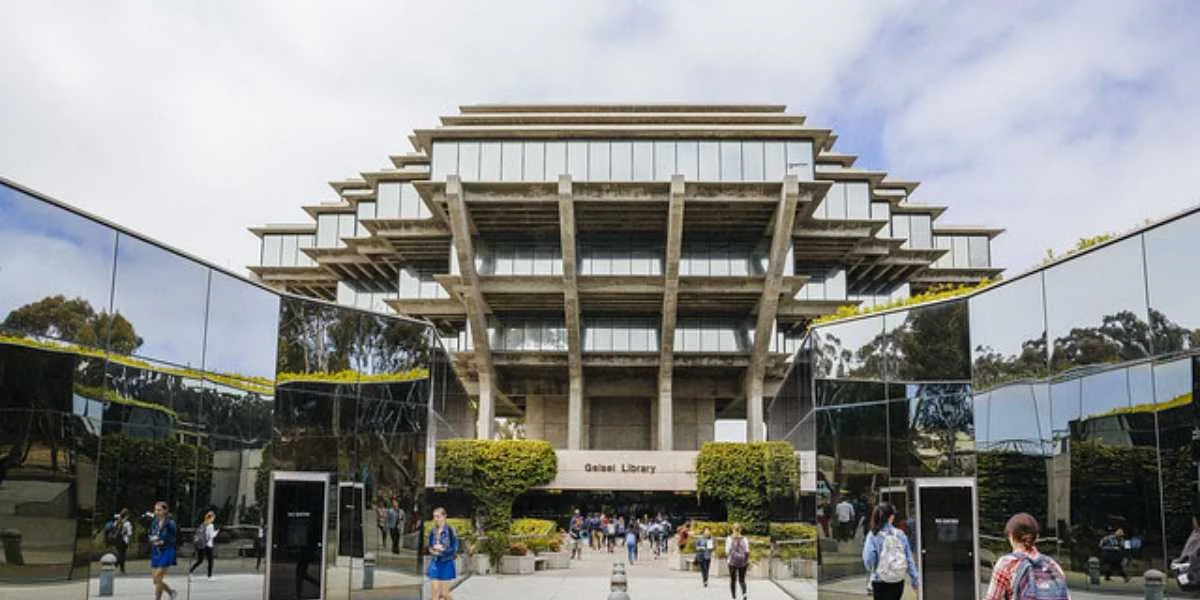
Computer Science and Engineering
Program Overview
The Master of Science programs in Computer Science and Engineering at the University of California, San Diego are designed to meet the needs of graduate education in both computer science and computer engineering. The program's course requirements ensure that students master fundamental concepts and tools and gain not only an understanding of advanced ideas in the field but also exposure to the latest ideas in their area of study or specialization. The program aims to give students comprehensive knowledge of the discipline, equipping them with a strong theoretical foundation and practical skills in computer science and computer engineering.
Degree Type
Master of Science programs in Computer Science and Engineering
Sources:
University of California, San Diego Computer Science and Engineering Program Overview
University of California, San Diego Computer Science and Engineering Degree Programs
Application Requirements
Admission Requirements
Applicants must have a strong academic background in computer science and engineering or a related field and must demonstrate the potential to succeed in graduate school. Applicants holding degrees in other disciplines will be considered if they have completed the courses required at minimum by CSE or their equivalent. For more information on background preparation, see the undergraduate academic background requirements.
A minimum undergraduate grade average of B (GPA 3.0) or equivalent is required.
Writing Requirement
Applicants should describe their past achievements in computer science and engineering, their reasons for being qualified for the program, and their goals for graduate study. For more information on what to include, see the University of California, San Diego Statement of Purpose.
Letters of Recommendation
At least 3 letters of recommendation are required, and they must be written by individuals who can assess your abilities and academic potential. Recommenders should generally hold academic positions. Letters from research or project advisors and from professional or industry references are also acceptable.
English Proficiency
Applicants whose native language is not English and who have not completed full-time study at a university where English is the sole language of instruction must submit English proficiency scores. The TOEFL institution code is 4836. The minimum TOEFL scores are 550 on the paper-based test, 213 on the computer-based test, or 85 on the internet-based test (iBT).
The TOEFL iBT Special Home Edition is accepted for master's and doctoral admissions. The TOEFL ITP Plus for China solution cannot be used in place of the standard TOEFL iBT test.
The minimum IELTS score is 7. Scores should be sent to:
University of California, San Diego Graduate Admissions
9500 Gilman Drive #0003
La Jolla, CA 92093-0003
In addition to the program-specific requirements above, the complete application requirements can be found in the Application Requirements section of our website.
Source: University of California, San Diego Computer Science and Engineering Application Requirements
Graduation Requirements
Credit Requirements
Thesis Plan: M.S. Plan I - Thesis
Students must complete 40 units of coursework: 12 units in the breadth module, 12 units in the depth module, and 16 units in the electives and research module (the thesis plan requires at least 8 units and at most 12 units of CSE 298 (Independent Study)).
Comprehensive Exam Standard Option: M.S. Plan II - Comprehensive Exam, Standard Option
Students must complete 40 units of coursework: 12 units in the breadth module, 12 units in the depth module, and 16 units in the electives and research module (including at most 4 units of research credit).
Comprehensive Exam Interdisciplinary Option: M.S. Plan II - Comprehensive Exam, Interdisciplinary Option
Students must complete 48 units of coursework: 12 units in the breadth module, 12 units in the primary depth module, 12 units in the secondary depth module, and 12 units in the electives and research module (including at most 4 units of research credit).
Grade Requirements
The overall grade point average at the University of California, San Diego must be at least 3.0.
All breadth module courses must be completed with a grade of B- or better.
Thesis Requirement
Thesis Plan: M.S. Plan I - Thesis:
Students in the thesis plan must write a thesis based on their research, which is then reviewed by a master's thesis committee. For more information on the thesis plan, see the Planning Ahead Checklist.
Comprehensive Exam Standard Option: M.S. Plan II - Comprehensive Exam, Standard Option: None
Comprehensive Exam Interdisciplinary Option: M.S. Plan II - Comprehensive Exam, Interdisciplinary Option: None
Capstone
Thesis Plan: M.S. Plan I - Thesis: None
Comprehensive Exam Standard Option: M.S. Plan II - Comprehensive Exam, Standard Option, and Comprehensive Exam Interdisciplinary Option: M.S. Plan II - Comprehensive Exam, Interdisciplinary Option:
Under this plan, students must pass a comprehensive exam designed to test their fundamental knowledge of computer science. The comprehensive exam is a practical exam intended to assess each student's ability to apply what they have learned. To ensure the exam remains relevant and is taught according to actual circumstances, it is integrated into the host course.
Sources:
University of California, San Diego Computer Science and Engineering Curriculum
University of California, San Diego Computer Science and Engineering Plan I: THESIS
University of California, San Diego Computer Science and Engineering Plan II: COMPREHENSIVE EXAM, STANDARD OPTION
University of California, San Diego Computer Science and Engineering II- COMPREHENSIVE EXAM, INTERDISCIPLINARY OPTION
Course Information
Breadth (12 units)
Computer science students must take one course in each of three breadth areas: Theory, Systems, and Applications.
Computer engineering students must take two courses in the Systems area and one course in either the Theory or Applications area.
Depth (12 units)
Computer science students must take three courses (12 units) in one depth area from the list.
Computer engineering students must take three courses (12 units) in the Computer Engineering depth area.
Artificial Intelligence
Computer Engineering
Computer Systems
Database Systems
Graphics And Vision
Human-Computer Interaction
Programming Languages, Compilers, And Software Engineering
Bioinformatics
Theoretical Computer Science
Robotics
Thesis Plan: M.S. Plan I - Thesis:
Electives and Research (16 units)
The thesis plan requires at least 8 units and at most 12 units of CSE 298 (Independent Study).
The remaining units may be taken from graduate courses in CSE, ECE, and the Department of Mathematics, or from approved courses in other departments under the elective exception list.
At most one upper-division undergraduate CSE course from the approved elective exception list may be counted as an elective.
Master's students who have completed one of the following six undergraduate versions of a course at the University of California, San Diego may not take or count the graduate version of that course. Master's students may not take both the undergraduate and graduate versions of these six courses for degree credit. For more information, see Graduate/Undergraduate Course Restrictions.
Comprehensive Exam Standard Option: M.S. Plan II - Comprehensive Exam, Standard Option:
Electives and Research (16 units)
Elective units may be taken from graduate courses in CSE, ECE, and the Department of Mathematics, or from approved courses in other departments under the elective exception list.
At most one upper-division undergraduate CSE course from the approved elective exception list may be counted as an elective.
Students may take four units of research credit (typically CSE 293) while conducting a research project with a faculty advisor and must complete the 4 units within one quarter.
Comprehensive Exam Interdisciplinary Option: M.S. Plan II - Comprehensive Exam, Interdisciplinary Option:
Secondary Depth (12 units) and Electives and Research (12 units)
For the secondary depth module, students may take 12 units in an approved area outside CSE. The 12 units must come from a single area and must be approved by the master's committee in the Department of Cognitive Science, the Department of Electrical and Computer Engineering, the Department of Mechanical and Aerospace Engineering, the Department of Structural Engineering, or JSOE management courses.
Elective units may be taken from graduate courses in CSE, ECE, and the Department of Mathematics, or from approved courses in other departments under the elective exception list.
In the electives and research module, students may take four units of research credit (typically CSE 293) while conducting a research project with a faculty advisor. At most four research units may count toward the electives and research module.
Sources:
University of California, San Diego Computer Science and Engineering Plan I: THESIS
University of California, San Diego Computer Science and Engineering Plan II: COMPREHENSIVE EXAM, STANDARD OPTION
University of California, San Diego Computer Science and Engineering II- COMPREHENSIVE EXAM, INTERDISCIPLINARY OPTION
Career Development
The University of California, San Diego offers Computer Science and Engineering students a wide range of career development opportunities and encourages them to take an active part in university-hosted professional development and networking events. These opportunities support students' career development and personal growth. Through these activities, students build broad professional networks, strengthen their teamwork skills, and prepare thoroughly for the workplace.
Source: University of California, San Diego Computer Science and Engineering Graduate student life