Ivy Elite
University of California, Berkeley

The University of California, Berkeley is a world-renowned public research university located in Berkeley, California. As one of the flagship campuses of the University of California system, Berkeley currently comprises 14 schools and 11 graduate schools as well as 4 undergraduate colleges. The university has a long history and an outstanding academic reputation, and is dedicated to advancing innovation and discovery. Its rich academic resources and diverse cultural atmosphere attract top faculty and students from around the world. Berkeley is known worldwide for its exceptional research achievements and outstanding teaching quality, and has compiled remarkable accomplishments across a wide range of fields.

About the university

School data is compiled from public sources and may change. Confirm current tuition, deadlines and requirements with the university before applying.

At a glance

Acceptance rate 12%
Tuition and fees $23,544
Application deadline Nov. 30
Undergraduate enrollment 32,143
Student-faculty ratio 19:1
Location 200 California Hall, Berkeley, CA, 9472
School type Public (4-year)
In-state tuition
$832
Out-of-state tuition
$23,544
Room and board
$23,544
Graduation rate
81%
Student-faculty ratio
19:1
Gender ratio
44:56

Alumni starting salaries

Architecture and Related Services
+
Area, Ethnic, Cultural, Gender, and Group Studies
+
Biological and Biomedical Sciences
+
Business, Management, Marketing
+
Communication, Journalism, and Related Programs
+
Education
+
Engineering
+
English Language and Literature/Letters
+

Student body

First-year diversity
White
35%
Hispanic
20%
Asian
22%
Black
6%

Inside the school

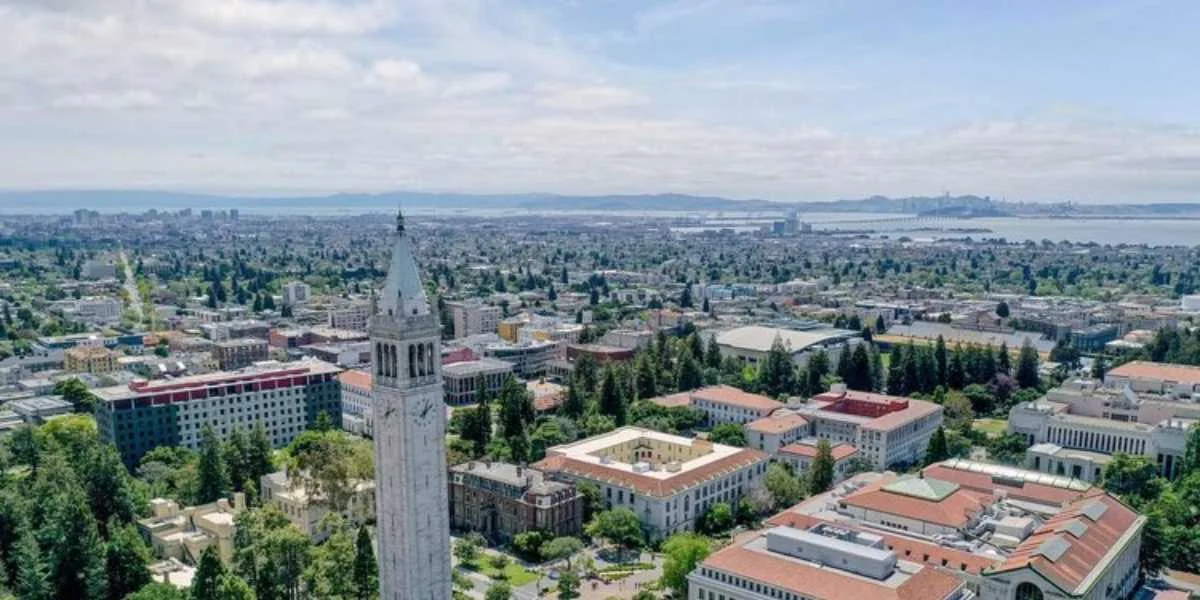
UC Berkeley is not only one of the top public universities in the United States, but also a global hub of technological innovation and academic research. Located in the San Francisco Bay Area and adjacent to Silicon Valley, Berkeley offers students an exceptional environment for academics, employment, and entrepreneurship. The university is known for its spirit of freedom and inclusiveness and has cultivated countless thought leaders who have changed the world. Berkeley is especially strong in STEM fields, with computer science, engineering, physics, biology, and other disciplines leading globally; many cutting-edge technologies, such as the 3D transistor and CRISPR gene editing, were born here. UCB is also a cradle of Olympic medals, and its sports culture is equally distinguished. Landmarks such as the Sather Tower campanile and the Berkeley Botanical Garden add unique charm to this temple of learning.

We will examine the University of Washington's distinctive appeal from several perspectives, showcase its core features, and convey its academic achievements and cultural character. Click the button below to view the university's full introduction.

01. An advantageous location

02. One of the most free and inclusive universities in the United States

03. UCB has recorded many important moments in human history

04. The No. 1 public university in the United States

05. Top-tier academic strength and a leader in STEM fields

06. An Olympic university

07. UCB's acceptance rate hits another record low

08. One of the American universities that sends the most tech talent to Silicon Valley

09. Home to one of the world's most botanically diverse botanical gardens

10. The third-tallest clock tower in the world

Most popular majors

Social Sciences
18%
Computer and Information Sciences and Support Services
17%
Engineering
11%
Biological and Biomedical Sciences
10%
Multi/Interdisciplinary Studies
5%
Mathematics and Statistics
5%
Natural Resources and Conservation
5%
Business, Management, Marketing, and Related Support Services
4%
Psychology
4%
Physical Sciences
3%

Graduate programs

Computer Science

Computer Science

Program Overview

The Master of Science in Computer Science at the University of California, Berkeley is a rigorous program focused on research and practice, designed to prepare students thoroughly for research and experimentation and to give them the opportunity to explore frontier areas of computer science. Unlike the engineering degree, the program also offers most students a key opportunity to build a foundation for doctoral study.

Degree Type

M.S. in Computer Science

Program Length

Two-year full-time program

Source: UCB CS in MS

Application Requirements

English Proficiency

All applicants who completed their foundational degree in a country or region where the official language is not English must submit official proof of English proficiency and may take two standardized tests: TOEFL and IELTS.

For admission, the TOEFL iBT score must be at least 90, or the IELTS score must be at least 7.

English proficiency may be waived under the following conditions:

A foundational degree awarded by a recognized institution in a country where the official language is English.

Completion of a foundational or advanced degree at a U.S. institution or a U.S. institution abroad where the language of instruction is English and the institution is accredited by one of the U.S. regional accrediting agencies.

Completion of at least one year of full-time academic coursework at a regionally accredited institution in the United States with grades of B or better.

TOEFL school code: 4833

GRE/GMAT

GRE scores are neither required nor accepted.

Undergraduate Prerequisite Background

If your university uses a 4.0 grade point average (GPA) scale, a satisfactory academic record with a GPA of at least 3.0 (B) is required.

Letters of Recommendation

Upload three letters of recommendation in PDF format through the link provided in the online application. The letters may describe in detail the applicant's goals, research achievements, technical and leadership abilities, academic work, and more.

Statement of Purpose

Explain why you are applying to the program. What are your research goals and interests? What do you hope to accomplish in this degree program? What do you want to do afterward, and how will this help you?

In addition to the program-specific application requirements above, the complete application requirements can be found in the corresponding Application Requirements section of our website.

Sources:

UC Berkeley Graduate Application Requirements

UC Berkeley MS in CS Admission

Graduation Requirements

Credit Requirements

A minimum of 24 credits must be completed to graduate.

Grade Requirements

Minimum cumulative GPA = 3.0.

A "D+" or below does not count for credit.

Thesis Requirement

Students must complete a research thesis or a research report. Students should begin selecting an ideal research advisor in their first semester. Submitting the master's thesis to the graduate division is one of the final steps in awarding the graduate degree and serves as an academic presentation of the research conducted.

Further details on thesis writing and submission can be found at: UCB Thesis Writing and Filing

Source: UCB EECS MS Student Guide

Curriculum Overview

The program covers 10 research areas, including

Artificial Intelligence (AI)

Database Management Systems (DBMS)

Education (EDUC)

Graphics (GR)

Human-Computer Interaction (HCI)

Operating Systems & Networking (OSNT)

Programming Systems (PS)

Scientific Computing (SCI)

Security (SEC)

Theory (THY)

The courses included in each research area vary; the complete CS course list can be found at: UCB CS Graduate Courses

Career Development

UC Berkeley has a dedicated career development office (Berkeley Career Engagement) that provides students with comprehensive and detailed career services. Information platforms including Handshake give students first-hand job information, while professional training on resumes, cover letters, interviews, networking, and more helps students navigate every stage of the job search.

The university also holds regular job fairs, creating opportunities for face-to-face, one-on-one communication between employers and students. The career center offers different targeted services for different groups and majors.

UCB's EECS department also has many distinguished alumni, and these alumni are a major asset for graduates in their job search.

Source: UCB Career Engagement

Education

Program Overview

The Master's in Education program at the University of California, Berkeley serves students interested in topics such as the science of learning, the politics of school reform, explorations of race and inequality, and educational measurement and research methods. The school seeks thinkers who are curious about and committed to human learning and school improvement—people who want to master an academic discipline while remaining active in civil society organizations, educational institutions, or the policy arena. Some applicants have just earned their bachelor's degrees, while others bring ten years or more of professional experience.

Degree Type

Master's in Education

Program Length

One-year full-time master's program

Source: UCB Masters in Education

Application Requirements

Language Scores

All applicants who completed their foundational degree in a country or region where the official language is not English must submit official proof of English proficiency. Applicants may take either of two standardized tests: TOEFL (TOEFL iBT) and IELTS. For admission, the TOEFL iBT score must be at least 90, and the IELTS score must be at least 7.

To qualify for a TOEFL/IELTS waiver, you must meet any one of the following conditions:

You hold a foundational degree from a recognized institution in a country where the official language is English.

You completed a foundational or advanced degree at a U.S. institution or a U.S. institution abroad where the language of instruction was English, and that institution is accredited by one of the U.S. regional accrediting agencies.

You completed at least one year of full-time academic coursework with a grade of B or better at a regionally accredited institution in the United States.

TOEFL school code: 4833

Undergraduate Prerequisite Background

You need an outstanding average academic record, typically a grade point average (GPA) of at least 3.0 (B) on a 4.0 scale.

Statement of Purpose

Describe your ability and motivation to pursue graduate study in your field, including your preparation in this area, your academic plan or research interests in your chosen field of study, and your future career goals. Please specifically explain why UC Berkeley is an intellectual fit for you.

Personal Statement

Describe how your personal background and experiences influenced your decision to pursue a graduate degree. In this section, you may also provide relevant information such as: how you have overcome barriers to accessing higher education; evidence of how you understand the barriers faced by others;

evidence of academic service you have provided to advance equitable access to higher education for women, racial minorities, and other groups historically underrepresented in higher education; evidence of your research focused on underserved populations or related issues of inequality; or evidence of your leadership role among these groups.

Undergraduate GPA

You must calculate your advanced GPA, which includes all coursework after the first two years of your bachelor's degree.

Letters of Recommendation

Applicants must submit three letters of recommendation, at least two of which must be academic letters.

In addition to the program-specific application requirements above, you can view the complete application requirements in the corresponding [Application Requirements] section of our website.

Sources

UCB Admission Requirement

UCB Master's in Education

Graduation Requirements

Credit Requirements

You must complete 24 credits, equivalent to 7-8 courses.

Thesis Requirement

You must write a master's research thesis in consultation with your assigned principal faculty advisor.

Internship Requirement

At the time of application, students will choose a course group to join; that group's coursework typically includes a field project related to the thematic group/specialization.

Source: UCB Masters in Education

Course Introduction

By choosing the master's in education program at UC Berkeley, students select their area of research interest at the time of application, including:

Critical Studies of Race, Class, and Gender

This concentration offers students the opportunity to study schooling within broader social, cultural, political, and economic contexts. In particular, race, class, and gender relations are social forces that influence and shape school organization and learning more broadly, and the concentration aims to provide students with a solid foundation in social theory and research methods. Faculty interests in this concentration are wide-ranging, including the political economy of education, structural racism, globalization, and immigration. In addition to the master's course requirements within the GSE, students must select two courses from the concentration's list.

Cultural Studies of Sport in Education

This concentration examines how institutionalized physical activity embodies and reflects social meaning and identity. The social practice of sport provides a space for the reproduction or resistance of dominant discourses such as race, gender, sexuality, ability (disability), and social class. As these sporting activities become commercialized and embedded in educational institutions, individuals must navigate a subtle and contradictory terrain when participating in and engaging with sport. This concentration trains students to examine in depth the intersection of sport and academics within the education system.

Early Education Leadership

The related fields that promote early childhood development—child health, developmental research, and early education—are also continually evolving. Berkeley cultivates confident, creative leaders who understand the small-scale family and organizational practices that promote early childhood development, as well as the policy and advocacy work needed to improve family-friendly institutions. This concentration requires one education policy or politics course and one developmental or learning sciences course. Faculty typically develop a field project that informs your master's thesis.

Learning and Data Science

This concentration requires two courses taught by faculty in the Learning and Data Science specialization. Master's students are encouraged to carry out a hands-on field project in consultation with their assigned advisor. Students are best served by attending a research group each semester and learning alongside doctoral students. Some students complete their field project and master's thesis over the summer.

Evaluation and Measurement

This concentration prepares early-career professionals who wish to develop in applied statistics, data science, program evaluation, or assessment. Many graduates go on to local school districts, R&D companies, testing companies, and nonprofit organizations. Master's students take three introductory courses related to measurement and quantitative research methods alongside doctoral students. Students take an oral exam at the end of the second semester focused on a topic of their choosing, or complete a research thesis, possibly during the summer.

Other Core Requirements:

1) A two-hour core seminar each week in the first semester introducing BSE faculty discussions of educational research and practice (2 credits).

2) At least one research methods course chosen from courses introducing basic qualitative or quantitative analysis methods (3-4 credits).

3) A master's research thesis written in consultation with your assigned principal faculty advisor.

Source: UCB Masters in Education

Career Development

UC Berkeley has a dedicated career development office (Berkeley Career Engagement) that provides students with comprehensive and detailed career services. Information platforms including Handshake give students first-hand job information, while professional training on resumes, cover letters, interviews, networking, and more helps students successfully navigate every stage of the job search. The university also regularly holds job fairs, creating opportunities for one-on-one communication between employers and students. The career center offers different targeted services for different groups and majors.

UCB's School of Education also has many outstanding alumni, and these alumni will be a major asset for graduates in their job search.

Source: UCB Career Engagement

Public Affairs

Public Affairs

Program Overview

The Master of Public Affairs (MPA) program at the University of California, Berkeley is designed for experienced mid-career professionals. It aims to equip students with the knowledge and skills needed to succeed in public affairs and administration, covering areas such as public policy, leadership, public management, economics, and statistics. The one-year program offers a customized curriculum, and students may choose to attend in person in May or study virtually in June. Students in the program have an average of 7-10 years of professional experience, and they pursue not only career advancement but also preparation to take on transformative leadership and policy-focused roles in their fields.

Degree Type

Master of Public Affairs (MPA)

Program Length

12-14 months

Source: UCB MPA Program

Application Requirements

Language Scores

All applicants who completed their foundational degree in a country or region where the official language is not English must submit official proof of English proficiency. Applicants may choose between two standardized tests: TOEFL (TOEFL iBT) and IELTS. For admission, the TOEFL iBT score must be at least 90, and the IELTS score must be 7.

To qualify for a TOEFL/IELTS waiver, you must meet any one of the following conditions:

Hold a foundational degree from a recognized institution in a country where the official language is English.

Complete a foundational or advanced degree in the United States or at a U.S. overseas institution where the language of instruction is English, and the institution is accredited by one of the U.S. regional accrediting agencies.

Complete at least one year of full-time academic coursework at a regionally accredited institution in the United States with a grade of B or better.

TOEFL school code: 4833

GRE/GMAT

GRE or GMAT scores are not required, but they can help you demonstrate skills not shown in your application materials. If you wish to submit these scores, they may be current or expired.

GRE school code: 4833

Undergraduate Prerequisite Background

The MPA curriculum is designed to build on your work experience. Therefore, when making admission decisions, the admissions office pays close attention to your career progression and level. Currently admitted students have an average of 11 years of work experience, ranging from 5 to 19 years. In addition, the positions they have held demonstrate their leadership, management ability, and fit with the degree and public affairs goals.

Personal Statement (600 words maximum)

Prompt: Diversity, equity, and inclusion are integral to the GSPP culture. We are all shaped by our origins, personal experiences, and what we have learned. Please share your personal story with us, what life experiences have shaped your perspective, and explain how your unique and diverse perspective will contribute to the classroom and the school.

Statement of Purpose (800 words maximum)

Prompt: Please share with the admissions committee which policy and/or public service issues you are passionate about. What motivates you to bring positive change to the world? How have these interests influenced your short-term and long-term career goals? How will the Berkeley MPA help you achieve your goals based on your existing professional experience?

Resume

If applicable, please include honors, awards, publications, presentations, languages used, and association memberships. The admissions committee expects a chronological resume of 1-2 pages.

In addition to the program-specific application requirements above, complete application requirements can be found in the corresponding [Application Requirements] section on our website

Source:

UCB MPA Application

UCB MPA Program FAQ

Graduation Requirements

Credit Requirements

MPA students must complete at least 30 credits over four semesters (including summer), including 17 credits of core courses and at least 13 units of elective courses.

The Capstone

PUB AFF 207: The Capstone

The capstone project requires each student to use the interdisciplinary methods, approaches, and perspectives learned in the MPA core curriculum to conduct a thorough analysis of a major policy issue facing an organization in the real world.

Source: UCB MPA Core Courses

Course Introduction

Summer Core Courses

Course

Course Number

Public Policy Analysis through the Eightfold Path: An Ethical, Systematic, and Practical Approach

PUB AFF 201

Economics for Public Policy Makers

PUB AFF 215

Research Methods for Policy Leaders

PUB AFF 235

Inferential Statistics for Policy Makers

PUB AFF 245

Strategy, Innovation and Leadership in Public Organization

PUB AFF 287

Spring Semester Core

Course

Course Number

The Capstone

PUB AFF 201

In-person Electives

Students living near UC Berkeley are welcome to take courses in almost any department on campus. In addition to the policy courses offered by the Goldman School, departments in which students have taken electives include Haas School of Business, Berkeley Law, the School of Public Health, the School of Social Welfare, Data Science, and City and Regional Planning.

Students who intend to pursue the MPA degree online during the fall and spring semesters may also choose online elective courses. In addition to the Goldman School, departments offering online electives include the School of Public Health and the School of Information. Courses offered include benefit-cost analysis, performance management, program evaluation, negotiation, legal policy for data scientists, and various public health courses.

Source:

UCB MPA Core Courses

UCB MPA Elective Courses

Career Development

Graduates of UC Berkeley's Goldman School have strong quantitative and analytical skills and are able to address problems facing communities in the United States and around the world. Today, Goldman alumni serve as analysts and leaders in the public, nonprofit, and private sectors domestically and abroad, with the shared goal of contributing to the public interest. Alumni work as policy analysts, political leaders and committee professionals at all levels of government, program staff at multilateral organizations, researchers and consultants at private companies, or in various public and nonprofit institutions and an increasing number of private enterprises. GSPP alumni continue to grow throughout their careers into executive directors, chief executive officers, presidents, and political leaders across industries.

The GSPP Career Services Office provides MPA students with a comprehensive set of resources to help current students with all aspects of career development and job searching (including summer internships, client projects, and full-time jobs). These include but are not limited to: individual coaching, job listings and job search services, resume posting, career fairs and networking events, and career management workshops and webinars.

Source: UCB Goldman School Career Service

Data Science

Program Overview

The Data Science program at Stevens Institute of Technology combines theoretical knowledge with practical skills. The program trains students to analyze complex data and apply advanced modeling and visualization techniques to support data-driven decision-making across a range of organizations. The Data Science program offers a flexible curriculum with an interdisciplinary character and four optional specialization tracks: Fundamentals of Data Science, Data Acquisition and Management, Data Security, and Business Applications. Students may choose a thesis or non-thesis option.

Degree Type

MS in Data Science

Source: Stevens Institute of Technology MSDS

Application Requirements

Language Scores

Depending on your native language and academic background, you may need to submit an English language proficiency test score, such as TOEFL, IELTS, or DuoLingo, to demonstrate your English proficiency. Students must achieve at least 74 on the TOEFL iBT, at least 547 on the TOEFL PBT, at least 6 on the IELTS, or at least 100 on the DuoLingo test to be admitted to Stevens graduate programs. Beginning in Fall 2024, the minimum DuoLingo score requirement will be 110. The institution code is 2819.

Essays

Students should write a personal statement on the following topic: "Why did you choose Stevens and the program to which you are applying?"

Personal statement specifications - Font: Times New Roman, size: 12pt, line spacing: double; length: maximum one page

Admission Background

Applicants must hold a bachelor's degree in any major and satisfy several mathematics prerequisites. An overall grade point average of 3.0 is required.

In addition to the program-specific admission requirements above, the complete application requirements can be found in the [Application Requirements] section of our website

Source:

Stevens Institute of Technology MSDS Application Requirements

Stevens Institute of Technology Application Requirements

Stevens Institute of Technology Language Scores

Graduation Requirements

Credit Requirements

Students must complete 30 credits of coursework, including 15 credits of core courses and 15 credits of elective courses

Thesis Requirement

Students may choose to complete 6 credits of thesis work

Source: Stevens Institute of Technology MSDS Graduation Requirements

Course Introduction

Students must complete 30 credits of coursework, including 5 core courses and 5 elective courses. Choosing a specialization track is not required; students who choose a track must take at least 9 credits from the corresponding 15 elective courses.

Core Courses

Course Course Number CreditsStatistical MethodsMA5413Applied Machine LearningCPE6953Deep LearningCS5833Optimization for Data Science/Advanced Optimization MethodsMA576/MA6303Numerical Linear Algebra for Big Data/Time Series Analysis I/Dynamic Programming and Reinforcement LearningMA544/MA641/MA6613Elective Courses

FUNDAMENTALS OF DATA SCIENCE

Course Course Number CreditsNumerical Linear Algebra for Big DataMA5443Statistical Network AnalysisMA5773Spatial and Spatio-Temporal Statistical ModelingMA6133Tensor Methods for Data AnalysisMA6173Intro Network & Graph TheoryMA6203DATA ACQUISITION AND MANAGEMENT

Course Course Number CreditsEnterprise and Cloud ComputingCS5263Distributed Systems and Cloud ComputingCS5493Database Management Systems ICS5613Database Management Systems IICS5623Data Management and Exploration on the WebCS6093DATA SECURITY

Course Course Number CreditsPrivacy in a Networked WorldCS5783Enterprise and Cloud SecurityCS5943Information Security and the LawCS5953Database SecurityCS6963Information Systems SecurityCPE6913BUSINESS APPLICATIONS

Course Course Number CreditsWeb MiningBIA6603Augmented Intelligence and Generative AIBIA6623Marketing AnalyticsBIA6723Supply Chain AnalyticsBIA6743Data Stream AnalyticsBIA6763For more information, please read the course catalog for the Data Science program at Stevens Institute of Technology.

Career Development

The Master of Science in Data Science program builds in-demand knowledge and skills to help you succeed in a variety of roles, such as:

Data Scientist

Data Analyst

Data Engineer

Statistician

Network Engineer

AI Research Scientist

Data Analytics Specialist

Companies hiring data scientists: Amazon, Bank of America, New York University, Cityblock Health, Disney Streaming Services, Two Sigma Investments, LLC.

Source: Stevens Institute of Technology MSDS Career Development

Data Science

Data Science

Program Overview

The Data Science program at Stevens Institute of Technology combines theoretical knowledge with practical skills. The program prepares students to analyze complex data and apply advanced modeling and visualization techniques to support data-driven decision-making across all types of organizations. The Data Science program offers a flexible curriculum with an interdisciplinary character and four optional specialization tracks: Fundamentals of Data Science, Data Acquisition and Management, Data Security, and Business Applications. Students may choose either a thesis or non-thesis option.

Degree Type

MS in Data Science

Source: Stevens Institute of Technology MSDS

Application Requirements

English Language Proficiency

Depending on your native language and academic background, you may be required to submit English language proficiency test scores, such as TOEFL, IELTS, or DuoLingo, to demonstrate your English proficiency. Students must achieve at least 74 on the TOEFL iBT, at least 547 on the TOEFL PBT, at least 6 on IELTS, or at least 100 on DuoLingo to be admitted to Stevens graduate programs. Beginning in Fall 2024, the minimum DuoLingo score requirement will be 110. The institution code is 2819.

Essays

Students should write a personal statement on the following topic: "Why did you choose Stevens and the program to which you are applying?"

Personal statement specifications - Font - Times New Roman, size: 12pt, line spacing: double-spaced; length: maximum one page

Admission Background

Applicants must hold a bachelor's degree in any major and satisfy several mathematics prerequisites. An overall average of 3.0 is required.

In addition to the program-specific admission requirements above, full application requirements can be found in the corresponding [Application Requirements] section of our website

Sources:

Stevens Institute of Technology MSDS Application Requirements

Stevens Institute of Technology Application Requirements

Stevens Institute of Technology English Language Proficiency

Graduation Requirements

Credit Requirements

Students must complete 30 credits of coursework, including 15 credits of core courses and 15 credits of elective courses

Thesis Requirement

Students may choose to complete 6 credits of thesis work

Source: Stevens Institute of Technology MSDS Graduation Requirements

Curriculum Overview

Students must complete 30 credits of coursework, including 5 core courses and 5 elective courses. Choosing a specialization track is not required; students who choose a track must complete at least 9 credits from the corresponding 15 elective courses.

Core Courses

Course | Course Number | Credits: Statistical Methods | MA541 | 3; Applied Machine Learning | CPE695 | 3; Deep Learning | CS583 | 3; Optimization for Data Science/Advanced Optimization Methods | MA576/MA630 | 3; Numerical Linear Algebra for Big Data/Time Series Analysis I/Dynamic Programming and Reinforcement Learning | MA544/MA641/MA661 | 3

Elective Courses

FUNDAMENTALS OF DATA SCIENCE

Course | Course Number | Credits: Numerical Linear Algebra for Big Data | MA544 | 3; Statistical Network Analysis | MA577 | 3; Spatial and Spatio-Temporal Statistical Modeling | MA613 | 3; Tensor Methods for Data Analysis | MA617 | 3; Intro Network & Graph Theory | MA620 | 3

DATA ACQUISITION AND MANAGEMENT

Course | Course Number | Credits: Enterprise and Cloud Computing | CS526 | 3; Distributed Systems and Cloud Computing | CS549 | 3; Database Management Systems I | CS561 | 3; Database Management Systems II | CS562 | 3; Data Management and Exploration on the Web | CS609 | 3

DATA SECURITY

Course | Course Number | Credits: Privacy in a Networked World | CS578 | 3; Enterprise and Cloud Security | CS594 | 3; Information Security and the Law | CS595 | 3; Database Security | CS696 | 3; Information Systems Security | CPE691 | 3

BUSINESS APPLICATIONS

Course | Course Number | Credits: Web Mining | BIA660 | 3; Augmented Intelligence and Generative AI | BIA662 | 3; Marketing Analytics | BIA672 | 3; Supply Chain Analytics | BIA674 | 3; Data Stream Analytics | BIA676 | 3

For more information, please read the course catalog for the Data Science program at Stevens Institute of Technology.

Career Development

The Master's in Data Science program builds in-demand knowledge and skills to help you succeed in a variety of roles, such as:

Data Scientist

Data Analyst

Data Engineer

Statistician

Network Engineer

AI Research Scientist

Data Analytics Specialist

Companies hiring data scientists: Amazon, Bank of America, New York University, Cityblock Health, Disney Streaming Services, Two Sigma Investments, LLC.

Source: Stevens Institute of Technology MSDS Career Development

Campus life

Transportation

Nearby Airports

San Francisco International Airport (SFO)

Distance from campus: 25 miles

Campus to airport travel:

Driving/rideshare:

Typically takes about 30-40 minutes. It may take longer during heavy traffic.

Public transit:

You can take the Red Line subway and transfer to the airport bus, or take the 51B bus, transfer to the Yellow Line subway, and then transfer to the airport bus. It takes about 1.5 hours.

Oakland International Airport (OAK)

Distance from campus: 13 miles

Campus to airport travel:

Driving/rideshare:

Typically takes about 18-24 minutes. It may take longer during heavy traffic.

Public transit:

Take the Orange Line and transfer to BelgeS, or walk to the 73 bus stop and take the bus to the airport.

Mineta San Jose International Airport (SJC)

Distance from campus: 50 miles

Campus to airport travel:

Driving/rideshare:

Typically takes about 40-60 minutes. It may take longer during heavy traffic.

Public transit:

You can take the Orange Line to Milpitas, walk for a while, and transfer to the 60 to the airport, or take the Red Line, transfer to the Green Line, and then take the 60 to the airport.

Nearby Train Stations

Berkeley Station

Campus to train station travel:

Driving/rideshare:

Typically takes 5-7 minutes. However, it may take longer during heavy traffic.

Public transit:

You can take bus 52/51B/79/F, which takes about 9-12 minutes (if you choose to walk, it only takes 12 minutes).

Ashby Station

Campus to train station travel:

Driving/rideshare:

Typically takes 6-8 minutes. However, it may take longer during heavy traffic.

Public transit:

You can take the Red Line/Orange Line and bus 7/F, which takes about 14 minutes.

City Public Transportation

There are various public transportation options available around UC Berkeley, including:

Bay Area Rapid Transit (BART): There are multiple BART stations near UC Berkeley, including Berkeley Station and Ashby Station. Students, faculty, staff, and visitors can use BART to easily travel to San Francisco, Oakland, the airports, and various cities in the Bay Area.

Buses: There are multiple AC Transit bus lines around UC Berkeley, providing commuter and intercity bus services covering the city of Berkeley and surrounding areas.

Bicycles: UC Berkeley encourages students and faculty to bike. There are bike lanes on campus and bike parking facilities are provided. In addition, the city of Berkeley has an extensive network of bike lanes.

Safety

The Campus Police department is responsible for responding to emergencies and provides comprehensive safety programs and services. In addition to emergency contact information, UC Berkeley also offers campus safety programs, including information on fire prevention, environmental protection, hazardous materials management, and workplace safety.

Campus Police:

The UC Police Department is responsible for responding to emergencies and providing safety programs and services on the Berkeley campus. You can call 911. From a cell phone, call (510) 642-3333.

Environment, Health & Safety:

Learn about campus fire prevention, environmental protection, hazardous materials, radiation safety, and workplace safety.

Office of Emergency Management:

A campus organization dedicated to planning, responding to, and recovering from emergencies and disasters such as earthquakes, fires, or floods.

Cal Recreational Sports:

Sports facilities, fitness classes, fields, and pools available to faculty, staff, and students.

Sexual Harassment and Violence Support and Education:

Berkeley is committed to preventing and addressing sexual harassment and sexual violence on campus. Learn about resources for how to report incidents, support survivors, obtain academic and emotional support, and find legal and policy information.

Optometry Clinics:

The Berkeley School of Optometry provides vision and eye care services to the campus community and the public. Schedule appointments, shop for eyeglass frames, or get urgent care.

Housing

Our student residence hall community provides students with a welcoming home where they create memories, share ideas, and grow together with friends. The residence halls meet a variety of student needs and are conveniently located one to two blocks from the south side of campus, offering a traditional residential experience in downtown Berkeley. Gender-inclusive and single-gender floors are available.

Residential Colleges

Residence halls in the South Campus area include: Blackwell Hall, Martinez Commons, Unit 1-3

Residence halls in the North Campus area include: Foothill (Unit 4), Stern (Unit 4)

Residence halls in the Southeast Campus area include: Clark Kerr (Unit 5)

On-Campus Housing Application Steps

New Students:

Housing Application Phase 1

Accept your offer of admission and create your CalNet ID.

Update your student record and select your application term.

Indicate your housing preferences, including "any room size, any location" as a preference.

If you want a specific theme housing, be prepared to submit an essay.

Indicate any ADA accommodations or identity-based needs.

Submit roommate information.

Submit your application by the deadline and wait for your admission notification!

Housing Application Phase 2

Review and accept your housing offer.

Select a meal plan.

Provide emergency contact information and student privacy statement.

Review and accept the housing contract terms and conditions.

Dining

UC Berkeley has 3 restaurants, 5 convenience stores, and 4 dining halls on campus.

Campus Restaurants

Café 3

Restaurant stations: offering international cuisine, comfort food, and healthy options such as stir-fries, salads, soups, and grilled items.

Kosher restaurant: specializing in kosher meals that meet Jewish dietary requirements, including kosher and dairy-free foods.

Bear Market convenience store: offering ready-to-eat foods and daily essentials such as sandwiches, salads, drinks, and snacks.

Clark Kerr

Multiple options: enchiladas, beef stew, or Tikka Masala; custom pizzas and pasta with various sauces; halal beef burgers or vegan patties; vegan and vegetarian foods such as grilled polenta, white bean stew, and wild rice stuffed peppers. The allergy station is free of the nine major allergens and offers halal chicken and beef as well as gluten-free foods.

Crossroads

Its 10 stations offer a variety of cuisines such as pho, pizza, deli, salad bar, and more, all with close attention to food labeling, allergen-free platforms, and dietary needs.

Foothill

Offers halal beef and chicken, as well as the allergen-friendly Bear Fit station. The refrigerator is stocked with gluten-free and allergy-friendly foods. This is a special place to enjoy aguas frescas and tea. At the Cub Market next to Foothill, you can purchase fresh and frozen foods, snacks, drinks, and more.

Meal Plan

Meal Plan Requirements:

Students living in residence halls can choose from three meal plans. A meal plan consists of two parts:

Meal Swipes: Use a certain number of meal swipes per week at the dining commons, or as meal equivalency at the Golden Bear Café, Brown's, and the Student Union. Any unused meals expire at midnight every Saturday and reset the following week. Meal swipes can only be used by the meal plan holder.

Flex Dollars: Use a certain amount of flex dollars per semester, which function like cash dollars and have a declining balance.

Plans

Blue Plan

Gold Plan

Ultimate Plan

Swipes: 12 meal swipes per week (1 per meal period); 10 meal swipes per week (1 per meal period); unlimited swipes per week (1 swipe per 30 minutes during each meal period)

Flex Dollars: 600 Flex Dollars ($300 per semester); 1000 Flex Dollars ($500 per semester); 1000 Flex Dollars ($500 per semester)

Cost: included in your housing contract; + $350 per year ($175 per semester); + $950 per year ($475 per semester)

Add-on flex dollars

Students can get more value by purchasing additional flex dollars.

$100 for 110 Flex Dollars

$50 for 55 Flex Dollars

Admissions

Acceptance rate
12%
Average GPA
3.9

Admissions data

UC Berkeley has the highest acceptance rate, at 15%.
The application deadline is November 30, and the UC Berkeley application fee is $70.
UC Berkeley admissions officers consider a student's GPA to be a very important academic factor.
UC Berkeley admissions officers do not consider an applicant's high school class rank, but they do consider letters of recommendation.
Applicants
Admitted
Female applicants
Male applicants
Female admits
Male admits
Waitlist offered
Yes
Students on waitlist
4,820
Students accepting a place
7,001
Admitted from waitlist
1,191

Application requirements

01.
Meet the basic A-G course requirements.
02.
Achieve a GPA of at least 3.0 in A-G courses taken in 10th and 11th grades; non-California students must achieve a GPA of at least 3.4.
03.
Take the SAT or the ACT.

Application checklist

01.
Weighted or unweighted UC course GPA for grades 10 and 11.
02.
Grade 12 course schedule.
03.
Grade trends
04.
Completed college preparatory courses, AP courses, IB courses, honors courses, and transferable college courses
05.
Comparison of instructional level with other applicants from your own school.
06.
Your AP or IB exam scores
07.
ACT test scores and SAT test scores
08.
For international students, the following two items must be submitted:
09.
TOEFL or IELTS test scores; the UC Berkeley TOEFL code is 4833
10.
Proof of funds
11.
Students who studied in high school in China should prepare application materials according to the following two recommendations:
12.
List all courses on the transcripts for 3 years of middle school (grades 7–9) and 3 years of high school (4 years total)
13.
Students admitted to a UC system school must submit a high school graduation certificate

Application deadlines

Deadline
Date
Regular Decision
Nov. 30
RD notification
March 31

Transfer requirements

01.
General education requirements.
02.
Some universities accept a complete UC IGETC or basic competency.
03.
Students from schools other than California community colleges can confirm RC information on the school's course list and receive credit for courses that meet the reading and writing requirements.
04.
Students entering in the fall must complete at least 60 semester transferable units or 90 quarter transferable units by the end of the spring semester.
05.
The minimum GPA requirement for all credit-bearing courses is 3.0.
06.
Complete the major preparation courses; requirements vary by college, and specific information can be found on the school's official website.
07.
For international students, no TOEFL or IELTS score is required if they meet the RC course requirements or obtain an IGETC certificate.

Transfer checklist

01.
The applicant's performance in university coursework, including general education courses and major courses.
02.
The applicant's personal qualities, including leadership ability, character, insight, creativity, and concern for others.
03.
The applicant's participation in and contributions to campus culture.
04.
The applicant's outstanding academic achievements.
05.
Note that only 6 universities in the University of California system offer the TAG transfer program, and UC Berkeley is not among these 6 universities. Therefore, if a transfer applicant wants to apply to the school through the TAG program, they cannot transfer into Berkeley; those who wish to transfer can only do so through the regular transfer application.

Transfer deadlines

Deadline
Date
Fall application deadline
Nov. 30

Similar universities

Admissions FAQ

What is the acceptance rate at University of California, Berkeley?

The reported acceptance rate is 12%. Acceptance rates vary by applicant pool and application cycle; confirm the current figure with University of California, Berkeley.

When is the application deadline at University of California, Berkeley?

The listed Regular Decision deadline is Nov. 30. Deadlines can vary by program and application cycle; confirm the exact date with the university.

How much does University of California, Berkeley cost?

The listed tuition and fee figure is $23,544. Costs vary by residency, programme and academic year; confirm current costs with the university.

Where is University of California, Berkeley located?

University of California, Berkeley is located at 200 California Hall, Berkeley, CA, 9472.

Planning your application?

Build a school list around your profile.

Ivy Elite advisors help students compare programs, plan coursework and prepare applications for U.S. universities.