
The university's historic main campus sits on a hilltop in northwest Washington, just a few blocks from the famous U Street and the Howard Theatre. The school is only two miles from the U.S. Capitol, where many students intern, and dozens of alumni have contributed to American and foreign policy. The university offers a broad range of programs, and students can pursue undergraduate, graduate and professional degrees in more than 140 fields. Its medical school and law school are both well known, and its social work programs are also very strong. Students at the university are deeply compassionate, and each year Howard University undergraduates and graduate students contribute hundreds of hours to community service. In addition, with a strong focus on issues in the United States and abroad, Howard University is dedicated to developing creative leaders for the nation and the world.


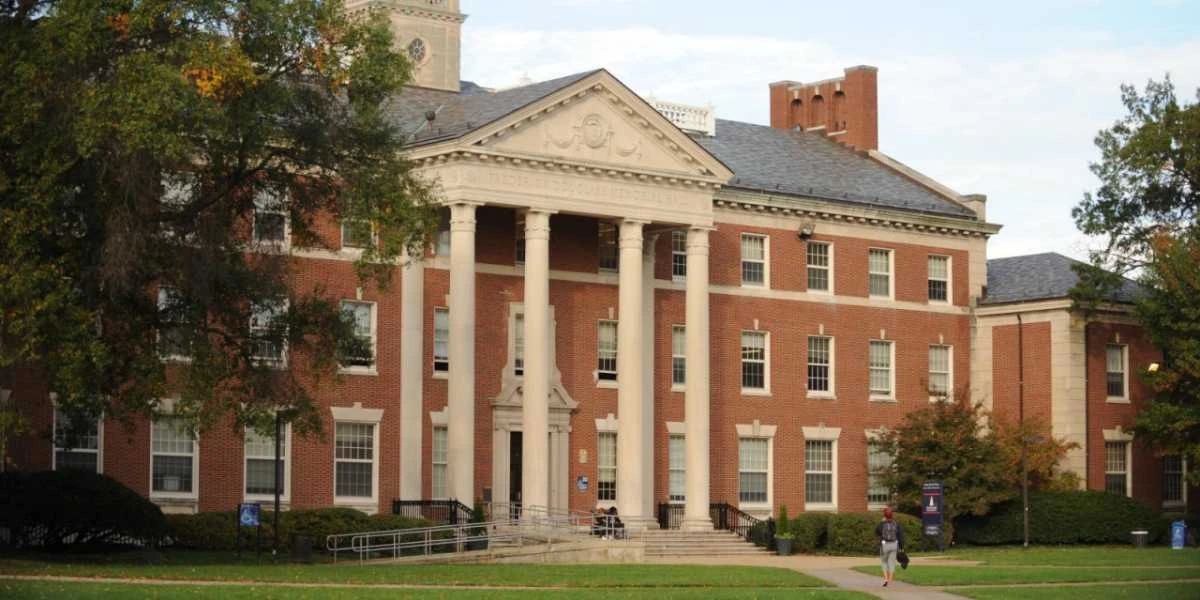
Howard University (HU) was founded in 1867 and is a private research university with 13 schools and colleges. The university is culturally diverse and comprehensive, and it is a research-intensive historically Black university. Howard is committed to providing students with an educational experience of exceptional quality, with faculty of the highest academic standing dedicated to developing all students with potential, and it places particular emphasis on providing educational opportunities to Black students. To date, Howard has awarded more than 120,000 degrees in the arts, sciences, and humanities, as well as more doctorate degrees to African Americans than any other university in the United States, and it has graduated more Black degree recipients than any other university in the country.
About the university
School data is compiled from public sources and may change. Confirm current tuition, deadlines and requirements with the university before applying.
At a glance
Alumni starting salaries
Student body
Most popular majors
Campus life
Transportation
Nearby Airports
Ronald Reagan Washington National Airport
Distance from campus: 5.9 miles
Campus-to-airport travel:
By car/rideshare:
Typically about 12 minutes. Allow more time during heavy traffic.
Public transit:
Take Bus 70 to 7 St NW & H St NW, transfer to Bus 74 to 7 St SW & C St SW, then transfer to the Metro Yellow Line.
Dulles International Airport
Distance from campus: 30.1 miles
Campus-to-airport travel:
By car/rideshare:
Typically about 40 minutes. Allow more time during heavy traffic.
Public transit:
Take Bus G8 to I St NW & 17 St NW, then transfer to the Metro Silver Line.
Nearby Train Stations
Washington Union Station
Campus-to-station travel:
By car/rideshare:
Typically 10 minutes. Allow more time during heavy traffic.
Public transit:
Take Bus 80.
New Carrollton Station
Campus-to-station travel:
By car/rideshare:
Typically 22 minutes. Allow more time during heavy traffic.
Public transit:
Take Bus 92 to Marion Barry Av SE & 16 St SE (E), transfer to Bus V2 to 63rd St & Clay St, then transfer to Bus F4.
City Public Transit
Howard University is surrounded by a well-developed public transit system offering a range of travel options that make it easy for students, faculty, staff and visitors to reach campus and the surrounding area:
Campus Shuttle Services
Campus shuttles run on fixed routes with stops near the various parking lots, residence halls, the West Campus, Metro stations and other university locations.
WMATA Metro
The Washington Metro is the main public transit option, and the Shaw-Howard University Station near campus makes it easy for students and visitors to get around.
Metrobus
Washington's bus system offers broad coverage. Several bus lines pass by Howard University, most commonly the 70 and 79 buses.
Sources:
Howard University Transportation Services
Howard University Shaw-Howard U
Howard University Metrobus
Housing
Howard University has 11 residential colleges in total, including 4 that house first-time-in-college (FTIC) students and 7 that house continuing students. The residential colleges offer a warm and comfortable living environment and welcome every student to campus life. The university is committed to providing first-rate residential services and to ensuring that every student can enjoy their college years in a safe, comfortable atmosphere.
Residential Colleges
Residential colleges for first-time-in-college (FTIC) students: The Harriet Tubman Quadrangle, College Hall North, Drew Hall
Residential college for first-time-in-college (FTIC) students and sophomores: Cook Hall
Residential colleges for continuing students: The Axis, College Hall South, Bethune Annex, Howard Plaza Towers East, Bethune Annex, Howard Plaza Towers East, Howard Plaza Towers West, WISH Woodley Park, Mazza Grandmarc
On-Campus Housing Application Steps
First-time-in-college (FTIC) students:
First, students confirm their intent to enroll at Howard University by paying the required $300 non-refundable enrollment fee. Next, students receive all Howard emails. Finally, students must pay a $50 housing application fee in the housing application.
Sophomores, upperclassmen and transfer students:
You must pay a $50 housing application fee in the housing portal application to begin the application process. Sophomores are guaranteed housing.
Sources:
Howard University View Residence Halls
Howard University Apply for housing
Dining
Howard University dining is known for its diverse menus and its attention to students' individual needs. It not only offers a wide range of dining choices but also works actively with students to meet their specific dietary preferences and needs. In addition, the dining halls regularly host events, including food festivals and special dinners, giving students unique dining experiences and social opportunities.
Dining Halls
Blackburn Cafe
Blackburn Café offers vegan foods on request, such as vegan butter, cheese, desserts and jerky. Gluten-free items are also available on request!
Bethune Annex Cafe
Bethune Annex Café has won awards for its creative, sustainable design and features 11 exhibition cooking stations, such as Mongolian 360, made-to-order pasta, deli, plant-based soup bowls, classic dishes, a grill and more!
Meal Plan
Meal Plan requirements:
All students assigned to residence halls with a required meal plan must purchase a meal plan in the fall and spring semesters, as follows:
Students with no more than 60 credits who live in a residence hall with a required meal plan must choose one of the Traditional 19, Traditional 14, Block 170 or Block 140 plans;
Students with more than 61 credits who live in a residence hall with a required meal plan may choose any meal plan;
Commuters are not required to purchase a meal plan.
Meal Plan prices:
Price per semester / Meals per week or semester / Retail amount per semester: Traditional 19 $3,142 / 19 per week / $250; Traditional 14 $3,039 / 14 per week / $300; Block 170 $2,939 / 170 per semester / $375; Block 140 $2,886 / 140 per semester / $400; Block 75 $1,564 / 75 per semester / $450; Dining Dollars Only $1,283 / NA / $1,175. Sources:
Howard University Meal Plan
Howard University Dining
Safety
The primary responsibility of Howard University Department of Public Safety officers is to ensure compliance with the rules, regulations and policies established by the Howard University Board of Trustees and to enforce applicable District of Columbia and municipal regulations within their jurisdiction.
Safety Training and Education
Deliver the high level of service the community deserves and expects. Make training a top priority in order to maintain proficiency and skills in a changing environment.
Crime Prevention Unit
Crime prevention tips are used to alert the university community to current and ongoing crime trends, warn them of related criminal activity, and seek their help in preventing and solving crimes.
HUDPS Criminal Investigations Unit
The Criminal Investigations Unit is primarily responsible for all criminal investigations not expressly assigned to the Metropolitan Police Department. The unit's main responsibility is to coordinate administrative investigations of students referred by the Office of the Dean for Special Student Services. The unit is responsible for storing and returning all lost property.
AppArmor's New Mass Notification System
To improve Howard University's emergency response procedures and personal safety, Howard University has implemented AppArmor's new mass notification system.
HUDPS Safety and Security Patrol
The Department of Public Safety's Patrol Services Bureau consists of armed campus police officers and unarmed security personnel. These officers are deployed at strategic locations and use a variety of resources to provide vigilance 24 hours a day, year-round, in order to deter crime.
Source: Howard University Safety About
Admissions
Admissions data
Application requirements
Application checklist

Application deadlines
Transfer requirements
Transfer checklist
Transfer deadlines
Similar universities
Admissions FAQ
What is the acceptance rate at Howard University?
The reported acceptance rate is 39%. Acceptance rates vary by applicant pool and application cycle; confirm the current figure with Howard University.
What SAT scores does Howard University expect?
The reported SAT range is 1130-1260. Test-optional and score-reporting policies can change by application cycle; check the university's official admissions page before applying.
When is the application deadline at Howard University?
The listed Regular Decision deadline is Feb. 15. Deadlines can vary by program and application cycle; confirm the exact date with the university.
How much does Howard University cost?
The listed tuition and fee figure is $28,916. Costs vary by residency, programme and academic year; confirm current costs with the university.
Where is Howard University located?
Howard University is located at 2400 Sixth St NW, Washington, DC, 20059.
Planning your application?
Build a school list around your profile.
Ivy Elite advisors help students compare programs, plan coursework and prepare applications for U.S. universities.