


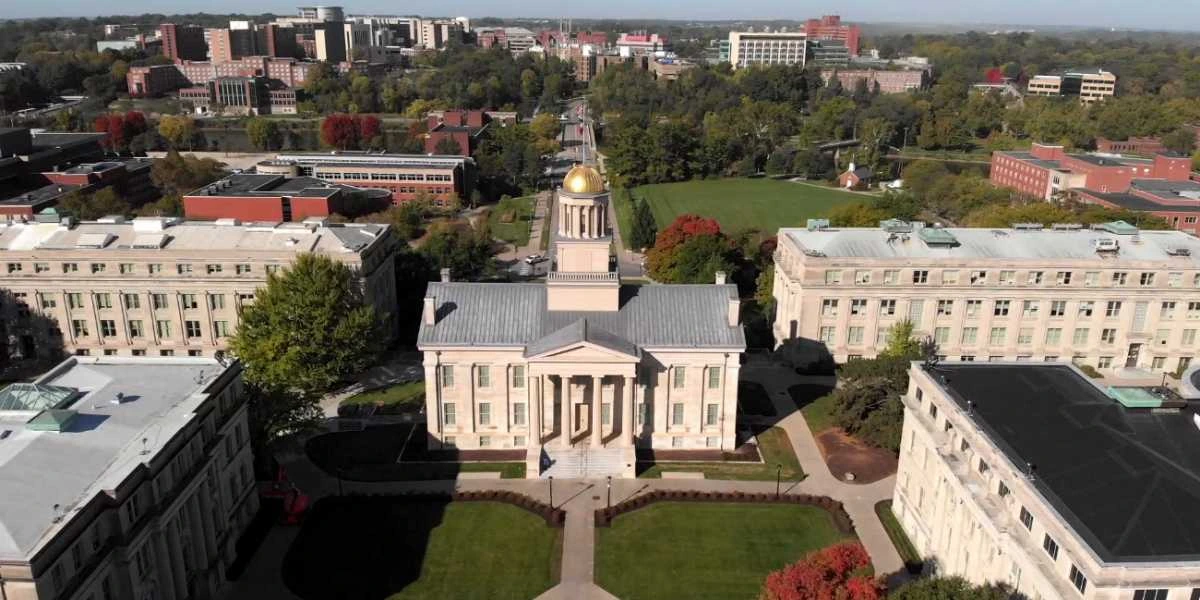
The University of Iowa currently has 11 undergraduate colleges and 7 graduate colleges. The university is known for its writing programs and its medical school; the Iowa Writers' Workshop has produced many renowned writers and is one of the most prestigious creative writing programs in the country. The medical school also has an excellent reputation in research and clinical practice. The university emphasizes interdisciplinary research and innovation and offers extensive academic resources and support.
About the university
School data is compiled from public sources and may change. Confirm current tuition, deadlines and requirements with the university before applying.
At a glance
Alumni starting salaries
Student body
Graduate programs
Finance
Finance
Program Overview
The Finance program at the University of Iowa is designed to provide the professional finance knowledge today's employers demand and to build students' skills in communication and visual analysis. Students have the opportunity to work one-on-one with industry leaders, preparing them fully to compete for senior positions when they enter the job market. The Master of Finance program at the Tippie College of Business is taught by faculty ranked No. 1 by the Financial Times. Whether students studied finance as undergraduates or come from another field, they will use innovative approaches to tackle the toughest business challenges.
Degree Type
Master of Finance
Program Length
16 months
Sources:
University of Iowa – Finance – Program Introduction
University of Iowa – Finance – Curriculum Plan
Application Requirements
GPA Requirement
There is no minimum score requirement, but the average GPA of admitted students across all graduate programs is 3.00.
Applicants with an average GPA below 3.00 may be considered for admission if there is sufficient evidence of academic or professional achievement demonstrating potential in the field.
Language Requirement
TOEFL minimum of iBT 100, IELTS 7.0 with no subsection below 6.0 (all IELTS test takers must take the on-campus English proficiency assessment), Duolingo (DET) minimum of 105
Students who have earned a bachelor's degree or higher from a recognized university in the United States, the United Kingdom, Ireland, Canada (excluding French-speaking Quebec), Africa (English-speaking countries), Australia or New Zealand may be exempt from the TOEFL/IELTS requirement.
GRE
Not required; students may submit scores optionally to strengthen their application
Statement of Purpose
In 500 words or fewer, tell the school why you want to earn a Master of Finance degree at Tippie. The prompt is "Discuss your overall career goals and how a degree from the Tippie College of Business will enable you to achieve them."
Degree Requirement
Students must hold a U.S. bachelor's degree or the equivalent from another country in the following:
Master of Accountancy
Master of Business Analytics
Master of Finance
Sources:
University of Iowa – Finance – International Student Language Requirements
University of Iowa – Finance – International Application
University of Iowa – Finance – Application Process
University of Iowa – Computer Science – Policies and Regulations Manual
Graduation Requirements
Credit Requirement
You must complete 45 credits
Internship Requirement
You must complete a summer internship
Sources: University of Iowa – Finance – Curriculum Plan
Course Information
Core Courses
The core courses build the foundation; critical thinking and communication skills are key to success in the discipline of finance.
Course | Course Number | Credits: Business Communication FIN8130 1-3; Corporate Financial Reporting MBA8140 2-3; Corporate Investment and Financing Decisions FIN9300 2-3; Data and Decisions BAIS9100; Derivatives and Risk Management FIN9210 2-3; Financial Modeling and Firm Valuation FIN9150 2-3; Fixed Income FIN9220 2-3; International Environment of the Firm MBA8170 2-3; Managerial Finance MBA8180 2-3; Portfolio Management FIN9200 2-3; Professional Development and Business Acumen FIN9400 2-3
Elective Courses: Students choose at least 1 course from the following
A range of electives helps you further develop additional expertise in the finance area of particular interest to you.
Course | Course Number | Credits: Applied Financial Analysis – Industry Project FIN9390 3; Applied Fixed Income Analysis – Fixed Income Fund FIN9225 3; Applied Securities Analysis – Henry Fund I FIN9250 3; Applied Securities Analysis – Henry Fund II FIN9260 3; Thesis in Business FIN9391 None; Extended Electives in Finance
Course | Course Number | Credits: Corporate Financial Strategy FIN9310 2-3; Enterprise Risk Management FIN9140 2-3; International Finance FIN9240 2-3; Investment Banking FIN9330 3; Quantitative Finance and Deep Learning FIN9160 3; Real Estate Finance and Investments FIN9230 2-3; Taxes and Business Strategy ACCT9050 2-3; Wealth Management FIN9350 2-3
Sources:
Master of Finance Curriculum
University of Iowa – Finance – Curriculum Plan
Career Development
The Tippie Career Services Center guides students along their career path with comprehensive support, including personalized assistance with job and internship searches, interview preparation, salary negotiation and more. As graduates of the Tippie Master of Finance program, students gain access to a powerful alumni network of more than 50,000 business professionals and become part of a larger community of more than 270,000 alumni. Through regional and city-specific events, they stay connected with top companies worldwide, continually expand their networks throughout their careers and open doors to career advancement.
Graduates of the Tippie College of Business Master of Finance program frequently qualify for the following positions and industries:
Asset Management
Assistant Bond Manager
Bond Analyst
Business Development
Commercial Banking
Consulting
The program provides real professional experience, including the Henry Fund website, the Hart Fund (a fixed-income fund run by Tippie College of Business students) and financial consulting opportunities. These help students demonstrate their analytical and professional abilities and experience to employers, giving them an edge in competing for positions.
Sources: University of Iowa – Finance – Career Planning
Business Analytics
Business Analytics
Program Overview
The Business Analytics program at the University of Iowa's Tippie College of Business is a diverse program with an outstanding teaching team. It is designed to build students' skills in statistics, data modeling, data visualization, and decision execution so that they can better guide corporate strategy, strengthen market position, and drive new business development in their future careers. Students can choose flexibly, based on their circumstances, between a full-time three-semester track and a flexible part-time option.
Degree Type
Master of Business Analytics
Program Length
16 months
Source: University of Iowa – Business Analytics – Program Home Page
Application Requirements
GPA Requirement
A GPA of no lower than 3.0
Language Requirement
TOEFL minimum iBT 100; IELTS 7.0 with no subsection below 6.0 (all IELTS test takers must complete the on-campus English proficiency assessment)
Applicants who have earned a bachelor's degree or higher from a recognized university in the United States, the United Kingdom, Ireland, Canada (excluding French-speaking Quebec), Africa (English-speaking countries), Australia, or New Zealand may be exempt from the TOEFL/IELTS.
GRE
Not required; applicants may submit scores optionally to help the school better evaluate their application
Statement of Purpose
In 500 words or fewer, tell the school why you want to earn a Master of Business Analytics degree at Tippie. The prompt is "Discuss your overall career goals and how a degree from the Tippie College of Business will enable you to achieve them." You may copy/paste into the online application or upload a PDF or Word document.
Sources:
University of Iowa – Business Analytics – Application Requirements
University of Iowa – Computer Science – Regulations Handbook
Curriculum
Core Courses
Course | Course Number | Credits: Advanced Analytics BAIS:9110 2–3; Analytics Experience BAIS:6120 3; Business Communication BAIS:8130 1–3; Data and Decisions BAIS:9100 3; Data Management BAIS:6050 3; Data Programming in Python BAIS:6040 3; Data Science BAIS:6070 3; Professional Development and Business Acumen BAIS:9400 0–3; Visual Analytics BAIS:6140 3. Electives
Course | Course Number | Credits: Applied Optimization BAIS:6130 3; Big Data Management and Analytics BAIS:6110 3; Cloud Computing BAIS:6400 3; Cybersecurity BAIS:6280 3; Data Analysis with R BAIS:6060 3; Data Leadership and Management BAIS:6210 3; Intro to Modeling with VBA BAIS:9210 2–3; Social Analytics BAIS:6105 3; Text Analytics BAIS:6100 3. Sources:
University of Iowa – Business Analytics – Curriculum
University of Iowa – Business Analytics – Full BAIS Course List
Career Development
The median starting salary of business analytics graduates is 54.5% higher than that of bachelor's degree holders; the lowest salary among past graduates was $31,200, and the average starting salary is $31,954. At the same time, a master's degree in business analytics from the University of Iowa can take students in many different directions, from executive roles to consulting, such as forensic analyst, big data consultant, business analyst, business analytics consultant, and business intelligence analyst.
The Tippie College of Business provides comprehensive career coaching and guidance throughout the student's job search. As a master's student in business analytics, students receive personalized support for job and internship searches, interview preparation, mock interviews, salary negotiation guidance, and more. In addition, the program helps students build relationships with alumni and employers in the career fields that interest them.
Source: University of Iowa – Business Analytics – Career Development
Computer Science
Computer Science
Program Overview
The Master's program in Computer Science in the University of Iowa's College of Liberal Arts and Sciences is designed to provide students with the opportunity to gain in-depth knowledge of advanced computer science concepts through coursework in order to advance their careers. Students who complete the M.C.S. typically choose employment in the software industry or continue their studies toward a doctoral degree. Learning outcomes of the program include deep and current knowledge of computer science concepts and techniques, the ability to solve problems in related fields, a solid theoretical foundation in computer science, and exposure to cutting-edge research.
Degree Type
Master of Computer Science
Program Length
24 months
Sources:
University of Iowa – Computer Science – Program Overview
University of Iowa – Computer Science – CS Program Catalog
Application Requirements
Academic Requirements
There is no minimum score requirement, but the average GPA for regular admission to all graduate programs is 3.00.
Applicants with an average GPA below 3.00 may be considered for admission if there is sufficient evidence of academic or professional achievement demonstrating potential in the field.
Language Requirement
TOEFL minimum iBT 100; IELTS 7.0 with no subsection below 6.0 (all IELTS test takers must complete the on-campus English proficiency assessment); Duolingo (DET) minimum 105
Applicants who have earned a bachelor's degree or higher from a recognized university in the United States, the United Kingdom, Ireland, Canada (excluding French-speaking Quebec), Africa (English-speaking countries), Australia, or New Zealand may be exempt from the TOEFL/IELTS.
Sources:
University of Iowa – Computer Science – Program Overview
University of Iowa – Computer Science – Regulations Handbook
Graduation Requirements
Credit Requirement
Students must complete at least 32 credits
Grade Requirement
The Department of Computer Science expects students to maintain a 3.00 GPA throughout the graduate degree program, and students must achieve at least a 2.75 to graduate and receive the MCS degree
Source: University of Iowa – Computer Science – Graduation Requirements
Curriculum
The MCS requires completion of 32 credits, of which at least 24 credits must be earned at the University of Iowa
Core Courses:
Course | Course Number | Credits: Theory of Computation CS4330 3; Logic in Computer Science CS4350 3; Topics in Computer Science II CS4980 3; Limits of Computation CS5340 3; Design and Analysis of Algorithms CS5350 3; Randomized Algorithms CS5360 3; Computational Geometry CS5370 3; Programming Language Foundations CS5850 3; Lambda Calculus and Applications CS5860 3; Design and Implementation of Algorithms CS6000 3; Research Seminar: Colloquium Series (must enroll twice) CS4310 3. Electives:
Course | Course Number | Credits: Database Systems CS4400 3; Artificial Intelligence CS4420 3; Web Mining CS4440 3; Health Data Analysis CS4470 3; Research Methods in Human-Computer Interaction CS4500 3. For more courses, please refer to the University of Iowa – Computer Science – Full CS Course List. Electives must meet the following rules:
Students must choose at least six courses numbered 4300 or above
Excluding CS5110 Introduction to Informatics, CS5990 Individual Study or Programming Project, CS6000 Research Seminar: Colloquium Series, CS6990 Research Readings, and CS7990 Thesis Research.
A maximum of one CS:5990 Individual Study or Programming Project may be counted.
A maximum of two technical courses outside computer science graduate courses (subject to advisor approval).
Source: University of Iowa – Computer Science – Master's Course Requirements
Career Development
Master's graduates in Computer Science from the University of Iowa's College of Liberal Arts and Sciences focus on software design and development in the technology field, covering areas such as UIX, mobile, and web development. Graduates have opportunities to work at technology giants such as Microsoft, Google, Yahoo, or Intel and build careers in the software industry.
In addition, other graduates have found career development opportunities at internationally renowned organizations in consulting, finance, healthcare, insurance, and media/entertainment. Some Computer Science students choose to enter the entrepreneurial market, while others pursue doctoral degrees at the University of Iowa or elsewhere.
Source: University of Iowa – Computer Science – Career Development
Electrical and Computer Engineering
Electrical and Computer Engineering
Program Overview
The Electrical and Computer Engineering program at the University of Iowa is dedicated to inspiring academic and research excellence through close contact with faculty and the design of individualized programs. Students plan a personalized curriculum under the guidance of a chosen advisor, with major areas including medical image analysis, signal and image processing, control systems, wireless communications, waves and materials, computer systems, and computational genomics. Learning outcomes include demonstrating broad knowledge of electrical and computer engineering, the ability to analyze and solve related problems, and professional skills in effective communication and ethical conduct in professional, social, and academic activities.
Degree Type
Electrical and Computer Engineering, MS
Program Length
24 months
Source: University of Iowa - Electrical and Computer Engineering - Program Catalog
Admission Requirements
GPA Requirement
Applicants must have a GPA of at least 3.0 in electrical and computer engineering, mathematics, and physics courses
Students with a GPA between 2.75 and 3.00 in electrical and computer engineering, mathematics, and physics courses may also be considered at the discretion of the program if other aspects of their academic record are strong
Language Requirement
Minimum TOEFL score of iBT 100, IELTS 7.0 with no subsection below 6.0 (all IELTS test takers must take the on-campus English proficiency assessment), and a minimum Duolingo (DET) score of 105
Students are exempt from the TOEFL/IELTS if they earned a bachelor's degree or higher from an accredited university in the United States, the United Kingdom, Ireland, Canada (excluding French-speaking Quebec), Africa (English-speaking countries), Australia, or New Zealand.
Sources:
University of Iowa - Electrical and Computer Engineering - Admission Requirements
University of Iowa - Electrical and Computer Engineering - Regulations Manual
Graduation Requirements
Credit Requirement
The program offers thesis and non-thesis tracks: all students must complete at least 30 credits
MS with Thesis:
Must include at least 12 semester hours of approved graduate courses in the field.
All graduate students must take the 1-semester-hour engineering ethics course ENGR:7270
MS without Thesis:
The program must include at least 18 semester hours of approved ECE graduate courses.
All graduate students must take the 1-semester-hour engineering ethics course ENGR:7270
Grade Requirement
Whether students choose the thesis or non-thesis track, graduates must have a cumulative grade-point average of 3.00 or higher in all graduate courses counted toward the degree.
Academic Requirement
MS with Thesis: requires 3 semester hours of approved coursework and 6 semester hours of ECE:5999 Research: Electrical and Computer Engineering Master's Thesis
MS without Thesis: complete an additional 9 semester hours of approved coursework. Students who complete one or more required undergraduate courses may select course substitutions from the approved electrical and computer engineering course list
Sources:
University of Iowa - Electrical and Computer Engineering - Program Requirements
University of Iowa - Electrical and Computer Engineering - ECE Catalog
Course Information
Core Courses:
Course Course Number Credits High Performance Computer Architecture ECE5320 3 Graph Algorithms and Combinatorial Optimization ECE5330 3 Fundamentals of Software Engineering ECE5800 3 Formal Methods in Software Engineering ECE5810 3 Software Engineering Languages and Tools ECE5820 3 Software Engineering Project ECE5830 None Elective Courses: all courses numbered ECE:5001 and higher
Course Course Number Credits Introductory Solid State Physics ECE4728 3 Contemporary Topics in Electrical and Computer Engineering ECE5995 None Contemporary Topics courses ECE7995 None Power Electronics ECE5420 3 Electric Drive Systems ECE5430 3 For more elective courses, refer to University of Iowa - Electrical and Computer Engineering - All ECE Courses
Sources:
University of Iowa - Electrical and Computer Engineering - Program Requirements
University of Iowa - Electrical and Computer Engineering - ECE Catalog
Career Development
Engineering is a cornerstone of careers spanning industry, medicine, law, government, and consulting. Electrical engineers find employment opportunities in every field where smart technology is applied. According to statistics from previous years, 93-98% of graduates were employed in a related field or chose to continue their studies within 7 months of graduation.
To support students' career development, the program's Engineering Career Services (ECS) office is dedicated to developing and promoting experiential education and professional opportunities. The office's professional staff coordinate the college's cooperative education and internship programs, participate in employer outreach activities, and provide students with opportunities to connect with employers, including the engineering career fair held each semester and other career development programs. In addition, the program's career services office offers individual advising and classroom presentations covering resume and cover letter preparation, job and internship search strategies, interview techniques, and evaluating job offers, to help students better prepare for their careers.
Sources:
University of Iowa - Electrical and Computer Engineering - Career Development
University of Iowa - Electrical and Computer Engineering - Engineering Career Services
Public Affairs
Public Affairs
Program Overview
The University of Iowa's Master of Public Affairs (MPA) program is designed to prepare future leaders to address the critical challenges facing communities, the nation, and the world in a systematic and creative way. Its scope spans challenges such as environmental change, health care, aging, and inequality. Supported by an interdisciplinary public affairs infrastructure, the program has made the University of Iowa a local and national leader in the field of public affairs. Graduates will be equipped with creative and knowledgeable abilities and committed to addressing the major challenges of the 21st century.
Combined MPA Degrees:
The University of Iowa also offers students a variety of combined degree options, allowing them to earn a public affairs degree and another degree in less time than it would take to complete the two degrees separately. Coursework from one degree may count as elective credit toward the other. One example is the combined Law and Public Affairs degree.
Degree Type
Master of Public Affairs (MPA)
Program Length
24 months
Sources:
University of Iowa – Public Affairs – Program Overview
University of Iowa – Public Affairs – Curriculum
Application Requirements
GPA Requirement
The University of Iowa's Public Affairs program requires a minimum GPA of 3.0.
Language Requirement
International applicants who do not qualify for an exemption must submit English proficiency scores.
The minimum scores are TOEFL iBT 81, IELTS 7.0 with no subsection below 6.0 (all IELTS test takers must take the on-campus English proficiency assessment), Duolingo (DET) 105, and PTE 68 with no subsection below 58.
Note: Unless the TOEFL total score is 100 or higher, or the IELTS total score is 8.0 or higher, applicants must take the on-campus English Proficiency Evaluation (EPE). All students admitted using Duolingo (DET) scores must take the EPE upon arrival on campus. TOEFL MyBest Superscores are not accepted.
Applicants may be exempt from TOEFL/IELTS if they earned a bachelor's degree or higher from an accredited university in the United States, the United Kingdom, Ireland, Canada (excluding French-speaking Quebec), Africa (English-speaking countries), Australia, or New Zealand.
Sources:
University of Iowa – Public Affairs – Application Requirements
University of Iowa – Public Affairs – English Proficiency Requirements
Graduation Requirements
Credit Requirement
You must complete 42 credits, including 8 core courses and 5 electives (including 9 credits of specialized electives, 1 internship, and a two-semester capstone project).
Grade Requirement
Students must earn at least a B- (GPA 2.67) in core courses, the capstone project, and specialized courses.
In other courses, students must earn at least a C- (GPA 1.67).
Capstone Project
MPA students typically complete the capstone project for the Master of Public Affairs degree during the final two semesters of the program.
In this project-based course, students work with a project partner (or "client") to produce a professional-quality deliverable under faculty guidance. Capstone projects focus on management and/or policy topics. Projects may be applied to nonprofit organizations; local, county, state, federal, and/or international public agencies (or interagency processes); and any public affairs topic.
Capstones are typically completed in small groups (2–4 students). Except in rare special circumstances, all capstone projects must have a project partner. Potential projects are identified through the IISC community partnership model and other IISC and SPPA connections with state and local agencies. Students will see multiple potential projects and rank them according to their preferences. Groups will be determined by the lead instructor. In rare cases, students may receive permission to carry out a self-determined individual capstone project.
Internship Requirement
Students should seek internship placements with substantive work related to the public affairs degree (for example, scanning, receptionist, or courier services are generally not acceptable internship placements).
After completing the internship, students must submit an internship credit approval form and an internship paper to their advisor. The paper should include the following:
1. Internship description: the employer, the student's position in the organization, and the tasks the student completed or the projects the student participated in;
2. A critical discussion of public policy or administrative processes and of the organization: In this section, students should think critically about the work they performed, the purpose of that work, and where and how the work fits into the organization's mission; the structure of the agency/organization; and the relationship between the agency or program and local politics and society.
66 or the relationship between the program and local politics and community engagement; and the methods used to make policy. This section should be reflective, thoughtful, critical, and constructive.
3. The value of the internship experience to the student's personal development and its potential value to other public affairs students.
Sources:
University of Iowa – Public Affairs – Student Handbook
University of Iowa – Public Affairs – Curriculum Overview
Curriculum Overview
Core Courses: 20 credits
Course Course Number Credits Bureaucratic Politics and Public Administration PBAF5117 3 Public Policy Process PBAF5120 3 Analytic Methods I PBAF6200 3 Economics for Policy Analysis PBAF6205 3 Program Seminar PBAF6208 1 Applied GIS for Planning and Policy Making PBAF6225 1 Public Finance and Budgeting PBAF6233 3 Public Management PBAF6240 3 Internship PBAF6335 1, 2, or 3 Electives:
There are two areas to choose from—Public and Nonprofit Management or Public Policy. Students complete at least 9 credits of coursework in the Public and Nonprofit Management or Public Policy specialization.
The Public and Nonprofit Management area includes the following tracks:
Nonprofit Management
Public Management
Strategic Communication
The Public Policy area includes the following tracks:
Criminal Justice
Economic Development Policy
Educational Policy
Environmental Policy
Health Policy
Housing and Community Development Policy
Transportation Policy Methods
Politics of Public Policy Making
Sustainable Development
Sources:
University of Iowa – Public Affairs – Focus Areas
University of Iowa – Public Affairs – Curriculum Overview
Career Development
The MPA degree gives individuals the opportunity to earn an applied degree on top of their undergraduate education, preparing them for professional and/or managerial service in the public and nonprofit sectors. The degree builds knowledge and skills across topics such as policy, economics, statistics, research, and management. These areas of knowledge and skill help students prepare for careers that shape public policy through analysis, application, or management. People with this interdisciplinary degree have many career options, including administrative positions in federal, state, and local government or nonprofit agencies in fields such as the environment, housing, transportation, health, and education. State, federal, nonprofit, and even private-sector employers include:
Local:
Program coordinator, community health director, public housing director, community relations specialist, neighborhood improvement coordinator, elected official, city manager.
State:
Legislative services analyst, environmental policy project manager, policy analyst/project manager for various state agencies, budget analyst, regulatory inspector, program evaluator.
Federal:
Presidential Management Fellow, policy analyst in federal departments (starting at GS-9), congressional committee staff, speechwriter.
Nonprofit:
Education and outreach director, research and development coordinator, grant writer, fundraiser, foundation grants officer, community organizer, and project management roles as program specialist, manager, or director.
Other nongovernmental organizations:
Think tank analyst, data analyst, public and government relations director, lobbyist, consultant, advocacy group director.
The school is committed to providing excellent career assistance for internships, post-graduation jobs, and scholarship seekers. The school offers access to employment information and one-on-one advising support through our career services coordinator.
Source: University of Iowa – Public Affairs – Career Development
Campus life
Transportation
Nearby Airport
Eastern Iowa Airport (CID)
Distance from campus: 21 miles
Campus to airport travel:
By car/rideshare:
Typically takes about 25–30 minutes. It may take longer during heavy traffic.
Public transportation:
Take bus 380 Express and transfer to Route 11.
Nearby Train Station
Mount Pleasant Amtrak Station
Campus to train station travel:
By car/rideshare:
Typically takes 50 minutes. It may take longer during heavy traffic.
City Public Transportation
Public transportation at and around the University of Iowa is mainly provided by Iowa City Transit and Coralville Transit, including the following options:
Iowa City Transit: Offers multiple bus routes covering the University of Iowa campus and most of Iowa City. Buses run frequently, making daily travel convenient for students and residents.
Coralville Transit: Serves the neighboring city of Coralville, connecting the University of Iowa, Coralville and major areas of Iowa City.
Cambus: A campus shuttle system operated by the University of Iowa, free for students, faculty, staff and visitors, covering major buildings, parking lots and residence hall areas across campus.
Regional Transit: SEATS (Southeast Iowa Area Transit System) provides regional transportation services, particularly suited to passengers who need special assistance.
Long-distance buses: Greyhound and Megabus offer long-distance bus service to other cities, making it convenient for students and residents to travel to farther destinations.
These public transportation options provide convenient travel for University of Iowa students, faculty, staff and visitors, making it easy to get around Iowa City and the surrounding area.
Safety
The safety services department plays a vital role in supporting campus safety by implementing various measures to prevent crime and ensure the well-being of students, faculty and staff. The safety services department employs full-time security officers and part-time student security officers who help maintain campus safety by regularly patrolling campus to deter crime and identify potential safety threats. They also monitor security cameras and other security systems to detect suspicious behavior and respond quickly to incidents. In addition to building patrols, the team assists with building unlocks, fire patrols, student life compliance checks and other campus safety needs. The safety services department also operates essential campus safety services, including nighttime escorts, lost and found, and fingerprinting services.
NITE RIDE
A free late-night transportation service for all UI students, faculty and staff. Rides can be scheduled between 10 p.m. and 5 a.m.
Lost and Found
View the virtual lost and found, or file a claim for your lost item. You will be notified as soon as your item is returned.
Fingerprint Services
The university offers fingerprinting services by appointment for all students, faculty, staff, immediate family members and recent graduates.
Housing
At the University of Iowa, the university offers 11 different residence halls, located on the east and west sides of campus. All residence halls feature fully furnished spaces, front desks, study lounges, high-speed internet, laundry facilities and more.
Residence halls
Burge Hall
Catlett Hall
Currier Hall
Daum Hall
Hillcrest Hall
For more information, please read the residence hall list.
On-campus housing application steps
First-year students
Submit the online application
After submitting your application, you can take part in online room selection. You can access the application through your admissions profile in MyUI. You will need to verify your personal and emergency contact information, indicate whether you wish to receive disability accommodations, agree to the contract terms and conditions, and pay a $75 application fee. Students will receive a room selection lottery number based on a monthly random assignment. Students who apply between the first and last day of a given month will be randomly assigned a room selection number (queue position).
Explore and personalize LLC and roommate options
If you have submitted a housing application, you will be able to explore your housing options. Here you can apply to join a living-learning community and take part in roommate search or requests.
Select a room, insurance and meal plan
Online room selection takes place each year, based on the number randomly assigned after applications are received each month. Once you have selected or been assigned a room, you will have the opportunity to learn about GradGuard, the University of Iowa's preferred renters insurance provider.
Current students
Become eligible for housing
To be eligible for housing as a returning student, an individual must be enrolled in 7 or more semesters by the designated date.
Roommate matching
Applicants are encouraged to check again, as the number of potential roommates will be greater.
Time slots
Depends on how long the student has lived in the residence halls. For example, if you are returning to the residence halls for your fourth year, you will be in the first group assigned a room selection time slot. Current first-year students who apply before the designated date will be randomly assigned together.
Dining
The university offers multiple restaurants, dining halls, stores and cafés to meet students' diverse dietary needs.
University restaurants
Black's Gold Grill
Black's Gold Grill is located in Petersen residence hall. The menu features items such as quesadillas, smoothies, appetizers, mac and cheese, burgers and chicken tenders. This restaurant is designed for late-night diners on the west side of campus and any community members passing through on their way to athletic facilities.
Burge Market Place
Burge Market Place is located in Burge residence hall. You will find a variety of stations offering a range of fresh foods, including made-to-order items. A variety of soups, freshly baked bread and specialty grilled meats are also served here.
Catlett Market Place
Catlett Market Place is located in Catlett residence hall. It has nine different stations offering a range of fresh foods, including made-to-order items such as pizza, salads and burgers. Breakfast is also served here all day.
For more information, please read the restaurant list.
Meal Plan
A meal plan is a set number of meals purchased in advance for a semester. At the University of Iowa, meal plans offer both market meals and flex meals. With a meal plan, you can eat freely anytime and anywhere throughout the semester (with some restrictions). All first-year students living on campus and returning students not living in rooms with a university-provided kitchen are required to have a meal plan.
You need to show your Iowa One card to the cashier, who will swipe it at the register before you can enjoy these meals. This swipe deducts one meal from your balance, known as a meal swipe. Meal plans offer two types of swipes: market meal swipes and flex swipes. Most students will use most of their swipes at the market, where both market meal swipes and flex swipes are accepted.
All students living in residence halls must purchase the Gold or Black meal plan. Students living in rooms with a university-provided kitchen may choose the Hawkeye meal plan. University Housing and Dining offers several meal plan options, including: Gold, Black, Hawkeye and the Herky Booster Pack.
Meal PlanMeal swipesFlex swipesGuest meal costGold Meal PlanUnlimited75/semester8/semester$2,245/semesterBlack Meal Plan145/semester75/semester8/semester$2,023/semesterHawkeye Meal Plan075/semester0$850/semesterHerky Booster Pack025/semester0$285/semester
Admissions
Admissions data
Application requirements

Application checklist
Application deadlines
Transfer requirements
Transfer checklist
Transfer deadlines
Similar universities
Admissions FAQ
What is the acceptance rate at University of Iowa?
The reported acceptance rate is 85%. Acceptance rates vary by applicant pool and application cycle; confirm the current figure with University of Iowa.
What SAT scores does University of Iowa expect?
The reported SAT range is 1130-1320. Test-optional and score-reporting policies can change by application cycle; check the university's official admissions page before applying.
When is the application deadline at University of Iowa?
The listed Early Action deadline is Nov. 1. Deadlines can vary by program and application cycle; confirm the exact date with the university.
How much does University of Iowa cost?
The listed tuition and fee figure is $12,920. Costs vary by residency, programme and academic year; confirm current costs with the university.
Where is University of Iowa located?
University of Iowa is located at 101 Jessup Hall, Iowa City, IA, 52242-1316.
Planning your application?
Build a school list around your profile.
Ivy Elite advisors help students compare programs, plan coursework and prepare applications for U.S. universities.