


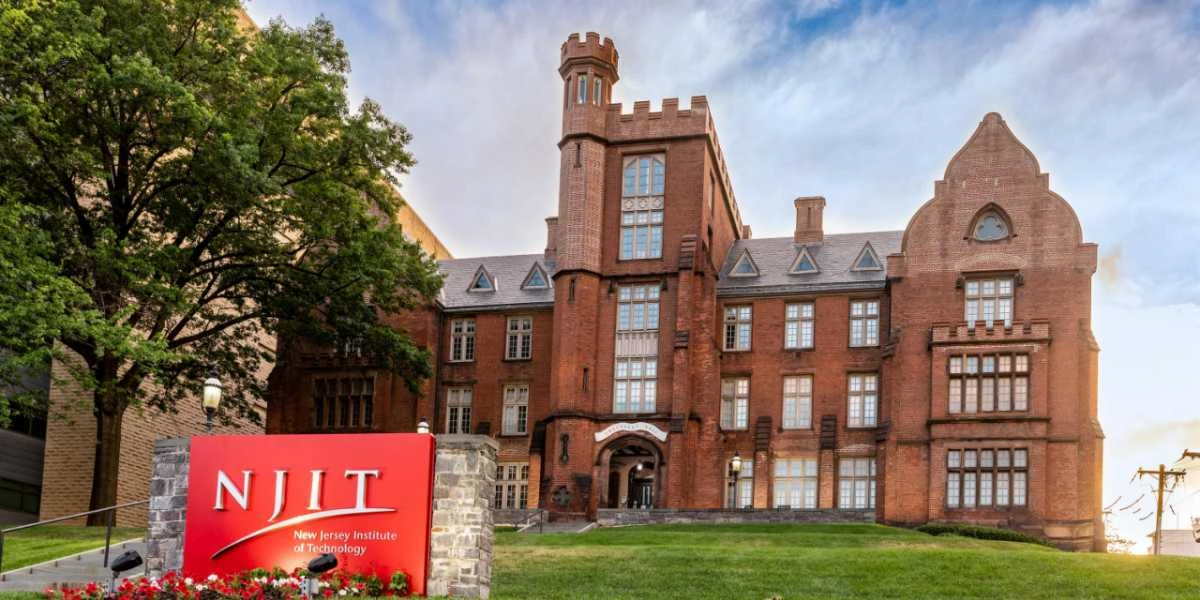
New Jersey Institute of Technology (NJIT) has six undergraduate colleges and five graduate schools. The university is known for its outstanding STEM (science, technology, engineering, and mathematics) education and research, offering abundant hands-on opportunities and industry-academia collaboration programs. NJIT enjoys a strong reputation in fields such as engineering, computer science, and business management, attracting a large number of students who aspire to technological innovation and business leadership.
About the university
School data is compiled from public sources and may change. Confirm current tuition, deadlines and requirements with the university before applying.
At a glance
Alumni starting salaries
Student body
Most popular majors
Graduate programs
Data Science
Data Science
Program Overview
The Data Science program with a Statistics concentration at New Jersey Institute of Technology is administered by the Department of Mathematical Sciences. The program focuses on the statistical aspects of data science and is designed to give students a deep understanding of randomness, sampling, data generation, statistical inference, modeling, data analysis and statistical computing, and to apply this knowledge in machine learning, data analysis and data science.
Students have the opportunity to choose electives according to their individual interests and goals, including topics such as probability, mathematical statistics, data visualization and deep learning. Coursework covers data analysis and simulation using the R statistical software and the Python programming language. Students gain extensive hands-on experience applying these skills to data sets of various sizes, building a strong foundation for careers in data science and related fields.
Degree Type
M.S. Data Science (Statistics Concentration)
Program Length
2 years
STEM Designation
Yes
Sources:
New Jersey Institute of Technology DS
New Jersey Institute of Technology Mathematical Sciences
Application Requirements
Language Requirements
All international applicants who do not hold a degree from a U.S. institution of higher education must take the TOEFL, IELTS or Duolingo test.
The minimum score requirements are 79 on the internet-based TOEFL, 213 on the computer-based TOEFL and 550 on the paper-based TOEFL. Institution code: 2513
The minimum IELTS score is 6.5, with no subscore below 6.0.
The minimum Duolingo score is 120.
GRE/GMAT
The college does not require applicants to submit GRE/GMAT scores
In addition to the program-specific requirements above, the complete application requirements can be found in the [Application Requirements] section of our website
Source: New Jersey Institute of Technology Master Program Application Checklist
Graduation Requirements
Credit Requirements
Whether students choose the thesis or non-thesis option, they must complete 30 credits
Grade Requirements
A cumulative grade point average of 3.0 or higher is required
Academic Requirements
If students choose the master's project or master's thesis, the project or thesis must be related to data science and must be approved by one of the program co-directors.
Sources:
New Jersey Institute of Technology DS
New Jersey Institute of Technology Academic Policy
Curriculum
Students in the Master of Science in Data Science (MSDS) program must successfully complete 30 credits under one of the following options:
Courses (30 credits)
Courses (27 credits) + MS project (3 credits)
Courses (24 credits) + master's thesis (6 credits)
Whichever option is chosen, all core courses in the student's concentration are required.
With the approval of the program co-directors, students may select up to two courses outside their concentration. Computing concentration students may take up to three non-computer science courses. Statistics concentration students may take up to three non-mathematics courses.
If students choose the master's project or master's thesis, the project or thesis must be related to data science and must be approved by one of the program co-directors.
The MSDS program has two concentrations, computing and statistics, and students must choose one at the time of admission. The two concentrations have different core courses but the same admission requirements and electives.
With the approval of their respective advisors, students may select one elective outside the list.
Core Course Requirements for Statistics Track
Course Course Code Credits Introduction to Statistical Computing with SAS and R MATH 660 3 Applied Statistics MATH 661 3 Stat Methods in Data Science MATH 678 3 Introduction to Big Data CS 644 3 Machine Learning CS 675 3 or Advanced Statistical Learning MATH 680
3 Electives and Foundation Courses
Computer Science Electives
Course Course Code Credits Data Structures and Algorithms CS 610 3 Data Management System Design CS 631 3 Advanced Database System Design CS 632 3 Data Mining
Data Mining CS 634 3 Data Analytics with R Program CS 636 3 Elec. Medical Records: Med Terminologies and Comp. Imp. CS 639 3 Cloud Computing
Cloud Computing CS 643 3 Math Electives
Course Course Code Credits Linear Algebra and Applications MATH 630 3 Linear Algebra MATH 631 3 Regression Analysis Methods MATH 644 3 Introduction to Statistical Computing with SAS and R MATH 669 3 Probability Distributions MATH 662 3 Other Electives
Course Course Code Credits Computational Ecology BIOL 638 3 Selected Topics BME 698 3 Data Mining and Analysis MGMT 635 3 Decision Analysis with Quantitative Modeling MGMT 630 3 Corporate Finance I FIN 600 3 For more electives, please see the official website
Career Development
The Career Development Services office provides value-added services for the career planning and preparation of New Jersey Institute of Technology students and graduates. The office is committed to continuously improving its services to students and to providing leadership in the career development profession.
Its services include:
Students: helping students clearly understand their career options and job requirements, gain experiential learning opportunities in the private and public sectors, master job search and interview skills, and secure employment upon graduation;
Alumni: refining job search and interview skills and career goals, clearly understanding career options and workplace requirements, and obtaining meaningful work in professional fields that match their education, experience and personal goals;
Employers: providing organizations with qualified students, graduates and alumni who can meet workforce needs, and building closer and more effective relationships with university faculty and staff;
Directly connecting students, alumni, faculty and staff with organizations dedicated to improving the quality of life of New Jersey residents through service and civic engagement activities.
Contributing to New Jersey's economic and workforce development by making a highly skilled workforce readily available, thereby reducing companies' costs for recruiting, staffing and training new employees; promoting the transfer of technical knowledge to the workplace; and stimulating the creation of new jobs.
Source: New Jersey Institute of Technology Career Services
Computer Science
Computer Science
Program Overview
The Computer Science program at New Jersey Institute of Technology. This program is designed to provide a comprehensive advanced education in computer science, giving students the theoretical knowledge and technical skills they need to pursue a variety of careers in computing and technology. Students can choose courses in different areas according to their personal interests and professional needs, such as cybersecurity, artificial intelligence, data management, computer algorithms, programming languages and environments, software engineering, and systems. This means students can study in depth the areas that interest them and prepare for future career development.
Degree Type
M.S. in Computer Science
Program Length
2 years
STEM Designation
Yes
Source: New Jersey Institute of Technology CS
Application Requirements
Language Requirements
All international applicants who do not hold a degree from a U.S. institution of higher education must take the TOEFL, IELTS, or Duolingo test.
The minimum score is 79 on the internet-based TOEFL, 213 on the computer-based TOEFL, and 550 on the paper-based TOEFL. Institution code: 2513
The minimum IELTS score is 6.5, with no subscore below 6.0.
The minimum Duolingo score is 120.
GRE/GMAT
Students must submit GRE/GMAT scores. Institution code: 2513
Academic Background
A four-year bachelor's degree from a U.S.-accredited institution, or an equivalent degree from a non-U.S. institution. The degree must be in a computer-related field. Applicants should in particular have completed undergraduate coursework equivalent to the following: CS 113, CS 114, CS 252, CS 332, CS 356, CS 431, CS 506, MATH 111, MATH 112, MATH 333 (see the CS catalog and MATH catalog for details).
In addition to the program-specific admission requirements above, the complete application requirements can be found in the [Application Requirements] section of our website.
Source:
New Jersey Institute of Technology Master Program Application Checklist
New Jersey Institute of Technology CS FAQ
Graduation Requirements
Credit Requirements
Students must complete 30 credits.
Grade Requirements
A cumulative grade point average of 3.0 or higher is required.
Thesis Requirement
Students choosing the thesis option must take CS 701B. Students must work closely with a research advisor, who determines the project/thesis topic and guides the student in selecting specific elective courses to prepare for the research.
Source:
New Jersey Institute of Technology Academic Policy
New Jersey Institute of Technology CS
Curriculum Overview
Students interested in research can earn up to 6 of the 30 required credits by taking the CS 700B master's project, and may then take CS 701B master's thesis. The specific requirements are as follows.
Core Courses (12 credits)
Courses covering fundamental topics in computer science.
Course Course Code Credits Data Structures and Algorithms
Data Structures and Algorithms CS 610 3 Choose three of the following courses: Operating System Design
Operating System Design CS 630 3 Data Management System Design
Data Management System Design CS 631 3 Internet and Higher-Layer Protocols
Internet and Higher-Layer Protocols CS 656 3 Machine Learning
Machine Learning CS/DS 675 3 Elective Courses (18 credits)
Electives include all CS graduate courses as well as selected courses from other departments. A list of CS courses organized by area of specialization can be found here.
Choose six courses from the following list.
Bridge course: CS 506 Foundations of Computer Science
Computer science graduate courses: all listed 600-level and 700-level courses&1
Courses from other departments
DS courses corresponding to CS: DS636, DS644, DS675, DS677 &2
At most one course from IS 601, IS657, IS665, DS 669, MATH 661, YWCC 691 3
At most one course from the graduate catalogs of other departments 4
0. Bridge courses are recommended only for students who do not hold a typical CS undergraduate degree. The program has four bridge courses: CS332, CS350, CS 505, CS506.
1. CS course list. A few 700-level courses are open only to doctoral students.
2. Only one course from each pair counts toward the degree requirements: CS/DS 636, CS/DS 644, CS/DS 675, CS/DS 677.
3. YWCC 691 and CS 700B cannot both count toward the degree requirements.
4. Courses from other departments must be CS-related and require prior approval from the program director.
Course List
Algorithms and CS Theory
Course Course Code
Data Structures and Algorithms
Data Structures and Algorithms CS 610
Introduction to Computational Complexity
Introduction to Computational Complexity CS 611
Algorithms on Graphs CS 665 Design Techniques for Algorithms
Design Techniques for Algorithms CS 667
Artificial Intelligence
Course Course Code Artificial Intelligence CS 670 Machine Learning CS 675 Reinforcement Learning DS 669 Deep Learning CS 677 Cybersecurity and Privacy
Course Course Code Cryptography and Security CS 608 Security and Privacy in Computer Systems
Security and Privacy in Computer Systems CS 645
Network Protocols Security
Network Protocols Security CS 646 Counter Hacking Techniques
Counter Hacking Techniques CS 647
Data Management
Course Course Code Data Management System Design
Data Management System Design CS 631
Advanced Database System Design
Advanced Database System Design CS 632
Data Mining CS 634 Introduction to Big Data DS 644 Programming Languages and Environments
Course Course Code Java Programming CS 602 Computer Programming Languages
Computer Programming Languages CS 635
Data Analytics with R Program
Data Analytics with R Program CS 636
Cloud Computing CS 643 Systems
Course Course Code Operating System Design CS 630 Distributed Systems CS 633 Computer Architecture CS 650 Cognitive Cloud Networking - Architectures and Applications
Cognitive Cloud Networking - Architectures and Applications CS 652
Software Engineering
Course Course Code Software Design and Production Methodology
Software Design and Production Methodology CS 673
Software Project Management
Software Project Management CS 683
Software Testing and Quality Assurance
Software Testing and Quality Assurance CS 684
Software Architecture CS 685
Various Topics
Course Course Code Principles of Interactive Computer Graphics
Principles of Interactive Computer Graphics CS 657
Image Processing and Analysis
Image Processing and Analysis CS 659
Systems Simulation CS 661 Cognitive Computing CS 676 More courses can be found in the list on the official website.
Source: New Jersey Institute of Technology CS
Career Development
The Career Development Services office provides career planning and preparation services to all types of students at New Jersey Institute of Technology, helping them achieve their first career goals. Together with employers and community partners, New Jersey Institute of Technology works to give all students access to career counseling, coaching, skill-building, and practical experience opportunities in a progressive and comprehensive way, so as to best ensure they are career-ready upon graduation.
Preparing students for career success. The office collaborates with numerous campus partners to provide comprehensive career education and professional development opportunities designed to enhance students' career awareness, decision-making ability, self-efficacy, and career readiness.
Employer relations and engagement. Expand and diversify employer relationships to ensure all students have access to career development and employment opportunities in areas related to their academic and career interests. Engagement takes the form of various types of experiential learning, including internships, cooperative education, leadership development programs, and alumni mentoring programs.
Experiential learning. Career Development Services emphasizes experiential learning as an important part of every student's career exploration, preparation, and professional development. Through internships, cooperative projects, major-related summer or part-time work, service learning, or other programs, experiential learning gives students meaningful knowledge and key skill-development opportunities beyond the classroom, leading to successful career outcomes upon graduation.
Community investment. Expand the university's relationships with surrounding public-sector organizations to increase student participation in service projects, thereby meeting community needs, achieving students' professional development goals, and advancing the university's mission statement goals.
Source: New Jersey Institute of Technology Welcome to CDS
Computer Engineering
Computer Engineering
Program Overview
The Computer Engineering program at New Jersey Institute of Technology is designed to provide students with advanced study related to computer hardware, software, or the interaction between the two, and to prepare them for leadership positions in academia, industry, or government. Coursework covers several specialized areas, including computer architecture and embedded systems, computer networks, VLSI (Very-Large-Scale Integration) system design, and intelligent systems. Students have flexibility in their curriculum and can choose among three different tracks: the master's thesis option, the master's project option, or the coursework-only option. This structure allows students to choose the learning path best suited to their interests and career goals.
Degree Type
M.S. in Computer Engineering
Program Length
2 years
STEM Designation
Yes
Sources:
New Jersey Institute of Technology MS in CS
New Jersey Institute of Technology MS CS overview
Application Requirements
Language Requirements
All international applicants who do not hold a degree from a U.S. institution must take the TOEFL, IELTS, or Duolingo test.
The minimum score requirements are 79 on the internet-based TOEFL, 213 on the computer-based TOEFL, and 550 on the paper-based TOEFL. Institution code: 2513
The minimum IELTS score is 6.5, with no subscore below 6.0.
The minimum Duolingo score is 120.
GRE/GMAT
Students must submit GRE/GMAT scores. Institution code: 2513
Academic Background
Students must have an undergraduate background related to computer science. If they do not and are admitted, they must complete bridge courses before beginning the master's program; see the course information below for details.
In addition to the program-specific admission requirements above, full application requirements can be found in the [Application Requirements] section of our website.
Sources:
New Jersey Institute of Technology Master Program Application Checklist
New Jersey Institute of Technology MS in CS
Graduation Requirements
Credit Requirements
Students must complete 30 credits.
Grade Requirements
A cumulative grade point average of 3.0 or higher is required.
Thesis Requirement
Students choosing the thesis option must complete a master's thesis. With the approval of their research advisor, students intending to write a master's thesis may first register for the 700B MS project course. They must earn a satisfactory (S) grade in 700B in order to register for 701B MS thesis in the immediately following semester, under the guidance of the same advisor. The master's thesis topic should be a continuation of the work completed in 700B.
Sources:
New Jersey Institute of Technology Academic Policies and Procedures
New Jersey Institute of Technology MS in CS
Course Information
Bridge Courses
Students lacking appropriate background may be admitted and required to take courses beyond the degree requirements to make up deficiencies. They must earn a grade of B or higher in each course. At the department's discretion, bridge course requirements may be reduced for students who have already taken equivalent courses.
Bridge Courses (undergraduate degree in computer science)
Course Course Code Credits Computer Organization and Architecture ECE 353 3 Microprocessor Laboratory ECE 395 2 Circuits and Systems I ECE 231 3 Advanced Microprocessor Systems
Advanced Microprocessor Systems
ECE 684 3 Bridge Courses (undergraduate degree in electrical engineering)
Course Course Code Credits Programming, Data Structures, and Algorithms CS 505 3 Foundations of Computer Science
CS 506 3 Computer Organization and Architecture ECE 353 3 Microprocessor Laboratory ECE 395 2 Advanced Microprocessor Systems ECE 684 3 MS CoE Required Core Courses
Course Course Code Credits Data Structures and Algorithms CS 610 3 Computer Systems Architecture ECE 690 3 Department of Electrical and Computer Engineering (ECE) Focus Areas
Communications, signal processing, and microwave; computer networks; computer architecture; solid-state, VLSI, and electro-optical systems; and intelligent systems.
Students should contact the cooperative education master's program advisor or designee for guidance and recommended courses in the different focus areas. Up to three 600-level non-ECE graduate courses, including CS 610, may be selected, but approval is required because not all courses outside the ECE department apply to the MS CoE program.
Recommended MS CoE Technical Electives
Course Course Code Credits Linear Systems ECE 601 3 Discrete Event Dynamic Systems ECE 605 3 Power System Steady-State Analysis ECE 610 3 Transients in Power Systems ECE 611 3 Protection of Power Systems ECE 613 3 Power Electronics ECE 616 3 More electives can be found in the list on the official website.
Career Development
The Career Development Services office provides value-added services for the career planning and preparation of New Jersey Institute of Technology students and graduates. The office is committed to continuously improving career services for students and to providing leadership in the career development profession. Its mission includes:
Helping students clearly understand their career options and job requirements, gain experiential learning opportunities in the private and public sectors, develop job search and interview skills, and secure employment upon graduation;
Refining job search and interview skills and career goals, clearly understanding career options and workplace requirements, and obtaining meaningful work in a professional field consistent with their education, experience, and personal goals;
Equipping employers with qualified students, graduates, and alumni who can meet workforce needs, and building closer and more effective relationships with university faculty and staff;
Directly connecting students, alumni, faculty, and staff with organizations dedicated to improving the quality of life for New Jersey residents through service and civic engagement activities.
Source: New Jersey Institute of Technology Career Services
Campus life
Transportation
Nearby Airports
Newark Liberty International Airport
Distance from campus: 3.7 miles
Campus to airport travel:
Driving/rideshare:
Typically takes about 8–12 minutes. It may take longer during heavy traffic.
Public transit:
Take bus route 62.
Teterboro Airport
Distance from campus: 13.6 miles
Campus to airport travel:
Driving/rideshare:
Typically takes about 20–26 minutes. It may take longer during heavy traffic.
Public transit:
Take bus route 1 and transfer to route 2, or take bus route 62 and transfer to the PATH train and then to route 2. Both options ultimately require transferring to bus route 190 and then to route 161.
Nearby Train Stations
Newark Penn Station
Campus to train station travel:
Driving/rideshare:
Typically takes 5–10 minutes. However, it may take longer during heavy traffic.
Public transit:
Take bus route 1/62.
NJIT Rail Station
Campus to train station travel:
Driving/rideshare:
Typically takes 1 minute.
Public transit:
No public transit needed; the station is a 2-minute walk.
City Public Transportation
New Jersey Institute of Technology (NJIT) is located in Newark, New Jersey, and offers a variety of public transit options nearby for students and employees:
Newark Light Rail: Operated by New Jersey Transit, the Newark Light Rail system connects downtown Newark and surrounding communities. Several light rail stations are near the NJIT campus, such as Washington Street Station and Warren Street/NJIT Station, providing convenient on- and off-campus travel for students.
Newark Penn Station: Newark Penn Station is a major transportation hub offering Amtrak, NJ Transit, and PATH (Port Authority Trans-Hudson) rail services. Students can take NJ Transit trains to New York City, Hoboken, Jersey City, and other areas of New Jersey. PATH trains also provide a quick connection to Manhattan in New York City.
Buses (New Jersey Transit Buses): New Jersey Transit operates multiple bus routes covering Newark and surrounding areas. Bus stops are located near the NJIT campus, making it convenient for students to take buses to downtown, shopping centers, and other important locations.
Campus Shuttle Service: NJIT provides a campus shuttle service to help students and employees move around campus and nearby areas. The shuttle typically has fixed routes and schedules, covering major academic and residential areas.
Safety
The Department of Public Safety provides police protection 24 hours a day, 7 days a week. All NJIT police officers are graduates of accredited police academies and are certified by the New Jersey Police Training Commission.
Crime Prevention & Safety
Crime prevention is defined as an attitude and behavior pattern aimed at reducing criminal threats, enhancing the sense of security, positively influencing the quality of life in our society, and creating an environment where crime cannot thrive. With this goal in mind, the Department of Public Safety is committed to reducing campus crime by educating students, faculty, and staff and by raising individual awareness and crime prevention activities. To this end, the department provides many useful "safety tips" as well as educational articles and safety information.
H.O.P.E. Program
The program provides mental health, addiction, housing, and other socioeconomic services to homeless individuals. Through interactions with police and other community partners in the City of Newark, the HOPE program aims to build positive interactions between law enforcement and the homeless community through an incentive-based care approach, with the goal of building trust and ensuring that services are provided to homeless individuals.
Housing
A growing number of NJIT students choose to live on campus. More than 2,500 students live in one of the five residence halls on the NJIT campus.
Residential Colleges
First-year students: Redwood Hall, Cypress Hall
Upperclass students: Redwood Hall, Cypress Hall, Oak Hall, Laurel Hall, Maple Hall
On-Campus Housing Application Steps
Complete the online application
Sign the contract
Transfer students and graduate students may be placed on a housing waitlist. Students on the waitlist will be assigned housing based on distance from campus, application date, and student need.
First-year students who apply before the specified date will receive priority for housing. If you apply after this date, you may be placed on a housing waitlist. Students on the waitlist will be assigned housing based on distance from campus, application date, and student need.
Dining
NJIT campus dining offers a variety of options, from the Highlander Commons dining center with its themed food stations and buffet to quick meals and coffee at Tech Café.
Dining Locations
Highlander Commons
Highlander Commons is NJIT's main continuous dining restaurant, offering full service and 25 interactive dining stations. Each station allows students to create their own dishes using a variety of fresh ingredients and to prepare dishes in the amount they want.
Highlander Pub
Highlander Pub is a great place to hang out with classmates, enjoy university events, or watch games on one of the many televisions. It serves specialty sandwiches and a selection of traditional bar-style dishes in a relaxed atmosphere, along with BYOB – build-your-own-burger.
Tech Café
Tech Café offers Starbucks-branded coffee and products, pre-made sandwiches, and desserts. Tech Café is conveniently located in the center of campus.
For more information, see the restaurant list.
Meal Plans
Meal plans offered include continuous unlimited dining, the 80 anytime meal plan, and commuter meal plans. Please note: commuters can purchase any of the plans listed below.
First-Year and Second-Year Student Meal Plans (available to all other years as well)
Meal Plan | Meals | Tech Bucks | Guest entries | Cost
A PLAN | Unlimited | 0/semester | 10/semester | $2,223/semester
B PLAN | Unlimited | 100/semester | 10/semester | $2,323/semester
C PLAN | Unlimited | 200/semester | 10/semester | $2,423/semester
D PLAN | Unlimited | 400/semester | 10/semester | $2,623/semester
E PLAN | Unlimited | 600/semester | 10/semester | $2,823/semester
Upperclass Student Meal Plans
Meal Plan | Meals | Tech Bucks | Guest entries | Cost
F PLAN | 80/semester | 400/semester | 10/semester | $1,517/semester
G PLAN | 0 | 1414/semester | 0 | $1,414/semester
H PLAN | 80/semester | 0 | 10/semester | $1,117/semester
Commuter Meal Plans
Meal Plan | Meals | Tech Bucks | Guest entries | Cost
J PLAN | 5/week (breakfast or lunch) | 0 | 0 | $873/semester
Admissions
Admissions data
Application requirements
Application checklist
Application deadlines
Transfer requirements
Transfer checklist
Transfer deadlines
Similar universities
Admissions FAQ
What is the acceptance rate at New Jersey Institute of Technology?
The reported acceptance rate is 67%. Acceptance rates vary by applicant pool and application cycle; confirm the current figure with New Jersey Institute of Technology.
What SAT scores does New Jersey Institute of Technology expect?
The reported SAT range is 1210-1478. Test-optional and score-reporting policies can change by application cycle; check the university's official admissions page before applying.
When is the application deadline at New Jersey Institute of Technology?
The listed Regular Decision deadline is March 1. Deadlines can vary by program and application cycle; confirm the exact date with the university.
How much does New Jersey Institute of Technology cost?
The listed tuition and fee figure is $15,000. Costs vary by residency, programme and academic year; confirm current costs with the university.
Where is New Jersey Institute of Technology located?
New Jersey Institute of Technology is located at University Heights, Newark, NJ, 007102.
Planning your application?
Build a school list around your profile.
Ivy Elite advisors help students compare programs, plan coursework and prepare applications for U.S. universities.