Ivy Elite
University of California-Santa Barbara

UC Santa Barbara currently offers 5 undergraduate colleges and 1 graduate school. The university is known for its outstanding research in fields such as environmental science, engineering, social sciences, and the humanities. The campus has a rich culture and a wide range of recreational activities. The university offers world-class educational resources and research facilities, attracting outstanding students and faculty from around the world.

About the university

School data is compiled from public sources and may change. Confirm current tuition, deadlines and requirements with the university before applying.

At a glance

Acceptance rate 28%
Tuition and fees $19,947
Application deadline Nov. 30
Undergraduate enrollment 23,196
Student-faculty ratio 17:1
Location 5221 Cheadle Hall, Santa Barbara, CA, 93106
School type Public research university
In-state tuition
$460
Out-of-state tuition
$19,947
Room and board
$19,947
Graduation rate
73%
Student-faculty ratio
17:1
Gender ratio
43:57

Alumni starting salaries

Biology
+
Engineering
+
English Language and Literature
+
Business
+
Social Sciences
+
Communication, Journalism and Related Programs
+
Foreign Languages, Literatures and Linguistics
+
Legal Professions and Studies
+

Student body

First-year diversity
White
32%
Hispanic
20%
Asian
27%
Black
7%

Inside the school

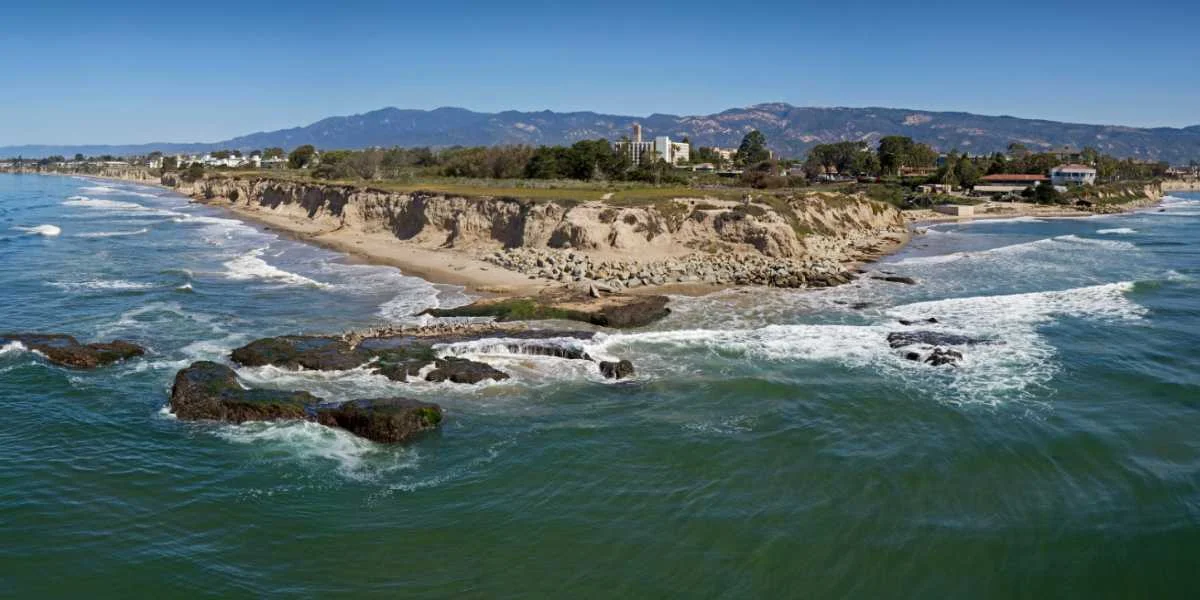
The University of California, Santa Barbara is known as "Seaside Paradise," set along California's beautiful Pacific coastline with outstanding natural scenery and academic resources. The university operates on the Quarter system, which keeps the pace of study brisk while offering students a wide range of interdisciplinary choices. UCSB enjoys a strong reputation in engineering, the sciences, and media, is home to numerous Nobel laureates, and has deep research strength. Its distinctive College of Creative Studies (CCS) offers students individualized research opportunities, and the campus sits next to a surfing destination, making outdoor activity part of daily life. UCSB combines a rigorous academic atmosphere with a vibrant social culture; a wealth of campus events, such as the Deltopia Beach Party, reflect its free and open student life.

We will examine the distinctive character of the University of Washington from several angles, showcase its core features, and explore its academic achievements and cultural appeal. Click the button below to view the full introduction to the school.

01. Location

02. Campus Environment

03. The Quarter System

04. Seaside Paradise in the UC System

05. A Distinctive College at the University of California, Santa Barbara: The College of Creative Studies

06. A Surfer's Paradise

07. One of the well-known party schools

08. Around campus

09. Storke Tower, the iconic landmark of the University of California, Santa Barbara

10. Athletic tradition

Most popular majors

Social Sciences
27%
Biological and Biomedical Sciences
10%
Mathematics and Statistics
9%
Psychology
9%
Communication, Journalism, and Related Programs
9%
Visual and Performing Arts
5%
Physical Sciences
5%
Natural Resources and Conservation
5%
Engineering
3%
Foreign Languages, Literatures, and Linguistics
3%

Graduate programs

Communication

Communication

Program Overview

In the Communication program at the University of California, Santa Barbara, students study the theory and practice of effective communication between individuals and within groups, as well as the role of media in information dissemination and social influence. Students may also choose to pursue in-depth study in areas such as language and communication, health communication, new media communication, group communication, family communication, political communication, media literacy, human-computer interaction, information technology, communication law and policy, and global and international communication.

It is worth noting that the master's degree in this program is designed to prepare students for the doctorate, so students who do not hold a master's degree should apply to both degree programs at the same time. This reflects the program's emphasis on training students with strong research skills and academic potential and on encouraging them to pursue further study in an academic career.

Degree Type

Master of Arts Communication

Program Length

2 years

Sources:

UC Santa Barbara MAC

UC Santa Barbara MAC Program Length

Application Requirements

Language Scores

Applicants whose native language is not English must take the TOEFL or IELTS. Exemptions will be considered for students who completed an undergraduate or graduate degree at an institution where the primary language of instruction is English. Applicants must submit TOEFL or IELTS scores taken within the past two years; the institution code is 4835. The minimum score is 550 on the paper-based TOEFL, 80 on the internet-based TOEFL, and 7 on the IELTS.

GRE

Students must submit GRE scores.

Admission Background

The average overall grade point average must be at least 3.0.

In addition to the program-specific application requirements above, the complete application requirements can be found in the Application Requirements section of our website.

Sources:

UC Santa Barbara MAC Application Requirements

UC Santa Barbara MAC International Student Application Requirements

Graduation Requirements

Credit Requirements

Students must complete 47 credits of coursework.

Grade Requirements

The average overall grade point average must be at least 3.25. With the exception of COMM 500, grades in all other core courses must be B- or higher. COMM 500, COMM 505, and COMM 598 must be passed with a satisfactory grade.

Thesis Requirements

Students must complete 8 credits of thesis coursework.

All students must write an original master's thesis and defend it. After successfully submitting the thesis, students must defend it. Required courses must be completed by the end of the quarter in which the thesis is submitted. The student's master's committee oversees the thesis research, presides over the thesis defense, and certifies that the student has completed the required courses.

Sources: UC Santa Barbara MAC Graduation Requirements

Course Overview

Students must complete 47 credits of coursework, including 15 credits of core courses, 4 credits of survey courses, 12 credits of elective courses, 4 credits of methods/tools elective courses, 8 credits of thesis courses, and 4 credits of professional socialization colloquium courses.

Core Courses

Course | Course Number | Credits: Communication Theory Construction, COMM 200, 4; Research Methods in Communication, COMM 204A, 4; Introduction to Applied Statistics, COMM 204B, 4; Teaching College Communication, COMM 500, 3.

Survey Elective Courses

Course | Course Number | Credits: Interpersonal Communication, COMM 207, 4; Mass Media, the Individual, and Society, COMM 213, 4; Organizational Communication, COMM 222, 4.

Thesis

Course | Course Number | Credits: MA Thesis Research & Preparation, COMM 598, 8.

Professional Socialization Colloquium

Course | Course Number | Credits: Issues in Communication Research, COMM 505, 4.

Elective Courses

Course | Course Number | Credits: Media Literacy, COMM 101, 4; Understanding Mass Communication Theory, COMM 102, 4; Media, Race, & Ethnicity, COMM 103, 4; Evolution and Human Communication, COMM 104, 4; Sports, Culture, and Communication, COMM 105, 4. For more information, see the course catalog for the Communication program at the University of California, Santa Barbara.

Sources: UC Santa Barbara MAC Course Overview

Career Development

Students who earn a bachelor's degree in Communication should be able to:

Identify and describe key concepts in core areas such as interpersonal communication, group/intercultural communication, organizational communication, and media communication; review the key principles of major theories in these areas.

Apply communication theories and concepts to real-world events, issues, or problems; analyze communication practices, communication messages, and communication effects.

Locate, read, summarize, and critically evaluate published empirical research in the field of communication.

Describe the basic methods used in the field of communication to collect and analyze data; participate in the social science research process, including research design and the collection and analysis of empirical data.

Write, synthesizing the views of other authors to form a coherent argument and provide support; write clearly, authoritatively, and logically, using the appropriate style of communication literature (APA style).

Evaluate the nature and extent of the positive and negative effects information may have on interactants and audiences; identify multiple audiences and adapt messages appropriately.

Sources: UC Santa Barbara MAC Career Development

Electrical and Computer Engineering

Electrical and Computer Engineering

Program Overview

The Electrical and Computer Engineering program at the University of California, Santa Barbara covers computer engineering, communications, control and signal processing, and electronics and photonics. With a mission of education and research, the department trains electrical and computer engineers and advances science and technology. It offers extensive laboratory facilities and research areas such as microwaves, communications, and signal processing. Electrical and computer engineering is a broad field spanning many different areas, such as computers and digital systems, control, communications, computer engineering, electronics, signal processing, electromagnetics, electro-optics, physics, and the fabrication of electronic and photonic devices.

Degree Type

M.S. in Electrical and Computer Engineering

Program Length

6 quarters

Sources:

UC Santa Barbara ECE

UC Santa Barbara ECE program length

Application Requirements

Language Scores

Applicants whose native language is not English must take the TOEFL or IELTS. Exemptions are considered for students who completed an undergraduate or graduate degree at an institution where the primary language of instruction is English. Applicants must submit TOEFL or IELTS scores taken within the past two years; the institution code is 4835. The minimum score is 550 on the paper-based TOEFL, 80 on the internet-based TOEFL, and 7 on the IELTS.

GRE

Students must submit GRE scores.

Admission Background

The graduate program is open to individuals holding a bachelor's degree in electrical engineering, computer engineering, computer science, another engineering field, or mathematics, physics, or another related science field. Applicants holding a degree in a field other than electrical and computer engineering or computer science may need to complete undergraduate prerequisite courses. Required foundational subjects include differential equations and advanced calculus mathematics, a full year of college physics, and introductory computer programming.

In addition to the program-specific requirements above, complete application requirements can be found in the corresponding Application Requirements section of our website.

Source: UC Santa Barbara ECE application requirements

Graduation Requirements

Credit Requirements

Students must complete 42 credits of coursework.

Grade Requirements

The overall grade-point average must be at least a B.

Thesis Requirements

Students choosing the thesis path must complete a thesis. The master's thesis is modeled on the doctoral dissertation but is reduced in originality and length. A public seminar presentation is not required for the thesis defense.

Examples of projects suitable for a master's thesis:

An advanced design project, which may be analytical or experimental

An experimental or theoretical contribution to a problem currently being researched in the department

A critical evaluation of recent advances in a current research area, rather than merely a literature compilation

A critical theoretical analysis or preliminary experimental study, as a feasibility study, or

A preliminary experimental study that lays the foundation for more advanced doctoral research

Sources:

UC Santa Barbara ECE graduation requirements

UC Santa Barbara ECE thesis requirements

Course Information

Thesis Path

Students must complete 42 credits of coursework, with the following specific requirements:

A maximum of 8 units of ECE 598 may count toward the 42-unit requirement.

Of the remaining 34 units, 8 courses must be completed, of which 3 (12 units) may be approved upper-division undergraduate elective courses (100 series).

The 8 required courses may not include the equivalent of two of the following courses (8 credits): ECE 596, independent study courses, or courses graded P/NP or S/U.

8 credits of ECE 596, independent study courses, or courses graded P/NP or S/U.

At least 5 of the 8 courses must be in the ECE or CS department.

Exam Path:

Students must complete 42 credits of coursework, with the following specific requirements:

At least 10 courses must be completed, of which a maximum of 4 (16 credits) may be approved upper-division undergraduate elective courses (100 series), to meet the 42-credit requirement.

These 10 required courses may not include more than the equivalent of two of the following courses (8 credits): ECE 596, independent study courses, or courses graded P/NP or S/U.

At least 7 of the 10 courses must be in the ECE or CS department.

Courses Course Number Credits Integrated Circuit Design and Fabrication ECE120A 4 Integrated Circuit Design and Fabrication ECE120B 4 VLSI Principles ECE122A 4 VLSI Architecture and Design ECE122B 4 High-Performance Digital Circuit Design ECE123 4 For more information, see the course catalog for the Electrical and Computer Engineering program at the University of California, Santa Barbara.

Source: UC Santa Barbara ECE course information

Career Development

Graduates with a master's degree in electrical and computer engineering should possess:

Core Knowledge:

Students should have broad knowledge in at least one broad area of electrical and computer engineering, including computer engineering, electronics and photonics, communications, signal processing, or control.

Students should demonstrate significant expertise in one area of electrical and computer engineering.

Research Methods, Analysis, and Communication:

Students should master the qualitative and quantitative analysis tools relevant to their field of specialization.

Students should be able to critically analyze the technical literature in their field of specialization.

Students should demonstrate the ability to communicate technical results to their peers.

Source: UC Santa Barbara ECE career development

Computer Science

Computer Science

Program Overview

The Master of Science in Computer Science at the University of California, Santa Barbara is designed to provide students with advanced training in computer science in preparation for positions in industry and government or for further study toward a doctoral degree. The program is flexible in design and intended to meet the needs of students with diverse backgrounds in science and engineering. For graduate students with insufficient background in computer science, the program relies on the undergraduate program to provide the necessary course support.

Degree Type

M.S. in computer science

Source: UC Santa Barbara MSCS

Application Requirements

Language Scores

Applicants whose native language is not English are required to take the TOEFL or IELTS. Exemptions will be considered for students who completed an undergraduate or graduate degree at an institution where the primary language of instruction is English. Applicants must submit TOEFL or IELTS scores taken within the past two years; the institution code is 4835.

GRE

Students are required to submit GRE scores.

Admission Background

An overall average of 3.0 is required.

In addition to the program-specific application requirements above, the complete application requirements can be found in the corresponding Application Requirements section of our website.

Source: UC Santa Barbara MSCS Application Requirements

Graduation Requirements

Credit Requirements

Students must complete 42 units of coursework.

Grade Requirements

An overall average of B (3.0) is required.

Thesis Requirement

In addition to the course requirements, thesis-option students must submit an acceptable thesis, which must be completed under the supervision of a permanent faculty member in the Department of Computer Science and approved by a thesis committee of 3 UC ladder faculty, two of whom (including the chair) must be from the Department of Computer Science.

Internship Requirement

In addition to the specialization area and breadth courses common to all plans, the course requirements for the project plan include two additional 200-level graduate courses. Beyond these course requirements, students must complete at least six units of 596 directed study and complete a project under the supervision of a permanent Computer Science faculty member. Students must submit a report and give a 30-minute public project presentation.

Source: UC Santa Barbara MSCS Graduation Requirements

Course Introduction

Students must complete 42 units of upper-division coursework (excluding 193-level courses) or graduate coursework (200+, 595, 596, 598) approved by a College of Computer Science advisor. The specific requirements are:

Students must choose one specialization area from three areas: Foundations/Theory, Systems, and Applications.

Students must take four CS graduate courses (200-level) in the major area and one CS graduate course (200-level) in each of the other two areas. The same course cannot satisfy both the major area and breadth requirements.

The unit requirements must include at least two units and at most six units of 595 seminar units (excluding 595N: Faculty Research Seminar).

Thesis Option

In addition to the course requirements, students must submit an acceptable thesis, which must be completed under the supervision of a permanent faculty member in the Department of Computer Science and approved by a thesis committee of 3 UC ladder faculty, two of whom (including the chair) must be from the Department of Computer Science.

Project Option

In addition to the specialization area and breadth courses common to all plans, the course requirements for the project plan include two additional 200-level graduate courses. Beyond these course requirements, students must complete at least six units of 596 directed study and complete a project under the supervision of a permanent Computer Science faculty member. Students must submit a report and give a 30-minute public project presentation.

Examination Option

In addition to the course requirements for all tracks, students must complete 12 additional units of 100-level (excluding 193-level) and 200-level coursework. Of these, eight units must be 200-level courses. The comprehensive examination is held twice a year, in the eighth week of the fall and spring semesters. Each student will list four graduate courses; one question will be posed from each course on the examination. Students may choose to answer only three of the questions and must answer all three correctly to pass the examination. If a student does not pass the examination, they may take it at the next examination offering. Only two attempts are permitted. This is a rigorous examination, and students should prepare thoroughly in order to pass.

Theory / Foundations Area

Course Course NumberLogic and Applications in Computer ScienceCS209Level Set MethodsCS216Theory of Computation and ComplexityCS220Information TheoryCS225Approximations, NP-Completeness and AlgorithmsCS230Topics in Combinatorial AlgorithmsCS231Randomized AlgorithmsCS234Computational GeometryCS235Advanced Topics in Program AnalysisCS260Formal Specification and VerificationCS266Automated VerificationCS267Special TopicsCS290Special TopicsCS292Systems Area

Course Course NumberAdvanced Computer ArchitectureCS254Modern Programming Languages and Their ImplementationCS263Advanced Topics in Operating SystemsCS270Advanced Topics in Distributed SystemsCS271Software EngineeringCS272Data and Knowledge BasesCS273Advanced Topics in Database SystemsCS274Advanced Topics in NetworkingCS276Advanced Topics in Computer SecurityCS279Mobile ComputingCS284Special TopicsCS290Special TopicsCS293Applications Area

Course Course NumberMatrix Analysis and ComputationCS211ANumerical SimulationCS211BNumerical Solution of Partial Differential Equations--Finite Difference MethodsCS211CNumerical Solution of Partial Differential Equations--Finite Element MethodsCS211DSparse Matrix AlgorithmsCS219Applied Parallel ComputingCS240AAdvanced Topics in Machine IntelligenceCS265Computer GraphicsCS280Advanced Topics in Computer VisionCS281BAdvanced Image SynthesisCS285Special TopicsCS290Special TopicsCS291Source:

UC Santa Barbara MSCS Course Introduction

UC Santa Barbara MSCS Courses

Career Development

Upon graduation with a Master of Science in Computer Science, students should possess:

Core Knowledge

Students will be able to demonstrate broad knowledge of the field of computer science, including systems, foundations, and applications.

Students will have working knowledge of at least one computer science subfield.

Research Methods and Analysis

Students will be able to understand and describe a range of qualitative and quantitative methods commonly used in computer science research.

Students will be able to plan and execute projects of significant complexity and rigorously analyze their work.

Scholarly Communication

Students will be able to review and persuasively synthesize relevant literature.

Professionalism

Students will understand and be able to articulate the importance of keeping up with technological advances in their communities of discourse.

Students will be familiar with relevant professional societies, including but not limited to the Association for Computing Machinery (ACM) and the Institute of Electrical and Electronics Engineers (IEEE).

Students will be able to identify career options after graduation, including both industry and academia.

Students will demonstrate thoughtful consideration of the fundamental principles of ethical professional conduct.

Source: UC Santa Barbara MSCS Career Development

Campus life

Transportation

Nearby Airport

Santa Barbara Airport

Distance from campus: 3.8 miles

Campus to airport travel:

By car or rideshare:

Typically about 6 minutes. It may take longer during heavy traffic.

Public transit:

Bus Route 11 goes to the airport.

Nearby Train Station

Santa Barbara Amtrak Station

Campus to train station travel:

By car or rideshare:

Typically 13 minutes. It may take longer during heavy traffic.

Public transit:

Bus Route 24X goes to the airport, or take Bus Route 11 and transfer to Bus Route 12X to reach the airport.

City Public Transit

Public transit around UC Santa Barbara mainly consists of bus service and taxis.

There are multiple bus lines near campus, including routes to downtown and surrounding areas.

The university also offers a free campus shuttle service to make it easy for students to get around campus.

Safety

Statistics show that UCSB is a relatively safe environment compared with other large urban university campuses. However, as a community of more than 20,000 people, it is not problem-free. Criminal incidents occur on campus and in Isla Vista every year. Everyone in the campus community must take an active role in their own safety. Please encourage your student to be aware of this issue and to stay alert to their surroundings.

FIRE SAFETY PROGRAM:

The Fire Safety Program includes education, training, drills and policies designed to protect the campus community from injury, death, business interruption and property loss caused by fire and related hazards. The purpose of the program is to ensure that all students, staff and faculty understand the fire safety elements that help protect the community. UCSB's unique geographic location provides additional wildfire protection.

ENVIRONMENTAL HEALTH & SAFETY:

Environmental Health & Safety (EH&S) provides guidance and services to the campus community to promote the integration of health, safety and environmental management into all university activities. EH&S programs include: diving safety, emergency planning, ergonomics, fire and life safety, hazardous waste, injury and illness prevention, laboratory safety and occupational health.

PARAMEDIC RESCUE:

UCSB has an advanced life support paramedic ambulance that can respond to emergency and non-emergency calls in the UCSB and Isla Vista communities. The UCSB Paramedic Rescue unit is staffed 24 hours a day, 365 days a year, and is located in the Public Safety Building on campus. In an emergency, dial 9-911 from a campus phone line, or 911 from an off-campus line or cell phone.

Housing

Campus Housing is committed to providing an environment that supports your educational needs. The university's vibrant community offers a safe, welcoming environment where you can make lifelong friends, access classes and resources conveniently, and broaden your personal horizons by participating in academic, social, cultural and recreational activities. The university looks forward to helping you make connections in a stunning setting!

Residential Colleges

Residence halls: Anacapa Hall, Manzanita Village, San Miguel Hall, San Nicolas Hall, San Rafael Hall, and others

Undergraduate apartments: El Dorado Apartments, San Joaquin Villages, Santa Ynez Apartments, Sierra Madre Villages, Tropicana Villas, Westgate Apartments

Graduate apartments: San Clemente Villages

Apartments for students with families: Storke, West Campus

For more information, see the residence hall list.

On-campus housing application steps (essentially the same for each class year)

Apply online

The on-campus undergraduate housing application opens on a designated date. At that time, you can indicate your preference for a living-learning community. There is no application fee. Applying for housing does not guarantee that you will receive a contract. Check your U-Mail account often so you do not miss any important messages from UCSB. Forwarding your U-Mail to a backup email (Gmail, Yahoo, Hotmail, etc.) is not reliable. If you do not receive a confirmation email from UC Santa Barbara within a few minutes of submitting your application, check your spam folder.

Sign the contract

Self-assignment

Students with a contract can log in and choose an available bed. You can hover over each room to see whether other students have selected it and to view their preferences. If you are part of an optional roommate group, it is advantageous to assign the roommate group leader role to the student with the earliest self-selection date. Students who choose not to complete this process will be assigned based on availability.

Dining

Campus Dining is committed to serving delicious, fresh, local, sustainable, healthy and high-quality food. The goal is to offer a range of choices that meet the diverse tastes of customers. It covers all dining entities that provide food to the university community, including campus dining areas, retail markets and restaurants, campus catering, campus concessions, fine dining at the club and guest house, and the Miramar Food Pantry. There are four dining commons in total.

Dining commons

Carrillo Dining Commons

Carrillo Dining Commons immediately greets guests with the delicious aroma and warm sight of fresh pizza baking in the pizza oven. Natural light floods the dining area from outside, with views of the mountains, the ocean and the pool. This cozy, colorful dining facility serves 21st-century food at platform stations throughout the building, from Mongolian barbecue specialties to house-made frozen yogurt flavors, so there is always a dish to satisfy every guest.

De La Guerra Dining Commons

De La Guerra Dining Commons was immortalized as "DLG" by singer Jack Johnson in his famous song Bubble Toes. It showcases platform food production, preparing seasonal menus "just in time" to ensure the food is always fresh. Diners can enjoy their meals in the beautiful modern dining room or on the comfortable outdoor patio while taking in views of the UC Santa Barbara lagoon and the Pacific Ocean.

Portola Dining Commons

Portola Dining Commons offers a memorable dining experience with state-of-the-art cooking equipment and an open kitchen, where customized dishes are prepared right before your eyes. Portola's menu focuses not only on a variety of cuisines but also on offering a range of delicious plant-forward options, which make up an increasing share of the menu.

Take Out at Ortega Commons

Take Out at Ortega Commons is the university's exclusive takeout dining location, offering a convenient, continuously available menu every weekday along with daily lunch and dinner specials. The menu offers a variety of choices, from home-style comfort food to modern global cuisine, and includes a range of vegetarian options. Online mobile ordering is available for convenient, quick access to fresh, delicious meals.

Meal Plan

For students living in UCSB residence halls, your meal plan cost is included in your room and board. The room and board fee is calculated based on the combination of the meal plan and room type you choose. For details, see room and board rates. Students living in residence halls sign up for a meal plan when they register for housing.

Resident meal plans

Meal Plan | Price | Meals per week | Gaucho Platinum | 19/week | None | Gaucho Gold | 14/week | None | Gaucho Silver | 10/week | None

Non-resident meal plans: prices vary by the number of meals per week. Available meal counts include 5/7/10/14/17 per week.

The following figures are for reference only:

5 days per week: from $62 to $678

7 days per week: from $86 to $948

10 days per week: from $117 to $1,292

14 days per week: from $156 to $1,723

17 days per week: from $180 to $1,987

Admissions

Acceptance rate
28%
Average GPA
3.9

Admissions data

UC Santa Barbara has the highest acceptance rate, at 29%.
The application deadline is November 30, and the UC Santa Barbara application fee is $70.
UC Santa Barbara admissions officers consider a student's GPA to be a very important academic factor.
UC Santa Barbara admissions officers do not consider an applicant's high school class rank or letters of recommendation.
Applicants
Admitted
Female applicants
Male applicants
Female admits
Male admits
Waitlist offered
Yes
Students on waitlist
9,670
Students accepting a place
15,689
Admitted from waitlist
5,493

Application requirements

01.
UC Santa Barbara admits international students only for the fall term; the application period for the fall 2014 term was November 1–30, 2013.

Application checklist

01.
Create a personal account on the school's official website first
Then use it to log in to the University of California system website and submit the UC Santa Barbara undergraduate admission application online.
02.
Pay the US$80 application fee.
03.
High school transcripts.
04.
All applicants must submit ACT or SAT scores; some majors require SAT Subject scores.
05.
Some majors require letters of recommendation.
06.
Students from non-English-speaking countries must submit proof of English proficiency
TOEFL iBT 80 or above, or paper-based 550 or above; or IELTS 7 or above; scores are valid for two years.
07.
Proof of personal financial resources
Sufficient and legitimate sources of funds to support study at the school.

Application deadlines

Deadline
Date
Regular Decision
Nov. 30
RD notification
March 31

Transfer requirements

01.
Students applying to University of California, Santa Barbara must meet general education requirements and minimum transfer requirements.
02.
General Education Requirements
The Intersegmental General Education Transfer Curriculum (IGETC) is a series of courses certified by California community colleges; students must complete these courses to satisfy UC lower-division general education requirements.
03.
UC System School-Specific Requirements
Each school and college at each UC campus has its own general education curriculum; for specific information, consult the school's admissions office or a community college course counselor.
04.
Minimum Transfer Requirements
Complete 60 semester units or 90 quarter units.
05.
California students must have a minimum GPA of 2.4; out-of-state and international students must have a minimum GPA of 2.8.
06.
Complete 7 courses, with a minimum grade of C in each course.
Includes: 1. Two English courses 2. One mathematics course above the intermediate level 3. At least four courses in two of the following areas: · Arts and Humanities · Behavioral and Social Sciences · Biological and Physical Sciences

Transfer checklist

01.
Apply through the University of California online application system
Transcripts do not need to be submitted with the online application; you only need to enter your grade information, but you must ensure that the information you enter is true and accurate.
02.
Letters of recommendation are not required at the time of online application.
However, during the later review process, the school may ask the student to submit letters of recommendation, so please be sure to check your email.
03.
Student's personal statement: students must answer personal insight questions so that admissions officers can learn more about them.
There are 8 questions, and students may choose 4 to answer. Each answer must not exceed 350 words. This part should reflect the student's own ideas and be completed by the student alone.
04.
* The specific materials are subject to the school's application materials checklist after registering an application account.
05.
TAG agreement
UCSB has a Transfer Admission Guarantee agreement (TAG) with all California community colleges. TAG allows California community college students who meet specific requirements to be admitted. The specific TAG application varies depending on the student's major and target school; students need to consult a transfer counselor at the community college they attend to understand the requirements and submit an application. In addition, because most students apply to transfer to University of California campuses, including University of California, Santa Barbara, from community colleges, the University of California system provides a tool to help students plan their transfer: UC TAP (Transfer Admission Planner). UC TAP is an online tool that helps UC transfer students track and plan courses and is intended for students transferring from California community colleges, including students applying for the Transfer Admission Guarantee (TAG).
06.
Because the school effectively requires completion of the sophomore year before students can apply to transfer, SAT/ACT scores are not required.

Transfer deadlines

Deadline
Date
Fall application deadline
Nov. 30

Similar universities

Admissions FAQ

What is the acceptance rate at University of California-Santa Barbara?

The reported acceptance rate is 28%. Acceptance rates vary by applicant pool and application cycle; confirm the current figure with University of California-Santa Barbara.

When is the application deadline at University of California-Santa Barbara?

The listed Regular Decision deadline is Nov. 30. Deadlines can vary by program and application cycle; confirm the exact date with the university.

How much does University of California-Santa Barbara cost?

The listed tuition and fee figure is $19,947. Costs vary by residency, programme and academic year; confirm current costs with the university.

Where is University of California-Santa Barbara located?

University of California-Santa Barbara is located at 5221 Cheadle Hall, Santa Barbara, CA, 93106.

Planning your application?

Build a school list around your profile.

Ivy Elite advisors help students compare programs, plan coursework and prepare applications for U.S. universities.