Ivy Elite
University of California, Los Angeles

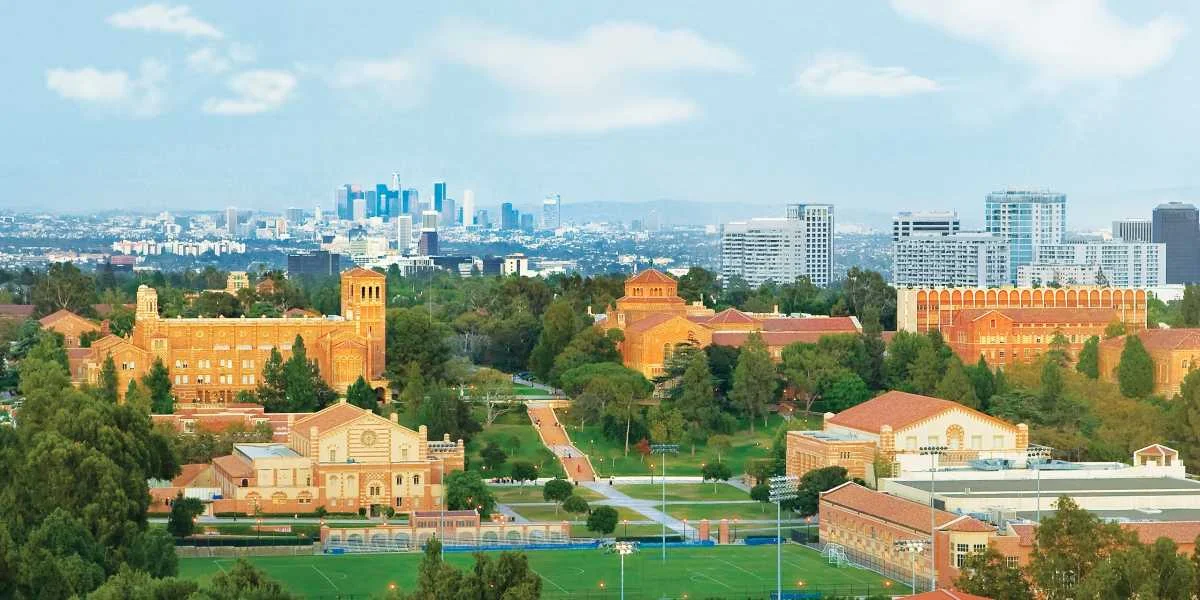
The University of California, Los Angeles (UCLA) is a world-renowned public research university located in Los Angeles, California. As one of the most popular campuses in the University of California system, UCLA currently comprises 12 schools, 13 graduate schools, and 4 undergraduate colleges. The university has world-class research output and teaching in fields such as science, engineering, medicine, the humanities, and the social sciences, and enjoys a strong reputation in academia. Students can join a wide range of clubs and organizations, arts activities, athletic competitions, and volunteer service projects to enrich their campus experience. At the same time, Los Angeles, a major international city, offers students abundant cultural, artistic, and entertainment resources, providing a broad stage and opportunities for their learning and growth.

About the university

School data is compiled from public sources and may change. Confirm current tuition, deadlines and requirements with the university before applying.

At a glance

Acceptance rate 9%
Tuition and fees $18,369
Application deadline Nov. 30
Undergraduate enrollment 31,636
Student-faculty ratio 19:1
Location 405 Hilgard Ave, Los Angeles, CA, 90095-1405
School type Public research university
In-state tuition
$208
Out-of-state tuition
$18,369
Room and board
$18,369
Graduation rate
86%
Student-faculty ratio
19:1
Gender ratio
39:61

Alumni starting salaries

Biological and Biomedical Sciences
+
Business, Management, Marketing and Related Disciplines
+
Engineering
+
Mathematics and Statistics
+
Social Sciences
+
Psychology
+
Physical Sciences
+
History
+

Student body

First-year diversity
White
30%
Hispanic
23%
Asian
25%
Black
8%

Inside the school

UCLA is more than a public research university with outstanding academics; it is a vibrant campus. Located in Los Angeles's Westwood neighborhood, UCLA enjoys a prime location near the Pacific Ocean, Hollywood, and Silicon Valley, giving students abundant internship and employment opportunities. The university's disciplines span a broad range, with programs in engineering, computer science, film and television, and architecture all ranked among the nation's leading. In addition, UCLA is known for its exceptional athletic tradition, having produced numerous Olympic champions and NBA players. Campus culture is diverse, with a rich array of arts events, student organizations, and traditional celebrations, and the best college dining in the country makes UCLA an ideal campus in the eyes of students.

We will examine the distinctive appeal of the University of Washington from several angles, highlighting its core features and its academic achievements and cultural character. Click the button below to view the full introduction to the school.

01. A University in a Garden

02. The Best Value School in the Nation

03. A Wealth of Campus Activities

04. The University with the Most Olympic Gold Medals

05. A Vast Alumni Network and Distinctive Career Advantages

06. Library Holdings Among the Largest in the Nation

07. No. 1 dining hall in the United States

08. A film lover's paradise at a public university

09. One of the best architecture schools on the U.S. West Coast

10. A more accessible alternative to the "Big Four" computer science schools

Most popular majors

Social Sciences
25%
Biological and Biomedical Sciences
15%
Psychology
12%
Mathematics and Statistics
8%
Engineering
7%
Multi/Interdisciplinary Studies
6%
Visual and Performing Arts
4%
Computer and Information Sciences and Support Services
4%
English Language and Literature/Letters
3%
History
3%

Graduate programs

Business Analytics

Business Analytics

Program Overview

The MSBA program at the University of California, Los Angeles is designed to train students to produce impactful solutions through scientific data analysis and rigorous decision-making methods. To achieve this goal, the program offers courses in research, modeling, communication, and business practice, along with extracurricular internships at well-known companies, data storytelling, and improvisation workshops. This training helps students make important business strategy decisions after joining relevant organizations or companies. In addition, UCLA Anderson emphasizes the ethical development of its students.

Degree Type

Master of Science in Business Analytics MSBA

Field of Study

Business Analytics

Program Length

5 months

Sources:

UCLA Graduate Program: Management – Business Analytics MS

UCLA Become a Master of Business Analytics

Application Requirements

Language Scores

IELTS: Your IELTS Academic overall score should be at least 7.0.

TOEFL: Your TOEFL paper-based test score must be at least 560, or your internet-based test score must be at least 100. These scores are the minimum requirements for applying to UCLA graduate programs. For the internet-based TOEFL (TOEFL iBT), the minimum section scores are as follows (Writing: 25, Speaking: 24, Reading: 21, Listening: 17).

TOEFL scores should be sent to your major department. Be sure to list the TOEFL institution code for UCLA, 4837.

For IELTS, please send your scores to your major department and the Graduate Education Office.

GRE/GMAT

Applicants must take the GMAT or GRE. GMAT or GRE scores are valid for five years.

Send GRE scores to school code 2216.

Application Background

Applicants are expected to have a strong quantitative background, including at least linear algebra, multivariable calculus, and statistics. Applicants who have studied computer programming, differential equations, numerical methods, advanced statistics, and probability theory are preferred.

Required Essays

Applicants must submit three essays as part of the online MBA program application. The application essays help the admissions committee understand the applicant's personal circumstances and demonstrate the applicant's concise, economical writing ability.

Sources:

UCLA Graduate Program: Management – Business Analytics MS ADMISSION

UCLA English Requirements

UCLA Prerequisites

Graduation Requirements

Credit Requirements

A total of 52 credits is required.

500-series core courses — 38 credits

Summer internship — 4 credits

Industry applications course — 4 credits

Program course — 4 credits

Grade Requirements

GPA ≥ 3.00

Internship Requirements

Students in the Master of Science in Business Analytics program are required to intern at a company in their intended field of study (business analytics). Students should devote at least 80 hours during the internship and be prepared to provide regular activity reports to their faculty advisor. Students considering research positions may also discuss their plans with the academic director of the Master of Science in Business Analytics program to develop alternative fieldwork opportunities. Students who, due to special circumstances, are unable to complete the Master of Science in Business Analytics internship may work with the academic director to develop a special research project to satisfy this requirement. Students' summer internship experiences are evaluated by their faculty advisor through enrollment in MGMTMSA 411 (4 credits). The evaluation may include any combination of written or oral presentations.

Sources: UCLA Graduate Program: Management – Business Analytics MS

Course Overview

All courses must be at the graduate level. In special circumstances, up to 4 units of 500-series graduate courses may be taken to satisfy the total course requirements. The curriculum consists of four components: (1) core courses; (2) summer internship; (3) applied business analytics project; (4) industry applications (electives).

Courses Statistical Foundations for Analytics (R)Machine Learning for Decision MakingSQL and Basic Data ManagementOptimizationBusiness Fundamentals for AnalyticsData ManagementPrescriptive Models & Data AnalyticsOperations AnalyticsCompetitive AnalyticsInternship: Fieldwork/Research in Business AnalyticsSources: UCLA LEARN FROM LEADERS IN THE FIELD

Career Development

Graduates of the MSBA program hold important roles in many fields, and their professional training enables them to serve as data engineers, data analysts, business analysts, product managers, and in other positions at companies. The average base salary for 2021 graduates was $115,568. The average signing bonus for 2021 graduates was $14,821, and 41% of graduates received a signing bonus.

Sources:

UCLA HOLISTIC CAREER SERVICES

UCLA Career Services

Computer Science

Computer Science

Program Overview

The Computer Science program at the University of California, Los Angeles uses a comprehensive training plan and partnerships with related industries to cultivate talent with outstanding abilities in software systems and algorithms, enabling them to make valuable contributions in design, development, and production. In addition, the program emphasizes developing students' teamwork skills and is committed to enhancing their social and ethical responsibility so that they can participate in and contribute to society in a more well-rounded way throughout their careers.

Degree Type

Master of Science in Computer Science

Program Length

Two years

Fields of Study

Artificial Intelligence, Computational Systems Biology, Computer Networks, Computer Science Theory, Computer System Architecture, Graphics and Vision, Data Science Computing, Software Systems, and others

Sources:

UCLA Graduate Education

UCLA Samueli Computer Science

Application Requirements

Language Scores

IELTS: Your IELTS Academic overall score should be at least 7.0.

TOEFL: Your TOEFL paper-based test score must be at least 560, or your internet-based test score must be at least 87.

TOEFL scores should be sent to your major department. Be sure to list the TOEFL institution code for UCLA, 4837, and the department code, 78.

For IELTS, please send your scores to your major department and the Graduate Education Office.

GRE/GMAT

Applicants are not required to submit GRE scores; if submitted voluntarily, they may be included in the application materials.

GPA

The University of California, Los Angeles treats a GPA ≥ 3.0 as a firm application requirement, and competitive applicants have an undergraduate GPA of at least 3.5 (4.00). The average cumulative GPA of admitted applicants is 3.60.

Personal History

All applicants to Computer Science programs must submit a personal history statement (500 words or fewer).

Sources:

UCLA Graduate Requirements

UCLA MSCS Program Requirements

Graduation Requirements

Credit Requirements

Thesis Plan - Plan I

A total of 9 courses is required to meet the master's degree requirements. Of these, 7 must be formal courses, and the remaining 3 courses are elective courses.

Capstone Plan - Plan II

A total of 9 courses is required to meet the master's degree requirements. At least 5 of these courses must be Computer Science 200-level courses, and the remaining 4 courses are electives.

Grade Requirements

GPA ≥ 3.00

A grade of B- or above at the University of California, Los Angeles represents satisfactory completion of the course.

Thesis Requirements

The thesis is a report on the findings of an investigation into a problem in the student's field of study, supervised by a thesis committee. The thesis committee approves the thesis topic and plan and reads and approves the completed manuscript. The thesis must demonstrate satisfactory style, organization, and depth of understanding of the subject.

Sources: UCLA Graduate Education

Course Overview

(1) Thesis Plan

4 Computer Science 200 courses

2 courses (or 8 units) of Computer 598 courses

3 elective courses

(2) Capstone Plan

At least 5 courses must be 200-level Computer Science courses.

The remaining four courses are electives, which may be 100- or 200-level Computer Science courses or closely related 200-level courses, such as Electrical and Computer Engineering, Statistics, Mathematics, and others.

Breadth Requirement:

Students pursuing a master's degree in the UCLA Graduate School must satisfy the Computer Science breadth requirement by the end of their fourth quarter. This requirement is satisfied by mastering the content of 5 undergraduate courses or equivalent: Computer Science 180, 2 of 111, 118, or M151B, one of 143, 161, or 174A, and one of 130, 131, or 132.

After satisfying the breadth requirement, a total of 9 courses is required to meet the master's degree graduation requirements.

Core Courses Network Protocol and Systems Software Design for Wireless and MobileQueueing Systems TheoryEmbedded SystemsEnergy-Aware Computing and Cyber-Physical SystemsBig Data SystemsInternet of Things: Connectivity and SensingNetwork AlgorithmicAlgorithms in Computational GenomicsVerification of Concurrent ProgramsFor a more complete course list, see: UCLA Registrar’s Office Computer Science (COM SCI)

Career Development

Graduates of the Computer Science program at the University of California, Los Angeles have a significant advantage in the job market. They are typically able to find jobs in a short time and command relatively high salaries. Graduates of the program can pursue a variety of roles, including financial data analyst, software developer, software engineer, and electronics engineer. This shows that the program provides students with strong employment prospects and a wide range of career options, enabling them to develop and succeed in different fields.

Sources: UCLA Career Center

Electrical & Computer Engineering

Electrical & Computer Engineering

Program Overview

The Department of Electrical & Computer Engineering at the University of California, Los Angeles has a long history and is organized into three main research areas: Circuits and Embedded Systems, Physical and Wave Electronics, and Signals and Systems. In addition to in-depth research in electrical and computer engineering, the department is committed to interdisciplinary research spanning fields such as medicine, physics, mathematics, theater and film. This cross-disciplinary research is designed to develop students comprehensively, giving them abundant academic and career opportunities so they can succeed in multiple fields.

Degree Type

Master of Science in Electrical & Computer Engineering

Program Length

Two years

Research Areas

Circuits and Embedded Systems, Physical and Wave Electronics, Signals and Systems

Sources:

UCLA Graduate Program: Electrical & Computer Engineering

UCLA Electrical and Computer Engineering At-A-Glance

Application Requirements

Language Scores

Applicants who have studied outside the United States or in other countries where English is the primary language of everyday speech and instruction must provide TOEFL or IELTS scores.

IELTS: Your IELTS Academic overall score should be at least 7.0.

TOEFL: Your TOEFL paper-based test score must be at least 560, or your internet-based test score at least 87.

Your TOEFL scores should be sent to your major department. Be sure to list the TOEFL institution code for UCLA, 4837; the department code is 66.

For IELTS, send your scores to your major department and to the Graduate Education office.

GRE/GMAT

The GRE is optional for applicants. GRE scores are valid for five years.

Send GRE scores to school code 4837, department code 1203.

Statement of Purpose

Applicants are permitted to submit a Statement of Purpose (SOP) of no more than 500 words. Applicants to the Department of Electrical & Computer Engineering may still submit a two-page SOP. In addition, your Statement of Purpose (SOP) should be accurate and concise. The statement should not exceed 2 pages and should contain only personal details that aid the admissions review process.

Source: Graduate Application Requirements

Graduation Requirements

Credit Requirements

Students must select a certain number of formal graduate courses as major and minor courses according to the requirements of the Master's Capstone Plan (eight courses) and the Thesis Plan (seven courses).

Grade Requirements

GPA ≥ 3.00 (cumulative grade point average per quarter)

Thesis Requirements

Every master's degree thesis plan requires the completion of an approved thesis demonstrating the student's ability to conduct original, independent research.

The master's thesis requirement is met by completing a thesis under the guidance of the student's adviser and with the approval of a thesis committee composed of the adviser and two other faculty members. Thesis research must be conducted concurrently with the required coursework.

Source: UCLA Graduate Program: Electrical & Computer Engineering

Curriculum

(1) Thesis Plan

5 formal graduate courses to satisfy the student's major research area

2 formal graduate courses to complete the student's minor

4 formal graduate courses must be in Electrical and Computer Engineering

1 graduate seminar series course (Electrical & Computer Engineering 297)

2 courses (8 units) of Electrical & Computer Engineering 598 covering thesis work

(2) Capstone Plan

6 formal graduate courses to satisfy the student's major research area

2 formal courses to complete the student's minor

5 of the formal graduate courses must be in Electrical and Computer Engineering

1 graduate seminar series course (Electrical & Computer Engineering 297)

1 individual study course (Electrical & Computer Engineering 299) to cover the comprehensive examination, or 1 additional formal graduate course

The selection of major and minor course sequences must come from different established tracks, or from an ad hoc track, or a combination of both. The selected courses must be approved by the student's adviser.

For more information, see: UCLA ECE Program Requirements

Core Courses Modeling of VLSI Circuits and Systems Embedded Systems Energy-Aware Computing and Cyber-Physical Systems Networked Embedded Systems Design Machine Perception Functional Analysis for Applied Mathematics and Engineering Nanoscience and Technology Special Topics in Circuits and Embedded Systems Adaptation and Learning For the complete course listing, see: UCLA Registrar's Office Electrical and Computer Engineering (EC ENGR)

Career Development

Graduates of the Electrical & Computer Engineering program typically take on leadership roles across industries such as technology, telecommunications, semiconductors and aerospace. They have opportunities to serve as circuit design engineers, communication systems engineers, analog design engineers and more at well-known companies. This means that after graduation they can play leadership roles in different industries and positions and achieve success in the technology and engineering fields.

Source: UCLA Graduate Job Opportunities

Data Science in Health

Data Science in Health

Program Overview

The data science program at the University of California, Los Angeles is designed to prepare students to become leaders in the field of health data science in order to meet the needs of a dynamic and complex health industry. Among the courses offered, the required courses focus primarily on building the skills students need to solve real-world problems, with particular attention to the needs of careers in data science within the health sector. This means students learn how to apply data science techniques and methods to analyze and solve a wide range of problems in the health field, advancing the development and progress of the health industry.

Degree Type

Master of Data Science in Health (M.D.S.H.)

Program Length

20-month full-time program

Program Advisor

The MDSH program director assigns an advisor to each new master's student upon enrollment. The advisor meets with each student quarterly and reviews their academic progress.

Advisors are teaching faculty in the MDSH program and are responsible for students' academic progress. Progress is assessed continuously. At the end of each quarter, the associate dean for student affairs reviews students whose cumulative grade point average falls below 3.0 and notifies their advisors. After deliberation and assessment, the advisor submits a recommendation to the Division of Graduate Education either to continue study or to disqualify the student.

Students who wish to change advisors must submit a petition, which must be approved by the new advisor, the MDSH program director, and the associate dean for student affairs.

Sources:

UCLA Program Requirements for Biostatistics (Data Science in Health), 2023-2024

UCLA Graduate Program: Data Science in Health

Application Requirements

Language Scores

Applicants who completed their post-secondary education outside an English-speaking country must take the TOEFL or IELTS.

Transcripts

The University of California, Los Angeles requires a bachelor's degree with a GPA of at least 3.0 or equivalent. You may apply to the program using unofficial transcripts. Official transcripts are required before enrollment. They must be sent directly by your university's registrar's office or through Parchment to admissions@ph.ucla.edu.

Recommendation Letters

The University of California, Los Angeles requires three professional or academic recommenders to upload their letters directly to the application website.

GRE

If you choose to submit GRE scores, make sure to use exactly the same personal information in the GRE application as in the UCLA graduate application. GRE code: 4837.

In addition to the program-specific application requirements above, the full application requirements can be found in the Application Requirements section of our website.

Sources: UCLA Admission Requirements

Graduation Requirements

Credit Requirements

A total of 48 credits is required, comprising 12 courses of 4 credits each.

Grade Requirements

Master's students in data science at the University of California, Los Angeles must earn a grade of C or better to receive the master's degree.

S/U grading may not apply toward degree requirements. In addition, the University of California requires that the overall average across all courses a student takes while enrolled be no lower than 3.0 (B).

Capstone Requirement

The data science capstone project is the final requirement for completing the master's degree. The capstone must include an original written analysis and an oral presentation. It involves applying health-related scientific data and focuses on advancing existing skills and techniques in health care or public health. The capstone is administered by the teaching faculty of BIOSTAT 401.

Sources: UCLA Program Requirements for Biostatistics (Data Science in Health), 2023-2024

Curriculum Overview

The master's degree curriculum in data science at the University of California, Los Angeles requires 12 courses totaling 48 credits, including a capstone project.

Required Courses (32 credits)

Public Health Foundation

Course

Course Code

Credits

Fundamentals of Public Health

PUBHLT C201

4

MDSH Capstone

Course

Course Code

Credits

Data Science Capstone

BIOSTAT 401

4

MDSH Core Courses

Course

Course Code

Credits

Introduction to Data Science

BIOSTAT 203A

4

Introduction to Data Science

BIOSTAT 203B

4

Introduction to Data Science

BIOSTAT 203C

4

Introduction to Biostatistics

BIOSTAT 100A

4

Statistical Learning

BIOSTAT 212A

4

Statistical Learning

BIOSTAT 212B

4

Electives (16 credits)

At least 4 courses

Course

Course Code

Credits

Observational Health Data Science and Informatics

BIOSTAT 218

4

Health Decision Making

BIOSTAT 217

4

Survival Analysis

BIOSTAT 215

4

Statistical Power and Sample Size Methods for Health Research

BIOSTAT 231

4

Applied Bayesian Inference

BIOSTAT M234

4

Longitudinal Data

BIOSTAT M236

4

Clinical Trials

BIOSTAT 410

4

Sources: UCLA TRAINING NEXT-GENERATION HEALTH DATA SCIENTISTS

Career Development

Graduates of the master's in data science program at the University of California, Los Angeles have secured key positions at prominent organizations including 23andMe, Amazon, the CDC, Cedars-Sinai, City of Hope, the FDA, Genentech, Google, Merck, Meta, UCLA Health, and Yahoo. Some graduates also pursue academic careers in top doctoral programs nationwide.

The advanced training in data management, data analysis, statistical modeling, machine learning, and big data computing offered by data science at the University of California, Los Angeles enables professionals to strengthen their data science skills for careers in hospitals, the pharmaceutical and biotechnology industries, insurance companies, government agencies, and other health care and public health management organizations.

Graduates of the University of California, Los Angeles can also access a wide range of career services and professional development opportunities through the FSPH Career and Professional Development Office (CPDO) and the UCLA central career center.

Services offered by the CPDO include:

Individual and small-group career counseling

On-campus and virtual recruiting for internships, fellowships, and jobs in academic and non-academic careers

Peer-to-peer learning workshops on resumes, cover letters, LinkedIn, interviews, and negotiation

Gallup CliftonStrengths assessment, strengths-based professional development, and strengths-based career coaching

Employer "lunch and learn" events and information sessions

Training in strategic job opportunities and salary negotiation

Career fairs and employer showcases

UCLA graduate alumni networking events

Sources:

UCLA Student Career & Professional Development

UCLA TRAINING NEXT-GENERATION HEALTH DATA SCIENTISTS

Public Policy

Public Policy

Program Overview

The Master of Public Policy program at the University of California, Los Angeles combines rigorous policy education with a flexible academic approach, preparing students to become leaders who understand traditional policy domains and think creatively. The full-time MPP curriculum emphasizes diverse quantitative and analytical skills and draws fully on the resources of a leading research university. Students broaden their perspectives by participating in international exchange programs and can also take part in summer courses, internships, and international seminars. In addition, joint degree programs offer opportunities to collaborate with the fields of law, management, medicine, public health, and social welfare.

The UCLA Public Policy program also offers students a range of international exchange and study opportunities, including summer courses, internships, international policy seminars, and international exchange agreements. The Luskin School-wide Global Public Affairs program offers students internships and project opportunities abroad, including international exchange programs involving the Hertie School in Germany and the University of Tokyo in Japan. Exchange agreements signed with GraSSP and the Hertie School offer students opportunities in the international MPP/IP program, with English as the common language. On the joint degree side, the Department of Public Policy offers joint degrees with law, management, medicine, public health, and social welfare, and students must meet the admission standards of each degree program. In addition, the Luskin-Wide certificate program focuses on techniques and resources related to quantitative data analysis and provides relevant training to interested students.

Degree Type

Master of Public Policy (MPP)

Program Length

Two-year full-time program

Sources:

UCLA ACADEMIC PROGRAMS

UCLA PUBLIC POLICY

Application Requirements

Language Scores

TOEFL: UCLA currently does not accept MyBest TOEFL scores.

IELTS: 7.0 or above

Paper-based TOEFL: 560/87 or above

Internet-based TOEFL: Writing: 25 or above, Speaking: 24 or above, Reading: 21 or above, Listening: 17 or above

If you are a U.S. applicant or an international student who does not meet UCLA's English requirement, you must take the UCLA English as a Second Language Placement Examination (ESLPE) upon arrival at the university.

Notes:

1. If your TOEFL iBT score is 100 or above, or your IELTS score is 7.5 or above, you are exempt from the ESLPE requirement.

2. If your TOEFL iBT score is below 100, or your IELTS score is below 7.5, you must take the ESLPE upon arrival at UCLA and immediately enroll in English as a Second Language courses.

3. If you hold a bachelor's degree or higher from an accredited university located in the United States or in a country where English is the first language (for example, Australia, Barbados, Canada, Ireland, Jamaica, New Zealand, or the United Kingdom), or if you have completed at least two years of full-time study at such an institution, you are exempt from the TOEFL/IELTS requirement and the English as a Second Language Placement Examination (ESLPE). Be sure to include this information and your transcripts in your application.

GRE

Application and information about the GRE can be found by visiting the GRE website. The GRE department code can be found on the GRE website or by contacting the prospective department.

Note: Applicants need to take the GRE by November to ensure that scores are received in time for admission consideration.

In addition to the program-specific application requirements above, full application requirements can be found in the corresponding Application Requirements section of our website.

Sources:

UCLA English Requirements

UCLA Materials to Be Uploaded or Sent to the Department/Program/School

Graduation Requirements

Credit Requirements

Public Policy students at UCLA must complete at least 80 credits per quarter, including eight core courses, elective courses, four quarters of seminars for the Applied Policy Project, and an internship course.

Internship Requirement

To ensure that students have the opportunity to apply what they learn in the classroom to the real world and to successfully build and develop professional connections in public policy, UCLA Public Policy students must complete a 400-hour field internship with a government agency, nonprofit organization, private company, or other organization approved by their faculty advisor. The internship is typically completed during the summer.

The department that houses Public Policy works with Luskin Career Services. This is a service designed to provide financial support to first-year students pursuing summer internships in low- and middle-income countries. It can provide students with potential information about summer internship placements, including summer employers and contact information for second-year students and Luskin graduates who have completed summer internships abroad.

Source: UCLA ACADEMIC PROGRAMS

Curriculum Overview

Core & Required Courses (28 credits)

Course

Course Code

Credits

Principles of Microeconomic Theory I

or

Microeconomic Analysis for Public Health and Policy

Principles of Microeconomic Theory I

&Microeconomic Analysis for Public Health and Policy

PUB PLC 201 or PUB PLC M201A

4

Politics and Policymaking

Politics and Policymaking

PUB PLC 202

4

Statistical Methods of Policy Analysis I

Statistical Methods of Policy Analysis I

PUB PLC 203

4

Principles of Microeconomic Theory II

or

Microeconomic Analysis for Public Health and Policy

Principles of Microeconomic Theory II

&Microeconomic Analysis for Public Health and Policy

PUB PLC 204 or PUB PLC M204A

4

Political Economy of Policy Adoption and Implementation

Political Economy of Policy Adoption and Implementation

PUB PLC 206

4

Statistical Methods of Policy Analysis II

Statistical Methods of Policy Analysis II

PUB PLC 208

4

Methods of Policy Analysis

Methods of Policy Analysis

PUB PLC 210

4

Four quarter second year Applied Policy Project seminars (10 credits)

Course

Course Code

Credits

Applied Policy Project I

Applied Policy Project I

PUB PLC 298A

2

Applied Policy Project II

Applied Policy Project II

PUB PLC 298B

4

Applied Policy Project III

Applied Policy Project III

PUB PLC 298C

2

Applied Policy Project IV

Applied Policy Project IV

PUB PLC 298D

2

Public Policy Internship Course (4 credits)

Course

Course Code

Credits

Public Policy Internships

Public Policy Internships

PUB PLC 496

4

You must also choose relevant elective courses totaling 38 credits

Sources:

UCLA Program Requirements for Public Policy, 2023-2024

UCLA Public Policy (PUB PLC)

Career Development

Some graduates of the UCLA Public Policy program have been in the workforce for many years, while others are relatively early in their careers. These graduates have pursued a wide range of careers, including: U.S. departments such as Education, Homeland Security, and Transportation; federal agencies such as the U.S. Office of Management and Budget (OMB); the U.S. Agency for International Development and the GAO; the U.S. Department of State and international nongovernmental organizations such as World Vision, Relief International, and Chemons Inc; various California departments and agencies; positions in local city and county governments in California, across the country, and overseas; nonprofit organizations such as the Environmental Defense Fund, the Children's Defense Fund, and national groups such as the United Way; the Public Policy Institute of California; major policy research organizations such as Mathematica Policy Research and the Urban Institute; Booz Allen Hamilton; the Boston Consulting Group; Nike; Google; and private companies such as Optima Health and Harris Poll Interactive.

UCLA Career Services and the Alumni Relations Office also connect students with current practitioner mentors through leadership development programs and senior fellow programs. They bring distinguished social and political figures to campus for the Luskin lecture series, enriching the knowledge, analytical, professional, and networking experience, as well as the practical skills training, of MPP students about to enter the workforce.

Source: UCLA PUBLIC POLICY

Campus life

Transportation

Nearby Airports

Los Angeles International Airport (LAX)

Distance from campus: 15 miles

Getting from campus to the airport:

By car or rideshare:

Typically about 20 minutes. It may take longer during heavy traffic.

Public transit:

You can take the CC6/CC6R Metro line directly to the airport, or transfer to bus 117 to reach the airport and reduce walking time; the trip takes about one hour and thirty minutes.

Long Beach Airport (LGB)

Distance from campus: 32 miles

Getting from campus to the airport:

By car or rideshare:

Typically about 30-40 minutes. It may take longer during heavy traffic.

Public transit:

Take bus CC6R, transfer to the C Line, walk to the 266 bus stop and transfer to 111 to reach the airport; the trip takes about 2 hours 35 minutes. Alternatively, take bus R12, transfer to the E Line, then the A Line, then bus 131 and bus 111 to reach the airport; this takes about three hours.

Nearby Train Stations

Woodland Hills Station

Getting from campus to the train station:

By car or rideshare:

The distance is 16 miles and typically takes 20-28 minutes. It may take longer during heavy traffic.

Public transit:

You can take bus 761, transfer to bus 240, then take Northbridge or walk; the trip takes about 1 hour 50 minutes. Alternatively, take bus 761, transfer to 237, then transfer to 152, then take Northbridge or walk to the station.

Van Nuys Station

Getting from campus to the train station:

By car or rideshare:

The distance is 12.3 miles and typically takes 15-20 minutes. It may take longer during heavy traffic.

Public transit:

Bus 761 goes directly there and takes about one hour.

City Public Transit

There are several city public transit options around UCLA, mainly including:

Buses: The Los Angeles area has a large bus system operated by Los Angeles Metro (Metro) and other operators. There are several Metro and Metro Bus lines near UCLA, including the Expo Line and Purple Line subways, as well as bus lines such as 2, 3 and 704.

Shared bikes and shared electric scooters: Several shared bike and shared electric scooter companies operate in Los Angeles, such as Bird, Lime and Jump.

Safety

Safety is UCLA's top priority. The UCLA Department of Transportation works in coordination with the UCLA Police Department to provide safety-focused programs, materials and services. Students need only learn a few basics, be aware of their surroundings and change behaviors that may make them a target for crime.

Campus Safety

Whether day or night, students can call 911 at any time for immediate help or to report a crime. The hospital emergency room can be reached at (310) 825-2111.

Campus Escort Service

The UCLA Police Department offers a free walking escort service every day from dusk until 1 a.m. Escorts can walk students, faculty, staff and visitors anywhere between campus, Westwood Village and the Village apartments. CSO safety escorts are specially trained, uniformed students employed by the UCLA Police Department. To request an escort, call (310) 794-9255. Please allow 15 to 20 minutes for your escort to arrive.

UCLA SafeRide

UCLA SafeRide is a free service providing safe, reliable nighttime transportation between campus buildings, on-campus housing and nearby residential areas. The service is offered during the fall, winter and spring quarters. On-demand rides can be booked using the TripShot app.

UCLA Police Department

Students can contact the UCLA Police Department 24 hours a day, 7 days a week at (310) 825-1491.

Housing

UCLA offers incoming first-year undergraduates the opportunity to live in university-owned housing for four years, and offers all incoming transfer students a two-year option. Housing options include 2-3 person Classic residence halls, Deluxe buildings, Plazas and Suites.

Residential Colleges

Classic residence halls: Dykstra, Rieber, Hedrick and Sproul

Deluxe buildings: Sproul Cove, Sproul Landing, Holly, Gardenia, Olympic and Centennial

Plaza buildings: De Neve, Sunset Village, Rieber Terrace and Vista, and Hedrick Summit.

Suites: Hitch Suites and Saxon Suites

On-Campus Housing Application Steps

Log in to your application:

Use the application you submitted previously to log in to RSU.

Go to the UCLA StarRez Housing Application and log in with your UCLA Bruin OnLine login ID and password.

Completing this step on a computer is more convenient.

Select the application: After logging in, select "Continue Application" on the "Housing Application" page to access your application for next year.

Select a building: Choose the building you want according to your RSU time. Make sure all members of your roommate group select the same building.

Select a room: Choose the room you want within the designated time. You have 5 minutes to make your selection; if you do not complete it in time, you will need to start over.

Review room information: You can view room attributes, floor plans and information about other students who have already selected the room.

Assign the room: Assign yourself and your roommates (if any) to the selected room. Use the drop-down menu under each person's name to select the assigned room.

Final confirmation completes the room assignment process.

Dining

UCLA Dining offers a variety of dining options for students, faculty, staff and guests. Currently, due to labor shortages and to ensure the most welcoming dining experience, the university has a limited number of open restaurants, and UCLA's residential restaurants are currently open only to students living in on-campus housing on the Hill. As appropriate staffing levels are reached, the university expects to open more locations.

On-Campus Restaurants

Bruin Bowl:

Signature Mexican bowls, such as whole grains, vegetables or flat rice noodles, topped with hearty ingredients such as roasted seasonal vegetables, grilled chicken or paneer butter masala, then finished with fresh garnishes and house-made sauces.

Bruin Cafe:

Its daily menu includes wholesome made-to-order sandwiches, healthy salads and wraps, and house-made soups. It also offers cafe-quality specialty coffee, tea and smoothies. Its weekly rotating featured dinners showcase a variety of flavors and global cuisines throughout the academic year.

Bruin Plate:

Popular dishes include roasted Brussels sprouts, arugula bread, roasted cauliflower soup, yam tacos, bison burgers, lemon cod and jalapeno chicken bowls, among others.

Café 1919:

Makes vegan and vegetarian meals so popular. The Café 1919 menu offers a variety of healthy plant-based options, excluding eggs, honey and dairy (except ice cream bars). Its nutritious entrees, organic salads, sandwiches, pizzas and delicious desserts are all made fresh daily.

Meal Plan

Meal Plan requirements:

On-campus housing meal plans

The meal plan is included in the resident's on-campus housing contract fee. The meal plan is selected when you accept your housing offer and pay the initial contract payment.

Students can upgrade their meal plan at any time during the quarter. Downgrades are only valid before the first Sunday of each quarter. Downgrade requests received after the first Sunday will be processed in the next quarter. Meal plan changes can be requested through the housing portal.

Meal Plan prices:

Breakfast

Lunch/Brunch

Dinner

Dinner

Students: On-campus housing (OCH) residents $14.00 $16.00 $18.00 $23.00 Students: Non-OCH residents $14.00 $16.00 $18.00 $23.00 UCLA staff rate $14.00 $16.00 $18.00 $23.00 Department card $14.00 $16.00 $18.00 $23.00 Children ages 6-10 $7.50 $8.50 $9.50 $13.25 Children ages 5 and under Free Free Free Free Cash and Visitor Card

Individual meal tickets can be purchased at the residence hall front desk at the following prices:

Breakfast

Lunch/Brunch

Dinner

Dinner

Students: On-campus housing (OCH) residents $19.00 $20.00 $22.00 $25.00

Admissions

Acceptance rate
9%
Average GPA
3.9

Admissions data

Admission to UCLA is highly competitive, with an acceptance rate of 11%.
The UCLA application deadline is November 30, and the application fee is $70.
UCLA admissions officers consider a student's GPA an important academic factor. UCLA admissions officers will consider an applicant's high school class rank, but the quality of letters of recommendation is also a very important consideration.
Applicants
Admitted
Female applicants
Male applicants
Female admits
Male admits
Waitlist offered
Yes
Students on waitlist
11,725
Students accepting a place
18,329
Admitted from waitlist
1,400

Application requirements

01.
Students must complete 15 A-G courses, and 11 of them must be completed before the start of the final year of high school. The A-G course requirements include:
2 years history/social science
4 years of college-preparatory English
3 years of mathematics (4 years recommended)
2 years of laboratory science (3 years recommended)
2 years of language other than English (3 years recommended)
1 year of visual and performing arts (if available)
1 year of college-preparatory elective

Application checklist

01.
Complete the UC application
02.
Complete high school transcripts
03.
SAT / ACT test scores
04.
International students must submit TOEFL/IELTS test scores
05.
The following four schools have additional application requirements; see each school's official website for details: School of the Arts and Architecture; Herb Alpert School of Music; School of Nursing; School of Theater, Film and Television
06.
Choose 4 of the 8 Personal insight questions to answer; each response is limited to 350 words.

Application deadlines

Deadline
Date
Regular Decision
Nov. 30
RD notification
March 31

Transfer requirements

01.
Admitted transfer students have an average GPA above 3.5, and admitted students have completed most or all of the major's preparatory courses. The school gives priority to applicants from California community colleges and other University of California campuses, and admits students only for the fall semester.
02.
Reach junior standing by the end of the spring term before transfer (complete 60 semester or 90 quarter transferable units)
03.
Earn a GPA of 3.2 or higher in transferable courses
04.
Complete the following course requirements by the spring before transfer: two transferable English composition or critical thinking and writing courses; one transferable mathematics course with an intermediate algebra or higher prerequisite; at least four transferable college courses in at least two of the following subject areas: arts and humanities, social and behavioral sciences, physical and biological sciences

Transfer checklist

01.
UC Transfer Application
• Report courses exactly as they appear on your transcript, including non-transferable courses and withdrawals. You must report all courses completed at any post-secondary institution. You may not omit any courses or previous institutions from your application. • Provide an accurate email address on your application and check that account regularly. You may receive important information via email during the admission review process. • List the language of instruction at your high school. • Provide your fall grades and planned spring coursework in January. To do so, log in to your application and create a Transfer Academic Update (TAU) by January 31. We can’t review your application if you have not submitted your TAU. • Explain any gaps in education. • Withdrawals, incomplete grades and academic renewals are not necessarily viewed negatively. Take time to address these in your application so that we have a clear understanding of your academic progress. • You can import information directly into the UC Application from the UC TAP.

Transfer deadlines

Deadline
Date
Fall application deadline
Nov. 30
Fall materials deadline
Nov. 30

Similar universities

Admissions FAQ

What is the acceptance rate at University of California, Los Angeles?

The reported acceptance rate is 9%. Acceptance rates vary by applicant pool and application cycle; confirm the current figure with University of California, Los Angeles.

When is the application deadline at University of California, Los Angeles?

The listed Regular Decision deadline is Nov. 30. Deadlines can vary by program and application cycle; confirm the exact date with the university.

How much does University of California, Los Angeles cost?

The listed tuition and fee figure is $18,369. Costs vary by residency, programme and academic year; confirm current costs with the university.

Where is University of California, Los Angeles located?

University of California, Los Angeles is located at 405 Hilgard Ave, Los Angeles, CA, 90095-1405.

Planning your application?

Build a school list around your profile.

Ivy Elite advisors help students compare programs, plan coursework and prepare applications for U.S. universities.