


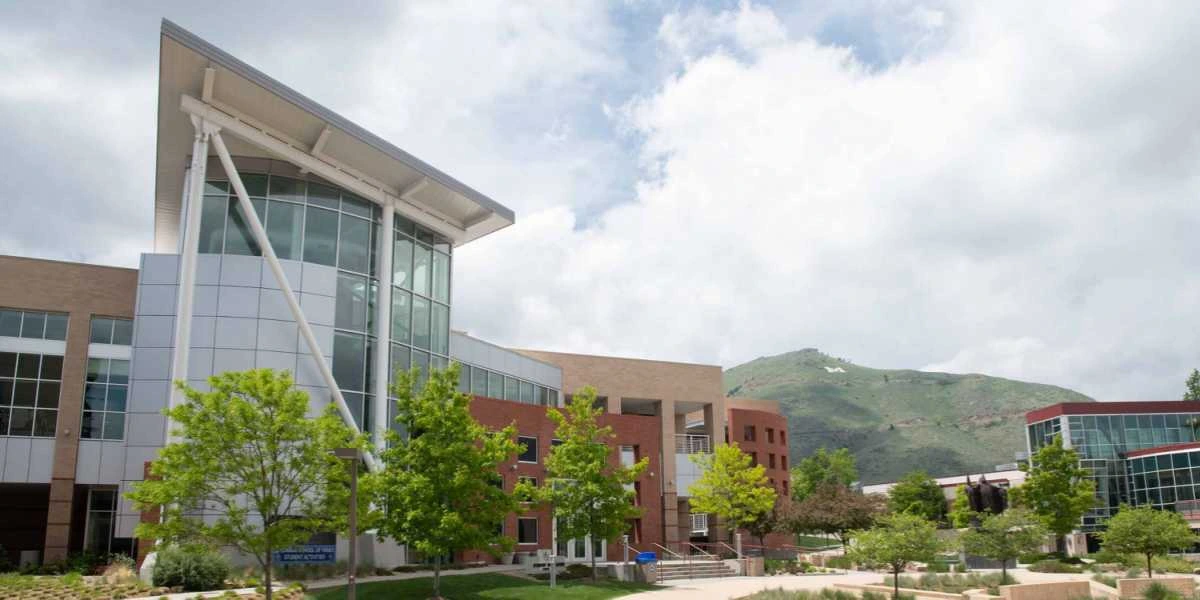
Colorado School of Mines currently has 3 undergraduate colleges and 1 graduate school. The university is known for its outstanding education in engineering, applied science, and earth sciences, and enjoys a global reputation in mining engineering, petroleum engineering, and geological sciences in particular. Colorado School of Mines emphasizes hands-on practice and research; its engineering programs have won numerous international awards and have produced many industry leaders.
About the university
School data is compiled from public sources and may change. Confirm current tuition, deadlines and requirements with the university before applying.
At a glance
Alumni starting salaries
Student body
Most popular majors
Graduate programs
Data Science
Data Science
Program Overview
The Data Science program at Colorado School of Mines is designed to give students a foundation in statistics and computer science and to teach them how to apply these skills within a specific scientific or engineering discipline. The program consists primarily of three modules:
Data Modeling and Statistical Learning: Courses in this module focus on teaching the theory and methods of data modeling and statistical learning. Students learn how to use statistical models and methods to analyze and interpret data.
Machine Learning, Data Processing and Algorithms, and Parallel Computing: Courses in this module cover machine learning, data processing, algorithm design, and related topics. Students learn how to use tools and techniques from computer science to process and analyze large-scale data, and they explore the principles and methods of parallel computing.
Personalized and Domain-Specific Courses: Courses in this module are designed to give students personalized and domain-specific data science knowledge. This may involve data analysis techniques and methods for a particular industry or discipline.
In addition, the program includes a mini-module of professional development courses; students may choose three credits of coursework to help them develop their skills and knowledge within their professional field. The overall goal of the program is to prepare students to become data science professionals with knowledge of statistics, computer science, and a specific domain who can successfully apply data science techniques to solve real-world problems across a variety of industries and fields.
Degree Type
Masters in Data Science
Program Length
One and a half years
Source: Colorado School of Mines MSDS
Application Requirements
English Proficiency
Applicants who are not U.S. citizens or permanent residents and whose native language is not English must demonstrate English proficiency during the application process. English proficiency may be demonstrated by meeting one of the following conditions: a minimum TOEFL iBT score of 79, with minimum section scores of Reading 20, Listening 21, Speaking 21, and Writing 17. The test must have been taken within the past two years and must not expire during the application process. If you have multiple valid TOEFL scores, the school accepts TOEFL MyBest scores or will superscore if necessary. Institution code: 4073. A minimum overall IELTS score of 6.5, with no individual band below 6.0. A minimum overall Duolingo score of 105, with no individual score below 100. A minimum score of 176 on the Cambridge English B2 First, C1 Advanced, and C2 Proficiency exams, with no individual skill below 169.
Other ways to demonstrate English proficiency:
A university degree program completed in an English-speaking country, completed within the two years prior to the date of admission to Mines
At least one year of full-time study (minimum 18 credits) completed at a university or universities in an English-speaking country, with a qualifying grade point average. Completed within the two years prior to the date of admission to Mines.
Two semesters of English composition courses completed at a U.S. university or universities with a grade of C or higher. (These courses must be completed on an A-F grading scale.) Completed within the two years prior to the date of admission to Mines.
You are currently on a university-approved OPT program. A letter from the university is required.
You completed a bachelor's or master's degree program in an English-speaking country, currently reside in an English-speaking country, work in a STEM field, and use English daily at work. An employer letter is required.
You are a citizen of an English-speaking country.
Statement of Purpose
The purpose of this requirement is to briefly introduce yourself to the graduate admissions review committee, share your professional, academic, and personal goals, and explain why you believe Colorado School of Mines is the best choice for achieving those goals. In addition, any skills or experience you possess that you believe are applicable to a teaching assistantship or research assistantship position should be mentioned in the statement. Please keep the statement to a maximum of one to two pages (approximately 500-750 words).
In addition to the program-specific application requirements above, complete application requirements can be found in the [Application Requirements] section of our website.
Source: Colorado School of Mines MSDS Application Requirements
Graduation Requirements
Credit Requirements
Students must complete 30 credits of coursework.
Source: Colorado School of Mines MSDS Graduation Requirements
Course Descriptions
Students must complete 30 credits of coursework, including 6 required courses, 3 elective courses, and 3 professional development courses.
Required Courses
Course | Course Number | Credits: Statistical Methods I | STATISTICAL METHODS I | DSCI530 | 3; Introduction to Key Statistical Learning Methods I | INTRODUCTION TO KEY STATISTICAL LEARNING METHODS I | DSCI560 | 3; Introduction to Key Statistical Learning Methods II | INTRODUCTION TO KEY STATISTICAL LEARNING METHODS II | DSCI561 | 3; Machine Learning, Data Processing and Algorithms, and Parallel Computing
Course | Course Number | Credits: Introduction to Data Science | INTRODUCTION TO DATA SCIENCE | DSCI503 | 3; Introduction to Machine Learning | INTRODUCTION TO MACHINE LEARNING | DSCI570 | 3; Machine Learning | MACHINE LEARNING | DSCI575 | 3; Elective Courses
Electrical Engineering
Course | Course Number | Credits: Digital Signal Processing | DIGITAL SIGNAL PROCESSING | EENG411 | 3; Sparse Signal Processing | SPARSE SIGNAL PROCESSING | EENG509 | 3; Convex Optimization and Its Engineering Applications | CONVEX OPTIMIZATION AND ITS ENGINEERING APPLICATIONS | EENG511 | 3; Mathematical Methods for Signals and Systems or Estimation Theory and Kalman Filtering | MATHEMATICAL METHODS FOR SIGNALS AND SYSTEMS or ESTIMATION THEORY AND KALMAN FILTERING | EENG515 or EENG519 | 3; Geophysics
Course | Course Number | Credits: Geophysical Data Integration & Geostatistics | GEOPHYSICAL DATA INTEGRATION & GEOSTATISTICS | GPGN533 | 3; Applications of Satellite Remote Sensing or Inversion Theory | APPLICATIONS OF SATELLITE REMOTE SENSING or INVERSION THEORY | GPGN570 or GPGN605 | 3; Professional Development
Course | Course Number | Credits: Introduction to Research Ethics | INTRODUCTION TO RESEARCH ETHICS | SYGN502 | 1; Leadership and Teamwork | LEADERSHIP AND TEAMWORK | SYGN5XX | 1; Professional Oral Communication | PROFESSIONAL ORAL COMMUNICATION | LICM501 | 1; Source: Colorado School of Mines MSDS Course Descriptions
Career Development
Job Types
Algorithm Engineer
Analyst
Analyst, Partnership Science
Analyst Programmer, Biostatistics and Data Science
Analytics Consultant
Analytics Strategy Manager
Applied Scientist
Artificial Intelligence Data Scientist
Bioinformatics Data Engineer
Bioinformatician
Business Analytics
Business Intelligence Developer
Business Intelligence Engineer
Client Solutions Statistician
Clinical Data Manager
Clinical Trial Data Science Consultant
Cloud Data Engineer
Data Analyst
Data and Applied Scientist
Data Architect
Data Science Analyst
Data Science Engineer
Data Science Manager
Data Scientist
Data Scientist
Data Visualization
Decision Science Analyst
Deep Learning Researcher
Financial Modeling and Research
Machine Learning Engineer
Mathematical Statistician
Model Validation Data Scientist
People Analytics
Product Strategy Lead
Programmer Analyst
Quantitative Analyst
Quantitative Modeling/Data Science Associate
Quantitative Researcher
Quantitative Risk Analyst
Research Science Manager
Research Scientist
Robotics and AI Research Scientist
Scientific Programmer
Senior Programmer and Data Analyst
Software Engineer--Mathematical Modeling
Solutions Designer
Spatial Data Scientist
Statistical Programmer
Statistician
Systems Engineer
Systems Analyst
Systems Modeling and Optimization
Test Engineer
Source: Colorado School of Mines MSDS Career Development
Electrical Engineering
Electrical Engineering
Program Overview
The graduate program in Electrical Engineering at Colorado School of Mines is one of the top choices for Colorado students pursuing careers as leaders in engineering. The graduate program in Electrical Engineering offers cutting-edge educational training, hands-on research experience, and project-based learning designed to ensure students succeed in the field of electrical engineering. The program covers several specialized areas, including Antennas and Wireless Communications (AWC), Information and Systems Sciences (ISS), and Power and Energy Systems (PES), so students can choose the direction that suits their interests and goals for in-depth exploration. The curriculum is designed to be flexible, giving students the freedom to choose and explore. At every level, undergraduate and graduate students alike have the opportunity to conduct research alongside faculty and gain the skills needed to succeed in industry or academia.
Degree Type
Master of Science in Electrical Engineering
Source: Colorado School of Mines MSEE
Application Requirements
English Proficiency
Applicants who are not U.S. citizens or permanent residents and whose native language is not English must demonstrate English proficiency during the application process. English proficiency can be met through one of the following: a minimum TOEFL iBT score of 79, with the following minimum section scores: Reading 20, Listening 21, Speaking 21, Writing 17. The test must have been taken within the past two years and must not expire during the application process. If you have multiple valid TOEFL tests, the school accepts TOEFL MyBest scores or will superscore as necessary. Institution code: 4073. A minimum overall IELTS score of 6.5, with no individual band below 6.0. Duolingo requires a minimum total score of 105, with no individual score below 100. The minimum score for the Cambridge English B2 First, C1 Advanced, and C2 Proficiency exams is 176, with no individual skill below 169.
Other ways to demonstrate English proficiency:
A university degree program completed in an English-speaking country, completed within the last two years from the date of admission to Mines
At least one year of full-time study (minimum 18 credits) at a university or college in an English-speaking country, with a grade point average that meets the requirement. Completed within the last two years from the date of admission to Mines.
Two semesters of English composition courses at a U.S. university or college with a grade of C or higher. (These courses must be completed on an A-F grading scale.) Completed within the last two years from the date of admission to Mines.
You are currently on a university-approved OPT program. A letter from the university is required.
You completed a bachelor's or master's degree program in an English-speaking country, currently reside in an English-speaking country, work in a STEM field, and use English daily at work. An employer letter is required.
You are a citizen of an English-speaking country.
GRE
A GRE Quantitative score of 151 or higher (or 650 on the old scale).
Statement of Purpose
The purpose of this requirement is to briefly introduce yourself to the graduate admissions review committee, share your professional, academic, and personal goals, and explain why you believe Colorado School of Mines is the best choice for achieving those goals. In addition, skills or experience you possess that you believe apply to teaching assistant or research assistant positions should also be mentioned in the statement. Please keep the statement to a maximum of one to two pages (approximately 500-750 words).
Admission Background
A bachelor's degree in engineering, computer science, physical sciences, or mathematics with a grade point average of 3.0 or higher on a 4.0 scale.
In addition to the program-specific application requirements above, complete application requirements can be found in the [Application Requirements] section of our website
Source:
Colorado School of Mines Application Requirements
Colorado School of Mines MSEE Application Requirements
Graduation Requirements
Credit Requirements
Students must complete 30 credits of coursework.
The master's thesis option requires 24 semester hours of coursework and 6 credits of thesis research.
The non-thesis option requires 30 credits of coursework. Up to six credits of independent study may be used to meet degree requirements.
Thesis Requirements
For students choosing the thesis track, at the end of the master's (thesis option) coursework, students must give a formal presentation and defense of their thesis research.
Source: Colorado School of Mines MSEE Graduation Requirements
Course Information
Electrical Engineering has three tracks: (1) Antennas and Wireless Communications (AWC), (2) Power and Energy Systems (PES), and (3) Information and Systems Sciences (ISS). Colorado School of Mines encourages students to choose among the different tracks before pursuing an advanced degree. Colorado School of Mines also encourages students to communicate with their advisor and/or faculty in the Department of Electrical Engineering before registering for courses, and to select a long-term advisor as soon as possible.
All students must complete the 0-credit EENG 500 seminar course.
Thesis-option students must complete 6 credits of the EENG 707 thesis course, and course-option students must complete an additional 6 credits of elective coursework.
Required Courses
Antennas and Wireless Communications Track
Course Course Number Credits Antennas ANTENNAS EENG525 3 Advanced Electromagnetics ADVANCED ELECTROMAGNETICS EENG526 3 Wireless Communications WIRELESS COMMUNICATIONS EENG527 3 Computational Electromagnetics COMPUTATIONAL ELECTROMAGNETICS EENG528 3 Passive RF & Microwave Devices PASSIVE RF & MICROWAVE DEVICES EENG530 3 Information and Systems Sciences Track
Course Course Number Credits Mathematical Methods for Signals and Systems MATHEMATICAL METHODS FOR SIGNALS AND SYSTEMS EENG515 3 Sparse Signal Processing SPARSE SIGNAL PROCESSING EENG509 3 Convex Optimization and Its Engineering Applications CONVEX OPTIMIZATION AND ITS ENGINEERING APPLICATIONS EENG511 3 Theory and Design of Advanced Control Systems THEORY AND DESIGN OF ADVANCED CONTROL SYSTEMS EENG517 3 Estimation Theory and Kalman Filtering ESTIMATION THEORY AND KALMAN FILTERING EENG519 3 Wireless Communications WIRELESS COMMUNICATIONS EENG527 3 Design and Control of Wind Energy Systems DESIGN AND CONTROL OF WIND ENERGY SYSTEMS EGGN589 3 Robot Mechanics: Kinematics, Dynamics, and Control ROBOT MECHANICS: KINEMATICS, DYNAMICS, AND CONTROL MEGN544 3 Source: Colorado School of Mines MSEE Course Information
Career Development
Career Types
Digital Signal Processing Engineer
Director of Interconnect
Electrical Engineer, Antenna, RF Electronics, and Digital Systems
Engineer/Scientist
Engineering Manager — Grid and Resource Integration
Operations Electrical Engineer
Operations Manager
Postdoctoral Researcher
RF Engineer
Companies Where Alumni Work
Ball Aerospace
Cheyenne Mountain Air Force Station
GE Energy
Light Source
Lockheed Martin
National Renewable Energy Laboratory (NREL)
The Aerospace Corporation
Xcel Energy
Zeta Associates
Source: Colorado School of Mines MSEE Career Development
Educational Leadership
Program Overview
The Educational Leadership graduate degree program in Marquette University's College of Education is designed for teachers or administrators who wish to strengthen their leadership and management skills or who intend to earn principal and/or director of instruction licensure. The curriculum examines organizational leadership in K-12 schools in depth and, through systematic attention to the social, cultural, philosophical, and historical contexts of education, aims to prepare students to become agents of critical inquiry and social justice. Students learn how to lead and manage effectively in school settings in order to drive school development and improvement. Depending on the pathway they choose, students can also earn the Wisconsin Director of Instruction license or the Wisconsin Principal license. This means students gain the knowledge, skills, and credentials needed to take on senior administrative roles in education and to contribute positively to school success and student development.
Degree Type
M.Ed. In Educational Leadership
Program Length
2 years
Sources:
Marquette University MASTER OF EDUCATION IN EDUCATIONAL LEADERSHIP
Marquette University Graduate School EDUCATIONAL LEADERSHIP
Application Requirements
Language Requirements
International students whose official language of instruction for their bachelor's degree (or master's degree) was not English must submit proof of English proficiency, typically evidenced by official TOEFL or IELTS scores. The Duolingo English Test cannot be used as proof of English proficiency.
TOEFL: minimum computer-based score of 213, minimum internet-based score of 80 (at least 20 in each section). Institution code: 1448
IELTS: minimum score of 6.5
Testing
After an initial screening, applicants may be asked to complete an interview and/or a writing test.
In addition to the program-specific requirements above, full application requirements can be found in the [Application Requirements] section of our website.
Sources:
Marquette University PROOF OF ENGLISH PROFICIENCY
Marquette University Educational Leadership Application Details
Graduation Requirements
Credit Requirements
Students must complete a total of 33 credits to earn the Master of Education in Educational Leadership. The program consists of 27 core credits and 6 credits dedicated to earning the Director of Instruction or Principal certification.
Grade Requirements
Students must maintain a minimum grade point average of 3.00 across all graduate courses.
Practicum Requirement
Students must complete a 75-hour practicum in a K-12 school or district.
Sources:
Marquette University ACADEMIC REVIEW
Marquette University Educational Leadership Program Requirements
Course Information
Course Course Code Credits Introduction to Educational Inquiry EDPL 6000 3 Quantitative Literacy and Research EDPL 6050 3 Introduction to Student Affairs EDPL 6100 3 Counseling Skills for Student Affairs Professionals EDPL 6130 3 Social Justice Advocacy in Student Affairs EDPL 6140 3 Student Development in Higher Education EDPL 6200 3 Environmental Theory Assessment in Higher Education EDPL 6210 3 History of Higher Education in the United States EDPL 6250 3 For more information, see: Marquette University Educational Leadership Course
Career Development
Preparing Future Faculty and Professionals (PFFP), hosted by the Graduate School, offers professional development opportunities for graduate students. Graduate students are welcome to attend all PFFP events as part of their preparation for academic and other careers. The Graduate School partners with the Center for Teaching and Learning, the Office of Research and Sponsored Programs, the Writing Center, the Career Services Center, 707 Hub, the Kohler Center, the Office of Community Engagement, GROW, and Campus Ministry to offer graduate students a broad range of career development opportunities.
PFFP participants prepare an individual development and mentoring plan and take part in activities organized around seven areas: teaching, scholarship, leadership, career development, professional development, internal and entrepreneurial, and service and mission.
Graduate students who successfully complete the requirements of the PFFP program receive a notation on their official university transcript. For more information, email mupff@marquette.edu or visit the website.
Source: Marquette University PREPARING FUTURE FACULTY AND PROFESSIONALS PROGRAM
Campus life
Transportation
Nearby Airports
Denver International Airport (DEN)
Distance from campus: 32.6 miles
Getting from campus to the airport:
By car/rideshare:
Under normal conditions, the trip takes about 30–40 minutes. It may take longer during heavy traffic.
By public transit:
Take Bus Route 17, transfer to Route 16, then take the E Line light rail or Bus Route 15, and finally transfer to the A Line light rail.
Rocky Mountain Metropolitan Airport (BJC)
Distance from campus: 21.9 miles
Getting from campus to the airport:
By car/rideshare:
Under normal conditions, the trip takes about 28 minutes. It may take longer during heavy traffic.
By public transit:
Take Bus Route 17, transfer to Route 16, and finally transfer to Route 76.
Nearby Train Station
RTD Light Rail Jefferson County Government Center – Golden Station
Getting from campus to the train station:
By car/rideshare:
Under normal conditions, the trip takes 6 minutes. It may take longer during heavy traffic.
By public transit:
Take Bus Route 17.
City Public Transit
Public transit around Colorado School of Mines is provided mainly by the Regional Transportation District (RTD) and includes the following options:
Light Rail: Jefferson County Government Center – Golden Station is the terminus of the W Line, connecting Golden with downtown Denver and offering students and employees a convenient commuting option.
Bus: RTD bus routes. Several bus routes serve Golden and the surrounding area. Major routes include 16L, 16 and GS, which connect Golden with downtown Denver and other nearby communities.
Campus Shuttle: Mines Shuttle Services. The school provides campus shuttle service to help students get around campus and the surrounding area.
These public transit options give Colorado School of Mines students, employees and visitors convenient ways to travel within Golden and the greater Denver metropolitan area.
Safety
The Police Department is committed to maintaining a safe environment so that the educational mission can proceed without disruption. The school is dedicated to improving quality of life for the campus community and is primarily responsible for developing and maintaining services, programs and strategies that keep the campus safe. Its mission is to make the Mines campus the safest campus in Colorado.
Campus Crime Report
The Campus Safety and Fire Safety Report is designed to inform you about crime and fire statistics for the Mines campus, along with related safety and security information. The Mines Police and campus administration are committed to making the Mines campus the safest campus in Colorado.
Stay Safe on Campus
Watch for signs of a person in crisis. If you have concerns about a student's behavior, contact the Crisis, Assessment, Response and Education (CARE) team. Many of these behaviors also apply to situations involving offices and colleagues.
Biking on Campus
Always wear a helmet. A head injury can mean a brain injury, which is why wearing a bicycle helmet is so important. If you fall, a helmet can provide some protection for your face, head and brain. A bicycle helmet should fit properly. If a helmet is too large, too small or worn incorrectly, it may not provide adequate protection. If you are unsure whether a helmet fits, ask a professional at a local bike shop for help. Wearing bright clothing and installing reflectors on your bicycle also help keep you safe. They help other people on the road see cyclists and help avoid collisions. Riding during the day is safest, so try to avoid riding after sunset. Avoid distractions such as headphones or using a phone. These types of distractions often lead to collisions. Colorado law requires a white headlight on the front of a bicycle when riding between sunset and sunrise.
Drug and Alcohol Policies
The Colorado School of Mines Board of Trustees has established an alcohol use policy to comply with state and local laws governing the use, distribution and consumption of alcohol. The university is committed to responsible behavior, and the alcohol policy is therefore intended to encourage responsible drinking and conduct. Violating this policy may result in disciplinary action and/or legal proceedings. Colorado School of Mines prohibits the sale, manufacture, distribution, use or possession of illegal drugs on the Mines campus. Members of the Mines campus community who sell, distribute or manufacture illegal drugs will generally face administrative action to curb such activity. This policy applies on campus, in buildings and at any other facilities. Individuals who violate these policies, as well as criminal laws governing controlled substances and alcohol, may be subject to sanctions.
Housing
The school believes that living on campus benefits students' learning, development and personal growth. It demonstrates its dedication to students by creating experiences and physical spaces that recognize the unique challenges and opportunities of being a Miner at Colorado School of Mines. The school is committed to providing purposeful learning by fostering a safe, inclusive, academically focused environment. It challenges and encourages students to become critical thinkers and civically engaged leaders in a diverse global community.
Residence Halls
First-year students: ELM HALL, MAPLE HALL, SPRUCE HALL, TRADITIONAL HALLS, WEAVER TOWERS
Second-year students: 1750 JACKSON STREET APARTMENTS, MAPLE HALL SOPHOMORE COMMUNITY
Steps to Apply for On-Campus Housing
First-year students
Complete the online application and pay the deposit
Housing applications are accessible through the housing portal on Trailhead (within the "New Student" section and the "Residence Life" section). Only new students who have paid the enrollment deposit can find and log in to the housing portal. Please note that if a student pays the enrollment deposit after business hours or on a weekend, the student's access to the Trailhead housing portal will be delayed. Please allow 2 business days for the transaction to process.
Room assignment
When applying for first-year housing, students have the opportunity to choose their own room assignment. Students will be assigned a room selection time slot based on the date of their enrollment deposit. During the designated time slot, students can return to the housing portal, view all available rooms in the Colorado School of Mines residence halls, and choose their own room assignment.
Second-year students
Complete the online application and pay the deposit
Room assignment
Applicants for second-year housing are selected through a lottery process. Environmental Justice applicants are selected based on a complete application and selection into the Environmental Justice SLC.
Dining
The school offers several restaurants and cafés to meet students' varied needs.
Dining Locations
Mines Market
Mines Market is a modern dining hall with nine unique stations that is sure to satisfy any taste. In addition to offering all the favorites you love, you can sample dishes from around the world.
Zime
Located in Spruce Hall, Zime is a modern bakery/café brand offering fresh, nutritious meals. Zime specializes in comfort food made with healthy, ethically sourced ingredients. Options include flatbread sandwiches, pasta, soups, salads, smoothies and more.
For more information, please read the dining location list.
Meal Plans
First-year residential students
Meal Plan | Meals | Meal Exchanges | Munch Money | Guest Meals | Cost | Marble | 19/week | 3/semester | 205/semester | 5/semester | 3413/semester | Marble Plus | 19/week | 3/semester | 355/semester | 5/semester | 3563/semester | Quartz | 14/week | 3/semester | 205/semester | 5/semester | 3345/semester | Quartz Plus | 14/week | 3/semester | 355/semester | 5/semester | 3495/semester | Second-year residential students (may choose any of the four plans above)
Meal Plan | Meals | Munch Money | Cost | Granite | 10/week | 255/semester | 3145/semester | Granite Plus | 10/week | 405/semester | 3295/semester | Ruby | 8/week | 505/semester | 2877/semester | Ruby Plus | 8/week | 655/semester | 3027/semester | Commuters
Meal Plan | Meals | Meal Exchanges | Munch Money | Guest Meals | Cost | Gold | 19/week | 3/semester | 205/semester | 5/semester | 3413/semester | Blue | 14/week | 3/semester | 205/semester | 5/semester | 3345/semester | Bronze | 10/week | 0 | 255/semester | 0 | 3145/semester | Silver | 8/week | 0 | 505/semester | 0 | 2877/semester | Agate | 40/semester | 0 | 125/semester | 0 | 480/semester | Double Agate | 80/semester | 0 | 245/semester | 0 | 940/semester
Admissions
Admissions data
Application requirements

Application checklist
Application deadlines
Transfer requirements
Transfer checklist
Transfer deadlines
Similar universities
Admissions FAQ
What is the acceptance rate at Colorado School of Mines?
The reported acceptance rate is 60%. Acceptance rates vary by applicant pool and application cycle; confirm the current figure with Colorado School of Mines.
What SAT scores does Colorado School of Mines expect?
The reported SAT range is 1320-1470. Test-optional and score-reporting policies can change by application cycle; check the university's official admissions page before applying.
When is the application deadline at Colorado School of Mines?
The listed Regular Decision deadline is Jan. 15. Deadlines can vary by program and application cycle; confirm the exact date with the university.
How much does Colorado School of Mines cost?
The listed tuition and fee figure is $16,820. Costs vary by residency, programme and academic year; confirm current costs with the university.
Where is Colorado School of Mines located?
Colorado School of Mines is located at 1500 Illinois St, Golden, CO 80401.
Planning your application?
Build a school list around your profile.
Ivy Elite advisors help students compare programs, plan coursework and prepare applications for U.S. universities.