Ivy Elite
University of Pennsylvania

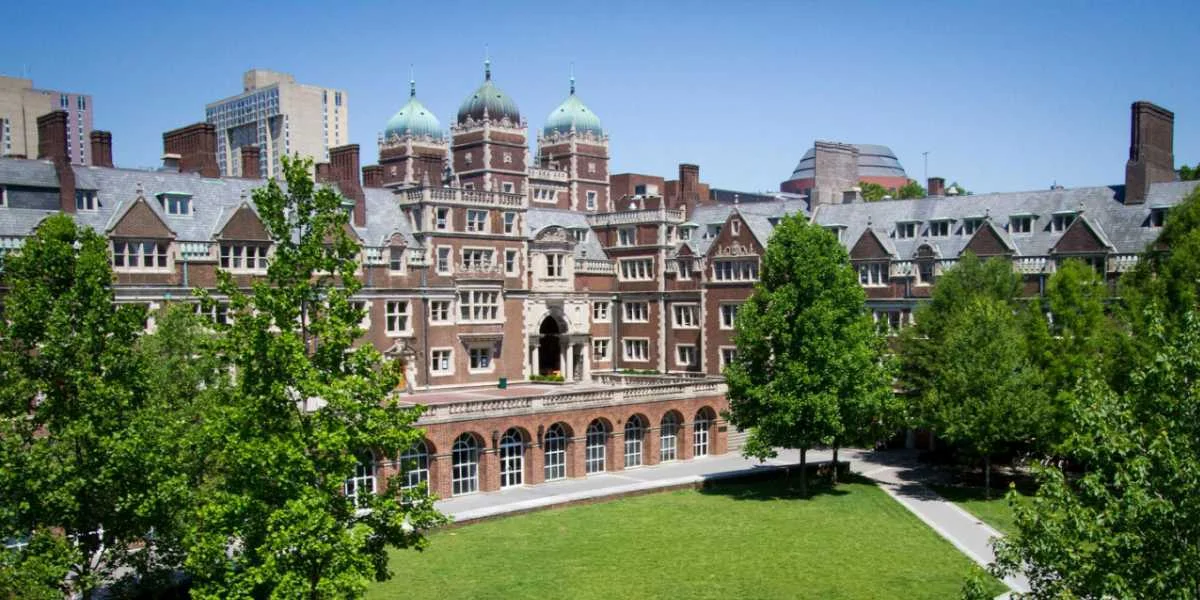
The University of Pennsylvania currently offers students 4 undergraduate schools and 12 graduate schools, providing some of the world's top undergraduate and graduate programs. Because they share one adjacent campus, collaboration and the integration of knowledge across disciplines take place every day, both formally and informally; wherever the most cutting-edge technology is being developed, Penn faculty and students are involved. The University of Pennsylvania is highly sought after by applicants for its distinctive inclusiveness, creativity, rigorous academic standards, and extensive research opportunities.

About the university

School data is compiled from public sources and may change. Confirm current tuition, deadlines and requirements with the university before applying.

At a glance

Acceptance rate 6%
Tuition and fees $19,174
SAT range 1500-1570
Application deadline Jan. 5
Undergraduate enrollment 11,155
Student-faculty ratio 8:1
Location 34th & Spruce Street, Philadelphia, PA, 19104-6303
School type Private research university
In-state tuition
$686
Out-of-state tuition
$19,174
Room and board
$19,174
Graduation rate
88%
Student-faculty ratio
8:1
Gender ratio
46:54

Alumni starting salaries

Biological and Biomedical Sciences
+
Business, Management, Marketing, and Related Fields
+
Engineering
+
Social Sciences
+
Psychology
+
History
+
Communication, Tourism, and Related Fields
+
Area, Ethnic, Cultural, Gender, and Group Studies
+

Student body

First-year diversity
White
29%
Hispanic
13%
Asian
28%
Black
8%

Inside the school

The University of Pennsylvania laid the foundation of the modern American university through its long history and outstanding academic strength. Wharton, as one of the world's leading business schools, has driven innovation in business education, while the Perelman School of Medicine and the birth of the ENIAC computer further solidified Penn's academic influence. The university has a powerful alumni network spanning business, technology, politics and many other fields, supporting students' career development. Penn promotes a "Work hard, play hard" culture. In addition, the international student scholarship program, diverse admissions and the Wharton China Center reflect Penn's globalized and open development.

We will examine the distinctive appeal of the University of Washington from several angles, showcasing the school's core features and its academic achievements and cultural character. Click the button below to view the full introduction to the school.

01. The world's top-ranked business school — Wharton

02. The birthplace of the world's first general-purpose electronic computer

03. America's first medical school

04. One of the most powerful alumni networks in the world

05. The first modern comprehensive university in the United States

06. International student scholarships established for international students

07. Nearly half of applicants are admitted during Early Decision

08. A more diverse student body

09. University of Pennsylvania Wharton China Center

10. The No. 1 Party School in the United States

Most popular majors

Business, Management, Marketing, and Related Support Services
20%
Social Sciences
16%
Biological and Biomedical Sciences
11%
Engineering
9%
Computer and Information Sciences and Support Services
8%
Philosophy and Religious Studies
6%
Health Professions and Related Programs
6%
Multi/Interdisciplinary Studies
5%
Physical Sciences
3%
Psychology
3%

Graduate programs

Finance

Finance

Program Overview

Finance is the combination of decision-making methods and analytical and theoretical tools, and the Finance major in the Wharton MBA program provides students with the analytical and theoretical tools needed to master real-world finance problems and apply them to financial management in business corporations, financial institutions, government, and nonprofit entities. Graduates of the major can succeed in asset management, investment banking, broker-dealers, management consulting firms, and other financial institutions, as well as in chief financial officer positions at nonfinancial corporations and nonprofit entities and in key positions at central banks and in government. The core courses of the program—Corporate Finance and Macroeconomics and the Global Economic Environment—ensure that all graduates master personal financial issues and can provide important advice to businesses, financial institutions, government, and nonprofit organizations. The variety and quality of elective courses offered by Wharton's finance faculty are also one of the school's strengths.

Degree Type

Master of Business Administration in Finance

Program Length

Two-year full-time program

STEM Designation

Since 2023, the MBA Finance program at the Wharton School of the University of Pennsylvania has been officially designated as a STEM program, meaning that international students who, after completing the degree, work in the United States in a role that meets STEM requirements may apply to extend their current 12 months of Optional Practical Training (OPT, the post-completion practical training period for U.S. F1 visa students) to 36 months.

Source: University of Pennsylvania MBA Finance

Application Requirements

Language Scores

All international applicants whose native language is not English or who have not completed their studies at an institution where English is the language of instruction must take the TOEFL (TOEFL iBT), PTE, or IELTS. Applicants who have earned a bachelor's or master's degree at an institution where English is the language of instruction may be exempt.

(TOEFL – Wharton MBA program code: 2926)

GRE/GMAT

All applicants must submit GMAT or GRE scores no more than five years old. The school accepts scores from tests taken at a test center or at home/online; all at-home tests are proctored online by a human proctor.

(Wharton MBA program GMAT code: G56-97-73; GRE code: 6802)

Essays

First-time MBA applicants must complete Essay 1 and Essay 2.

Essay 1 – How do you plan to use the Wharton MBA program to help you achieve your future professional goals? You might consider your past experience, short- and long-term goals, and the resources available at Wharton. (500 words)

Essay 2 – Taking into consideration your personal, professional, and/or academic background, how do you plan to make a specific and meaningful contribution to the Wharton community? (400 words)

Optional Essay

Please use this section to share any additional information about yourself that is not in the application and that you would like the admissions committee to know. You may also use this section to explain any extenuating circumstances (for example, an unexplained gap in employment, the choice of recommenders, inconsistent or questionable academic performance, a weakness, etc.) that you would like the admissions committee to consider. (500 words)

Required essay for reapplicants: Please use this section to share with the admissions committee your reflections and growth since your last application and to describe any relevant updates to your candidacy (for example, changes in your professional life, additional coursework, and extracurricular/volunteer activities). (250 words)

Letters of Recommendation

The letters of recommendation section of the application is divided into two parts.

Recommenders are asked to select from ten characteristics the two that best describe the candidate they are recommending.

Two open-ended questions:

Please provide an example of why you believe this candidate will succeed in the Wharton MBA classroom. (300 words)

Please provide an example of why you believe this candidate will succeed in their career. (300 words)

The school requires two letters of recommendation from individuals who know the applicant's work performance well, preferably the applicant's current or former supervisor.

In addition to the program-specific application requirements above, the complete application requirements can be found in the [Application Requirements] section of our website.

Source: USC MBA Application Requirement

Graduation Requirements

Credit Requirements

You must complete 19 course units.

Source: UPenn MBA Finance Catalog

Curriculum

Finance Major Requirements

Course

Course Number

Credits

Corporate Finance

FNCE 6110

2

Macroeconomics and the Global Economic Environment

FNCE 6130

2

MBA Core Requirements (9.5 credits total)

Course

Course Number

Credits

Accounting-related, choose 1 of the following 2

0.5-1

Fundamentals of Financial Accounting

ACCT 6110

Fundamentals of Financial and Managerial Accounting

ACCT 6130

Macroeconomics-related, choose 1 of the following 2

0.5-1

Macroeconomics and the Global Economic Environment

FNCE 6130

Macroeconomics and The Global Economic Environment (Half CU)

FNCE 6230

Legal Studies-related, choose 1 of the following 3

0.5

Responsibility in Global Management

LGST 6110

Responsibility in Business

LGST 6120

Business, Social Responsibility, and the Environment

LGST 6130

Microeconomics for Managers: Foundations

MGEC 6110

0.5

Microeconomics for Managers: Advanced Applications

MGEC 6120

0.5

Foundations of Teamwork and Leadership

MGMT 6100

0.5

Management-related, choose 1 of the following 2

1

Managing Established Enterprises

MGMT 6110

Management of Emerging Enterprises

MGMT 6120

Marketing Management

MKTG 6110

0.5

Marketing-related, choose 1 of the following 2

0.5

Dynamic Marketing Strategy

MKTG 6120

Strategic Marketing Simulation

MKTG 6130

OIDD-related, choose 1 of the following 7

0.5-1

Quality and Productivity

OIDD 6110

Business Analytics

OIDD 6120

Online Business Models and the Information-Based Firm

OIDD 6130

Innovation

OIDD 6140

Operations Strategy

OIDD 6150

Enabling Technologies

OIDD 6620

Managerial Decision Making

OIDD 6900

Statistics-related, choose 1 of the following 2

1

Regression Analysis for Business

STAT 6130

Accelerated Regression Analysis for Business

STAT 6210

Management Communication

WHCP 6110

0.25

Communication-related, choose 1 of the following 3

0.25

Advanced Persuasive Speaking

WHCP 6120

Communication Challenges for Entrepreneurs

WHCP 6150

Persuasive Writing for Business Leaders

WHCP 6240

Source: UPenn MBA Finance Catalog

Career Development

Graduates of the program begin their careers in the finance departments of nonfinancial corporations, investment banks, broker-dealers, asset management firms, and management consulting firms, as well as in various divisions of commercial banks and other financial intermediaries, nonprofit entities, central banks, and international financial organizations. Wharton MBA talent is highly sought after because graduates create direct and sustainable value for businesses, nonprofits, and government agencies around the world.

Wharton also provides MBA students with very detailed career development services. From startups to Fortune 500 companies, the MBA Career Management team is dedicated to connecting students with a wide range of employers and has helped more than 650 companies extend invitations to Wharton students. The MBA Career Management team helps students leverage and build on their prior career achievements and provides personalized support on the path to internship and full-time success. Specific services include:

Career Advising: Students work closely with career advisors across multiple industries. Career advisors guide students through the job search process, including resume and cover letter preparation, job search strategy, networking, interview preparation, and negotiation.

Courses and Workshops: Students can hear from top speakers and experts in career education and have the opportunity to expand their career knowledge through hands-on practice.

Recruiting Tools: Wharton has a powerful library of interactive data tools that provides a strong platform for recruiting and job searching.

Employer Connections: The team works with employers to host networking events, post job openings, and arrange interviews. Students can connect with employers on and off campus through industry clubs and conferences, career treks, and alumni connections.

Lifelong Alumni Career Support: The Wharton Lifelong Learning program and the Wharton Global Forums provide all Wharton alumni with rich career education resources and networking opportunities throughout their careers.

Source:

The Value of the Wharton MBA

UPenn MBA Finance

UPenn Wharton MBA Career Services

Computer & Information Science

Computer & Information Science

Program Overview

The Master of Science in Engineering in Computer & Information Science program at the University of Pennsylvania is designed to give students the opportunity to pursue advanced study in computer science. Students may choose coursework across multiple areas, including artificial intelligence, databases, security, and programming languages. The program aims to prepare students to become innovators, leaders, and forward-thinking professionals in the future of computer science. This means students will not only master technical and theoretical knowledge but also develop creative thinking, leadership ability, and strategic vision to meet the challenges of a rapidly evolving field and succeed within it.

Degree Type

Master of Science in Engineering in Computer & Information Science

Source: Penn CIS MSE Catalog

Application Requirements

Language Scores

International applicants, or applicants who are not U.S. citizens or permanent residents, whose native language is not English must submit official scores from one of the following exams: (1) TOEFL; (2) IELTS; or (3) the Duolingo English Test (DET).

(The TOEFL institution code is 2888.)

To be exempt from the English language requirement, applicants must meet one of the following conditions at the time of enrollment:

Graduated from an undergraduate program in the United States;

Studied in a country where English is recognized as an official language;

Graduated from an institution where English is the language of instruction, as noted on the unofficial transcript.

Applicants who meet one of these conditions are automatically exempt from the language exam requirement.

Undergraduate Prerequisite Background

Applicants to the MSE graduate program should have a strong academic background in computer science and solid undergraduate training in mathematics and computer science. Prior coursework should include areas such as operating systems, programming languages, data structures, discrete mathematics, linear algebra, algorithms, and theory, similar to the courses taken by computer science undergraduates at the University of Pennsylvania.

Personal Statement

In the personal statement, write an essay of two pages or less that answers the questions below, using specific examples wherever possible.

Why are you interested in this program?

What work have you done that makes you a strong candidate?

How will you benefit from the program?

How do you plan to contribute to the student community while studying at Penn Engineering?

Why will you succeed in this program?

What will you do after completing the program?

GRE/GMAT

For the 2024-2025 application cycle, the GRE is not required, and choosing not to take it will not affect your application. However, if an applicant has taken the exam and has valid scores, the school encourages submitting them. Scores must be valid at the time the application is submitted.

(The GRE institution code is 2888.)

In addition to the program-specific requirements above, the complete application requirements can be found in the corresponding Application Requirements section of our website.

Source: How to Apply to Penn Engineering Graduate Programs

Graduation Requirements

Credit Requirements

You must complete 10 course units.

Grade Requirements

Master's students must maintain a minimum cumulative grade point average (GPA) of 2.7 to be considered in good academic standing; otherwise, they will be placed on academic probation or dismissed. In all cases, a final GPA of 2.7 is required to graduate.

Students are permitted to graduate with a course grade of F, but grades below C- may not count toward the degree. In particular, core courses must be completed with a grade of C- or higher, or they must be retaken.

Thesis Requirement

Students who wish to complete a master's thesis may take CIS 5970 or master's thesis research; these count as electives toward the 10 course units required for the CIS/MSE degree.

The thesis advisor and the student discuss and determine the topic and scope of the thesis, and a second faculty member must also be identified as the thesis reader. The advisor and reader will evaluate the thesis to determine whether it is suitable as a research document and will require the student to give an oral presentation of the thesis. The oral presentation may take the form of a public presentation open to all CIS faculty and students, a conference presentation, or a poster presentation, as determined by the thesis advisor.

Source: Penn CIS MSE Graduation Requirements

Curriculum Overview

Of the ten course units required for the degree, at least seven must be CIS courses. These seven courses consist of the following four core courses and three CIS electives.

Core Courses

Choose four courses from the following:

Course

Course Number

Credits

Analysis of Algorithms

CIS 5020

1

Theory of Computation

CIS 5110

1

Software Systems

CIS 5050

1

Operating Systems Design and Implementation

CIS 5480

1

Networked Systems

CIS 5530

1

Internet and Web Systems

CIS 5550

1

Machine Learning

CIS 5200

1

Applied Machine Learning

CIS 5190

1

Artificial Intelligence

CIS 5210

1

Software Foundations

CIS 5000

1

Computer Organization and Design

CIS 5710

1

Note: The four core courses must include: 1) at least one systems course, or CIS 5010; 2) at least one theory course; 3) at most one machine learning course. (Other machine learning courses may still count as electives.)

CIS Elective Courses

The three CIS electives may be chosen from any course numbered CIS 5000 to CIS 7000, and may include at most one CIS 7000 course.

CIS or Non-CIS Elective Courses

Each of the remaining three courses must be either a CIS course (numbered CIS 5000 to CIS 8000) or a course from the approved list of non-CIS courses.

Source:

Penn CIS MSE Graduation Requirements

Penn CIS MSE Catalog

Career Development

The University of Pennsylvania has a dedicated Career Service office and website, where career services advisors can discuss career planning and job search questions with students through appointments, walk-in services, and mock interviews. The office also provides master's students with a variety of career-related digital resources, such as Handshake, which posts thousands of jobs each year. The department also hosts a range of career events, such as networking meetings and in-person job fairs, to better connect students with target companies. In addition, Penn has established distinct communities for various majors to provide more effective, targeted services.

Source: Penn Engineering Career Services

Business Analytics Program

Business Analytics

Program Overview

The MBA in Business Analytics at the University of Pennsylvania is designed to build students' deep capabilities in implementing and overseeing data-driven business decisions. Specifically, the program focuses on developing skills in the following areas: (i) collecting, managing, and describing data sets, (ii) drawing inferences and making predictions from data, and (iii) making optimal and robust decisions. Business analytics has wide applications across functional areas, so students in this program learn to apply methods such as statistical analysis to solve a range of business problems. Students who choose this concentration are typically well suited to careers related to "data science," including roles in data management and data analysis. This means they will apply the principles and techniques of data science in business settings to support corporate decision-making and business development.

Degree Type

Master of Business Administration in Business Analytics

Program Length

Two-year full-time program

Source: Upenn MBA BA Catalog

Application Requirements

English Proficiency

All international applicants whose native language is not English or who have not completed their studies at an institution where English is the language of instruction must take the TOEFL (TOEFL iBT), PTE, or IELTS. Applicants who have earned a bachelor's or master's degree at an institution where English is the language of instruction may be exempted from the test.

(TOEFL — the Wharton MBA program code is: 2926)

GRE/GMAT

All applicants must submit GMAT or GRE scores no more than five years old. The school accepts scores from tests taken at a test center or at home/online; all at-home tests are proctored online by a live person.

(The Wharton MBA program's GMAT code is G56-97-73 and the GRE code is: 6802)

Essays

First-time MBA applicants must complete Essay 1 and Essay 2.

Essay 1 - How do you plan to use the Wharton MBA program to help you achieve your future professional goals? You might consider your past experience, short and long-term goals, and resources available at Wharton. (500 words)

Essay 2 - Taking into consideration your personal, professional, and/or academic background, how do you plan to make a specific and meaningful contribution to the Wharton community? (400 words)

Optional Essay

Please use this section to share any additional information about yourself that you would like the Admissions Committee to know but that is not in the application. You may also use this section to address any extenuating circumstances (e.g., an unexplained gap in work experience, choice of recommender, inconsistent or questionable academic performance, a weakness, etc.) that you would like the Admissions Committee to consider. (500 words)

Required essay for reapplicants: Please use this section to share with the Admissions Committee your reflections and growth since your last application, and describe any relevant updates to your candidacy (e.g., changes in your professional life, additional coursework, and extracurricular/volunteer activities). (250 words)

Letters of Recommendation

The letters of recommendation in the application will be divided into two parts.

Recommenders are asked to select the two characteristics that best describe the candidate they are recommending.

Two free-response questions:

Please provide an example of why you believe this candidate will succeed in the Wharton MBA classroom. (300 words)

Please provide an example of why you believe this candidate will succeed in their career. (300 words)

The school requires two letters of recommendation from individuals who know the applicant's work performance well, preferably the applicant's current or former supervisor.

In addition to the program-specific application requirements above, the complete application requirements can be found in the [Application Requirements] section of our website.

Source: USC MBA Application Requirement

Graduation Requirements

Credit Requirements

You must complete 19 course units.

Source: Upenn MBA BA Catalog

Course Overview

The following are the required courses for the MBA Business Analytics major.

Core Requirements

Course

Course Number

Credits

Regression Analysis for Business OR

Regression Analysis for Business OR

STAT 6130

1

Accelerated Regression Analysis for Business

Accelerated Regression Analysis for Business

STAT 6210

1

Quality and Productivity or

Quality and Productivity OR

OIDD 6110

1

Operations Strategy

OIDD 6150

1

Business Analytics

Business Analytics

OIDD 6120

1

Choose 3–4 courses from the following

Course

Course number

Credits

Financial Reporting and Business Analysis

Financial Reporting and Business Analysis

ACCT 7420

1

Financial Disclosure Analytics

Financial Disclosure Analytics

ACCT 7470

1

Applied Data Analysis

Applied Data Analysis

BEPP 7800

1

Investment Management

Investment Management

FNCE 7050

1

Financial Derivatives

FNCE 7170

1

Data Science for Finance

FNCE 7370

1

Financial Technology

FinTech

FNCE 7800

1

Healthcare Data and Analytics

Healthcare Data and Analytics

HCMG 8570

1

Big Data, Big Responsibilities: The Law and Ethics of Business Analytics

LGST 6420

1

People Analytics

MGMT/OIDD 7930

1

Data and Analysis for Marketing Decisions

Data and Analysis for Marketing Decisions

MKTG 7120

1

Pricing Policy

Pricing Policy

MKTG 7540

1

Models for Marketing Strategy

MKTG 7710

1

Applied Probability Models in Marketing

MKTG/STAT 7760

1

Experiments for Business Decision Making (Center Special Topic)

Experiments for Business Decision Making (Center Special Topic)

MKTG 8090

1

Special Topics - Marketing Analytics

Special Topics - Marketing Analytics

MKTG 8520

Thinking with Models: Business Analytics for Energy and Sustainability

OIDD 5250

Scaling Operations: Linking Strategy and Execution

OIDD 6360

1

Service Analytics

Analytics for Services

OIDD 6420

1

Analytics for Revenue Management

Analytics for Revenue Management

OIDD 6430

1

Mathematical Modeling and its Application in Finance

Mathematical Modeling and its Application in Finance

OIDD 6530

1

Service Operations Management

Service Operations Management

OIDD 6580

1

Advanced Topics (Operations Analytics)

Advanced Topics (Operations Analytics)

OIDD 6590

1

Enabling Technologies

Enabling Technologies

OIDD 6620

1

Analytics Databases

Databases for Analytics

OIDD 6630

1

Artificial Intelligence, Business, and Society

A.I., Business, and Society

OIDD 6670

1

Advanced Topics

Advanced Topics

OIDD 8980

1

Modern Data Mining

Modern Data Mining

STAT 7010

1

Statistical Computing with R

Statistical Computing with R

STAT 7050

1

Data Collection and Acquisition: Strategies and Platforms

Data Collection and Acquisition: Strategies and Platforms

STAT 7100

1

Management Forecasting Methods

Forecasting Methods for Management

STAT 7110

1

Predictive Analytics for Business

Predictive Analytics for Business

STAT 7220

1

Applied Machine Learning in Business

Applied Machine Learning in Business

STAT 7230

1

Text Analytics

Text Analytics

STAT 7240

1

Data Analytics and Statistical Computing

Data Analytics and Statistical Computing

STAT 7700

1

Introduction to Python for Data Science

Introduction to Python for Data Science

STAT 7770

1

Modern Regression for the Social, Behavioral and Biological Sciences

STAT 9740

1

Choose at most 1 course from the following:

Course

Course Number

Credits

Applied Machine Learning

Applied Machine Learning

CIS 5190

1

Machine Learning

Machine Learning

CIS 5200

1

Big Data Analytics

Big Data Analytics

CIS 5450

1

Database and Information Systems

Database and Information Systems

CIS 5500

1

Programming Languages and Techniques

Programming Languages and Techniques

CIT 5900

1

Introduction to Software Development

Introduction to Software Development

CIT 5910

1

Introduction to Computer Systems

Introduction to Computer Systems

CIT 5930

1

Data Structures and Software Design

Data Structures and Software Design

CIT 5940

1

Computer Systems Programming

CIT 5950

1

Applied Research Methods to Inform Policy and Practice

EDUC 5760

1

Survey Methods & Design

Survey Methods & Design

EDUC 6683

1

Regression and Analysis of Variance

Regression and Analysis of Variance

EDUC 7667

1

Measurement Theory and Test Construction

Measurement Theory and Test Construction

EDUC 7668

1

Structural Equations Modeling

Structural Equations Modeling

EDUC 7677

Statistical and Data Mining Methods for Urban Data Analysis

MUSA 5000

Geospatial Cloud Computing & Visualization

MUSA 5090

Geospatial Data Science in Python

MUSA 5500

Data Analysis for Social Impact

NPLD 7200

1

MBA Core Requirements

Course

Course Number

Credits

Accounting-related: choose 1 of the following 2

0.5-1

Fundamentals of Financial Accounting

Fundamentals of Financial Accounting

ACCT 6110

Fundamentals of Financial and Managerial Accounting

ACCT 6130

Macroeconomics-related: choose 1 of the following 2

0.5-1

Macroeconomics and the Global Economic Environment

Macroeconomics and the Global Economic Environment

FNCE 6130

Macroeconomics and the Global Economic Environment (Half CU)

Macroeconomics and The Global Economic Environment (Half CU)

FNCE 6230

Legal Studies-related: choose 1 of the following 3

0.5

Responsibility in Global Management

Responsibility in Global Management

LGST 6110

Corporate Responsibility

Responsibility in Business

LGST 6120

Business, Social Responsibility, and the Environment

LGST 6130

Managerial Microeconomics: Foundations

Microeconomics for Managers: Foundations

MGEC 6110

0.5

Managerial Microeconomics: Advanced Applications

Microeconomics for Managers: Advanced Applications

MGEC 6120

0.5

Foundations of Teamwork and Leadership

Foundations of Teamwork and Leadership

MGMT 6100

0.5

Choose one of the following two Management courses

1

Managing Established Enterprises

MGMT 6110

Management of Emerging Enterprises

MGMT 6120

Marketing Management

MKTG 6110

0.5

Marketing-related: choose one of the following two

0.5

Dynamic Marketing Strategy

MKTG 6120

Strategic Marketing Simulation

MKTG 6130

OIDD-related: choose 1 of the following 7

0.5-1

Quality and Productivity

Quality and Productivity

OIDD 6110

Business Analytics

Business Analytics

OIDD 6120

Online Business Models and the Information-Based Firm

OIDD 6130

Innovation

OIDD 6140

Operations Strategy

OIDD 6150

Assistive Technology

Enabling Technologies

OIDD 6620

Managerial Decision Making

Managerial Decision Making

OIDD 6900

Statistics-related; choose 1 of the following 2

1

Regression Analysis for Business

STAT 6130

Accelerated Regression Analysis for Business

STAT 6210

Management Communication

Management Communication

WHCP 6110

0.25

Communication-related: choose 1 of the following 3

0.25

Advanced Persuasive Speaking

Advanced Persuasive Speaking

WHCP 6120

Communication Challenges for Entrepreneurs

Communication Challenges for Entrepreneurs

WHCP 6150

Persuasive Writing for Business Leaders

Persuasive Writing for Business Leaders

WHCP 6240

Source: Upenn MBA Business Analytics Catalog

Career Development

Wharton provides MBA students with highly detailed career development services. From startups to Fortune 500 companies, the MBA Career Management team works to connect students with a wide range of employers and helped more than 650 companies extend invitations to Wharton students. The MBA Career Management team helps students leverage and build on their prior professional achievements and offers personalized support on the path to internship and full-time success. Specific services include:

Career advising: Students work closely with career advisors across multiple industries. Advisors guide students through the job search process, including preparing resumes and cover letters, developing job search strategies, building networks, interview preparation, and negotiation.

Courses and workshops: Students can hear from top speakers and experts in career education and have opportunities to expand their career knowledge through hands-on practice.

Recruiting tools: Wharton maintains a powerful library of interactive data tools that provides a strong platform for recruiting and job searching.

Employer connections: The team works with employers to host networking events, post job listings, and arrange interviews. Students can connect with employers on and off campus through industry clubs and conferences, career treks, and alumni connections.

Lifelong alumni career support: Wharton Lifelong Learning and the Wharton Global Forums provide all Wharton alumni with extensive career education resources and networking opportunities throughout their careers.

Source: Penn Wharton MBA Career Services

Teaching English to Speakers of Other Languages (TESOL)

Teaching English to Speakers of Other Language

Program Overview

The Teaching English to Speakers of Other Language program at the University of Pennsylvania is designed to explore in depth the theory and practice of language education and to prepare students to teach English around the world. Through a comprehensive course experience, students gain the theoretical and practical tools to address international language teaching challenges. The program emphasizes a comparative approach and focuses on students' ability to take on a wide range of roles in English education, from teacher to leader of international organizations. Through field practice, distinctive courses, and a comprehensive capstone project, students build a strong foundation for success in the global language education field.

Degree Type

Master of Science in Education in Teaching English to Speakers of Other Language (M.S.Ed in TESOL)

Program Length

One and a half years of full-time study

Sources:

Upenn TESOL Catalog

Upenn TESOL Master

Application Requirements

Language Scores

International applicants whose first language is not English must submit TOEFL iBT or IELTS scores. This requirement is waived for applicants who hold an undergraduate or graduate degree from an institution where English is the sole language of instruction. TOEFL and IELTS scores are valid for two years from the original test date.

TOEFL institution code: 2943

IELTS score reports should be sent to: University of Pennsylvania Graduate School of Education.

GRE/GMAT

GRE scores are not required and will not be considered during the review process.

Undergraduate Prerequisite Background

Teaching or tutoring experience is strongly recommended.

Statement of Purpose

In no more than 750 words, describe an unsuccessful learning or teaching experience, what you learned from it, and how it influenced your decision to apply to the TESOL M.S.Ed. program at Penn GSE.

Letters of Recommendation

Three letters of recommendation are required.

Additional Application Requirement

Applicants will be asked to participate in an admission video essay. The school encourages all applicants to complete this step, as it helps faculty comprehensively evaluate applicants' materials.

In addition to the program-specific requirements above, full application requirements can be found in the [Application Requirements] section of our website.

Sources:

Upenn TESOL Admission Requirement

Graduation Requirements

Credit Requirements

12 course units, including 8 required courses and 4 electives

Grade Requirements

Students must earn a grade of B- or above in core courses.

GSE courses taken outside the specialization must be completed with a grade of B or above.

Full-time registration is 3 course units. Students must achieve and maintain a cumulative grade point average of 3.5 after the end of the first fall semester in order to register for 4 course units in subsequent semesters.

Thesis Requirement

The capstone project includes a thesis related to reflective analysis or action research.

Internship Requirement

Students must complete 30 hours of teaching practicum during the semester in which they take EDUC 563.

Sources:

Upenn TESOL Msed Catalog

Upenn TESOL Course EDUC 563

Upenn TESOL Master

Curriculum Overview

The TESOL MSEd requires a total of 12 course units, and all courses must be at the 5000 level or above.

Core Courses

Course

Course Number

Credits

Approaches to Teaching English and Other Modern Languages

EDUC 6215

1

TESOL Practice Teaching

EDUC 8215

1

Linguistics in Education

EDUC 6205

1

TESOL Classroom Fundamentals

EDUC 5299

1

Sociolinguistics in Education

EDUC 6210

1

Second Language Development

EDUC 7225

1

Introduction to Applied Linguistics

EDUC 6200

1

In addition, students take three additional TESOL-related courses and complete one approved graduate-level (5000 or above) GSE course outside the specialization.

Capstone

Course

Course Number

Credits

TESOL Seminar (Final Semester of Coursework)

EDUC 8225

1

Sources:

Upenn TESOL Msed Catalog

Upenn TESOL Course EDUC 563

Career Development

Graduates of the Upenn TESOL M.S.Ed program teach English to immigrants settled in English-speaking countries, communicate with English-speaking peers around the world as international scholars and professionals, and lead classroom instruction in countries where English is a second or foreign language. Some graduates go on to pursue doctoral degrees and conduct in-depth research in fields such as applied linguistics and education.

In addition, for Penn GSE students or alumni seeking help with career and professional development, the school has a dedicated career development office with many resources available. These include regular updates on the latest career information, one-on-one online and in-person advising, assistance with revising resumes, personal statements, LinkedIn profiles, and other documents, regular job search workshops and events, and a strong alumni network that promotes communication and exchange among alumni and the sharing of resources. Students can visit sites such as Handshake to find relevant job postings and connect directly with employers.

Sources:

Upenn TESOL Master

Upenn GSE Career & Professional Development

Data Science

Data Science

Program Overview

The University of Pennsylvania has a strong interdisciplinary tradition and is an ideal place for data science enthusiasts to study. The University's Data Science program reflects how this emerging discipline has become central to decision-making, interpreting observations, and solving problems in today's world. Graduates of the Upenn Data Science program are prepared for a wide range of data-centered careers in technical engineering, consulting, science, and even literature, art, and communications. The program offers cutting-edge courses that integrate core topics such as machine learning, big data analytics, and statistics, along with a variety of electives, and gives students the opportunity to apply these techniques to their chosen field of specialization.

Degree Type

Master of Science in Engineering (MSE) in Data Science

Program Length

One and a half to two years, full-time

Sources:

Upenn Data Science Catalog

Upenn Data Science

Upenn MSE CIS Program offerings

Application Requirements

English Proficiency

International applicants, or non-U.S. citizens/permanent residents, whose native language is not English must submit official scores from one of the following exams: (1) TOEFL; (2) IELTS; or (3) Duolingo English Test (DET).

(The TOEFL institution code is 2888.)

To be exempt from the English language requirement, one of the following conditions must be met at the time of enrollment:

Graduated from an undergraduate program in the United States;

Studied in a country where English is recognized as an official language;

Graduated from an institution where English is the language of instruction, as noted on the unofficial transcript.

Applicants who meet one of these conditions are automatically exempt from the language test requirement.

There is no minimum score requirement for the language exams, but the school recommends: TOEFL 100, IELTS 7.5, Duolingo 135.

GRE/GMAT

For the 2024-2025 application cycle, the GRE is not required; choosing not to take it will not affect your application. However, if an applicant has taken the exam and has valid scores, the school encourages submitting them. Scores must be valid at the time the application is submitted.

(The GRE institution code is 2888.)

Personal Statement

In the personal statement, write an essay of two pages or less that answers the questions below, using specific examples wherever possible.

Why are you interested in this program?

What work have you done that makes you a strong candidate?

How will you benefit from the program?

How do you plan to contribute to the student community while studying at Penn Engineering?

Why will you succeed in this program?

What will you do after completing the program?

Letters of Recommendation

Two letters of recommendation are required, one of which should be written by a faculty member familiar with the student's academic abilities.

In addition to the program-specific requirements above, full application requirements can be found in the [Application Requirements] section of our website.

Sources: Upenn Data Science How to Apply

Graduation Requirements

Credit Requirements

You must complete 10 course units.

Thesis Requirement

Students who wish to complete a master's thesis may take DATS 5970/Masters Thesis Research. Students must choose a thesis advisor who is a member of a standing SEAS faculty, and must also have a Reader, who must also be a member of a standing University faculty (may be from outside SEAS). The Reader will read the final thesis.

Internship Requirement

Students who wish to complete an internship may take one or two course units of DATS 5990/Master's Independent Study (depending on the scope of the project). If the faculty member is not within SEAS, the program director will nominally co-supervise the project. For internships proposed by industry, a tangible, academically based product must still be produced for evaluation by the program director. The report should be 5-10 pages long, describing the project and its outcomes, including links to any evaluable code.

Sources: Upenn Data Science Project

Curriculum

Foundations

Course

Course Number

Credits

Choose one of the following two

1

Programming Languages and Techniques

CIT 5900

Introduction to Software Development

CIT 5910

Choose one of the following two

1

Fundamentals of Linear Algebra and Optimization

CIS 5150

Computational Linear Algebra

MATH 5130

Core Requirements

Course

Course Number

Credits

Statistics for Data Science

ESE 5420

1

Big Data Analytics

CIS 5450

1

Choose one of the following five

1

Applied Machine Learning

CIS 5190

Machine Learning

CIS 5200

Modern Data Mining

STAT 5710

Data-driven Modeling and Probabilistic Scientific Computing

ENM 5310

Data Mining: Learning from Massive Datasets

ESE 5450

In addition to the foundations and core courses, students must choose 5 course units of technical electives.

Students must choose at least 3 courses from the following:

Technical & Depth Area Electives

Data-centric Programming

Surveys and Statistical Methods

Data Analysis, Artificial Intelligence

Simulation Methods for Natural Science/Engineering

Mathematical and Algorithmic Foundations

For courses in each area, see: Upenn in Data Science related courses

Sources: Upenn Data Science Program of Study

Career Development

The University of Pennsylvania has a dedicated Career Service department and website, where career services advisors can discuss career planning and job search questions with students through appointments, walk-in services, and mock interviews. It also offers master's students a variety of career-related digital resources, such as Handshake, which posts thousands of jobs each year. The department also holds various career events, such as networking meetings and in-person job fairs, to better help students connect with target companies. In addition, Penn has established different communities for various majors to provide more effective targeted services.

Sources: Upenn Career Service

Campus life

Transportation

Nearby Airports

Philadelphia International Airport

Distance from campus: 7–8.5 miles

Getting from campus to the airport:

By car or rideshare:

Typically about 10 minutes. It may take longer during heavy traffic.

Public transportation

Students can take the Airport Line bus to Penn Medicine Station.

Nearby Train Stations

Philadelphia 30th Street Station

Distance from campus: 1–2 miles

By car or rideshare:

Typically 3–5 minutes. It may take longer during heavy traffic.

Public transportation:

You can take the airport bus to William H. Gray III 30th Street, which brings you to Philadelphia 30th Street Station.

Philadelphia North Station

By car or rideshare:

Typically 10–20 minutes. It may take longer during heavy traffic.

Public transportation:

You can take a SEPTA train from a station near the University of Pennsylvania, such as 30th Street Station, to Philadelphia North Station. You can also use SEPTA bus service to reach Philadelphia North Station.

City Public Transportation

Philadelphia, the city surrounding the University of Pennsylvania, has an extensive public transportation system that mainly includes the following options:

SEPTA (Southeastern Pennsylvania Transportation Authority)

SEPTA is the main public transportation system for Philadelphia and the surrounding region. It includes subway, surface trolley, bus and train service, connecting areas within Philadelphia and around the University of Pennsylvania.

Subway and Trolley

SEPTA operates Philadelphia's subway and trolley system, giving residents and visitors a fast, convenient way to travel within the city.

Bus Service

SEPTA's bus network covers Philadelphia and the surrounding region, giving residents a wide range of public transportation options. These bus routes connect different parts of the city and make it easy for people to reach their destinations.

Train Service

SEPTA's train service connects Center City Philadelphia with surrounding cities and provides convenient commuting options. Some train lines can also be used to reach areas around the University of Pennsylvania.

Safety

The University of Pennsylvania's Division of Public Safety (DPS) works to improve quality of life, safety and security in the community through collaboration with the community and a comprehensive safety and security program. The following are campus safety services Upenn offers students:

Emergency Preparedness

The University of Pennsylvania's emergency preparedness program (PennReady) oversees emergency preparedness at the University of Pennsylvania. Penn Ready aims to prevent, prepare for, respond to and recover from all emergencies that may affect Penn and the University City community.

Register for UPennAlert

The UPennAlert emergency notification system enables the University of Pennsylvania to quickly notify the University of Pennsylvania and surrounding Philadelphia communities with important information during a major emergency or a dangerous situation involving an immediate threat to the health or safety of students or employees on campus.

The system does this through three main methods: personal information management, alert and public address systems, and digital displays.

Penn Guardian App

Penn Guardian is an app that lets you contact the Division of Public Safety by phone or text message and share information. Download it on your smartphone, then register with your Penn email address.

Safety Resources

The most essential safety resources are provided to students to help protect their personal safety.

Housing

The University of Pennsylvania offers a wide variety of housing options to suit all student preferences. These options include traditional single rooms and double rooms with shared facilities, as well as suites and apartments that offer greater privacy. Every residence room or apartment comes with basic furniture appropriate to the room type and capacity. In addition, residence halls offer shared facilities including information centers with 24-hour security, electronic locks, free laundry facilities, free Wi-Fi and cable TV, and mail and package rooms.

College Houses

First-year students can live in a First Year house or a Four-Year house.

First Year

The University of Pennsylvania's "First Year" houses are designed to meet the needs of students experiencing campus life for the first time, so that new students can support one another and progress together.

The "First Year" houses include: Fisher Hassenfeld College House, Hill College House, Kings Court English House, Lauder College House, Riepe College House, Ware College House.

Four-Year

For students who want the opportunity to connect with upperclass students and benefit from their experience while studying at the University of Pennsylvania, the "Four-Year" houses are an ideal choice. These houses are designed to foster connections among students in different years and provide an environment where students can interact, learn from one another and develop lasting friendships.

The "Four-Year" houses include: Gregory College House, Gutmann College House, Stouffer College House, The Axis, W.E.B. Du Bois House.

Upperclass College House

For upperclass students, apartment-style housing is an option for enjoying independent living.

The apartment-style houses include: College House At The Radian, Harnwell College House, Harrison College House, Rodin College House.

Housing Requirement

The University of Pennsylvania requires all undergraduates to live in on-campus housing for their first four semesters (excluding summer sessions), regardless of course credits (CU) or class standing. Sophomore transfer students must live on campus for their first four semesters. Junior transfer students must live on campus for their first two semesters.

Sophomore students transferring to the University of Pennsylvania from another school may count semesters spent living on campus at their original school during their first year toward the University of Pennsylvania housing requirement.

Junior students transferring to the University of Pennsylvania from another school must live on campus for their first two semesters at the University of Pennsylvania.

Students who study abroad during their sophomore year may count that study abroad time toward the housing requirement.

Students who have taken a leave of absence during their first two years on campus may apply for an exemption from the housing requirement. If a student has lived on campus for three semesters, the exemption may be granted.

On-Campus Housing Application Steps

Whether you are a new Penn student, a returning sophomore, junior or senior, or a student who has just arrived at Penn for one semester or one year, the University of Pennsylvania tailors the application process to your needs.

Room Selection Timeline:

The University of Pennsylvania's room selection timeline varies depending on how long a student has been at Penn. The latest information about room selection, deadlines and other important details is communicated through student email accounts. Students are strongly encouraged to check their email daily to make sure they do not miss any time-sensitive room selection information.

Application Process

When applying for housing, first-year students at the University of Pennsylvania must complete a "Lifestyle Profile." These questions are designed to learn about students' sleep habits and room environment preferences. In addition, first-year students may choose to create a roommate group name in the application in order to request a specific roommate. For first-year students without a specific roommate request, students are matched with roommates based on their answers to the "Lifestyle Profile." The matching process ensures that roommates are of the same sex, but residence halls are coed.

Dining

Dining services at the University of Pennsylvania are designed to meet students' varied preferences. Campus dining includes both fast food and buffet options, and the diverse dining choices ensure that students can select a variety of delicious, satisfying meals based on their tastes and preferences.

Campus Dining Locations

The University of Pennsylvania has 18 Residential Dining and Retail Dining locations in total, such as:

1920 commons: The University of Pennsylvania's 1920 Commons is known for its extensive dining hours, with early breakfast hours during the week, late dinner hours, and brunch on weekends. The menu features a variety of delicious options, including Philadelphia roast pork sandwiches and seven-herb roasted chicken.

Falk at Penn Hillel: This is a Jewish dining location, and all food served strictly follows Jewish dietary laws.

Quaker Kitchen: This dining location has a unique design, and its dishes include salads and main dishes.

Meal Plan

Residential Dining

Upenn's residential dining locations offer students a variety of meal options through an "all-inclusive" service model. Students use their counts (also called "meals" or "swipes") upon arrival. Each entry into a residential dining cafe deducts one use from the balance. To enter the dining location, simply tap your Penn Card at the cashier to begin your meal.

Retail Dining

Upenn's retail dining cafes sell items of your choice, and guests with a dining plan can use Dining Dollars to purchase items on a one-dollar-for-one-dollar basis. Each purchase deducts the corresponding amount from your Dining Dollars account balance.

More Ways to Use Swipes

Meal-Exchange allows students to use a swipe at Houston Market, Gourmet Grocer, Accenture Cafe, Joe's Cafe, Cafe West and McClelland Sushi & Market to purchase a pre-designated combo meal (main dish, side dish, beverage).

Meal Plan Requirements

The University of Pennsylvania requires first-year undergraduates to purchase one of the two "First-Year Meal Plans."

Second-year undergraduates must purchase one of the two "First-Year Meal Plans" or the "Second-Year Meal Plan."

All other students, including graduate students, are not required but are encouraged to purchase a University meal plan.

Meal Plan Prices

The First-Year Meal Plans include the following two options:

If a student chooses to buy more fast food, the annual cost is approximately $6,330, including 374 swipes and $800 Dining Dollars.

If a student chooses to buy more buffet meals, the annual cost is approximately $6,330, including 592 swipes and 250 Dining Dollars.

In addition to the two first-year plans, the Second-Year Meal Plan also includes:

If a student chooses to buy customized small meals and fast food, the annual cost is approximately $4,256, including 312 swipes and $600 Dining Dollars.

If a student buys more buffet meals, the annual cost is approximately $6,330, including 592 swipes and 250 Dining Dollars.

For more dining options for other years, including graduate students, you can read: Upenn Dining Options

Admissions

Acceptance rate
6%
Average GPA
3.9
SAT range
1500-1570
ACT range
34-35
SAT / ACT
SAT reading and writing, 25th–75th percentile: 730-770
SAT math, 25th–75th percentile: 770-800
SAT median: 1540
ACT composite, 25th–75th percentile: 34-36
ACT English, 25th–75th percentile: 35-36
ACT math, 25th–75th percentile: 33-36
ACT median: 35

Admissions data

The University of Pennsylvania has an acceptance rate of 9%.
Half of the applicants admitted to the University of Pennsylvania have an SAT score between 1460 and 1570 or an ACT score between 33 and 35.
However, one quarter of admitted applicants scored above these ranges and one quarter scored below these ranges.
The application deadline is January 5, and the University of Pennsylvania application fee is $75.
University of Pennsylvania admissions officials consider a student's GPA to be a very important academic factor. An applicant's high school class rank, when available, is considered important, and letters of recommendation are also considered very important by University of Pennsylvania admissions officials.
Applicants
Admitted
Female applicants
Male applicants
Female admits
Male admits
Waitlist offered
Yes
Students on waitlist
2,288
Students accepting a place
3,010
Admitted from waitlist
40

Application requirements

01.
All application materials, unless otherwise noted, must be official and sent directly from an official source (for example, a high school) to the university or to the application platform designated by the university, rather than through an agent or third-party vendor, with the following exceptions: materials submitted by government and partner organizations and/or materials submitted by nonprofit community organizations when the school is unable to provide this information on the student's behalf.
02.
Applicants must certify the accuracy and authenticity of all information and documents submitted to the University of Pennsylvania. Failure to submit complete, accurate, and authentic application documents may result in denial or revocation of admission, cancellation of credit, suspension, expulsion, or eventual revocation of the degree. Applicants and/or school officials may be asked to assist the University of Pennsylvania Office of Admissions in verifying application documents and statements.

Application checklist

01.
Common Application or Coalition Application and the University of Pennsylvania-specific essay
02.
Official high school transcript
03.
School Report
04.
Letters of recommendation
05.
Early Decision Agreement (Early Decision applicants only)
06.
Mid-Year Report
07.
Final Report
Due in June for enrolling students only
08.
COVID-19 Update: In response to COVID-19, the University of Pennsylvania will not require applicants to submit SAT or ACT scores for the 2022-23 application cycle. This applies to first-year and transfer applicants. Applicants who do not submit SAT or ACT scores will not be disadvantaged in the admissions process. Students who are able to take the SAT or ACT and wish to report their scores may continue to do so.

Application deadlines

Deadline
Date
Early Decision I
Nov. 1
Regular Decision
Jan. 5
ED I notification
Dec. 15
RD notification
April 1

Transfer requirements

01.
Students who complete their senior year of high school simultaneously with their first year of college, or who participate in a dual-enrollment program taking college courses while enrolled in high school, should apply as first-year applicants.
02.
The university does not admit first-year or transfer students for mid-year entry. Students who leave college at the end of their first semester may apply for first-year admission for the following September.
03.
The University of Pennsylvania maintains a two-year academic residency requirement. Regardless of the number of transferable credits completed elsewhere, at least half of the courses required for a Penn degree must be completed here. If you have completed more than two years of transferable work at another institution, you are not eligible to transfer into one of Penn's undergraduate schools. In addition, the Wharton School and the School of Engineering and Applied Science only admit students with one year of credit as second-year students. They do not accept any students into the third year.
04.
Students who have already completed a bachelor's degree are not eligible to transfer into one of Penn's undergraduate schools.
05.
If you took courses on a pass/fail or credit/no-credit basis, you must have the professors of those courses send grades or written evaluations so that the courses can be transferred. If your school records only pass/fail on the transcript for your first-semester or first-year courses, request that your grades be posted on the transcript sent to our office.

Transfer checklist

01.
Common Application or Coalition Application and the University of Pennsylvania-specific essay
02.
Official college transcript
03.
College Report
04.
Official high school transcript
05.
Letters of recommendation
06.
Mid-Year Report

Transfer deadlines

Deadline
Date
Fall application deadline
Mar. 15

Similar universities

Admissions FAQ

What is the acceptance rate at University of Pennsylvania?

The reported acceptance rate is 6%. Acceptance rates vary by applicant pool and application cycle; confirm the current figure with University of Pennsylvania.

What SAT scores does University of Pennsylvania expect?

The reported SAT range is 1500-1570. Test-optional and score-reporting policies can change by application cycle; check the university's official admissions page before applying.

When is the application deadline at University of Pennsylvania?

The listed Regular Decision deadline is Jan. 5. Deadlines can vary by program and application cycle; confirm the exact date with the university.

How much does University of Pennsylvania cost?

The listed tuition and fee figure is $19,174. Costs vary by residency, programme and academic year; confirm current costs with the university.

Where is University of Pennsylvania located?

University of Pennsylvania is located at 34th & Spruce Street, Philadelphia, PA, 19104-6303.

Planning your application?

Build a school list around your profile.

Ivy Elite advisors help students compare programs, plan coursework and prepare applications for U.S. universities.